Variable

The course uses the metaphor of building cars (fonts) to drive/cruise to unexpected and new (typographic) destinations.

Kelsey Elder
Assistant Professor
Carnegie Mellon University

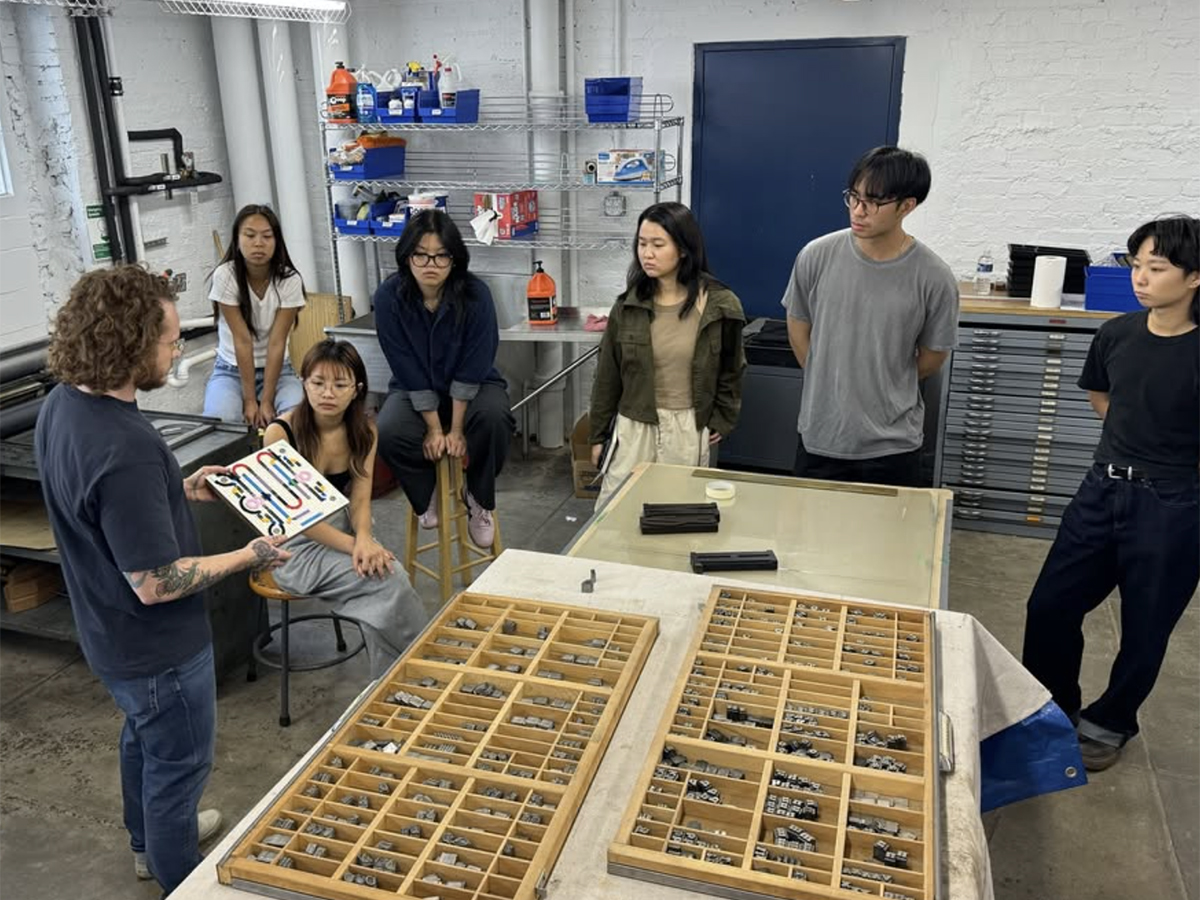
Variable is an elective that is the pedagogical manifestation of my research and creative practice surrounding typographic technologies, from the historical precedent to socio-cultural impact to the prosodic and practical potentials of formats today. It is part critical seminar and part experimental form laboratory. The course uses the metaphor of building cars (fonts) to drive/cruise to unexpected and new (typographic) destinations. Variable is divided into five mini-projects culminating in a final 5-week self-directed study project. Students investigate the socio-cultural impact of typographic technologies through embodied experiences and social activities. Talks and readings support by providing contextual history and future speculation to the world of typographic technologies. The projects allow students to learn and practice conventional techniques (letterpress) and novel techniques (variable fonts plus scripting) to design, render, and document glyphic forms. The course began as a graduate-level elective at the Rhode Island School of Design. It most recently ran as an undergraduate elective open to all majors at Carnegie Mellon University.

In the first project, Balance Bike, students learn about foundry type, printing, and type design foundational skills in Glyphs 3 through a collaborative alphabet prompt. This component-driven digital lettering exercise is then translated ‘type-high’ to letterpress by using a custom 3/4″ MDF and Lego Kit set up inspired by Pedro Neves’ “LegoType” letterpress printing course at UIC. In the second project, Kit Car, students practice drafting and basic type design practices (drawing, spacing, testing) through a component-driven workflow. Students are encouraged to observe the world around them and distill a kit of shapes from their insights. These sketches are turned into a digital set of parts (components) used to create a font; letters, icons, and/or patterns. This project picks up metaphorical and generative speed in project three, Gravity Racer, which introduces variable fonts and the generative potential of variable font workflows. Students expand their Kit Cars by adding one, two, and three axes through a series of workshops. They are also introduced to troubleshooting in font workflows, including scripting. Project four, Paint Booth, introduces color. The project introduces color font formats, including SVG, COLR/CPAL, color variable fonts, and layered font workflows. Students explore using these complex formats on the web, in print, and in interactive mediums they are already familiar with, illuminating each format’s opportunities and challenges. The final low-stakes project is titled Dune Buggy. In it, students remix, hack, and/or alter an existing open-source font through OpenType Feature writing, scripting, and developing programs/tools that can render their fonts. Students explore writing positional features, substitution features, and scripts that can manipulate vector data both in Glyphs 3 and outside of it (web, Processing, P5.js, Python). For the final 5-weeks, students can expand/revise/combine prior explorations into a culminating final self-directed study project titled Grand Prix.

While there have been necessary updates to the prompts due to the advancing nature of font technologies, the overall pedagogical methodology remains the same. The methodology is designed to reduce barriers related to typeface design, variable/color fonts, and programming. One significant barrier to learning typeface design is drafting. This is even more significant in variable fonts, where compatibility across drawings (masters) is a technical requirement. Another barrier is the need to craft/make rendering environments that allow these complex formats to flourish, often requiring a bit of ‘off-roading’ (code). The combination of these barriers commonly dissuades design students from engaging with typeface design and tool-making because there is a prevailing notion that it is ‘too technically difficult.’ Stemming from my research into patterning principles found across typographic technologies, I began exploring how to leverage the modular affordances of typeface design software today to reduce the barriers of access to the design sub-discipline. In foundry type, type founders used modular methods to reduce engraving (drawing) time via counterpunches. This allowed forms to be replicated easily; the same ‘counter’ of a /n/ could be used for /h/m/n/ and flipped to make the /u/. Digitally, ‘components’ do the same. Components are commonly used by type designers today not for counter-shapes but for language support—combining letters with marks via anchors. A liberal use of components to instead build letters from, akin to a pixel, when teaching variable fonts minimizes the complexity associated with drawing for master compatibility. One change in the component shape is immediately cascaded across all glyphs that use it. Instead of spending the majority of time resolving incompatible masters across hundreds of glyphs, students could more easily focus on developing their conceptual ideas and engaging the expansive design space of variable fonts and their generative possibilities when combined with computation. Scripting and programming custom tools are similarly broken into bits that successfully combine. Students begin by learning simple Python commands to troubleshoot their font. Then, OpenType Features, scripting, and basic custom program/tool making. Finally, they can combine and expand these skills towards their final project idea.

While access to type design technologies has perhaps never been easier, there remains a significant gap between the rate at which font technologies are developing in the field and the access to these emergent workflows in design education. Young designers must be given the ‘right to repair’ the linguistic tools of today and should be empowered through their education and lived experiences to create the ones of tomorrow. After all, type designers are responsible for stewarding the language traditions of our elders past, present, and future… and innovating new forms of communication. One of the most potent and effective ways of making the future of text-based communication more equitable is to have more type designers–or at least designers who have some typeface design experience and skill. This elective seeks to contribute to this future by providing access to conventionally exclusive design subdisciplines of typeface design and programming. The course offers a way of teaching at the intersections of typographic technologies, computation, and language to be more elastic to meet the needs of the languages of our lands where they are. Its materials are open for all to use, remix, and share.

This project was the 2024 Design Incubation Educators Awards winner recipient in the category of Teaching.

Biography

Kelsey Elder is an educator, typographer, and type-technology enthusiast based in Pittsburgh, Pennsylvania. He is an Assistant Professor at Carnegie Mellon University, teaching communication design, typeface design, and critical studies. He has previously taught at the Rhode Island School of Design, Purchase College (SUNY), and Virginia Commonwealth University. Elder holds a BFA from the Minneapolis College of Art and Design and an MFA from Cranbrook Academy of Art, with additional studies at the University of Reading and the Plantin Institute of Typography. His research on typographic technology’s socio-cultural impact and pedagogical practices has been presented at conferences like TypeCon, and by invitation for institutions including the Herb Lubalin Center, Museum Plantin-Moretus, and LAABF. His workshops on type design, including variable/color fonts, have been held at ATypI Brisbane and other venues. When he’s not teaching, crafting letters, or tinkering on a press, you’ll find him hanging out with his cats.

Working with Design Clients: Tools and Advice for Successful Partnerships

A practical guide to working on client and community work in the design studio.

Meaghan Dee
Associate Professor
Virginia Tech

Jessica Meharry
Visiting Assistant Professor

Institute of Design at Illinois Tech

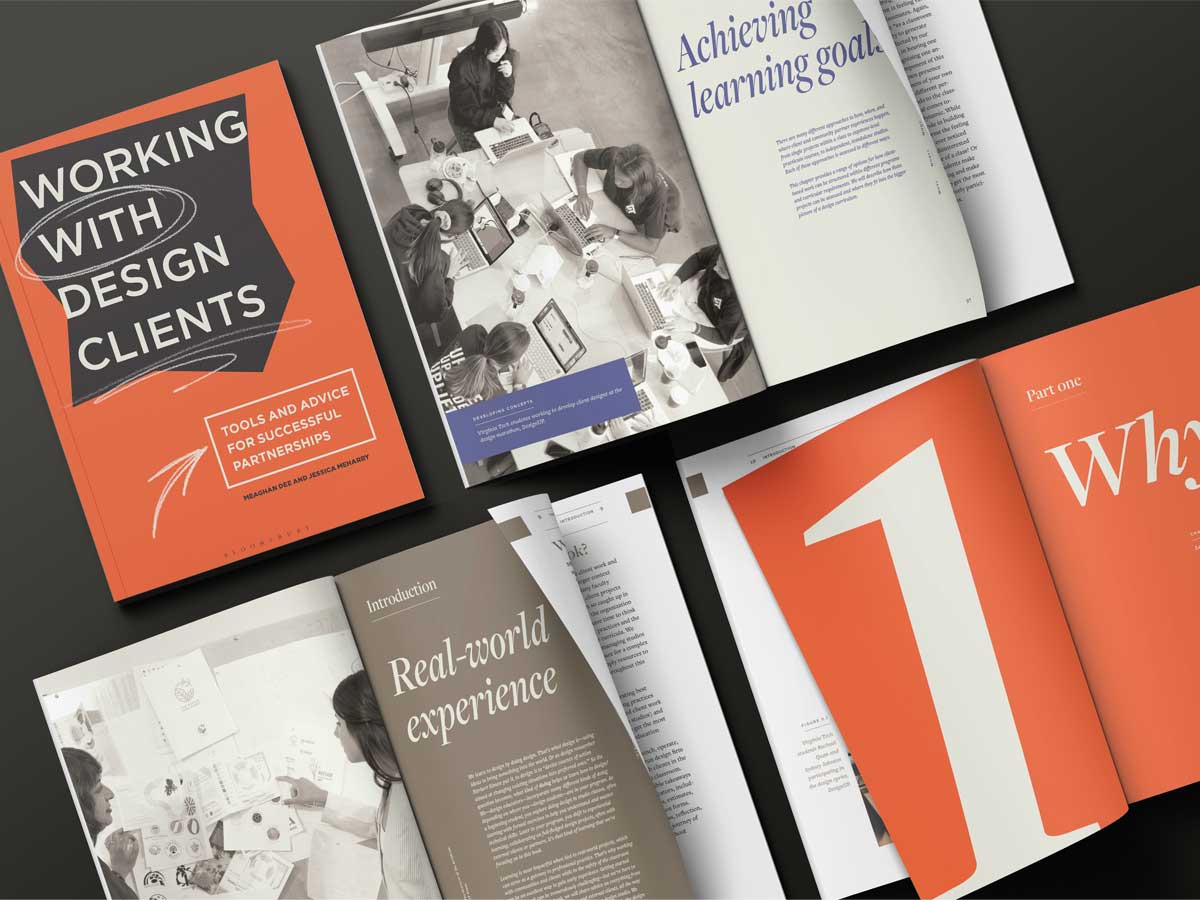
Working with Design Clients: Tools and Advice for Successful Partnerships is a book for design students and educators seeking to integrate real-world client projects into their curriculum. Born from extensive research, interviews, and the authors’ years of experience running a successful student-run design studio, this book offers practical advice, tools, and frameworks for navigating the complexities of client-based learning.

The studio is a core strand of design education, and working with real clients is one of the most valuable ways for students to develop their professional design practice skills.

The book is a practical guide to working on client and community work in the design studio – how to collaborate with and connect to communities, find and retain clients, and manage real-world design problems.

The book is structured in four parts:

  1. Why: Establishes the pedagogical value of client projects, emphasizing their role in fostering industry connections, experiential learning, and student empowerment.
  2. What: Focuses on the practicalities of community engagement, client selection, and structuring studio experiences to achieve learning goals.
  3. Who: Examines the roles and responsibilities of students, faculty, and clients, highlighting the importance of effective communication, collaboration, and articulating value.
  4. How: Offers guidance on launching and managing a student-run design studio, including financial management, operational logistics, and planning for long-term sustainability.

This is the book Jessica and Meaghan wish existed when they were thinking about starting a design studio and took over a design studio (respectively). This book addresses a critical gap in design pedagogy literature by providing a comprehensive resource for educators seeking to bridge the gap between academia and professional practice.

Key contributions include:

  • Practical Guidance: Offers concrete advice and actionable strategies for implementing client-based projects, from finding clients to managing budgets to assessing student learning.
  • Diverse Perspectives: Incorporates insights from numerous interviews with design educators, students, and industry professionals, representing a range of institutional contexts and pedagogical approaches.
  • Emphasis on Ethics and Community Engagement: Provides a framework for ethical client interactions, emphasizing the importance of designing with communities rather than for them.
  • Focus on Student Empowerment: Highlights the role of client projects in fostering student agency, leadership, and professional development. (Chapter 3 of this book also features Najla Mouchrek’s Model for Empowerment in the Transition to Adulthood)
  • Support for Student-Run Studios: Offers dedicated chapters on launching, managing, and sustaining student-led design studios.

This book aims for design educators to:

  • Integrate client-based projects into their courses.
  • Develop effective strategies for finding and managing clients.
  • Create meaningful learning experiences that foster student growth and professional preparedness.
  • Build and sustain successful student-run design studios.
  • Promote ethical and socially responsible design practice.

The book also hopes to empower design students to:

  • Confidently work with “real world” clients and community partners.
  • Be more prepared to graduate and enter industry.
  • Understand dynamics of client interactions.

By providing students and educators with the necessary tools and knowledge, this book will contribute to a more engaged, impactful, and relevant design education that better prepares students for the challenges and opportunities of the professional world.

Methodology

The book used a mixed-methods approach, combining:

  • Literature Review: Synthesized existing research on design pedagogy and experiential learning.
  • Surveys: Gathered quantitative data on client-based practices in design programs across the country and around the world.
  • Interviews: Collected qualitative insights from design educators, students, and industry professionals.
  • Case Studies: Via interview, examined successful examples of client projects and student-run studios.
  • Authors’ Expertise: Leveraged the authors’ years of experience in design education and running a student-led studio.

Overall, this book represents a culmination of the authors’ passion for design education and their commitment to preparing students for successful and meaningful careers. It is a resource they wish they had when they first embarked on their journey. They hope it will serve as a valuable guide for fellow educators and their students and contribute to a more vibrant and impactful design education landscape.

This project was the 2024 Design Incubation Educators Awards runner-up recipient in the category of Scholarship: Publication.

Biography

Meaghan A. Dee is an Associate Professor and Chair of Graphic Design at Virginia Tech, where she also serves as a Senior Fellow at the Institute of Creativity, Arts, and Technology. Her work centers on connecting communities through storytelling and immersive design experiences and by fostering collaboration between students, faculty, and industry professionals. Meaghan sees design as a tool for engagement, communication, and innovation.
In addition to her role at Virginia Tech, Meaghan is a docent emeritus for the Letterform Archive in San Francisco and served as co-chair for the AIGA Design Educators Community (AIGA DEC) Executive Board—a group dedicated to supporting and connecting design educators across the world. She earned her Bachelor’s degree in Graphic Design from the University of Illinois at Champaign-Urbana and a Master of Fine Arts in Visual Communication Design from Virginia Commonwealth University.

Jessica Meharry is a designer, researcher, and educator who develops justice-oriented design methodologies for professional practice. She teaches courses in the politics of design, critical contexts of design, and the philosophical context of design research. Jessica received a PhD from the Institute of Design (ID), an MFA from Savannah College of Art and Design, and a bachelor of science from Northwestern University. Jessica’s cross-disciplinary research interests focused on designing for equitable economies, strategizing processes that frame equity as an innovation driver, and developing inclusive design management pedagogy. Jessica’s current research projects include the development and testing of an anti-oppressive design framework focused on information and communication technologies. She is also a collaborator on a research project led by Hillary Carey, PhD candidate at Carnegie Mellon University, in which they’re using design methods to explore anti-racist futures in organizational contexts.

Riveted in the Word 

The true story of a writer/historian’s hard-fought battle to regain language after a devastating stroke.

Warren Lehrer 
School of Visual Arts (SVA);

Purchase College 
SUNY (Professor Emeritus) 

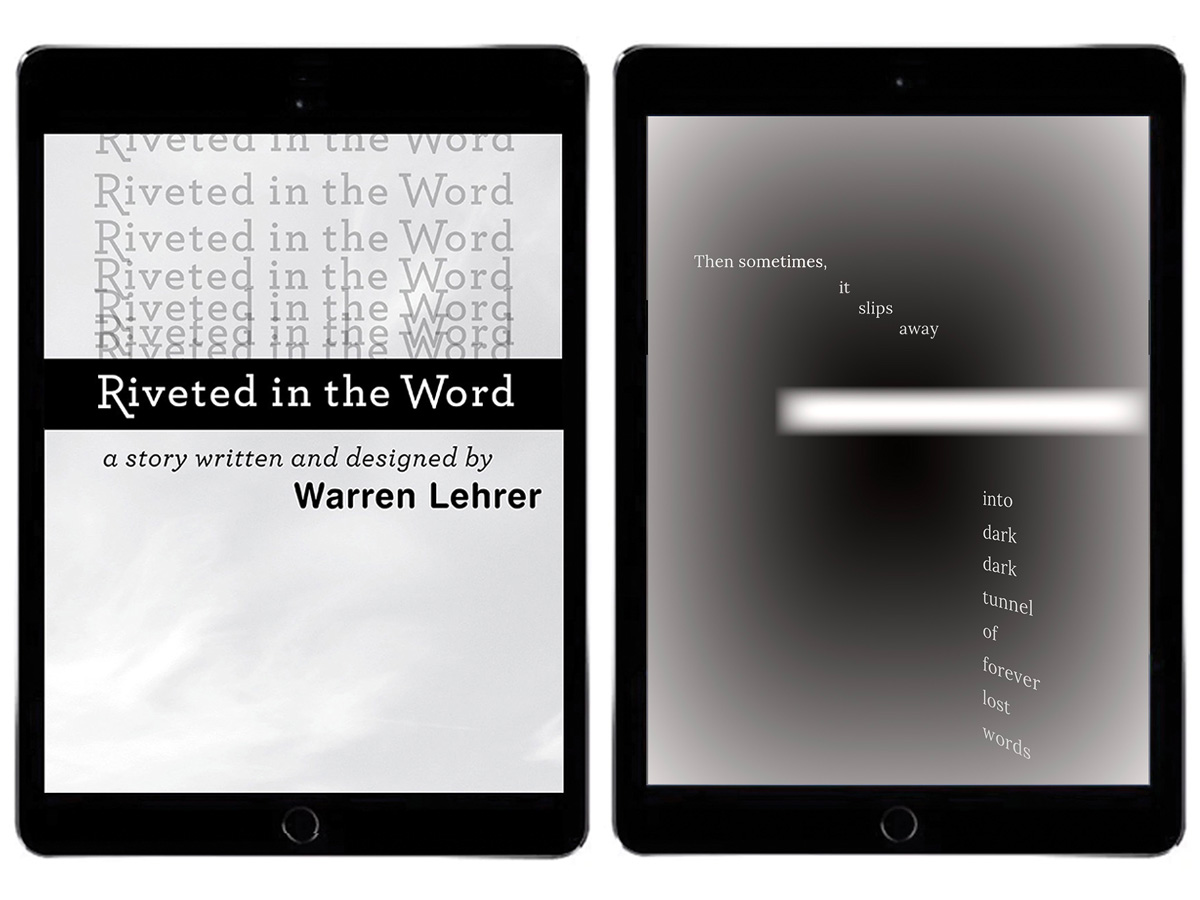
Riveted in the Word is an electronic book inspired by the true story of a writer/historian’s hard-fought battle to regain language after a devastating stroke. Written and designed by author/designer Warren Lehrer, the multimodal book app uses writing, a custom interface, kinetic typography, and an original soundtrack to place the reader inside the mind of a retired American history professor as she recalls her journey with Broca’s aphasia. The interface toggles between columns of text that readers navigate at their own pace, and animated sections that evoke gaps between perceptions (thoughts, memories, desires) and the words needed to communicate.

Most of the inner monologue takes place while the fictionalized protagonist, Norah Hanson, PhD, is lying in bed thinking about her 20+ year rehabilitation, hopeful for the day ahead, which turns out to be a breakthrough day for her. The interface is often bifurcated down the middle, in a way that mirrors the two hemispheres of the brain, which get affected differently by a stroke. The reader witnesses Norah’s sense of humor, determined spirit, and seemingly fragmented-but-intelligible thoughts as they shift from present to past, and toward her upcoming public lecture, the first she’s given since the stroke.

BACKGROUND/METHODOLOGY

I first met and interviewed Willie Lee Rose, a historian of the American Reconstruction period, two decades after she suffered a massive stroke. She was 71-years-old at the time. Willie’s stroke affected the left hemisphere of her brain, which gave her the kind of aphasia that affects the use of language. Like many cases of Broca’s aphasia, she retained the memories and intelligence that she had before, but she suddenly didn’t have the language to communicate. Willie’s difficult but triumphant rehabilitation inspired me to write a fictionalized interior narrative of a scholar and stroke survivor—that takes place over the course of a few hours of one day.

The first iteration of Riveted in the Word was published in my 2013 illuminated novel, “A LIFE IN BOOKS: The Rise and Fall of Bleu Mobley,” as an excerpt of one of my author-protagonist’s 101 books. In 2018, Willie Lee Rose died, at the age of 91, and a few years after that I decided to adapt Riveted into an electronic book, and dedicate it to Willie.

For the past twenty years, I’ve been enhancing my solo and collaborative printed books (non-fiction, fiction, and poetry) with animations, short films, and interactive media. I’ve also been focusing more and more on making work that helps create greater understanding of and empathy for neurodivergent and other human conditions such as Dyslexia, Alzheimer’s disease, displacement, trauma, and loss. So, I had the idea of developing Riveted in the Word as my first fully electronic book as a way of creating an immersive experience that could help readers have more awareness of the interior experience of this little understood condition.

In 2019, I had the good fortune of meeting Artemio Morales, a web developer with a literature background and passion for multimedia books. After deciding to work together on the Riveted in the Word ebook, we brainstormed about creating an interface that would in some ways split the difference between watching a movie and reading a book. Several months later, I sent him a 1,200 page storyboard, which he began translating into code using Unity. I also brought composer/multi-instrumentalist Andrew Griffin into the project because of the phenomenal job he did creating soundtracks for the animations of my and Dennis Bernstein’s “Five Oceans in Teaspoon” project. The three of us worked on “Riveted in the Word” for five years while juggling other projects.

OUTCOMES

Riveted in the Word launched in June, 2024 as a book app made for iPads, iPhones, and Mac computers, available for sale on the Apple App store, for $4.99. We are currently adapting it to work on Android and Windows devices and online through web browsers. The book app is co-produced and co-published by my non-profit arts organization EarSay, dedicated to nurturing and portraying stories of uncelebrated individuals and communities, and Artemio’s production lab, AltSalt, dedicated to publishing and promoting innovative works of electronic literature.

So far, we’ve had two official book launches to over-capacity audiences, one at the Center for Book Arts in NYC, one in Blue Hill Maine, in conjunction with the Maine Writers and Publishers Association’s “Word Festival.” Launches included real-time projection of the app with reading/performances by actress/author and my EarSay partner Judith Sloan, and Q&A with collaborators Andrew Griffin, Artemio Morales, medical professionals, and stroke survivors.

Over the past several months, we also presented performance/readings of Riveted at Torn Page, Art New York Studios, Topaz Arts, NYU Tish, Pratt Institute, the University of Wisconsin/Madison, and as part of the Contemporary Artists’ Book Conference/NY Art Book Fair, and the Electronic Literature Organization National Conference in Orlando, Florida/online.

Riveted was a featured title of the May, 2024 Print (Magazine) Book Club, along with another book that I wrote and designed, “Jericho’s Daughter.” That hour-long conversation was hosted by Debbie Millman and Steven Heller.

Riveted was the subject of a segment on New York Public Radio with me and Dr. Laura Boylan, a neurologist at Bellevue Hospital and faculty at NYU School of Medicine.

I also discussed Riveted in an hour+ interview with Carson Grubaugh on the Living the Line video podcast which features makers of graphic novels and visual literature.

In addition to receiving positive receptions from the design and electronic literature communities, I’m most hearted by the reception Riveted is receiving from health care professionals and stroke/aphasia survivors.

The National Aphasia Association (NAA) has endorsed Riveted and is featuring it on their Recommended Reading list.

Upcoming presentations include performance/readings at two New York medical schools and I’ve been invited to be a keynote speaker at an Art & Health Symposium in Tennessee.

In the attached Evidence of Outcomes doc, I’ve enclosed press quotes and other testimonials that attest to ways Riveted in the Word is innovative and contributes to the field(s) of design, electronic literature, and narrative medicine.

This project was the 2024 Design Incubation Educators Awards winner recipient in the category of Scholarship: Creative Works.

Biography

Warren Lehrer is a designer and writer known internationally as a pioneer of visual literature and design authorship. His work is acclaimed for its marriage of writing and typography, capturing the shape of thought and speech, and reuniting oral and pictorial traditions of storytelling in books, animations, and performance. Honors include: Ladislav Sutnar Laureate, Center for Book Arts Honoree, Brendan Gill Prize, Innovative Use of Archives Award, International Book Award for Best New Fiction, three AIGA Book Awards, and fellowships and grants from the National Endowment for the Arts, New York Foundation for the Arts, Rockefeller, Ford, and Greenwall Foundations. His books are in many collections including MoMA, Getty Museum, Georges Pompidou Centre, Tate Gallery. Lehrer is a founding faculty member of the Designer As Author/Entrepreneur MFA program at the School of Visual Arts, Professor Emeritus at SUNY Purchase, and co-founder of EarSay, a non-profit arts organization in Queens, NY. https://warrenlehrer.com/

2024 Design Incubation Communication Design Educators Awards

2024 Design Incubation Educators Awards competition in 4 categories: Creative Work, Published Research, Teaching, Service

Congratulations to the recipients of the 2024 Communication Design Educators Awards!


Scholarship: Publications

Winner

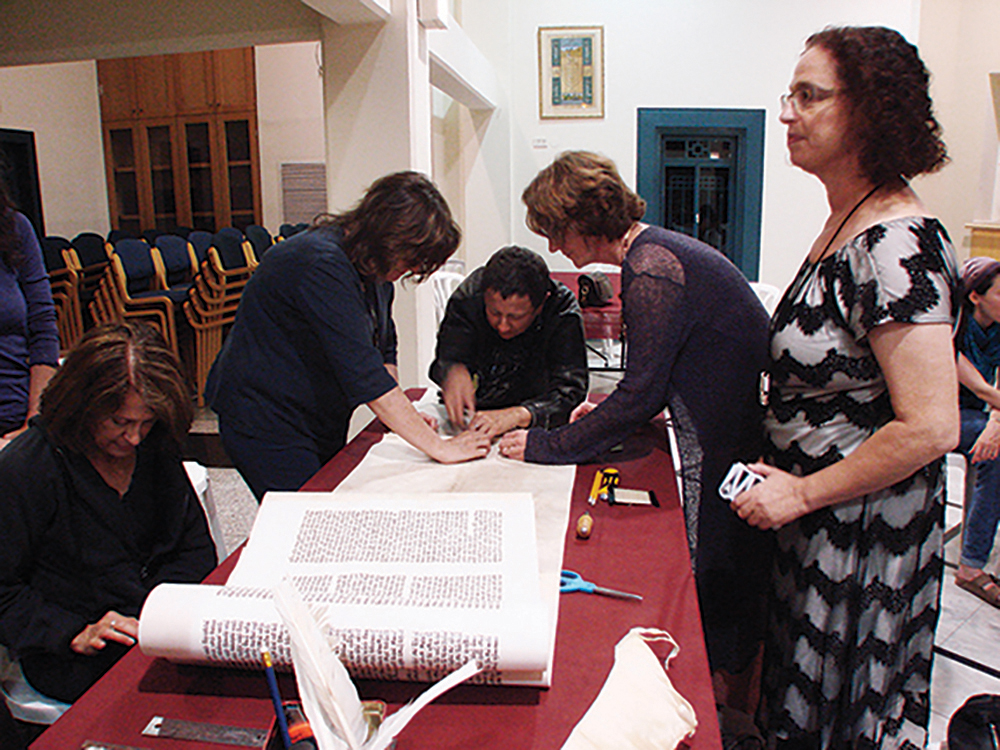
Gender, Transgression, and Ritual Torah Preparation
Leslie Atzmon
Professor
Eastern Michigan University

Runner-up

Working with Design Clients: Tools and Advice for Successful Partnerships
Meaghan Dee
Associate Professor
Virginia Tech

Jessica Meharry
Visiting Assistant Professor

Institute of Design at Illinois Tech


Scholarship: Creative Work

Winner

Riveted in the Word 
Warren Lehrer 
School of Visual Arts (SVA);

Purchase College 
SUNY (Professor Emeritus) 


Teaching

Winner

Variable 
Kelsey Elder
Assistant Professor
Carnegie Mellon University 

Runner-up

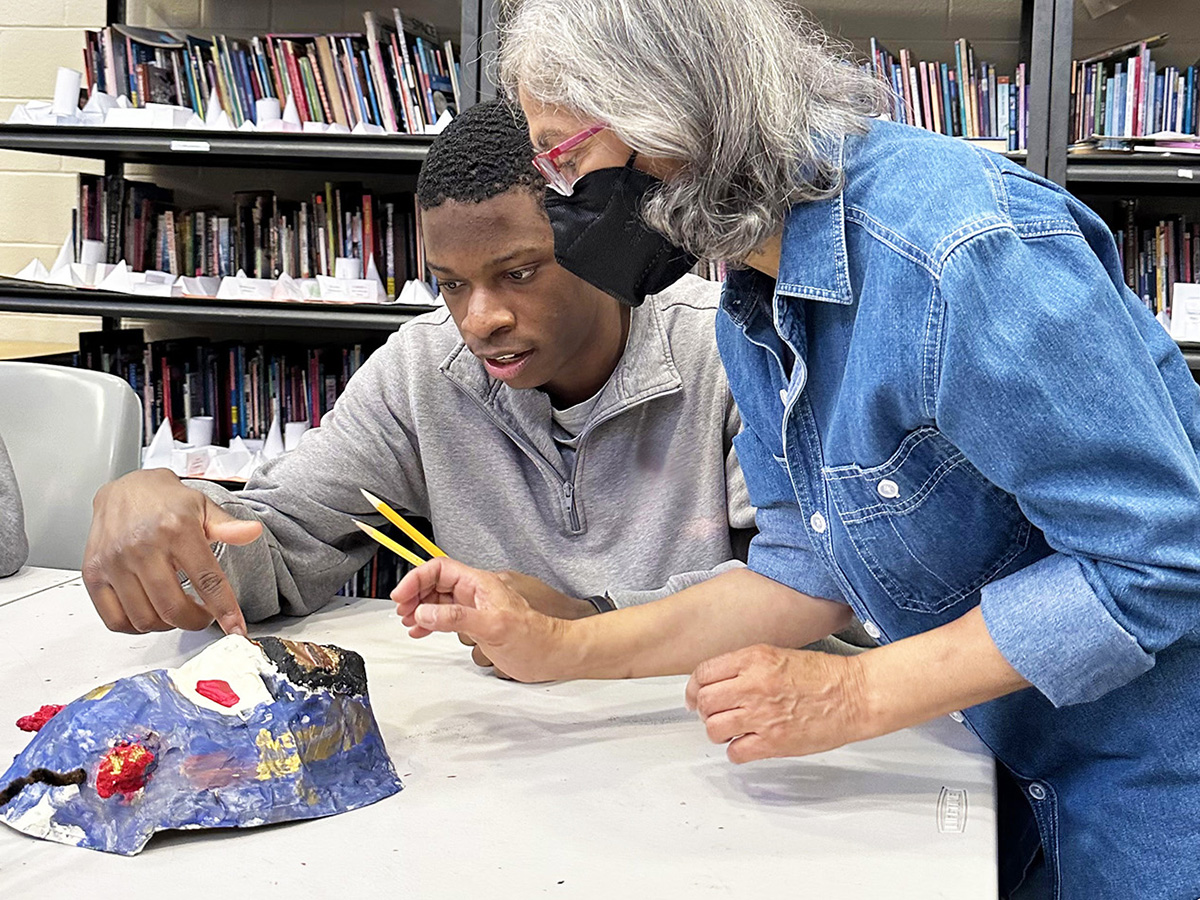
Chicago Designs: Teaching Community-Based Histories 
Christopher Dingwall
Assistant Professor
Washington University in St. Louis

Dr. Bess Williamson
Professor
North Carolina State University in Raleigh

Dr. J. Dakota Brown
Visiting Associate Professor
University of Illinois, Chicago

Amira Hegazy
Adjunct Assistant Professor
University of Illinois Chicago


Service

Winner

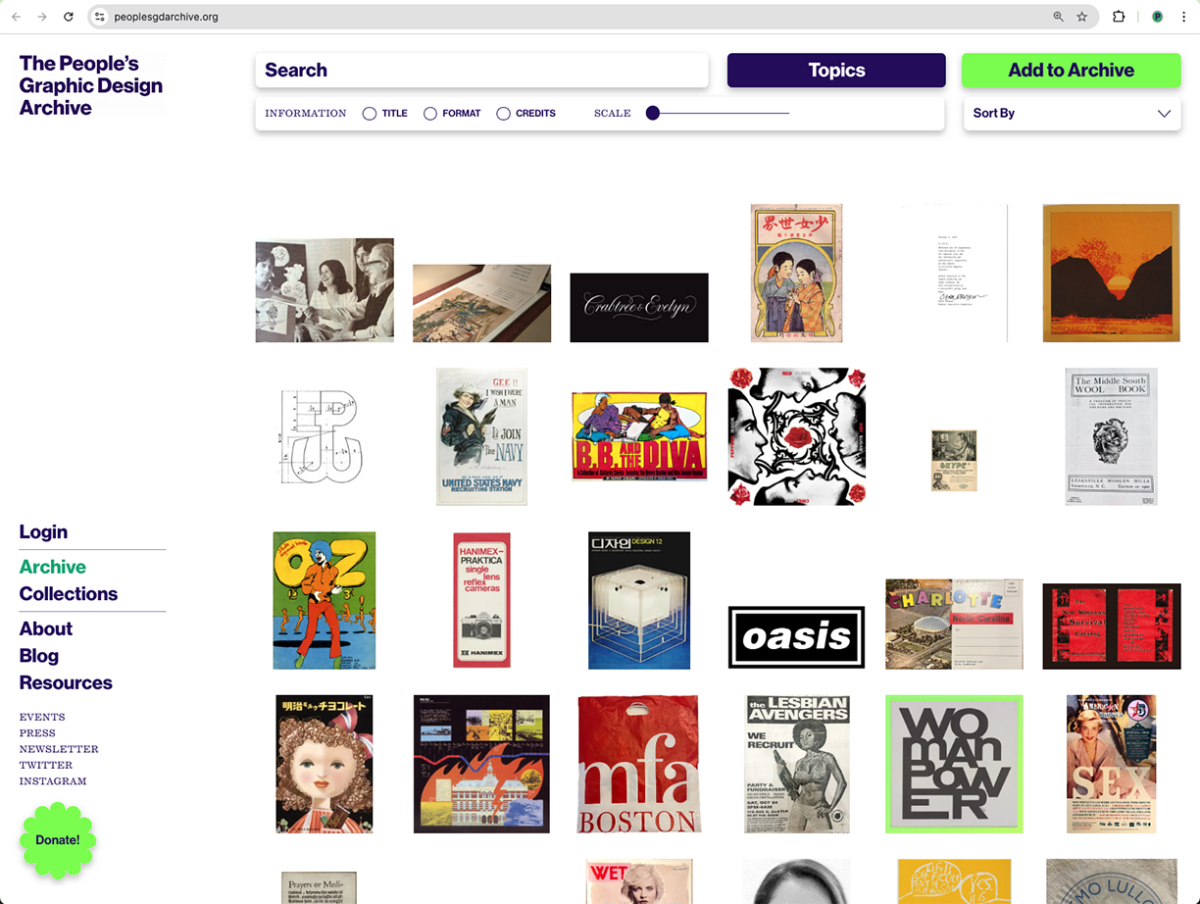
The People’s Graphic Design Archive
Louise Sandhaus
Professor
California Institute of the Arts

Mary Banas
Lecturer
Tufts University

Brockett Horne
Lecturer
Boston University

Alan Caballero Lazare
Assistant Professor
George Mason University

Briar Levit
Associate Professor
Portland State University

Alberto Rigau
Studio Interlínea

Morgan Searcy
Art Director

Bobby Joe Smith III
Special Faculty
California Institute of the Arts

Runner-up

Mitigating Youth Violence: The Futuring Project: Audacious Narratives & Enduring Voices 
Neeta Verma
Independent Scholar
Associate Professor (retired)

University of Notre Dame

Runner-up

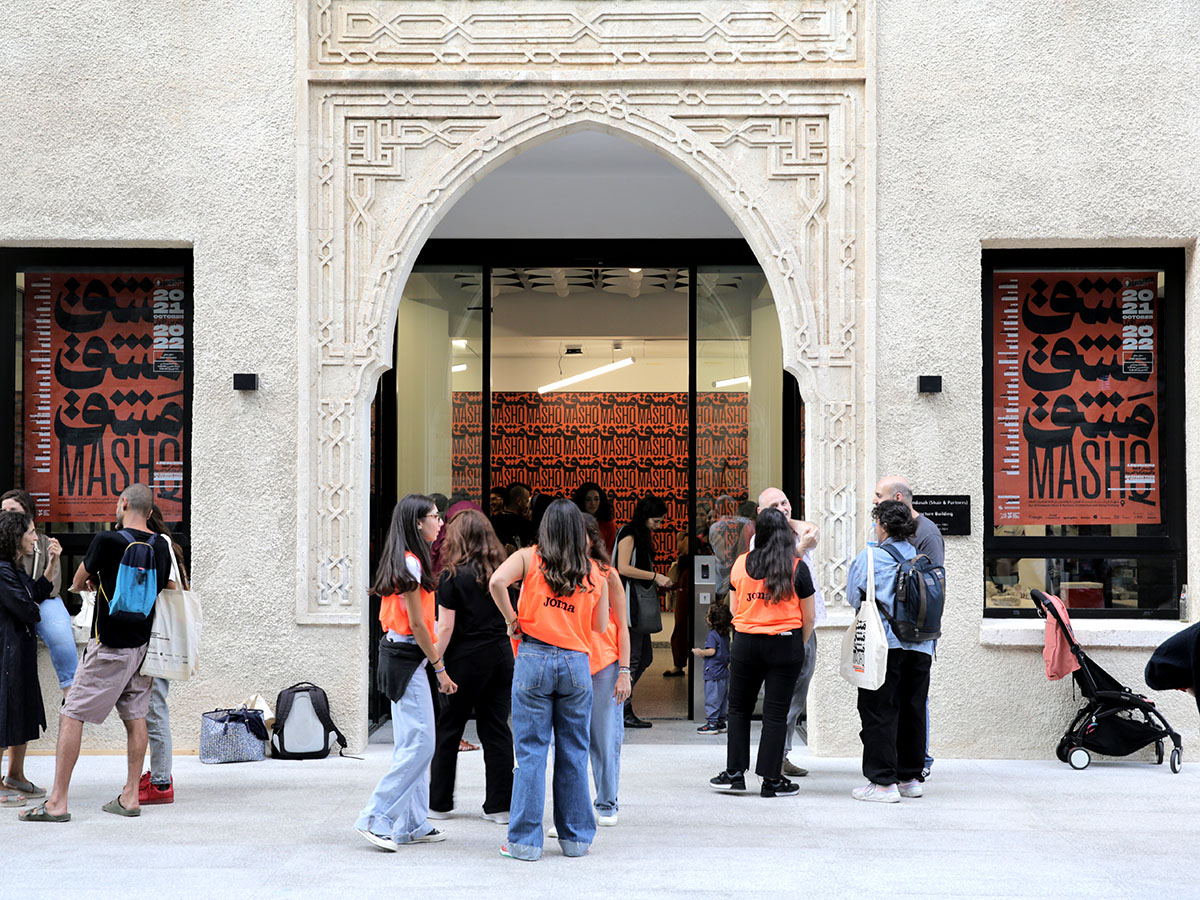
Mashq Conference 2022 on Arabic Type and Typography 
Yara Khoury Nammour
Assistant Professor
American University of Beirut, Lebanon

Khajag Apelian
Lecturer
American University of Beirut, Lebanon


2024 JURY

Steven McCarthy (Chair)
University of Minnesota

Douglas Kearney
University of Minnesota

Doug Barrett
University of Alabama at Birmingham

Basma Hamdy
Virginia Commonweath University—Qatar

Kali Nikitas
University of Southern California in Los Angeles

Workshop on Writing an Academic Abstract

An Affiliated Society Meeting at the CAA 113th Annual Conference

Affiliated Society Meeting at the CAA 113th Annual Conference, New York City

Friday, February 14, 2025
1:00 PM – 2:00 PM
New York Hilton Midtown – 2nd Floor – Murray Hill West

This is a hybrid event. Attendance is free to anyone in person. (No conference fee is required.) To attend virtually, complete the form below to receive details for the virtual login.

Join Design Incubation for a workshop on Writing an Academic Abstract. We will provide examples, recommendations, best practices, and ideas on crafting a written synopsis of your communication design research for submission to conferences, journals, invited lectures, grant and book proposals.

Please complete the form and let us know how we can facilitate your academic abstract writing efforts. This event is suited for junior faculty new to research and publication. It is also an opportunity for senior faculty to discover community and feedback on their scholarly endeavors.

Form: https://designincubation.com/abstract-writing-workshop/

Design Incubation Colloquium 11.2: Annual CAA Conference 2025 (Hybrid)

Presentations and discussion in Research and Scholarship in Communication Design at the 113th Annual CAA Conference 2025

Recent research in Communication Design. Presentations of unique, significant creative work, design education, practice of design, case studies, contemporary practice, new technologies, methods, and design research. A moderated discussion will follow the series of presentations.

The colloquium session is open to all conference attendees. Be sure to watch the online video presentations before attending this event.

Friday, February 14, 2025
11:00 AM – 12:30 PM
New York Hilton Midtown – 2nd Floor – Sutton North

CHAIRS

Camila Afanador-Llach
Florida Atlantic University

Heather Snyder Quinn
DePaul University

Discussants

Jessica Barness
Kent State University

Cat Normoyle
East Carolina University

Dan Wong
New York City College of Technology, CUNY

PRESENTATIONS

Design History Data: A Snapshot of US-based Undergraduate Programs
Aggie Toppins
Associate Professor
Washington University in St. Louis

Editorial Infographics: Bridging the Gap Between Complexity and Clarity in Design Education
Teresa Trevino
Professor
University of the Incarnate Word

The Bayou at y.our Doorstep: Integrating Environmental Education in Graphic Design
Natacha Poggio
Associate Professor
University of Houston Downtown

Collaborative Creativity and Digital Identity: Reimagining Authorship in the Digital Age
Feixue Mei
Assistant Professor
James Madison University

Designing Inclusive Engagements in Neighborhood Design Projects
D.J. Trischler
Assistant Professor
University of Cincinnati

Service Design for Digital Tours: The Rixing Type Foundry Case
Ting Han Chen
Adjunct Associate Professor Rank Specialist
Yuan-Ze University, Taiwan

Enhancing Design Education: Students Skill Development through Technology in Blended Learning Environments
Danilo Bojić
Associate Professor
Winona State University

CFP: 2024 Design Incubation Communication Design Educators Awards

Call for Nominations and Entries for the 2024 Design Incubation Educators Awards Competition. DEADLINE EXTENDED!

Design Incubation announces a call for nominations and entries for the 2024 awards for communication design educators in the areas of scholarship, teaching, service. The aim of the awards program is to discover and recognize new scholarship (creative work and publications), teaching, and service in our broad and varied discipline. We hope to expand the design record, promote excellence and share knowledge within the field.

Nominations and Entries

We ask colleagues and mentors to identify outstanding creative work, publications, teaching, and service being created by design educators in the field communication design and to nominate these individuals for an award. Nominations will be accepted until December 15, 2024 January 15, 2025.

Entry Guidelines

Entries will be accepted until (December 31, 2024) January 15, 2025. Nominations are not required to enter in this scholarly competition. Complete the online entry form (https://designincubation.com/design-incubation-awards-competition-entry-form/) with the following:

Title: Description of project and outcomes (not to exceed 500 words.)
Supporting Materials: (limited to 5-page medium resolution pdf of artwork; web links to websites, videos, other online resources; published documents or visual documents.)
Biography of applicant/s (150 words per applicant.)
Curriculum vitae of applicant/s.
Entry fee: $20.

2024 JURY

Steven McCarthy (Chair)
University of Minnesota

Douglas Kearney
University of Minnesota

Doug Barrett
University of Alabama at Birmingham

Basma Hamdy
Virginia Commonweath University—Qatar

Kali Nikitas
University of Southern California in Los Angeles

Douglas Kearney is an acclaimed poet, librettist, performer and book designer. His work is widely awarded and anthologized, and his book Sho was a finalist for the National Book Award in poetry. He is a professor of creative writing at the University of Minnesota–Twin Cities where he is a McKnight Presidential Fellow. Kearney earned a BA from Howard University and an MFA from CalArts. 

https://www.douglaskearney.com

Doug Barrett is a professor of graphic design at the University of Alabama at Birmingham who has over 20 years of professional graphic design experience. His practice combines client-oriented commercial work, community-focused “design for good,” and experimental design authorship. Barrett has received an Alabama State Arts Fellowship in Design and a Sappi: Ideas That Matter grant. He has an MFA from the University of Florida.

https://www.dougbarrett.com

Basma Hamdy is a professor of graphic design at Virginia Commonwealth University–Qatar campus where she teaches across the undergraduate and graduate curricula. Her scholarship ranges from visual documentation of socio-political activism in Egypt to exploring Arabic typography and calligraphy. Hamdy has an MFA from MICA and is currently a candidate for a PhD at Leiden University and The Royal Academy of Art in The Netherlands. 

https://qatar.vcu.edu/news/our-faculty/basma-hamdy/

Kali Nikitas serves as MFA Design Academic Program Manager at the University of Southern California in Los Angeles. She is a former Associate Professor at the School of the Art Institute of Chicago, Minneapolis College of Art and Design, Northeastern University and Otis College of Art and Design. Kali served as the Chair of the design departments at MCAD, NEU, and Otis making administration her main focus. Her designs and curatorial projects have been widely awarded and published. In addition to her academic role, she is a “Curator of Moments” designing happenings and events in the creative sector. Kali received an MFA in graphic design from CalArts and a BFA in graphic design from the University of Illinois, Chicago. 

https://www.tumblr.com/kali-nikitas

Steven McCarthy is a professor emeritus of graphic design at the University of Minnesota. His scholarship has led to lectures, exhibits, publications and grant-funded research on six continents. McCarthy has published in the field’s leading academic journals and he has been in over 135 juried and invitational exhibits. He has an MFA in design from Stanford University and a BFA in art from Bradley University. 

http://stevenmccarthy.design

New Director of Peer Reviews, Chair and Director at Large

Welcoming Cat Normoyle, incoming Director of Peer Reviews, and Camila Afanador Llach as Chair, Director-at-Large

This 2024 academic year has been busy and productive at Design Incubation. We have had many activities this fall, including the Design Educators Awards, currently accepting nominations and entries until December 31, 2024. In October, we had our first fully in-person colloquium since the onset of the pandemic and our largest one to date at Boston University with four sessions and more than 20 research presentations. This year, we celebrate our 10th year with new members and ongoing development. We continue to host the series, Design Your Research Agenda (DYRA), the latest one in November. We will be publishing this episode online shortly. 

Starting this September 2024, we welcomed Cat Normoyle, Associate Professor at East Carolina University as the incoming Director of Peer Review. In spring 2025 she will be taking over this role from Camila Afanador-Llach, Associate Professor at Florida Atlantic University, who has held the position since fall 2021. 

Normoyle is a designer, writer, and educator whose research and creative activities focus on community engagement, interactive and immersive experiences, and design pedagogy. She has a strong record of contributions to design scholarship and community engagement, evidenced by publications, presentations, and grants. Notably her writing appears in articles and book chapters published by AIGA Dialectic, Design Research Society, AIGA Design Educators Community, Routledge, and others. She is a recent grant recipient of the Engagement Scholarship Consortium for her work on the project, Our Story: The LGBTQ Stories of Eastern North Carolina, which is preparing for a fall 2025 exhibition of work. She is currently working on a book project, “Community-based Practices in Action.” We are excited to welcome her as the new Director of Peer Reviews at DI. 

Afanador-Llach has made tremendous contributions to the peer review process at DI over the last 3 years. She has further developed the peer review process, ensuring the double-blind process is objective, anonymous, rigorous, and fair and that it offers the benefits of the peer review to our members by offering feedback to all who have participated in our colloquium submission process. 

Afanador-Llach will be staying on as a Chair and Director-at-Large as she segues into other DI initiatives. We would like to thank her for her three years of service as Director of Peer Review and we are excited to be working with her in new capacities.

Afanador-Llach was promoted to tenured Associate Professor at Florida Atlantic University, and is currently researching and writing about the history of graphic design in her home country Colombia. She recently completed a three-year NEH-funded project cataloging and translating metadata, developing an online resource. With her experience with metadata and from her role as DI Director of Peer Review, we hope to further the development of keyword analysis and implementation at DI.

Designing Your Research Agenda (DYRA) 4.1

Design scholars and researchers discuss various aspects of their research agendas

Friday, November 8, 2024
1:00pPM Eastern / 12:00PM Central
Virtual Event

Designing Your Research Agenda is a panel discussion and open forum for design scholars and researchers to discuss various aspects of their research agendas. We aim to open a dialog regarding multiple challenges of discovering one’s design research inquiry. Designing Your Research Agenda is an ongoing design research event series.

Some of the questions we will discuss with panelists include:

  • How did you determine your research agenda (high-level timeline of your career/trajectory)
  • How do you define research and why do you think it matters/for society, the field, and yourself?
  • How do your department and institution define and support the work you do?
  • How would you describe/categorize your department and institution?
  • If you were going to position your work within a category, would you say your research addresses: design theory, design history, design practice, design research (traditional graphic design, speculative design, UXUI, typography, AR, VR, creative computing, design solutions, etc.), design pedagogy, or something else?
  • What barriers (if any) exist at your institution or in the field for creating and disseminating your research?

Moderators

Jessica Barness
Kent State University

Heather Snyder Quinn
DePaul University

Biographies

Jason Alejandro

Jason Alejandro is a Puerto Rican graphic designer and Associate Professor of Graphic Design at The College of New Jersey. His academic research explores intersections of cultural identity, design history, and critical pedagogy, with a focus on how these topics shape visual communication. Alejandro is particularly interested in using graphic design to address social and cultural narratives, including underrepresented communities in design education. His work spans writing, publishing, and visual projects, including contributions to both academic and professional design discussions on identity and collaboration in design practice. He is horrified at how well ChatGPT generated this bio, even if it is somewhat generic.

Yoon Soo Lee

Yoon Soo Lee is a Professor of Art and Design. She has been teaching at the University of Massachusetts Dartmouth since 2001, and also at Vermont College of Fine Arts since 2011.

Yoon Soo’s practice moves around three core areas of study: the art of pedagogy, how to work in dialogue cross-discipline, and how to create art and design that is based on self-knowledge. These investigations have led to presentations at the AIGA Educators Conference, UCDA Design Educators Conference, grants from the National Institute of Health, presentations at the Cognitive Science Society and papers such as “Functional Criticism in the Graphic Design Classroom” published in “Design Principles and Practices: An International Journal”.

Yoon Soo studied at Seoul National University where she received her BFA and MFA, and she also studied at Western Michigan University where she received her second MFA in graphic design.

D.J. Trischler

D.J. Trischler is an Assistant Professor of Communication Design for the University of Cincinnati’s Ullman School of Design in the College of Design, Architecture, Art, and Planning. He teaches typography, design research methods, and an introduction to design lecture. His research addresses the “dis-placed” sentiments familiar to the contemporary human experience, experimenting with possibilities to use design to “place” people in their surrounding ecologies. Through his research, he aims to increase place attachment, a sense of community and belonging, grow neighborliness and community engagement, and ultimately strengthen quality of life and well-being. D.J.’s work in this niche originated from his graduate thesis research into Neighborhood-Centered Design.

Design Incubation Colloquium 11.1: Boston University

Friday, October 25, 2024
9:30AM – 2:30PM
Boston University
808 Commonwealth Avenue

Hosted by Mary Yang and Kristen Coogan, College of Fine Art, Boston University. Design Incubation Colloquium is a part of BUGD’s Design Week.

Keynote: YuJune Park

Thursday, October 24, 2024
5:00PM
808 Commonwealth Ave
Room 410

Colloquium 11.1

Friday, October 25 , 2024
9:30AM–2:30PM
808 Commonwealth Ave
Room 409 and 410

9:30AM–10:00AMCoffee and Refreshments
(4th floor lobby)
Welcome/opening remarks
10:00AM–11:30AMSessions
Design + Translation (Room 409)
Design + Subversion (Room 410)
11:30AM–1:00PMLunch break
1:00PM–2:30PM Sessions
Design + Performance (Room 409)
Design + Methodology (Room 410)

MFA Open Studios

Friday, October 25, 2024
5:00PM


Design Incubation Colloquium Sessions

Design + Translation

Moderators: Kelsey Elder & Liz Deluna

The Design + Translation panel aims to recenter perspectives and prioritize inclusivity by representing a wider range of voices that build design community.

Typography as Racialization: Euro-American Craft and Asian Labor
Chris Lee
Associate Professor
Pratt Institute

Visualizing Faculty Salary Inequity: A Study of Salary Compression and Inversion and Its Impact in Higher Education
MiHyun Kim
Associate Professor
Texas State University

Design + Visual Translation and Cultural Bridging
Shuang Wu
Assistant Professor
Virginia Tech

Drawing Water: A Multi-disciplinary Approach to Representing Water Performance
Eugene Park
Associate Professor
University of Minnesota, Twin Cities

Jessica Rossi-Mastracci & Matt Tierney
University of Minnesota

A Sequence of Multiplicity
Moon Jung Jang
Associate Professor
University of Georgia

Kaithi Script’s Revival: An Intersection of Design and Cultural Inheritance
Anmol Shrivastava
Assistant Professor
Illinois State University

Design + Subversion

Moderators: Ash Yuxuan Wei & Dan Wong

The Design + Subversion panel is a space to critique the status quo through forms of intervention, disruption, subversion, and truth-telling.

Drawn Together: Exploring the Intersection of Image-Making and Community-Building
Grace Preston
Lecturer
Texas State University

Advancing Design Practices: Assessing the Impact of New Technologies and Sustainable Innovation
Caitlin Lu & Maidah Salman
Graduate student
Boston University

Designing for Mental Health and Wellbeing: Integrating Mental Health Support into UI/UX Design Course
Ting Zhou
Assistant Professor
University of Connecticut

Exploring Identity through Curatorial Practices: Gráfica Latina
José Menéndez
Assistant Professor
Northeastern University

Tatiana Gómez
Assistant Professor
Massachusetts College of Art and Design

In Search of Feminism and Identity in Asia
Wanjing Li
Designer and Artist
Boston University

Design + Performance

Moderators: Halim Lee & Cat Normoyle

The Design + Performances panel engages the senses through action and experience. It encompasses activities that unite communities and ideas.

Design + Computation + Performance + __________
James Grady
Assistant Professor
Boston University

Sensory and Ambient Interfaces
Jonathan Hanahan
Associate Professor
Washington University in St. Louis

Accessibility and Creative Authorship in Design Theory Through Multimodal Learning and Metacognitive Reflection
Molly Haig
Adjunct Professor
University of Europe for the Applied Sciences
Berlin, Germany

Dr. Till Julian Huss
Professor
University of Europe for the Applied Sciences

Pedagogical Workshops and Collaboration
Chen Luo
Lecturer
Boston University

Design + Methodology

Moderators: Claire Bula & Camila Afanador Llach

The Design + Methodology panel presents insights on new design tools, systems, and processes found through innovative research frameworks.

User-Centered Design + Generative AI Research Tools: Usability Testing and Implication
Yi-Fan Chen
Assistant Professor
Farmingdale State College

Design + History Methodology Slam
Brockett Horne
Lecturer
Boston University

A New Framework and Database for Exploring Works of Experience Design
Nicholas Rock
Associate Professor
Boston University, School of Visual Arts

Emotional Engagement in Design: Traditional vs. Art-Based Approaches
Violet Luczak
Associate Professor
McHenry County College, Crystal Lake, IL

Design + Cultural Heritage: The Guano Rug, A Cultural Heritage Under Extinction
Maria Isabel Paz Suarez
Assistant Professor
Universidad San Francisco de Quito

Design + Co-Creation: Engaging Audiences through Cross-Disciplinary Co-Curation
Bei Hu
Assistant Professor
Washington University in St. Louis

Faith and Fiction — The Impact of AI on Spirituality and Design
Nika Simovich Fisher
Assistant Professor
Parsons / The New School for Design