Louise Sandhaus
Professor
California Institute of the Arts
Mary Banas
Lecturer
Tufts University
Brockett Horne
Lecturer
Boston University
Alan Caballero Lazare
Assistant Professor
George Mason University
Briar Levit
Associate Professor
Portland State University
Alberto Rigau
Designer
Studio Interlínea
Morgan Searcy
Art Director
Morgan Searcy
Bobby Joe Smith III
Special Faculty
California Institute of the Arts
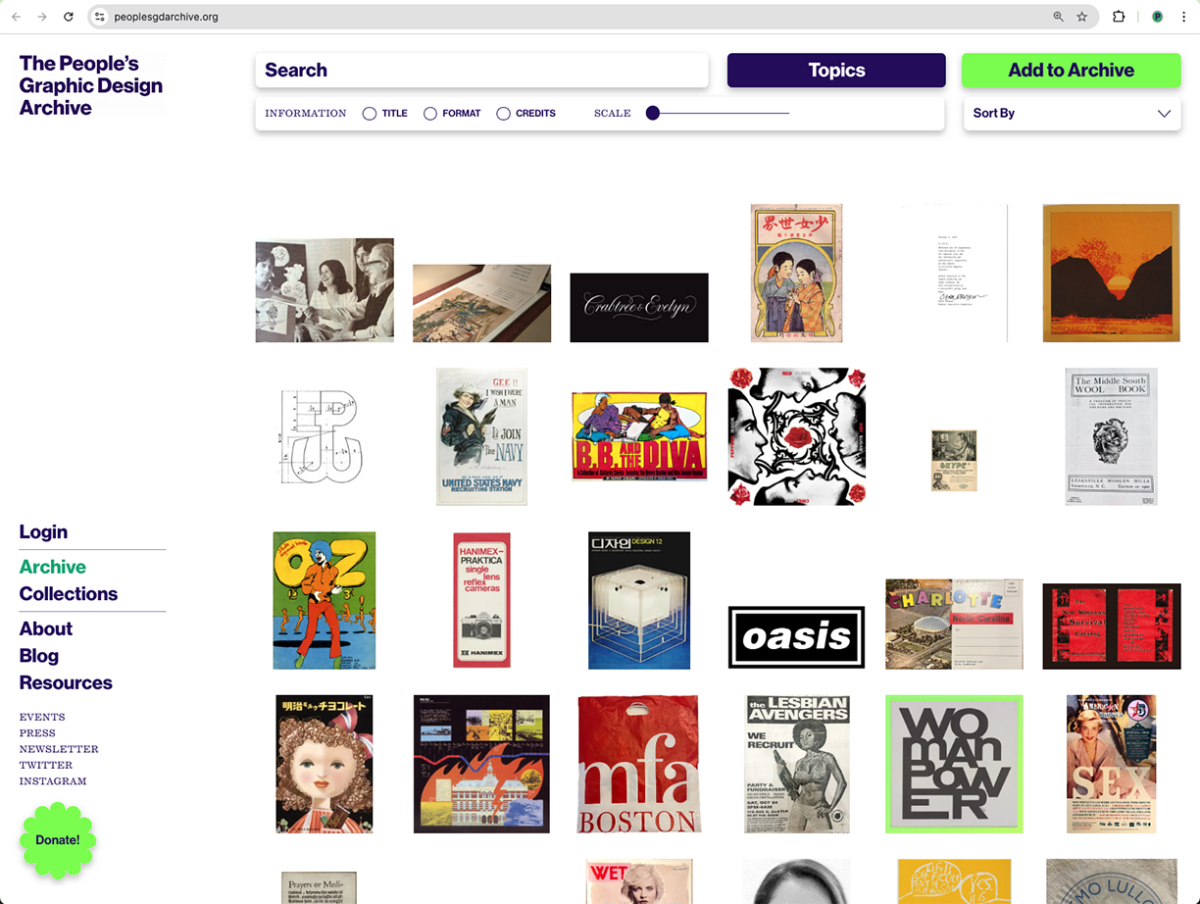
The People’s Graphic Design Archive is a crowdsourced digital archive of inclusive graphic design history. The project was first realized in 2020 as a prototype built in the off-the-shelf wiki software Notion; in September 2022, the permanent custom platform was launched. The motivation for PGDA was a belief that much of graphic design history was going unrecognized because it didn’t fit into the established canon or understanding of graphic design. Lack of preservation was also due to few archives for preserving graphic design; thus, much material ended up in dumpsters. Offering a virtual graphic design archive provided a means of preserving a record of this material. It allowed anyone interested to contribute, consume, and discuss what they argue is relevant and vital. The outcome reflects a wide range of cultures and interests — an expansive, democratized, decentered reflection of history. Contributions by individuals or teams can be a single image, a link to an existing archive, documents, interviews, essays, a small collection, or an entire research project. Formats include jpegs, pdfs, tiffs, and audio and video formats.
A Growing, Unique Resource
Visibility of the PGDA takes place through social media and participation in educator events and conferences, contributing to the Archive’s steady growth and knowledge of it as a valuable resource. Today, it boasts over 12,000 items in the collection and users from across the globe. Contributed material includes Roshanak Keyghobadi’s extensive research and collection of Iranian graphic design and designers, which includes a special sub-collection of women graphic designers— of particular value and relevancy given the recent Women, Life, Freedom revolutionary movement. The collection also includes extensive activist material, such as Geoff Kaplan’s thousands of hi-resolution images documenting alternative press from archives across the United States; Daneille Aubert’s research on cooperative printing in Detroit; and many short-form research projects by students all over the world, including The University of Florida, Massachusetts College of Art, CalArts, and George Washington University.
Add-a-Thons
Add-a-thons are events that allow groups to work collectively to add material of common interest to the Archive. These gatherings have included themes such as Latinx Design, Indigenous Design, and Southeast Asian design. Anyone can host an online Add-a-Thon event. During these live and lively 90-minute sessions, with the PGDA team on hand, attendees research and upload material to the Archive. One recent example is the Radical Scholarship Add-a-thons held by Jessica Barness and Amy Papaelias resulting in a multitude of materials that show the visual forms that scholarship has taken when trying to reflect alternatives to status quo scholarly journals.
Blog
Contributions to our blog enhance our understanding of the value of PGDA to different communities and offer critical perspectives. Posts range from curating a collection to highlighting a particular contributor to short essays offering critical perspectives on graphic design history. These include the recent posting by Choctaw-Apache designer and educator Sebastian Ebarb, unraveling the thread between typography and Native American beadwork. A post by Tanvi Sharma offered her favorite items from the Archive and a unique story about her family’s collections of stamps from Ghana. Among the reflective essays are Susan Yelavich’s Value(s) Added: Amplifying The PGDA, in which she asks us to contemplate work on what makes something preservation-worthy, inviting the community to share their finds and, most significantly, their reasoning for adding items to PGDA.
Value for Educators
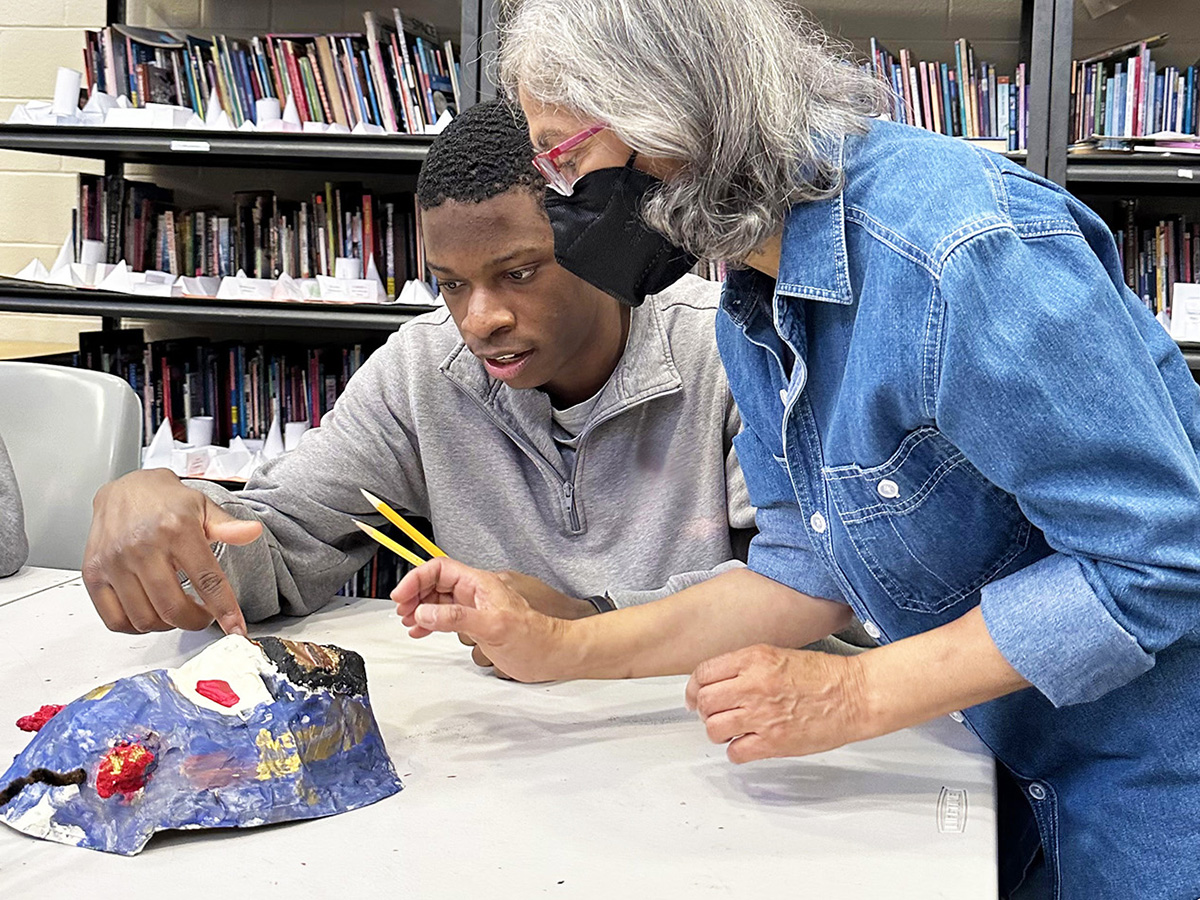
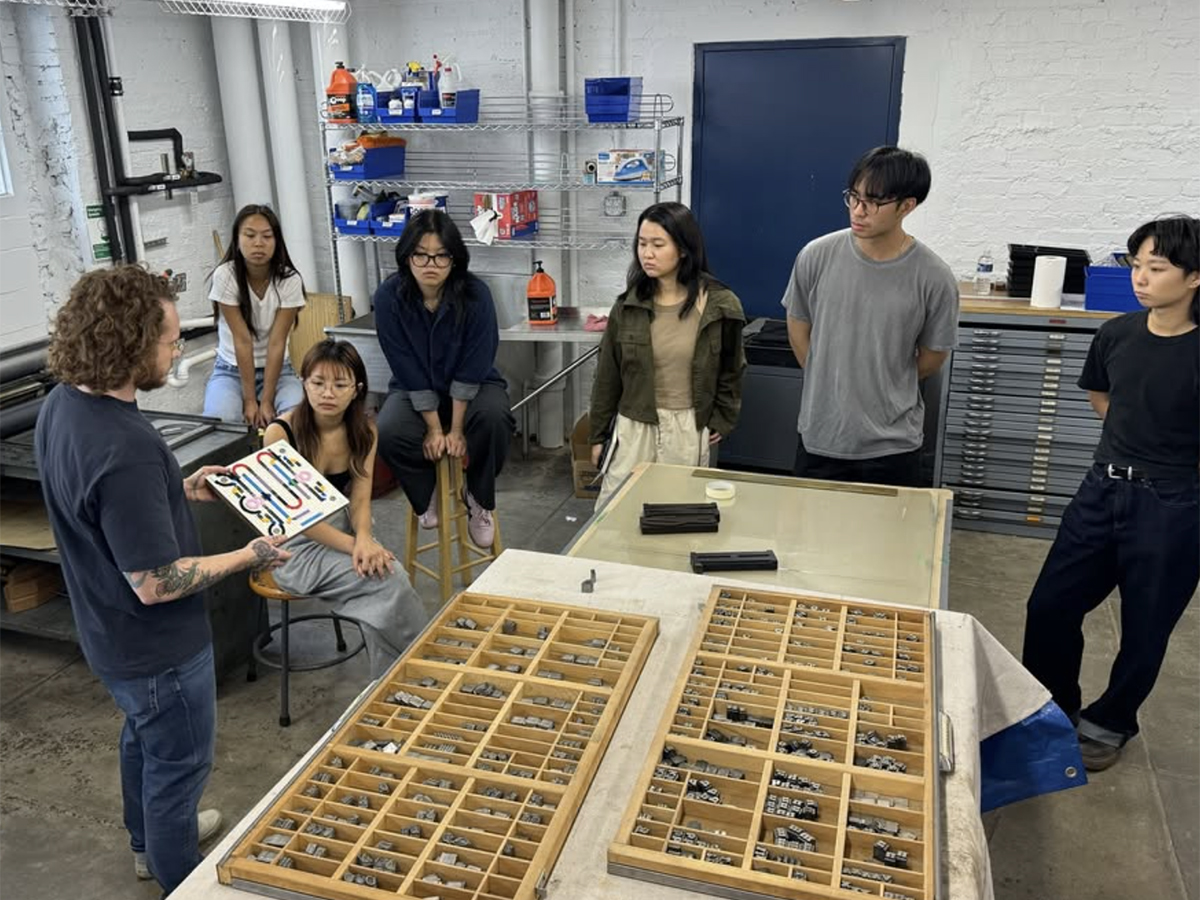
Although many who are curious about design, often looking for inspiration, delight in the PGDA, the largest user group is educators, who use PGDA extensively in the classroom for a variety of purposes. The site encourages students to become producers of historical narratives rather than just consumers of history, gives those teaching design history an expansive repository of examples of work made from different cultures in different periods, and even provides resources for creative projects. Examples of how the Archive is used in the classroom include:
An archive-to-archive project for University of Georgia faculty Julie Spivey, who integrated archive-based learning for teaching typography. Students would identify material from archives in their school library that those interested in graphic design would find of interest, then document these works, giving consideration to the tagging and data that provided relevancy through the work’s graphic form.
Animating The Archive. For a Kinetic Typography course at Boston University, students are asked to animate a favorite item from The Archive. Guided by faculty members Mary Yang and Brockett Horne, students offered an analysis of the grid, typography, and imagery from their selections to create storyboards that were developed into looping animations.
Analyzing Local Graphic Design History with the PGDA. For Christina Singer’s undergraduate Design Research class, students at UNC Charlotte investigated local graphic design history and researched ways of making social movements and graphic design history to contextualize their artifacts in local and graphic design history. Over 185 items, the stories about them were added to the PGDA.
Actively changing the narrative of graphic design history. For Robert Finkel’s Graphic Design History course, students collected artifacts that they thought merited inclusion into the historical canon and added those to the PGDA. At the end of the project, the teams were challenged to identify a unified theme and narrative for their collection.
This project was the 2024 Design Incubation Educators Awards winner recipient in the category of Service.
Biography
Mary Banas’s independent creative practice YES IS MORE includes research, teaching, and design. Mary develops conceptual and informed designs for brands, institutions, and people. She collaborates with artist Breanne Trammell as BMTMB where they embody “friendship as practice” and mine archives and contemporary collections to create new ephemera that responds to the existential crisis of contemporary American life. She has been a resident for Design Inquiry and led design workshops at OTIS College of Art & Design (Los Angeles, CA), and the Berkeley Art Museum + Pacific Film Archive (Berkeley, CA). Banas received her BFA from University of Connecticut and her MFA from Rhode Island School of Design. She currently teaches TYPE AS IMAGE in the undergraduate program at the School of the Museum of Fine Arts at Tufts University and serves as a working board member of the People’s Graphic Design Archive.
Brockett Horne, co director, is a designer, educator, and writer. She serves on the faculty at Boston University, where she teaches studio and theory courses. Her creative work encourages audiences to question their own ways of consuming design. Clients include the Baltimore Museum of Art, Johns Hopkins University, Decentering Whiteness working group, and Harvard University. She has won multiple design awards and presents her work internationally. She is Co-Director of The Peoples Graphic Design Archive, a crowd-sourced online platform that enables new and expanded stories about graphic design history. This experimental project asks each of us to write history instead of reserving narratives for only those with special training or access to exclusive tools. She holds a BFA from Carnegie Mellon University, an MFA from Rhode Island School of Design, and an MA from the Bard Graduate Center.
Alan Caballero LaZare is a Colombian American designer, artist, and educator. His work is focused on community engagement and reimagining design history pedagogy to be more inclusive, plural, and empowering for a new generation of design students. Alan is an Assistant Professor of Graphic Design at George Mason University where he teaches Graphic Design History and Visual Communication Theory + Practice. His essay, “The Road to Flores de María,” was recently published in SHIFT{ED}, Dialogue: Proceedings of the AIGA Design Educators Community Conferences. It illustrates how he used design to collaborate with community leaders in a remote village in Colombia, near where his family has lived for generations, to crowdsource medicine, toys, and clothing for local schoolchildren. Alan began his career as a graphic designer with Michael Graves. He is a recipient of the Writing Space 2024 Design Writing Fellowship and also serves as a board member of the People’s Graphic Design Archive. He received a BFA from Pratt Institute and an MFA from Rutgers University.
Briar Levit, co-director, is an Associate Professor of Graphic Design at Portland State University. Levit spent her early career in publishing as Art Director of the magazine, Bitch: Feminist Response to Pop Culture, as well as an independent book designer. In 2017, Levit released the feature-length documentary Graphic Means: A History of Graphic Design Production, which follows design production from manual to digital methods and looks at both the social and formal implications this transition had for the graphic design discipline. In 2021, Princeton Architectural Press published Levit’s edited volume of essays, Baseline Shift: Untold Stories of Women in Design History. In 2018, Levit joined Louise Sandhaus’ journey to realize The People’s Graphic Design Archive. The Archive is a crowd-sourced virtual archive that aims to allow for new and expanded stories about graphic design history.
Louise Sandhaus, co-director emerita, is the founder and Co-Director Emerita of The People’s Graphic Design Archive, a pioneering crowd-sourced platform dedicated to diversifying and preserving graphic design history, and is faculty at California Institute of the Arts (CalArts). She penned and designed the lauded book Earthquakes, Mudslides, Fires, and Riots: California and Graphic Design 1936-1986 (2014), which won the Palm d’Argent at the International Art Book and Film Festival (FILAF). With Kat Catmur, she co-authored A Colorful Life: Gere Kavanaugh, Designer (2019), published by Princeton Architectural Press. Louise’s contributions to the field extend to her roles as a board member of Letterform Archive and a former board member of the American Institute of Graphic Arts (AIGA), where she also chaired the Design Educators Community steering committee. In 2022, she was honored with the AIGA Medal for her exceptional impact on the design community.
Alberto Rigau was born and raised in Puerto Rico, Alberto is a seasoned designer based in San Juan. With nearly two decades in the field, his versatile practice spans many design projects, including branding, publications, exhibits, wayfinding systems, and environmental graphics. This work enables him to engage with initiatives that seek to advance and impact the design discipline. Alberto is a passionate advocate for design education and community involvement. As a Board Member of Puerto Rico’s Casa del Libro, he promoted the collection’s use for academic research. As Co-Chair of AIGA’s Design Educators Community, he collaborated with educators nationwide to create programs and resources supporting academic research and design teaching. Locally, he serves on the steering committee of the Design Dinners community, where he works to strengthen Puerto Rico’s design scene by fostering new connections. Recently, he joined the core team of the People’s Graphic Design Archive, where he aims to support and build specialized design communities. Beyond his studio practice and volunteer endeavors, Alberto has taught graphic design at several universities in both Puerto Rico and the United States.
Morgan Searcy, co-director, is a creative lead, researcher, and strategist with a background in graphic design and progressive politics. Morgan’s work balances nonprofit and commercial sectors. Her creative practice focuses on finding sustainable and practical solutions that center design. She supported design and creative strategy for the NY State Democrats and the DNC in 2024; political campaigns: Warren for President and Jon Ossoff for Senate in 2020; and has served as Brand and Creative Director at Rock the Vote. In 2023, she launched The Politics Project, an initiative supporting research that uplifts Gen Z and bipoc voices in progressive politics. Morgan has recently led creatives with Instrument and collaborated with Wieden+Kennedy. She is a Co-Director of The People’s Graphic Design Archive, where she collaborates to promote equitable collection of histories.
Bobby Joe Smith III is a Black and Indigenous graphic designer and media artist living on the unceded ancestral lands of the Tongva, Tataviam, Serrano, Kizh, and Chumash peoples in Los Angeles, California. His creative practice is a poetic discourse on the utilization of art and design to further anti-colonial movements and achieve decolonial outcomes. He studied graphic design at the Maryland Institute College of Art (Post-Bacc) and the Rhode Island School of Design (MFA), and received an MFA in Media Art from the University of California—Los Angeles.