Visualizing Historical Arguments

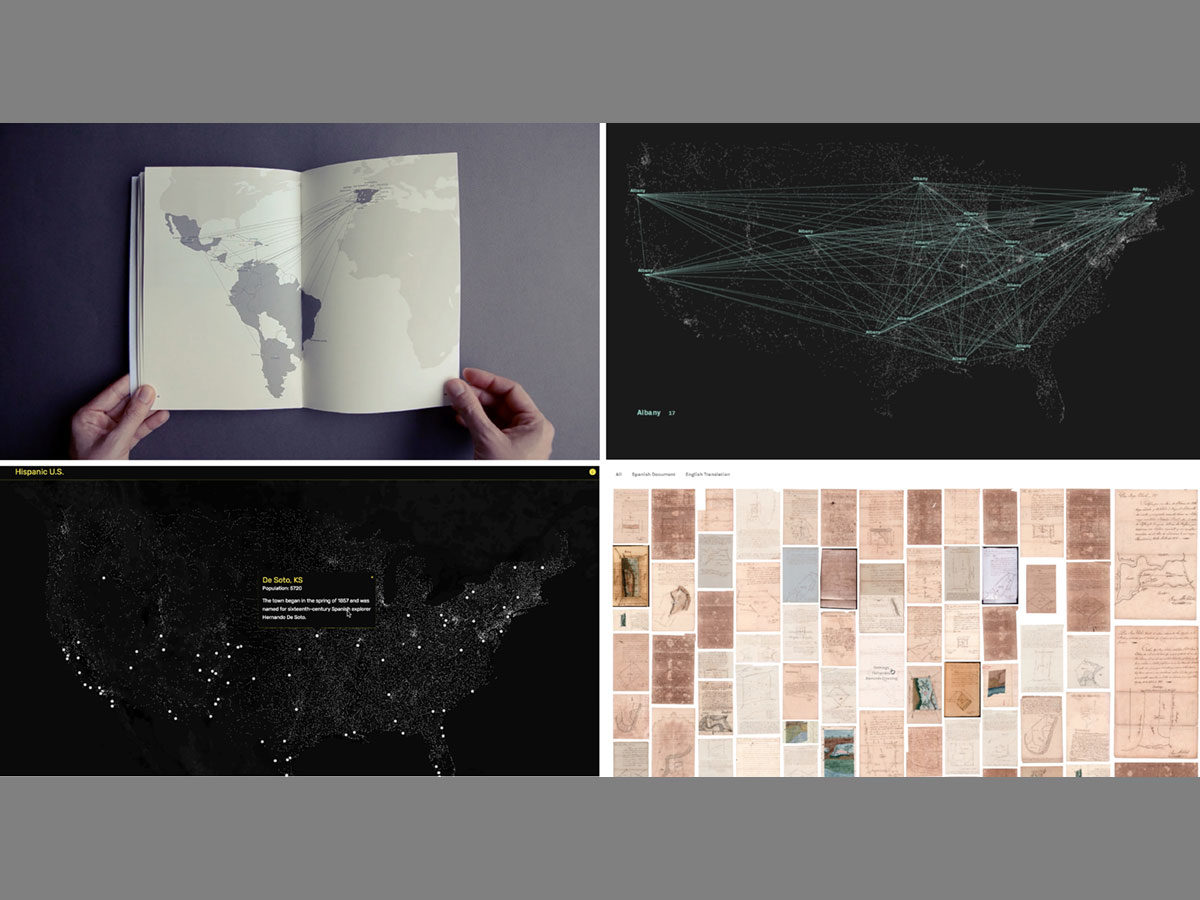
A Hispanic identity has been part of the United States since long before the massive immigration of the last decades. I explore the process as a form of research over finished forms.

Camila Afanador-Llach
Assistant Professor, Graphic Design
Florida Atlantic University

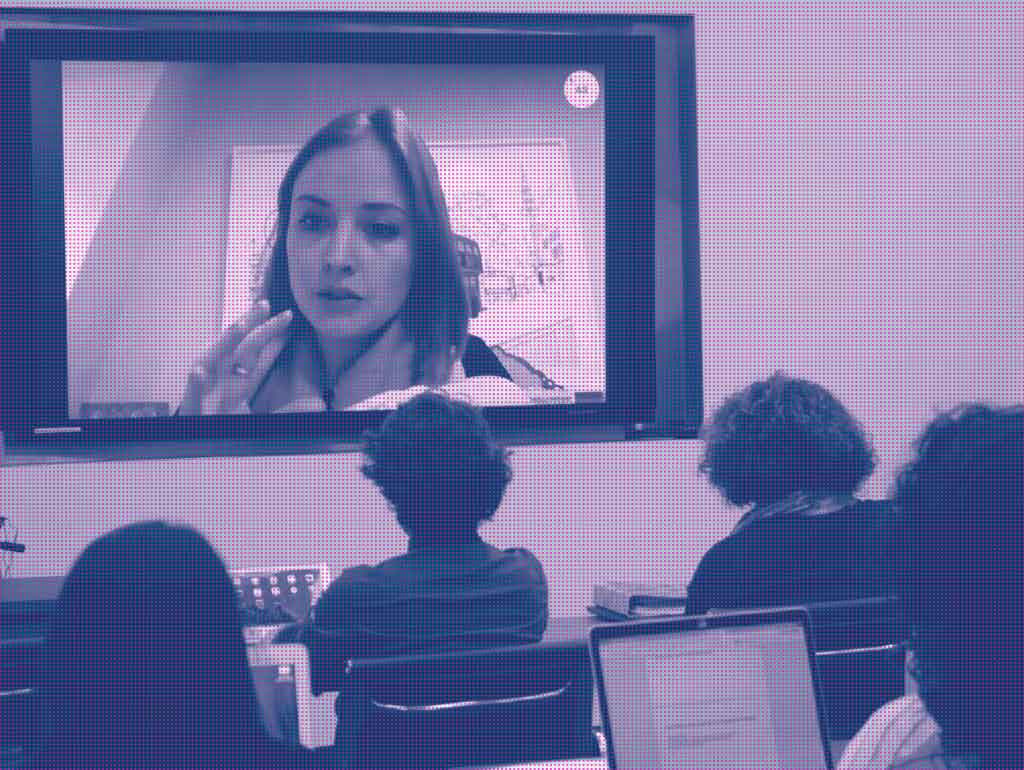
Visual representations of arguments based on historical events have the potential to shed light on contemporary issues. The graphic formats to structure such representations can include maps, data visualizations, and interactive archives. In this presentation, I show a series of projects where I use the tools of design to explore contemporary questions about the identity of places with a historical perspective. Using datasets and existing archives I seek to make evident the argument that a Hispanic identity has been part of the United States since long before the massive immigration of the last decades. I explore the process as a form of research over finished forms. With each iteration I continue to understand how arguments developed in long narrative texts can be communicated through visual forms.

In my engagement with historical narratives, I pursue more inclusive frameworks and decentralized ways of telling stories. Representing an argument in a visual format is also an act to bridge design practices with the humanities in the hope to establish methodologies for collaborative interdisciplinary endeavors.

This research was presented at the Design Incubation Colloquium 4.4: Parsons Integrated Design on Thursday, June 14, 2018.

The Future of Water

This project examines the critical relationship between storytelling and information, specifically, quantitative insights, within a dynamic virtual setting, of current events in the social sector—our global water crisis.

Jeannie Joshi
Principal/Director
Joshi Design LLC (joshidesign.com)

Mike Edwards
Founder/Lead Technologist
rich | strange (richstrange.com)

“The question of ‘experience’ is frequently debated in design circles, and particularly in educational circles where students have a tendency to mistake software as a way to transform themselves into film directors. The prevailing sentiment seems influenced not only by the stylistic urge to layer but also by the expectation that design must address new and complex audiences in new and complex ways.”

—Jessica Helfand, Essays on Graphic Design, New Media, and Visual Culture.

As interactive technologies become more complex and traditional narrative structures more layered—information and data are themselves becoming a powerful narrative tool.

Driven by our passion for both social impact and mixed reality, this project examines the critical relationship between storytelling and information, specifically, quantitative insights, within a dynamic virtual setting, of current events in the social sector—our global water crisis.

We begin to shape a new territory for human-centric interaction design through the use of mixed reality, striking a balance between craft and execution, context and purpose.

This project, Future of Water, is a proof of concept, of a virtual-reality data experience, that aims to critique the scarcity of information innovation within larger problem areas—in this instance, the global water gap.

Breaking down the quantitative data sets from McKinsey & Company’s economic report “Charting Our Water Future” our work:

  • showcases how VR affordances can adapt and illuminate these quantitative insights within the setting of mixed reality
  • suggests a process of divergent and convergent thinking for a diversity of stakeholders, including educators
  • demonstrates the transformative power of mixed reality storytelling, and
    educates our audience on the challenges that designers will face in creating functional solutions working with edge technologies


This research was presented at the Design Incubation Colloquium 4.4: Parsons Integrated Design on Thursday, June 14, 2018.

Tactics & Strategies

This presentation will discuss tactics and strategies for critique within the design school classroom that go beyond the archetypal “group crit,” and into innovative and unexpected ways of engaging students in critical dialog.

Mitch Goldstein
Assistant Professor
School of Design
Rochester Institute of Technology

Educating designers is a complex and layered process — a chaotic mixture of facts and opinions disseminated primarily through critical discourse. This presentation will discuss tactics and strategies for critique within the design school classroom that go beyond the archetypal “group crit,” and into innovative and unexpected ways of engaging students in critical dialog.

The AIGA “Designer of 2025” suggests that students need to learn a number of emerging competencies while attending design school, including working with complexity, understanding accountability for their design decisions, and embracing new forms of sense-making and dialog within their work. In addition to teaching the formal and methodological elements of design, educators need to make sure students have a clear understanding of why and how their design decisions resulted in work that accomplished its goal or missed the mark. This understanding primarily comes from critique.

Educators place a high value on critique, for many of us, it is how we spend the majority of our class time. Traditionally, critique has happened in a large group setting, with all members of the class and the instructor discussing each project one by one and offering feedback as a group. This method has value but is too often about social baggage and performance art, with the same handful of outgoing students doing most of the talking, drowning out students who are quieter or more anxious in large groups. This presentation asks a simple question: what are the most useful, most effective ways to give and receive feedback in the classroom? We have all had students we know are excellent thinkers but never speak in a large group critique — it may be time to move past the traditional models of feedback into other ways of helping students better understand what is happening within their work.

This research was presented at the Design Incubation Colloquium 4.4: Parsons Integrated Design on Thursday, June 14, 2018.

Call for Entries: Communication Design Educators Awards 2018

Accepting entries for the Communication Design Educators Awards 2018. The deadline for applications is May 31, 2018.

Design Incubation is delighted to announce we are now accepting entries for the Communication Design Educators Awards 2018. The deadline for applications is May 31, 2018.

The distinguished jurors for 2018 are the following:

Jorge Meza Aguilar
Professor of Strategic Design
Provost for Outreach and Collaboration
Universidad Iberoamericana
Mexico City, Mexico

Ruki Ravikumar
Director of Education
Cooper Hewitt, Smithsonian Design Museum 
New York, NY

Wendy Siuyi Wong
Professor
Graduate Program Director
Department of Design
York University
Toronto, Canada

Steven McCarthy
Professor of Graphic Design
University of Minnesota

Maria Rogal
Professor of Graphic Design
University of Florida

Categories

  • Scholarship: Published Research
  • Scholarship: Creative Work (design research, creative production, and/or professional practice)
  • Teaching
  • Service  (departmental, institutional, community)

For eligibility and criteria, go to the Competition Overview page.

For application process, go to the Awards Application Process page.

The awards will be announced the first week of September 2018.

The Design Incubation Communication Design Awards 2018

2018 Design Incubation Educators Awards competition in 4 categories— Creative Work, Published Research, Teaching, Service.

Call for Entries: Deadline, May 31, 2018

CATEGORY: SCHOLARSHIP CREATIVE WORK

Works in Process

Scholarship: Creative Work Award Winner

George Garrastegui
Assistant Professor
Communication Design
New York City College of Technology, CUNY

What Does Democratic Design Look Like? Establishing the Center for Design in the Public Interest at the University of California, Davis

Scholarship: Creative Work Award Runner Up

Susan Verba
Professor
University of California, Davis

CATEGORY: SCHOLARSHIP PUBLISHED RESEARCH

Unawarded

CATEGORY: TEACHING

Lowering Barriers to Access at the North Carolina Museum of Natural Sciences

Teaching Award Winner

Helen Armstrong
Associate Professor
North Carolina State University

CATEGORY: SERVICE

LEAP Dialogues: The Educators Guide

Service Award Winner

Mariana Amatullo
Associate Professor
Parsons School of Design, The New School

Andrew Shea
Assistant Professor
Parsons School of Design, The New School

Jennifer May
Director, Designmatters
ArtCenter College of Design

Recognition of excellence through peer review in scholarship, teaching, and service is fundamental to the professional development of communication design academics. To support this need, Design Incubation established the Communication Design Educators Awards in 2016.

An independent jury of esteemed design educators is invited by the Awards Jury Chair. This year’s jury chair, Maria Rogal, invited these internationally recognized jurors: Jorge Meza Aguilar, Ruki Ravikumar, Wendy Siuyi Wong, and Steven McCarthy. Rogal writes, “this jury reflects the diverse perspectives and experiences that exist in communication design today.”

The awards acknowledge faculty accomplishments in the areas of published research, creative work, teaching, and service. The award processes and procedures are rigorous, transparent, and objective. They reflect Design Incubation’s mission to foster professional development and discourse within the design community.

This year, award entries are open February 1, 2018 – May 31, 2018 via the online application. An overview of the awards program is on our website.

We are excited to announce Bloomsbury Publishing is sponsoring this year’s awards.

The 2018 Jury

Steven McCarthy is Professor of Graphic Design at the University of Minnesota in Minneapolis/St. Paul. He conceived of the Design Incubation Communication Design Educators Awards and chaired the jury in both 2016 and 2017. McCarthy’s teaching, scholarship, and contributions to the discipline include lectures, exhibitions, publications, and grant-funded research on a global scale. His creative work was featured in 125+ exhibitions and he is the author of The Designer As… Author, Producer, Activist, Entrepreneur, Curator and Collaborator: New Models for Communicating (BIS, Amsterdam). From 2014–2017, McCarthy served on the board of directors of the Minnesota Center for Book Arts.

Jorge Meza Aguilar is Professor of Strategic Design and Provost for Outreach and Collaboration at the Universidad Iberoamericana in Mexico City, where he founded the Bachelor in Interactive Design and the Master in Strategic Design and Innovation programs. He is widely recognized as an expert in strategic design and is the founding Director of Estrategas Digitales which focuses on research, strategic design, branding, trend forecasting, branding, Internet, and digital media. Meza is also a consultant and entreprenuer and holds degrees in art, graphic design, and systems engineering. Previously, he studied in and worked as a designer in Poland at Advertising Agency Schulz.

Ruki Ravikumar is Director of Education at the Cooper Hewitt, Smithsonian Design Museum in New York, a position she has held since April 2017. She joined the museum following thirteen years of service at the University of Central Oklahoma, where she held successive positions as professor of graphic design; director of graduate programs; chair of the Department of Design; assistant dean; and most recently, as associate dean of the College of Fine Arts & Design. In addition to her practice as an educator and published researcher in the areas of intersections between graphic design and culture and their impact on design education, she is also an award winning graphic designer. Further, she has served in leadership roles at the local and national levels of AIGA, the professional association for design.

Maria Rogal, Jury Chair, is Professor of Graphic Design, School of Art + Art History at the University of Florida and was Interim Director from 2015–2017. She is the founder of Design for Development (D4D), an award-winning initiative to co-design with indigenous entrepreneurs and subject matter experts to generate sustainable and responsible local outcomes. She has lectured and published about D4D, recently co-authoring “CoDesigning for Development,” which appears in The Routledge Handbook of Sustainable Design. Her research has been funded by AIGA, Sappi, and Fulbright programs, among others, and her creative design work has been featured in national and international juried exhibitions.

Wendy Siuyi Wong is Professor and Graduate Program Director in the Department of Design at the York University, Toronto, Canada. She has established an international reputation as an expert in Chinese graphic design history and Chinese comic art history. She is the author of Hong Kong Comics: A History of Manhua, published by Princeton Architectural Press (2002). She is a contributor to the Phaidon Archive of Graphic Design (2012), The Bloomsbury Encyclopedia of Design (2015), and acts as a regional editor of the Greater China region for the Encyclopedia of East Asian Design to be published by Bloomsbury Publishing. Also, Dr. Wong has served as an editorial board member of Journal of Design History.

Call for Proposals: CAA Conference 2019 NYC

Session proposal deadline: April 27, 2018

CAA 2019 Annual Conference

New York, NY, February 13—16, 2019
New York Hilton Midtown

The CAA Annual Conference is the largest professional convening of art historians, artists, designers, curators, and others in the visual arts. Each year we offer sessions submitted by our members, committees, and affiliated societies offering a wide range of program content.

The Annual Conference Committee members review over 800 submissions each year. They take into account subject areas and themes that arise from accepted proposals to present as a broad and diverse a program as possible. The Committee selects approximately 250 sessions for each conference and it must, at times, make difficult decisions on submissions of high merit. This means that on occasion, quality submissions may not be selected.

The Call for Proposals gives CAA members the opportunity to submit for the 2019 CAA Annual Conference. Proposals must be submitted from March 1 through April 27, 2018.


Developing Citizen Designers: Our Civic Responsibility

Social Design is the practice of design where the primary motivation is to promote positive social change within society. As the design industry evolves, so too must design education.

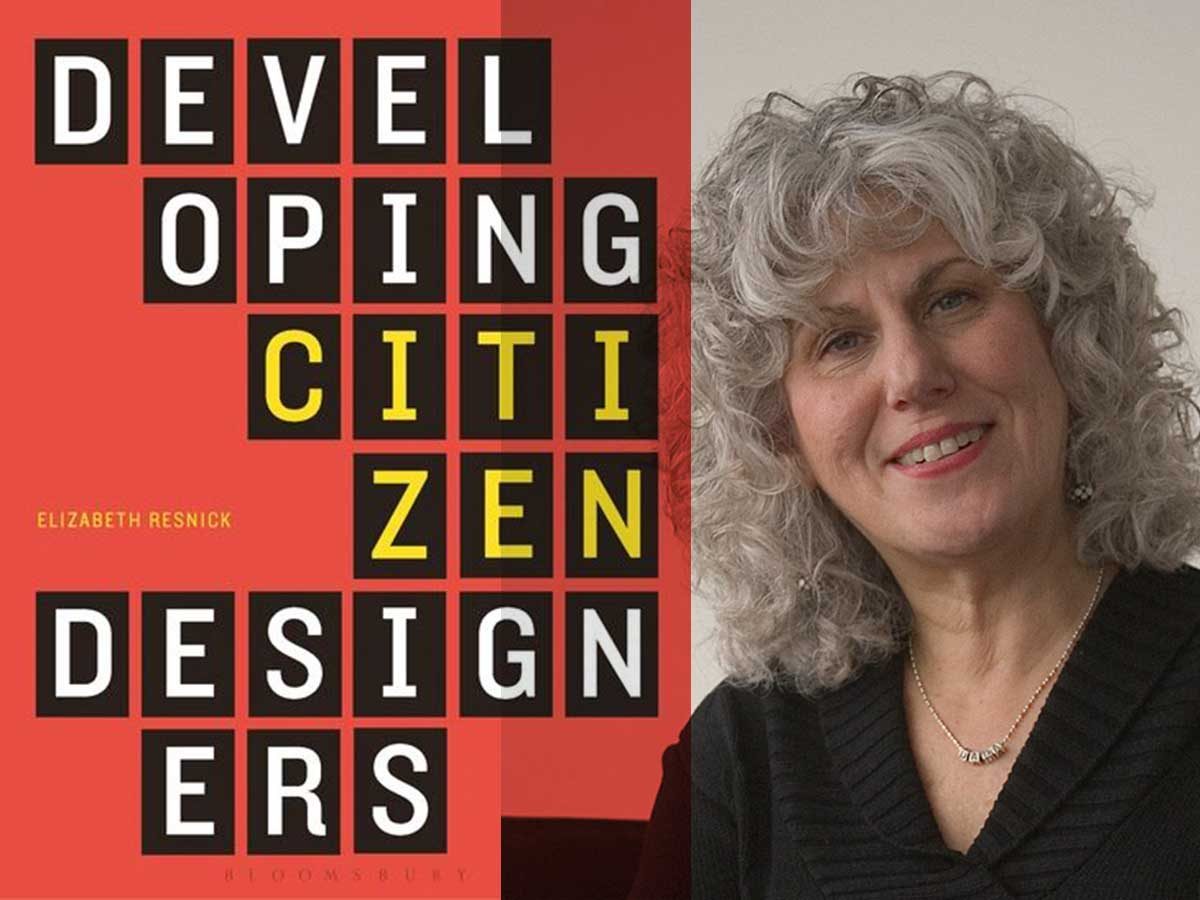
Social Design is the practice of design where the primary motivation is to promote positive social change within society. As the design industry evolves, so too must design education. Developing Citizen Designers is a compilation of case studies written by design educators to address the notion that design, and the teaching of design, can empower students to play a more an active role in improving the way they live, interact and communicate with each other and their audiences. My presentation will address how social design pedagogy can be developed to address concrete social needs utilizing strategies like design thinking, collaborative learning and participatory design process.

Elizabeth Resnick is a Professor Emerita, former chair of Graphic Design and current part-time faculty at Massachusetts College of Art and Design, Boston, Massachusetts. She earned her B.F.A. / M.F.A. in Graphic Design at Rhode Island School of Design, Providence, Rhode Island.

Professor Resnick is also an active design curator having organized 7 comprehensive design exhibitions, the last 4 on socio-political graphic design: The Graphic Imperative: International Posters of Peace, Social Justice and The Environment 1965–2005; Graphic Intervention: 25 Years of International AIDS Awareness Posters 1985–2010; Graphic Advocacy: International Posters for the Digital Age: 2001–2012 and Women’s Rights Are Human Rights: International Posters on Gender-based Inequality, Violence and Discrimination (2016) investigating gender-based inequalities deeply entrenched in every global society.

Her publications include catalogs for the exhibitions, plus Developing Citizen Designers, Bloomsbury Academic (2016), Design for Communication: Conceptual Graphic Design Basics, John Wiley & Sons Publishers (2003) and Graphic Design: A Problem-Solving Approach to Visual Communication, Prentice-Hall Publications” (1984). She is currently working on ‘The Social Design Reader’ for Bloomsbury Academic (2019).

Elizabeth Resnick
Professor Emerita, part-time faculty, Graphic Design
Massachusetts College of Art and Design
621 Huntington Avenue, T617
Boston, Massachusetts 02115 USA

Elizabeth.Resnick@massart.edu

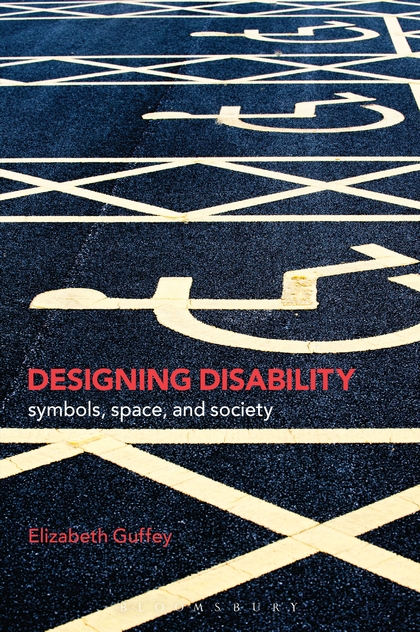
Designing Disability: A New Book by Elizabeth Guffey

Design Incubation is excited to announce Elizabeth Guffey’s latest book published by Bloomsbury Publishing, titled Designing Disability: Symbols, Space, and Society. This book describes the development of disability as an idea. Disability, accessibility, its institutionalization, acceptance, and integration is considered within the context of design history.

In collaboration with Design Incubation and AIGA/NY Elizabeth Guffey will host the upcoming panel discussion and workshop, Designing for and Teaching Accessibility, on Saturday, April 14, 2018. There are still a few seats available so register today!

How important is it for an author to have a significant social media presence and to demonstrate that to the publisher?

Questions: How important is it for an author to have a significant social media presence and to demonstrate that to the publisher? –SR 

Answer: Generally a social media presence is less important in academic publishing than in trade publishing (which are books for the general reader).

But obviously being able to utilise your contacts for promotion of the book is certainly a plus and may well reach people we wouldn’t naturally get to with our own marketing. 

It wouldn’t be a sticking point really though on whether a project was signed up – there are plenty of hugely successful academic authors who barely touch social media.

Your background, the project and the reviews are the most significant aspects for us.  It’s nice to be able to say when presenting a new book idea to our committee that an author has 10,000+ followers, and we would certainly exploit that with the author’s help, but that doesn’t necessarily mean the book will sell any better than one which relies on our own marketing contacts. 

With fairly limited marketing budgets across academic publishing, having a pro-active author, whether on social media or through other channels, is a big help in reaching the right people.

Louise Baird-Smith
Commissioning Editor – Design and Photography
Bloomsbury Visual Arts

“Ask the Editor” is a Design Incubation series, where design academics, researchers, and practitioners pose their questions to editors of books, journals, conferences and other academic and design trade publishing organizations. If you would like your questions answered by publishing professionals, send your questions to Design Incubation via the “Ask the Editor” form on our website.

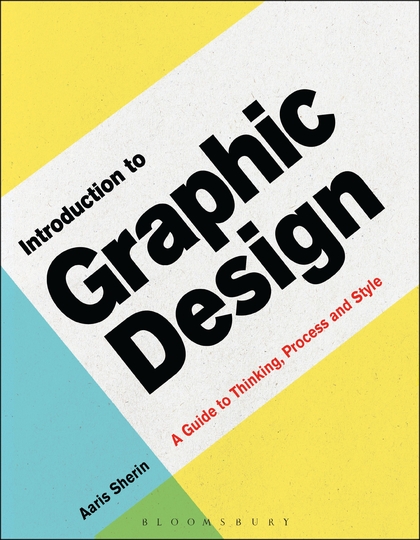
Aaris Sherin’s Latest Book, Introduction to Graphic Design, A Guide to Thinking, Process, and Style

Our own Aaris Sherin, director of the Fellowship Program at Design Incubation has recently published an Introduction to Graphic Design: A Guide to Thinking, Process, and Style, with Bloomsbury publishing.

Looking for a new book for Graphic Design 1 or a basic design class? Sherin’s text introduces students to the design process and examines the current landscape of contemporary design practice in addition to including chapters on layout and production and the use of basic visual elements such as color, type and shape. This textbook includes over 500 images from international designers explains critical thinking and visual exploration in addition to describing the special relationship graphic designers have to creative problem solving. Check it out!