Can an author approach more than one publisher at the same time?

Answer: This is an interesting question and one which has caused much discussion even in our office! 

Question: Can an author approach more than one publisher at the same time? -MR

Answer: This is an interesting question and one which has caused much discussion even in our office! 

In some cases, publishers will request that you only approach one at a time, but this isn’t always enforced in every subject or publisher.  Some editors I’ve heard will not consider a project if it has been sent to multiple publishers – the argument being that it can seem like you’ve just sent it out haphazardly to everyone, without fully considering which is the best publisher for you and the project.  It’s best to really consider who already publishes in the area you’re working in, where the best books are coming from and whether the reputation of the publisher is right for you (for instance, if you need a university press for tenure, or you need a publisher who double reviews the manuscripts, and so on).  As each publisher will invest time and money in the review process, submitting to various places is a difficult one, but you should certainly feel free to submit elsewhere if you haven’t heard back.

I’d personally say that given the fact it can sometimes take a little while to hear back from editors initially, it might be worth approaching a few to start with to gauge interest – however, it is best to be upfront about this, and certainly once you have had contact with an editor you need to make it clear to everyone if the project is also being considered by another publisher (for politeness as well as practicalities).  It is tricky if you were to get to the point of being offered a contract by two publishers at the same time without either knowing you’d been discussing the project elsewhere, especially as by that point there will likely have been a significant amount of input from the publishers and reviewers in developing the overall approach of the project.  Again, if in doubt have a look at the publisher’s website and see if there is guidance on multiple submissions.  And individually submitting the same project to several editors at the same publisher is generally poor form – if you’re not quite sure who to approach, try one editor and ask them to pass the project on to a colleague if it’s not right for them, or copy the editors into the same email so they don’t all end up individually assessing the same project.   

Louise Baird-Smith
Commissioning Editor – Design and Photography
Bloomsbury Visual Arts

“Ask the Editor” is a Design Incubation series, where design academics, researchers, and practitioners pose their questions to editors of books, journals, conferences and other academic and design trade publishing organizations. If you would like your questions answered by publishing professionals, send your questions to Design Incubation via the “Ask the Editor” form on our website.
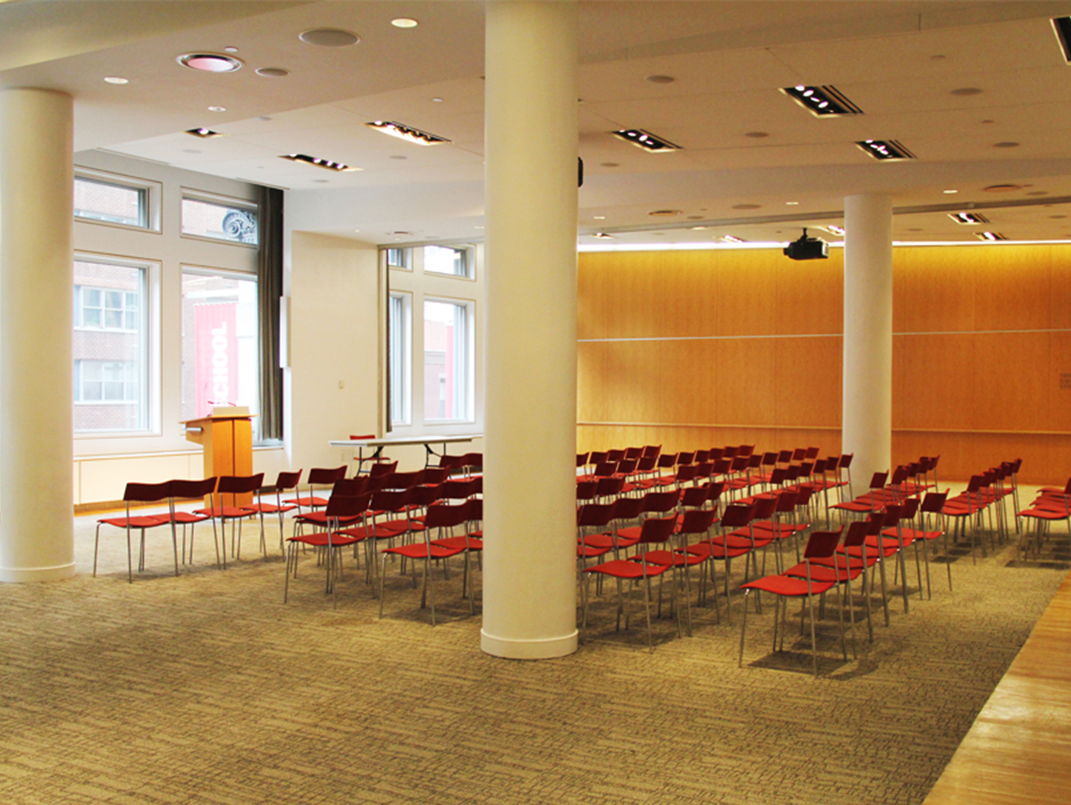

Design Incubation Colloquium 4.4: Parsons Integrated Design

Design Incubation Colloquium 4.4 (#DI2018jun) will be held at Parsons Integrated Design on Thursday, June 14, 2018.

Design Incubation Colloquium 4.4 (#DI2018jun) will be held at Parsons Integrated Design on Thursday, June 14, 2018.

Hosted by Cynthia Lawson and the department of Integrated Design. This event is open to all interested in Communication Design research.

Thursday, June 14th
10:30am–1:30pm
The New School
Theresa Lang Student Center
55 W. 13th St., 2nd floor
New York, NY 11011

To attend this event, register here. Abstract submission of presentations deadline April 15, 2017.  For details visit the Colloquia Overview and  Online Submission Form. 

Presentations

The Future of Water

Jeannie Joshi
Principal/Director
Joshi Design LLC (joshidesign.com)

Mike Edwards
Founder/Lead Technologist
rich | strange (richstrange.com)

Teaching the Truth About Eric Gill in the Age of #MeToo: A Classroom Case Study

Dave Gottwald
Assistant Professor
University of Idaho

Tactics & Strategies

Mitch Goldstein
Assistant Professor
School of Design
Rochester Institute of Technology

Story-Doing Concepts

Robin Landa
Distinguished Professor
Michael Graves College, Kean University

Visualizing Historical Arguments

Camila Afanador-Llach
Assistant Professor, Graphic Design
Florida Atlantic University

Power in the Dark

Nina Cooke John
Assistant Professor
Parsons, The New School for Design

Thoughtful Social Impact Through Scaffolded Design Methods and Well-Time Fieldwork

Cynthia Lawson
Associate Professor of Integrated Design
Parsons, The New School

Alik Mikaelian
MFA Transdisciplinary Design Candidate
DEED Lab Research Fellow
Parsons, The New School

Devanshi Sihare
Design Strategist

Megan Willy
MFA Transdisciplinary Design Candidate
Parsons, The New School

PERSONALIZE. COMMUNICATE. SOCIALIZE. LISTEN. PREPARE: Teaching Professional Practices for Designers

Holly Tienken
Assistant Professor
Communication Design
Kutztown University

Urban Abstract Design of Modern Architecture in Bauhaus

Min K. Pak
Assistant Professor of Graphic Design
Art & Design
University of Southern Indiana

Designing for and Teaching Accessibility: Panel Discussion + Accessibility Workshop

“Inclusive design” theory and practice are becoming the norm. Know the common standards and specifications of accessible interfaces for people with disabilities (and meet legally mandated ADA compliance standards).

Saturday, April 14, 2018

General Assembly NYC
902 Broadway, 4th floor
New York, NY 10010

To register.

Follow the discussion on our discussion board: https://social.designincubation.com/topic/101-accessibility-design/

Designing for and Teaching Accessibility Panel Discussion

At a minimum, criteria for success of a designed product, service or experience should be its usability by everyone, regardless of their abilities or disabilities. Since digital access is a Civil Right covered by the American Disabilities Act, the question of usability and access are now as important to digital and interactive designers as to those who produce products and physical artifacts.

“Inclusive design” theory and practice are becoming the norm with companies increasingly expecting employees to know the common standards and specifications for accessible interfaces which are used by people with disabilities (and meet legally mandated ADA compliance standards). Unfortunately, even as progress has been made in industry, teaching digital accessibility is rarely part of design curriculum or undergraduate course work.

To raise awareness and provide specific examples of ways to incorporate principles of accessibility into professional practice and design education, Design Incubation and AIGA/New York is inviting a group of scholars, practitioners and industry leaders to discuss accessible digital design and its relevance to the New York design community.

A morning panel discussion will provide a venue for experts to share their knowledge and an optional afternoon workshop will promote understanding of basic accessibility issues, concepts and best practices.

Panelists

Elizabeth Guffey heads SUNY Purchase’s MA in Modern and Contemporary Art and specializes in art and design history. She is author of several books, including Designing Disability: Symbols, Spaces and Society (Bloomsbury, 2017, Posters: A Global History (Reaktion, 2014), and Retro: The Culture of Revival (Reaktion, 2006. She has also authored numerous articles and is also the founding editor of the journal Design and Culture.

Neil Ward is currently an Assistant Professor of Graphic Design at Drake University. At Drake, Ward’s  students work through IDEO’s design thinking methodology along with user-centered design principles to solve problems in new and unexpected ways. Neil’s most recent projects focused on movement throughout the art building on campus for those who are unable to take the stairs along with creating a product to help a veteran – with limited mobility on his right side – cook for and feed himself at home. Both projects involve exercises in empathy for the user, ethnographic studies and a discussion around universal design. Outside of the classroom, he is the principle of Neil O. Ward Graphic Design specializing in identity and publication design.

Bo Campbell is an Interaction Designer and Accessibility Design Lead at IBM. As an accessibility thought leader and innovator in the IBM Accessibility organization, Bo functions as a driving force behind the integration of accessibility practices and techniques in the IBM Design Thinking framework. Additionally, he functions as a lead designer on products designed to improve the lives of people with disabilities. Bo has been with IBM since 2013, is a member of the W3C CSS Working group and has his Master’s degree in Human Computer Interaction from Iowa State University.

Liz Jackson is the founder of the Inclusive Fashion & Design Collective, a disability design organization that is focused on increasing the impact of beautiful, functional products in our everyday lives and in the global economy. Liz is committed to shifting the disability narrative, as current mainstream representations of disability do not accurately portray disabled lives. She is currently focused on creating pathways into design for disabled people through initiatives such as The Disabled List, a curated list of creative disabled people who are available to consult and collaborate. You can learn more about Liz on her blog The Girl with the Purple Cane.

Accessibility Workshop

Integrating Accessibility: Inclusive Design Methodologies and Practice

Bo Campbell, an Accessibility Design Lead for IBM, will conduct a workshop on accessible design while focusing on disability as a design challenge.

Participants will explore how and when to apply accessibility in the design and development process and will use empathy exercises to understand why accessibly is important for users with differing cognitive and physical abilities. Campbell will also discuss IBM’s inclusive design framework and will describe some of the training methodologies taught to new employees at the company.

Through a series of exercises, attendees will have the opportunity to learn how to apply the ideas and methodologies presented during the workshop to specific educational and/or practice-based design scenarios.

All are welcome, however, this workshop will be most useful for designers and educators who are less familiar with best practices around accessible design and want to learn more about how to practice and/or teach inclusive design.

(artwork: Mike Lagattuta)

Is there any difference between writing a single authored book and a co-authored book?

Question: Is there any difference between writing a single-authored book and a co-authored book? -AB

Answer: While different publishers or series may have set rules on when they will (or won’t) accept co-authored titles, in most cases, there usually isn’t a problem from the publishers’ side on this. 

Sometimes it can actually be a bonus where the book is interdisciplinary or has broad coverage where a single author couldn’t be an expert in all the content. My colleague is publishing a book on climate change in history written by a historian and a climate scientist together – it’s a massive selling point because we can say our book has holistic coverage and the science is valid.   

Something to bear in mind though is how to divide the work, and do you know you can definitely successfully work together over a couple of years? In terms of how you split the work is up to you – maybe you’d each write certain chapters and swap to read/edit the other ones, or you may have certain aspects of the book you’ll research individually, then write up together.  Generally, there would be a lead author, though this isn’t essential.  Saying all that, going above two co-authors can get tricky, so over this number, you’ll need to really consider if multi-authored is the right approach – an edited collection may then make more sense (a different author writing each chapter, with overall editors who commission individual chapters).  Another consideration is that any royalties will be split between the primary authors/editors of the volume, and you will be equally responsible for the delivery of the book.

Louise Baird-Smith
Commissioning Editor – Design and Photography
Bloomsbury Visual Arts

“Ask the Editor” is a Design Incubation series, where design academics, researchers, and practitioners pose their questions to editors of books, journals, conferences and other academic and design trade publishing organizations. If you would like your questions answered by publishing professionals, send your questions to Design Incubation via the “Ask the Editor” form on our website.

Colloquium 4.4: Parsons Integrated Design, Call for Submissions

Parsons Integrated Design, and Cynthia Lawson will be hosting a Design Incubation Colloquium. Abstract submission deadline Sunday, April 15, 2018.

Parsons Integrated Design, and Cynthia Lawson will be hosting a Design Incubation Colloquium on Thursday, June 14, 2018, 10:00am-6:00pm. All are welcome to attend. Details and agenda can be found on the Colloquium 4.4: Parsons Integrated Design.

We are accepting abstract submissions for presentations. Abstract submission Sunday, April 15, 2018.

We invite designers—practitioners and educators—to submit abstracts of design research. Presentations format is Pecha Kucha.

For more details, see the colloquia details and description. Abstracts can be submitted online for peer review.

How important is it that an author has written a book before?

Question: How important is it that an author has written a book before? Does that improve their chances of you taking on their project and giving them a contract? –MR

Answer: While there is an element of reassurance if an author has already published a book before, everyone has to start somewhere and there will always need to be a ‘first book’ at some point. 

Some big textbook lists/publishers may not sign unpublished authors as the bigger textbook projects have a higher risk factor than an academic monograph might do, but this isn’t the same across the board. 

I’ve worked on subjects where academic scholarship was relatively new, so the pool of previously published authors was very small – getting new voices into the mix was really important to build up the high quality literature in the area.

Equally, if someone has written many books before, it doesn’t mean that they will necessarily be offered a contract for their next book. 

Whether you have tons of experience as an author, or are brand new, the combination of the project itself and your experience in the area (as a researcher, practitioner or teacher, depending on the type of book) along with the feedback from the peer reviews is a more realistic predictor of whether a project would be approved.  If in doubt, just drop the editor/publisher an email and see if it’s worth submitting a proposal.

Louise Baird-Smith
Commissioning Editor – Design and Photography
Bloomsbury Visual Arts

“Ask the Editor” is a Design Incubation series, where design academics, researchers, and practitioners pose their questions to editors of books, journals, conferences and other academic and design trade publishing organizations. If you would like your questions answered by publishing professionals, send your questions to Design Incubation via the “Ask the Editor” form on our website.
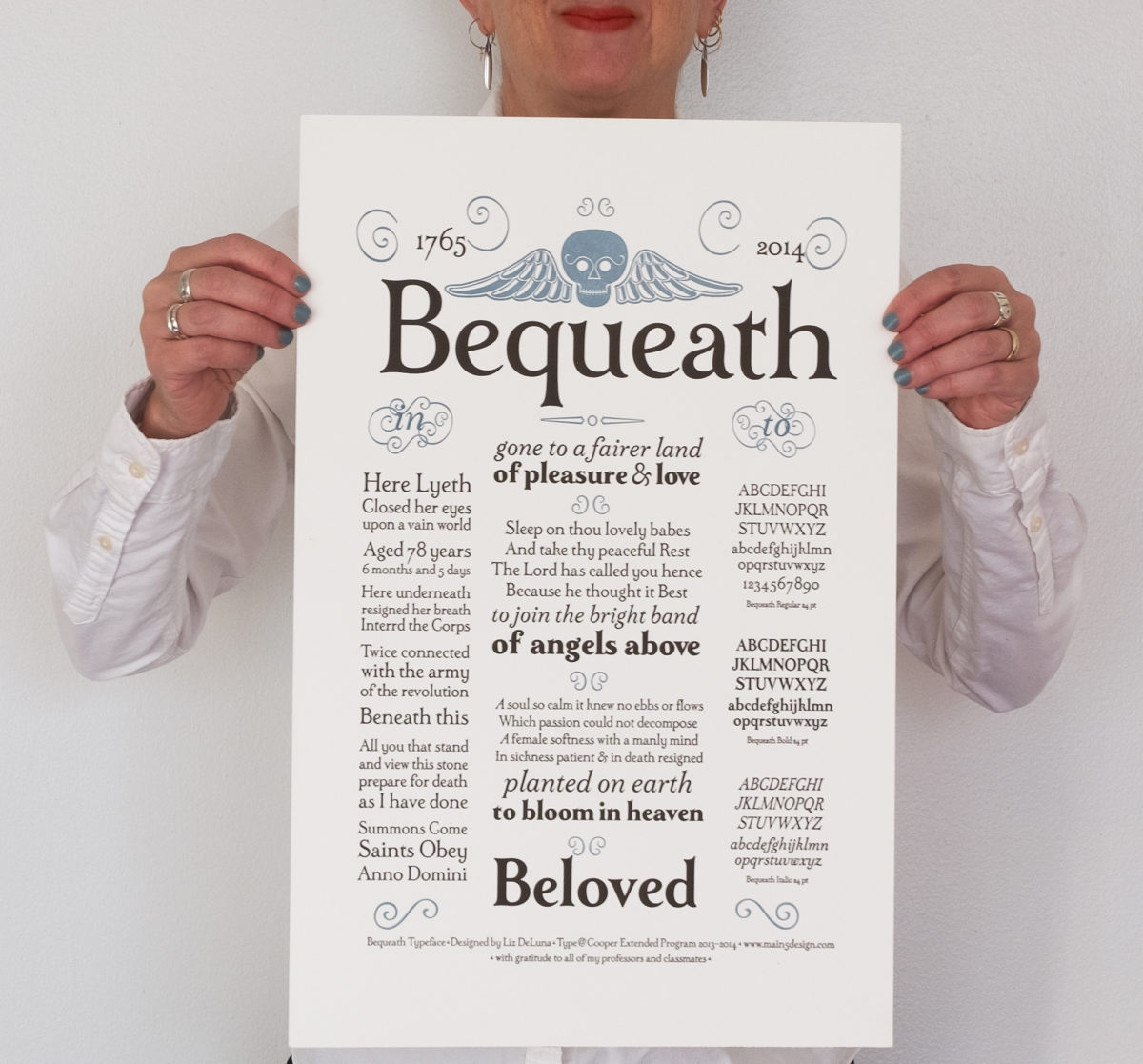
TDC Member of the Month: Liz DeLuna

Our very own Liz DeLuna is kicking off 2018 as the TDC Member of the Month . Check out her biography and see examples of her recent work there. Congratulations!  Great work, Liz!


Breakfast and Letterpress Typography Workshop @HMCT

Hoffmitz Milken Center for Typography at ArtCenter College of Design is hosting a workshop to welcome Design Incubation and typography design researchers to the West Coast.

We are excited to announce the Hoffmitz Milken Center for Typography at ArtCenter College of Design is generously hosting a workshop to welcome Design Incubation and typography design researchers to the West Coast during the 106th Annual CAA Conference in Los Angeles.

Saturday, February 24, 2018
10:30AM–1:30PM
Hoffmitz Milken Center for Typography / Archetype Press 
South Raymond Avenue
Pasadena, California 91105

The Hoffmitz Milken Center for Typography [HMCT] at ArtCenter College of Design was founded in 2015 in memory of Professor Leah Hoffmitz Milken, a well-known typographer, letterform designer and esteemed faculty member at ArtCenter. Archetype Press houses more than 2,500 cases of rare American and European foundry type, wood type, and ornaments.

Gloria Kondrup, Executive Director of Hoffmitz Milken Center for Typography and Director of Archetype Press, will also be moderating a special program of typography research presentations during Affiliated Society Meeting: Design Incubation Special Program on Typography. For details visit the website announcement. All are welcome to attend these events. Please register in advance.

Leveraging the Smartphone as a Teaching Tool

Heather Snyder-Quinn
Professional Lecturer
DePaul University
College of Computing and Digital Media
School of Design

Heather Snyder-Quinn 
Professional Lecturer
DePaul University 
College of Computing and Digital Media 
School of Design

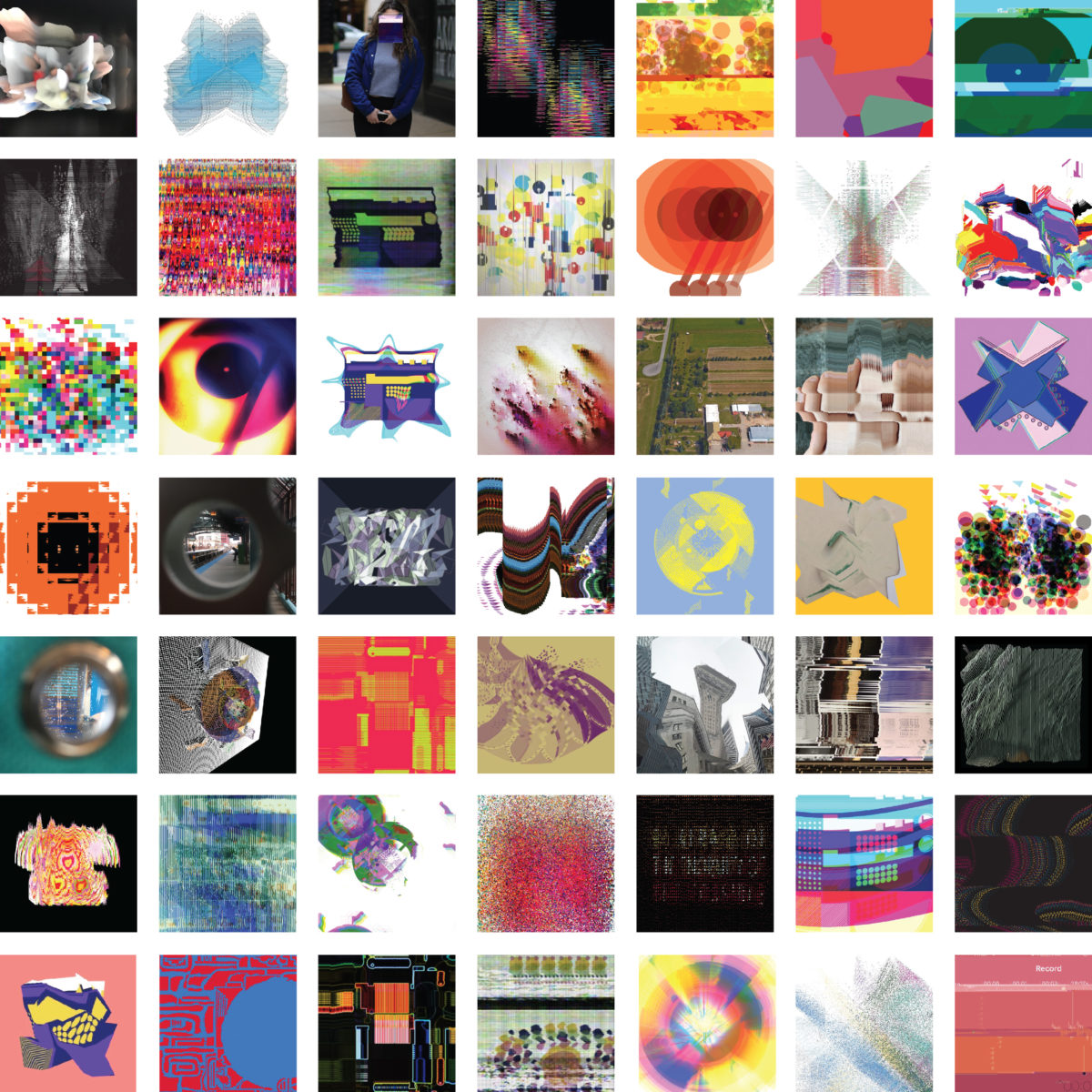
Educators are often frustrated with students’ constant attachment to their smartphones. But why do we assume the smartphone isn’t a creative tool akin to a pencil or brush—a simple way of seeing and interpreting the world around us?

As the world of design vacillates forever between the digital and analog, it’s imperative that students (and educators) understand an ever-expanding array of principles. In the words of Seymour Papert: “The role of the teacher is to create the conditions for invention rather than provide ready-made knowledge.” And as classroom content grows, the best thing we can teach students is how to be adaptive and curious thinkers.

Students can best embrace uncertainty and find comfort in a process of discovery by exploring and pushing the boundaries of the familiar. This is where the phone excels as a teaching tool. Analogous to the way a drawing teacher encourages mark-making with a branch or one’s foot, we can use a smartphone’s features in unintended ways that harness its power as a creative tool by altering our own expectations.

The smartphone is a device that most students have as an extension of their hand (though we must be vigilant of our own assumptions from privilege). Once students learn to use the smartphone in unintended and perceptively novel ways, they can extend this method to both past technologies and those yet to be imagined. By having students hack, make, and create in this manner, we are teaching them to think beyond the hand and machine, to the tool that has not yet been discovered.

Lastly, by exploring/investigating the capabilities of, and ever-present reliance upon our smartphones, we can raise awareness and open the classroom conversation to discuss ethical implications in design, including privilege, accessibility, inclusion, privacy and addiction.

This research was presented at the Design Incubation Colloquium 4.2: CAA 2018 Conference Los Angeles on February 24, 2018.

Geometries of the Sacred and Profane in Lewerentz’s St Peters

Nathan Matteson
Assistant Professor
DePaul University
College of Computing and Digital Media
School of Design

Nathan Matteson
Assistant Professor
DePaul University
College of Computing and Digital Media
School of Design

As the world of visual communication redefines itself around the design of experiences, and as those experiences are increasingly immaterial and mediated by technology (e.g. AR/VR, social media, etc.), there is much to learn from trans-disciplinary explorations of past interventions into human activity.

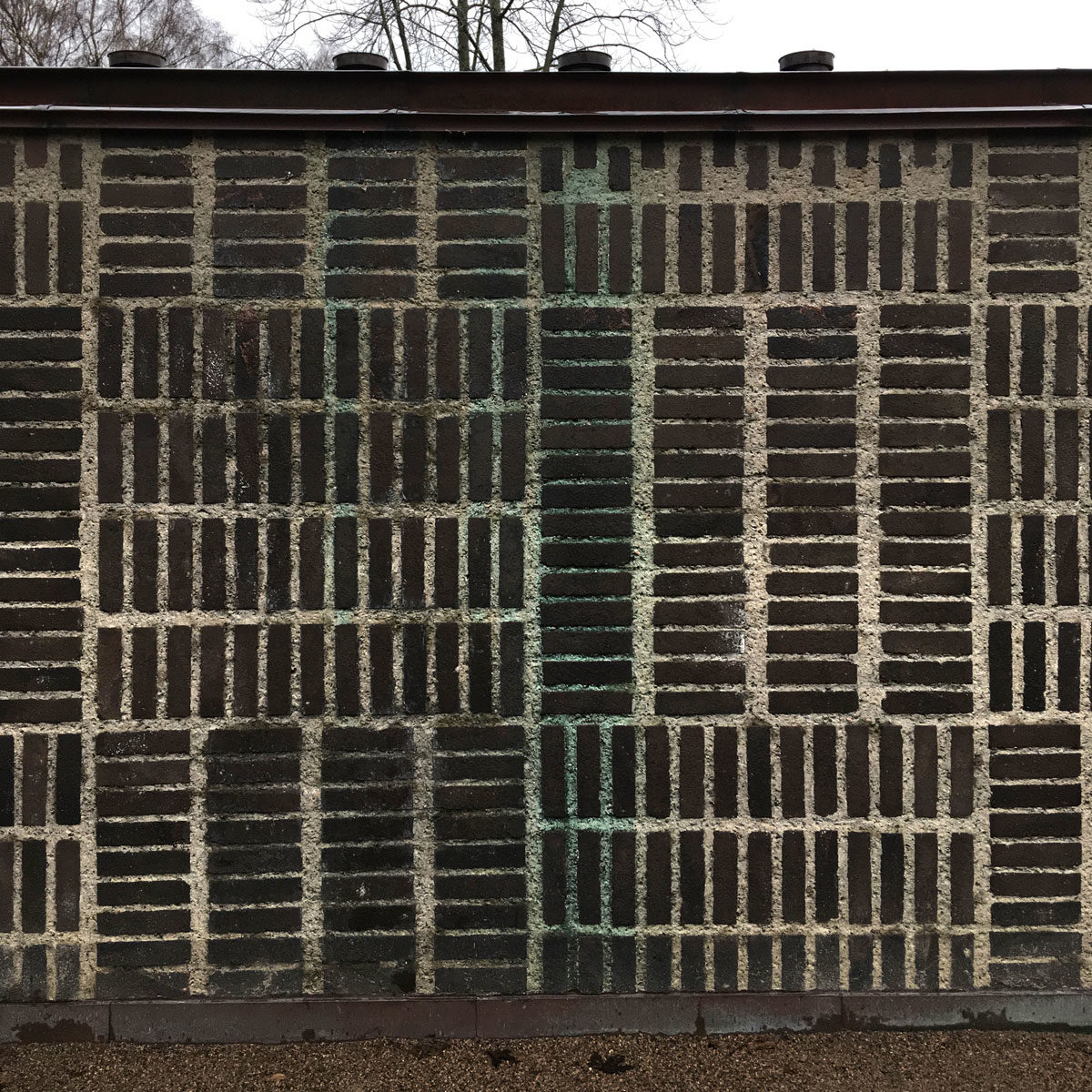
The architecture of Sigurd Lewerentz (1885–1975) comprises of relatively few buildings though his career spans several decades. His work, encompassing stylistic maneuvers from the neo-classical to the newly brutal, is lauded for its formal approaches to spatial organization and composition. Widely regarded as a peerless example of poetic materiality, St Peters in Klippan (built 1967) is held by many to be the culmination of this master architect’s lifelong exploration of form—a uniquely *authentic* visual and material expression.

Recent onsite documentation and archival research has further revealed connections across his output suggesting that, rather than making a turn away from classicism in the middle of his career, this thesis–antithesis was always present and ever evolving. This project proposes a new reading of St Peters’ seemingly intentional ‘differences’ or ‘frictions’: rotated plans, imperfect symmetries, ever-changing patterns within brickwork and floor tiles. These anomalies appeared throughout the entire span of the architect’s output, but never so vigorously as in this final church. Posited as visual proxies for authenticity, these frictions provide an antidote to contemporary template-driven culture and provide design strategies for creating visual and material experiences that are at once technological and humane.

This research was presented at the Design Incubation Colloquium 4.2: CAA 2018 Conference Los Angeles on February 24, 2018.