Born Digital: Fresh Attempts around Typography Courses for Students Today

A case study of first-year type.

Jialun Wang
Assistant Professor
Otis College of Art and Design

Eager Zhang
Assistant Professor
Otis College of Art and Design

What should the first year of typography class look like in art school today, when the students sitting in the classroom grow up in the screen-dominated era? This keynote presentation unfolded a pedagogical conversation between the two presenters, across their multiple years of teaching studio typography courses at Otis College of Art and Design and other institutes. Deeply inspired by the mutation from traditional printmaking to digital display in the type and design industry, the talk shares original assignments that we found innovative and unseen previously, along with students’ outcome, to build an emerging speculative pedagogy for the fellow type educators.

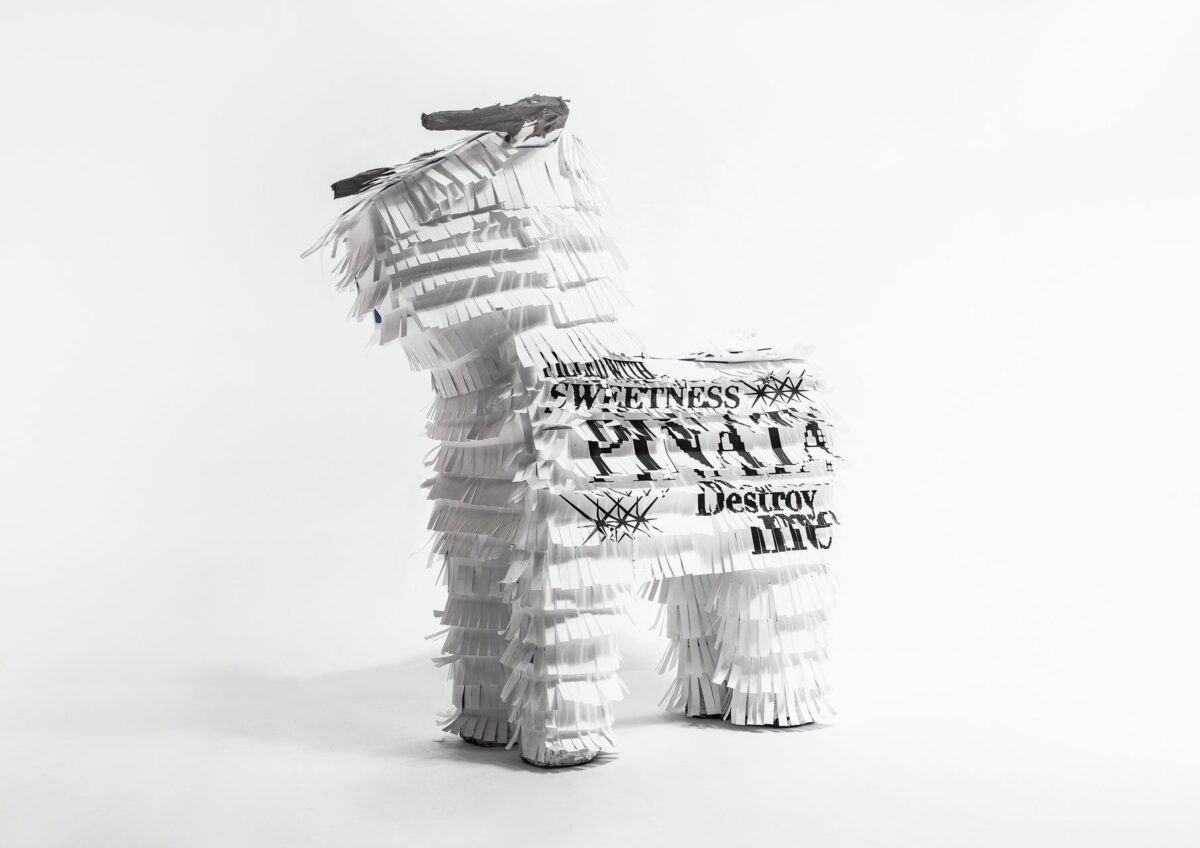
The assignment sequence begins with Pushing Pixels, a hands-on, analog typography workshop that introduces the notion of “legibility” through an origin of game UI. Students are required to design legible letterforms from low-resolution to high-resolution pushing the limit of legibility and investigating the balance of mathematical structure and visual intuition. It leads to a more integrated project later in the semester: Typo-e-ology, which will yield two typographic components: a 2D “encyclopedia page” and a 3D “still life”. The project stages a critical encounter between multiple tensions of contemporary life: craftsmanship versus software, individual narratives versus consumer culture, and consciousness versus artificial intelligence.

Rooted at Otis College of Art and Design, we aim to push the boundaries of teaching typography by introducing more digital perspectives—integrating cross-reality and embodied experiences such as AR and VR—while leading workshops and lectures at institutions including NYU, USC, Harvard University, The Cooper Union, and more. Our talk invites audiences to consider key questions: How can typography be taught with an awareness of both humanity and technology? How can students be encouraged to push typography beyond flatness to engage with a rapidly accelerating world?

This design research is presented at Design Incubation Colloquium 12.1: Virtual Online on Friday, November 14, 2025.
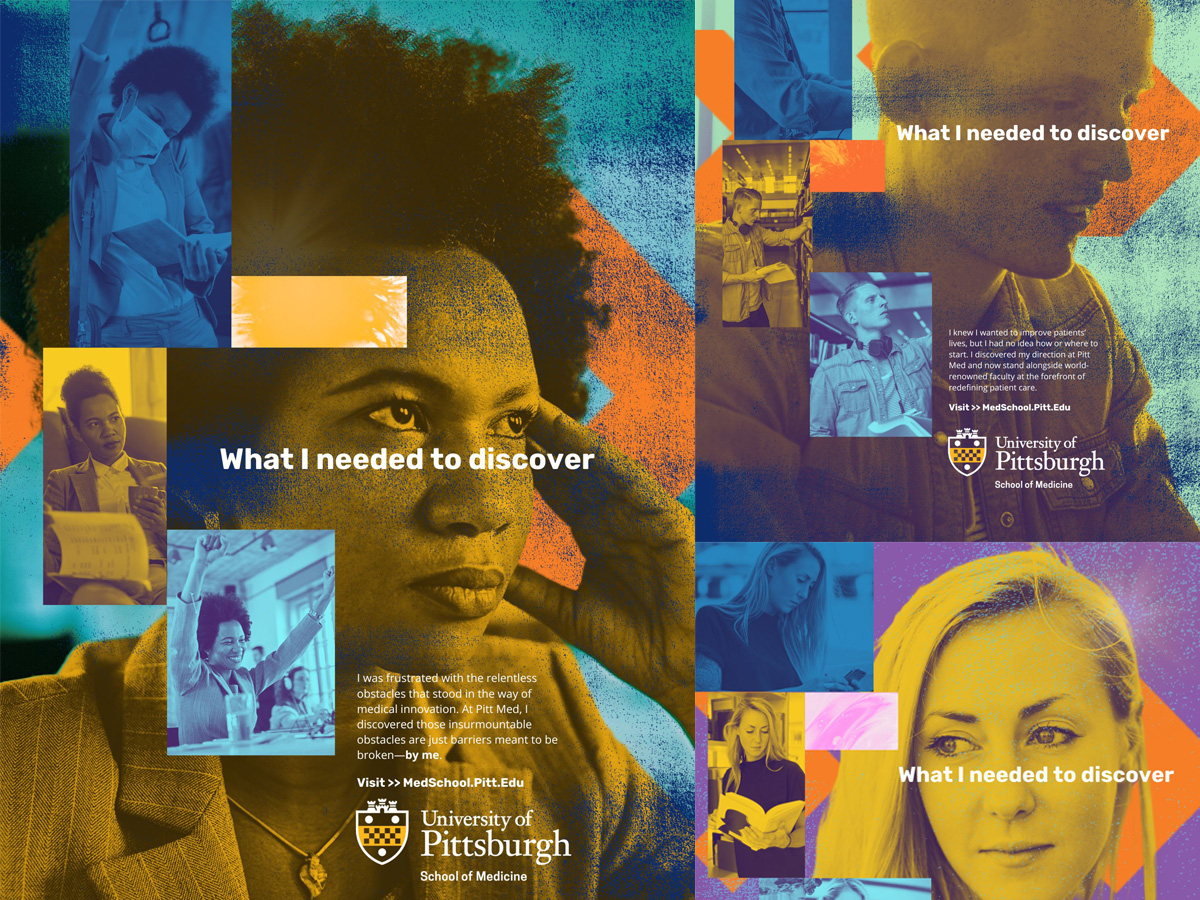
The Keywork: Using AI for Insight, Not Replacement, in Creative Practice

The ethical use of artificial intelligence.

RJ Thompson
Associate Professor

University of Pittsburg

The rapid evolution of generative AI has reshaped professional practice in marketing, communications, and design, introducing both opportunities for efficiency and challenges of adaptation. While organizations increasingly adopt AI—55% already using it for marketing and communications according to Gartner—many professionals encounter decision and adaptation paralysis amid an overwhelming number of tools and pressures to “adapt or perish.” This presentation argues that the essential question is not whether AI can increase the quantity or incremental quality of creative work, but rather how it can sustain and expand human creativity in meaningful ways.

Our inquiry centers on divergent thinking as a method for transforming AI outputs into catalysts for original work. Techniques such as inverting AI-generated story beats, reframing prompts into yes/no pathways, and intentionally opposing machine-suggested structures create conditions for unique, non-homogenous outcomes. These approaches resist the creeping uniformity of AI-produced content, which risks reducing professional output to predictable patterns and disengaging audiences.

To ground these concepts, we present The Keywork, a project conducted by the University of Pittsburgh’s Health Sciences Strategic Communications team. Leveraging ChatGPT for qualitative data analysis, the project processed five years of institutional content to identify brand pillars and generate insights that freed capacity for human-centered creativity. Here, AI served not as a replacement but as an amplifier—streamlining analysis so designers and communicators could focus on innovation, resonance, and impact.

Our findings suggest that the key to thriving with AI is to treat it as an interpretive and analytical partner, not a creative substitute. By adopting divergent thinking practices and positioning AI as a tool for inspiration and capacity optimization, creative professionals can ensure that their work remains unique, resonant, and enduring in an increasingly AI-saturated landscape.

This design research is presented at Design Incubation Colloquium 12.1: Virtual Online on Friday, November 14, 2025.
Make, Print, Share: Collective Learning Through Risograph Printing 

Finding ways to make design learning more tactile, experimental, and accessible.

Kyla Paolucci
Assistant Professor

St. John’s University

Vic Rodriguez Tang
Assistant Professor
Texas State University

Motivation/Problem/Opportunity 

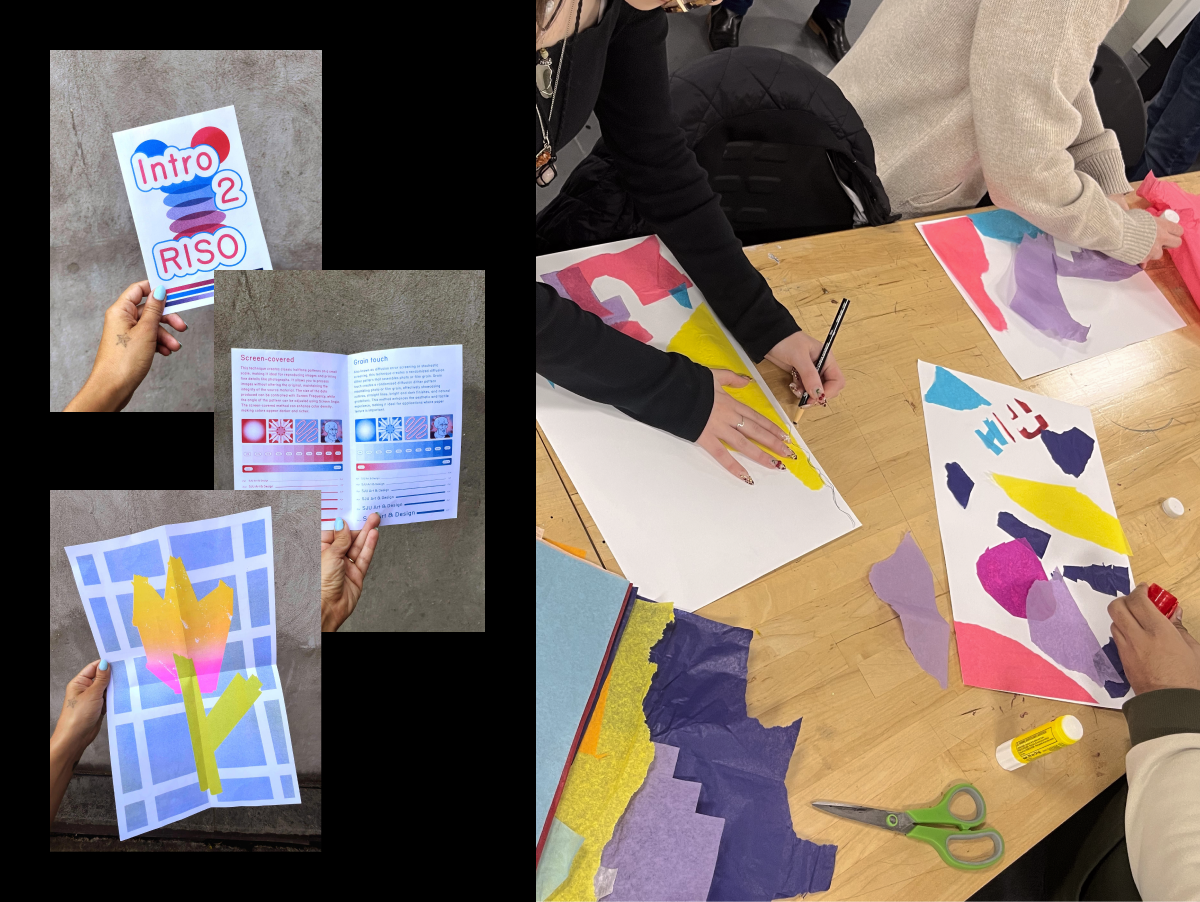
Risograph printing is having a moment. As a technology-based duplication process—often compared to a hybrid of screen printing and photocopying—it is recognized for its vibrant colors, layered textures, and presence in independent publishing and community printshops. While Riso is often celebrated as a trendy or aesthetic tool within design and art contexts, its pedagogical potential remains underexplored. There is an opportunity to frame Riso as a low-stakes, accessible teaching method that fosters technical literacy, collaboration, and community connection. Risograph printing can serve as an entry point into creative-related careers for students with little to no prior experience in art or design technologies. By offering a process-oriented environment where curiosity is enough to begin, Riso broadens participation in creative practice and helps learners reimagine design through experimentation and collective making. 

Thesis 

This project argues that constraint-driven, prompt-based Risograph printing can function as a model for pedagogy by combining technical skill-building, collaborative practice, and community engagement while moving beyond trend-based or perfection-oriented applications. 

Approach/Methodology 

Two educators respond to the same prompts—printing on black paper, executing a four-color separation, or working exclusively on the flatbed—without sharing approaches in advance. The paired responses form a prompt-based archive including prints, prompts, and reflections on similarities, differences, and lessons learned. Over time, this archive evolves into a toolkit of adaptable prompts for classrooms and community workshops, framing Riso printing as both teaching and research practice. 

Results/Outcomes/Analysis 

Unlike short-term workshops, this project cultivates a sustained, evolving body of work that operates as both practice and pedagogy. Outcomes include collaborative prints, adaptable exercises, and a reflective zine compiling process documentation. The project demonstrates how structured experimentation can reduce gatekeeping, promote curiosity, and support equitable access to design education.

Conclusion 

This project reframes Riso as a tool for approachable experimentation and shared authorship, showing how analog technologies can support creativity, inclusion, and critical reflection in design pedagogy.

This design research is presented at Design Incubation Colloquium 12.1: Virtual Online on Friday, November 14, 2025.
Mis/Understanding: Reframing Language Barriers and Miscommunication Through InteractiveDesign

An interactive installation that invites you to move and reveal layers of meaning as participants.

Najmeh Pirahmadian
Graduate student
Ohio University

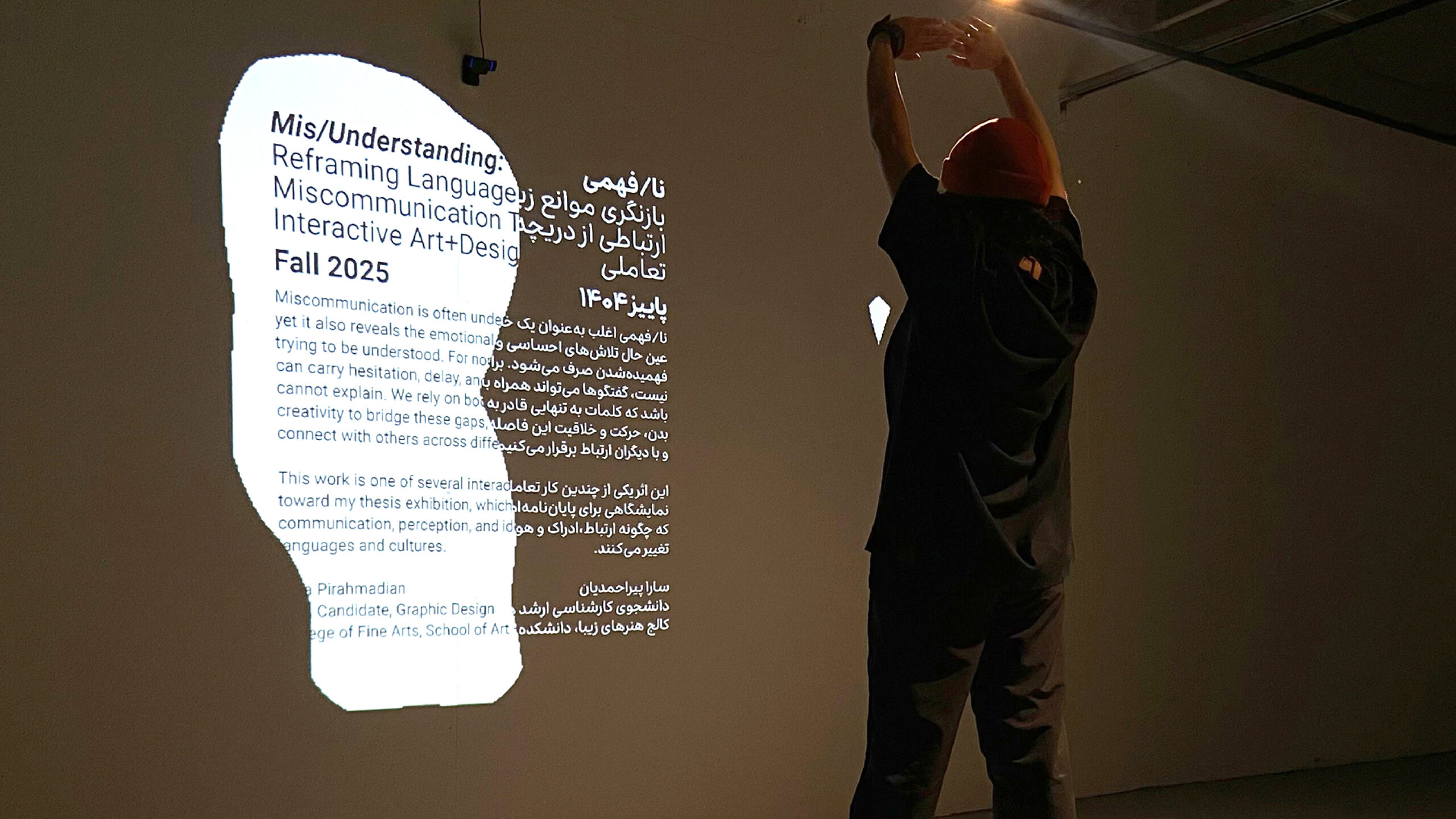
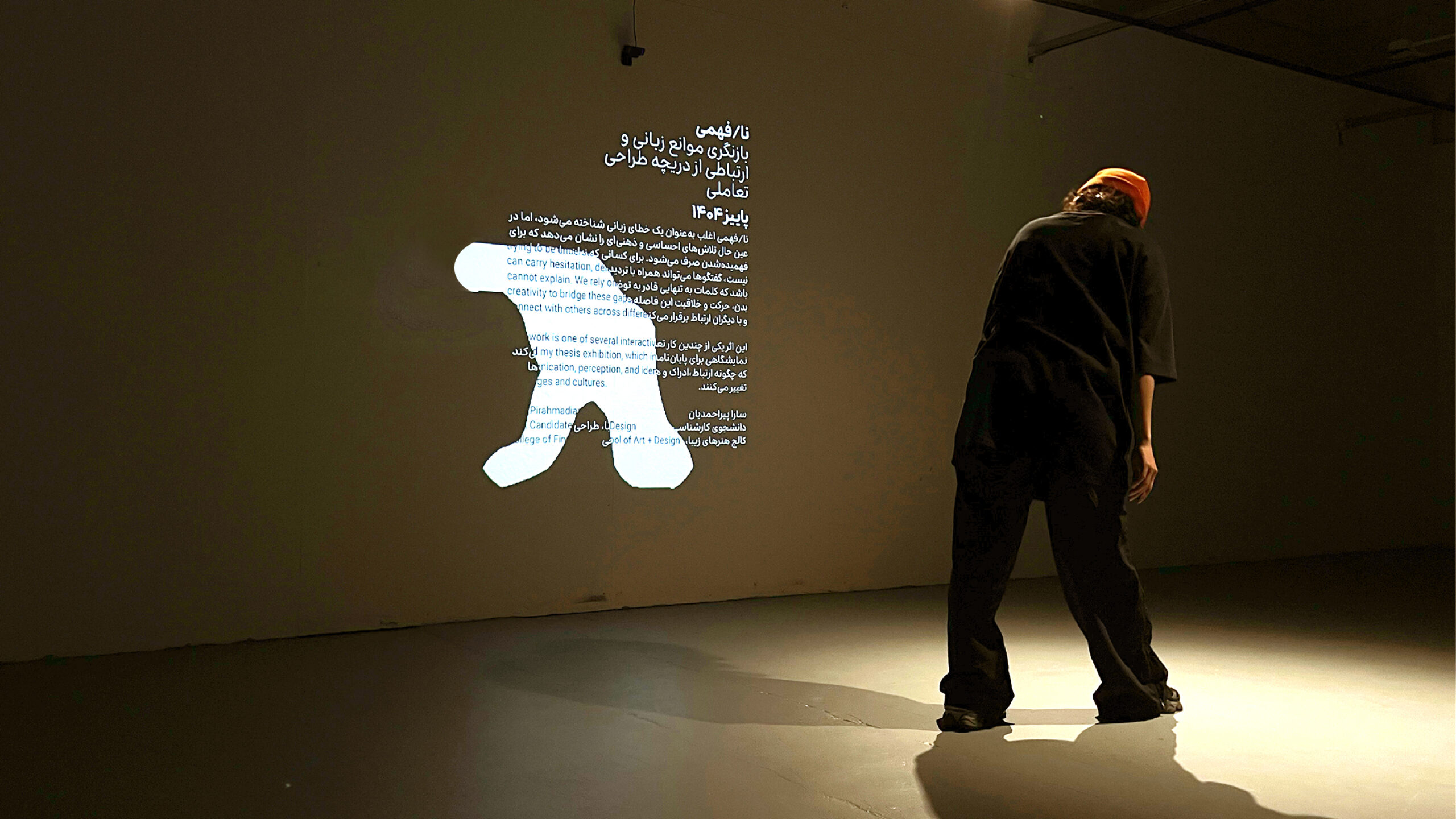
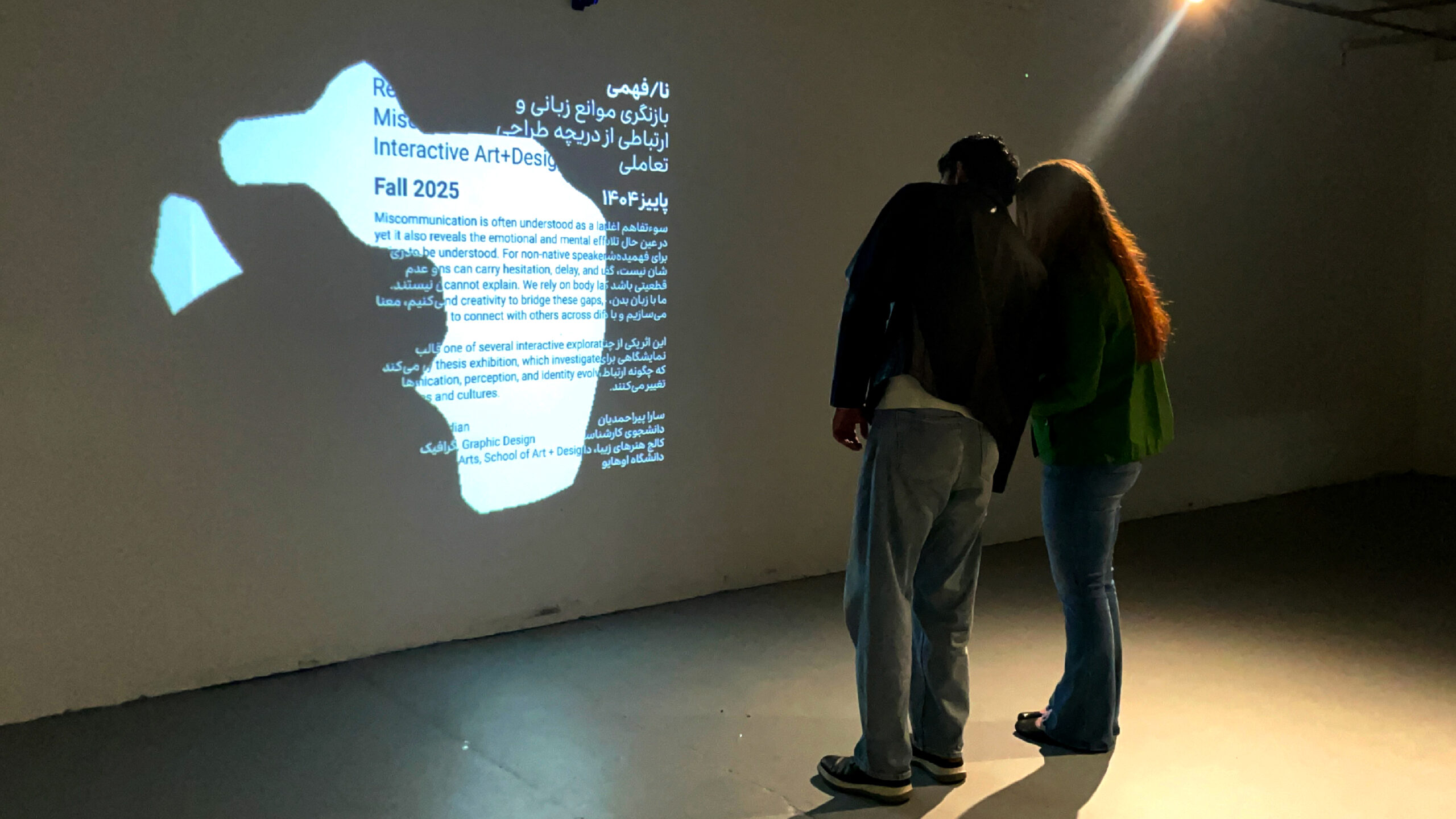
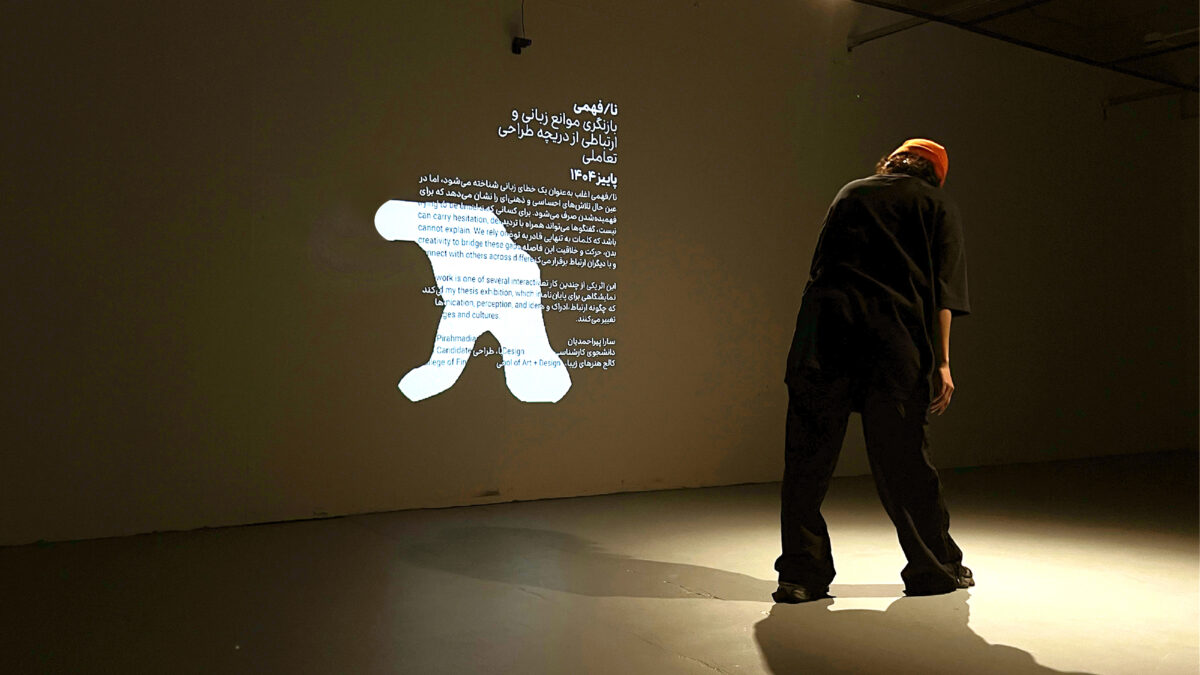
Miscommunication is often studied in linguistics and psychology as a technical challenge of understanding, yet such perspectives overlook the emotional and cognitive labor carried by non-native speakers. Language barriers create hesitation, delay, and dissonance that are difficult to express through description alone. This research addresses that gap by using interactive design to reveal the invisible labor of miscommunication, reframing it from a private struggle into a shared experiential phenomenon.

The project employed an exploratory, practice-based design research methodology that combined projection mapping, creative coding, and responsive technologies to construct environments where meaning is deliberately unstable. Works include wall text where English words gradually appear over Persian letters through the viewer’s body movement, echoing the struggle of non-native speakers who must often rely on body language to make themselves understood; a dual-microphone system that distorts or delays speech; motion-activated pieces that fragment words or faces in real time; and looping animations that represent anxiety, fear of misunderstanding, and the pressure to perform fluently.

This research resonates with works such as Cildo Meireles’s Babel, which sonifies linguistic confusion; Paige (Xinling)’s Speak in Bloom, visualizing fragile digital speech; and Shuang Wu’s A Poetic Space, reinterpreting poetry beyond translation. Like these, Mis/Understanding transforms linguistic distance into shared, sensory experience.

Initial outcomes show that participants experienced stress and disorientation, suggesting the installations successfully replicate the hesitation and cognitive load of bilingual communication and make the invisible labor of miscommunication tangible.

This research contributes to communication design scholarship by reframing miscommunication as both a design problem and an opportunity: a space where interactivity and relational aesthetics generate new forms of encounter. It demonstrates how practice-based design can function as research, moving beyond representation toward experiential knowledge-making and offering transferable methods for future studies of accessibility, identity, and cross-cultural communication.

This design research is presented at Design Incubation Colloquium 12.1: Virtual Online on Friday, November 14, 2025.
From Denim Wars to AI: Rethinking Fashion Advertising in the Classroom

How recent advertising campaigns have sparked political, cultural, and ethical reactions among students.

Summer Doll-Myers
Associate Professor

Kutztown University

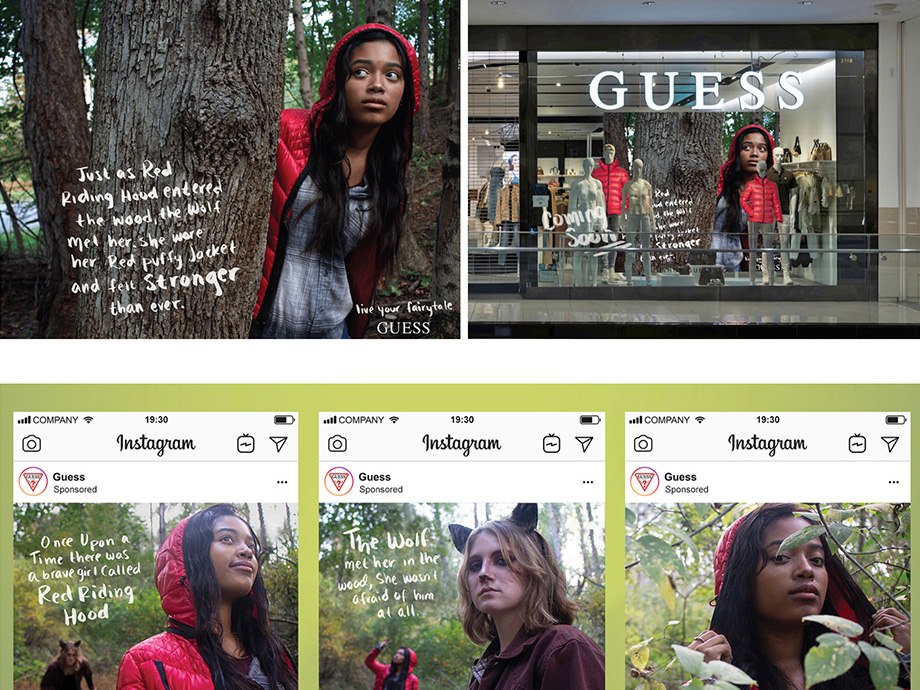
In previous work, I explored diversity of models, body positivity, and the role of storytelling in reaching millennial and Gen Z consumers. Those ideas shaped the original version of a fashion advertising project I teach in my communication design curriculum. Today, however, the landscape has shifted once again. TikTok and other social media platforms now shape how audiences interpret fashion campaigns, while artificial intelligence introduces both creative possibilities—such as impossible environments and experimental imagery—and new ethical questions around authenticity, representation, and human craft. At the same time, the current “denim wars” between brands like Gap and American Eagle reveal how cultural and political tensions weave themselves into fashion advertising, sparking unexpected conversations among students in the classroom.

In response, I redesigned the fashion project in my advertising design course. Students now develop a multi-platform campaign—print, in-store, and digital—using traditional photography with the option to integrate AI-generated background elements. They also analyze contemporary fashion campaigns, examining how AI, cultural politics, and brand positioning influence audience perception and trust. The project balances conceptual thinking with problem solving, encouraging students to evaluate fashion advertising through both creative and ethical lenses.

This presentation will share the project brief, examples covered, student quotes about AI, and selected student work. While earlier versions of the project emphasized storytelling and representation, design pedagogy today must also prepare students to navigate the technological, cultural, and political forces shaping the future of fashion advertising.

This design research is presented at Design Incubation Colloquium 12.1: Virtual Online on Friday, November 14, 2025.
Women Graphic Designers: Rebalancing the Canon

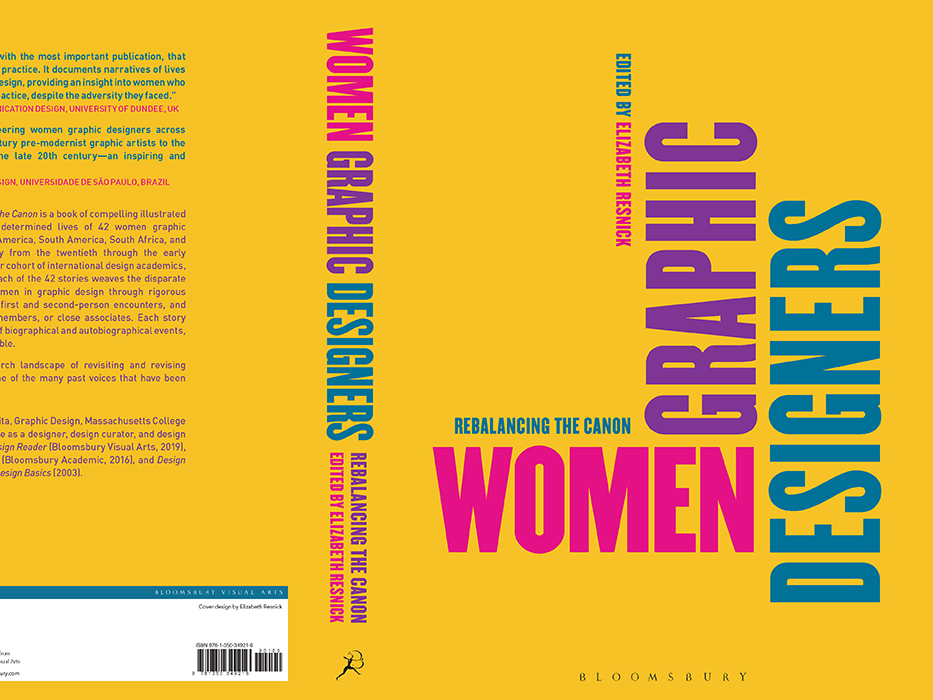
An anthology of 42 richly illustrated stories of profiling 44 women.

Elizabeth Resnick
Professor Emerita
Massachusetts College of Art and Design

In 1994, US designer, design educator, and historian Martha Scotford published an inspirational essay titled ‘Messy History vs. Neat History: Toward an Expanded View of Women in Graphic Design’ (Visible Language 28:4). In her introduction, she states: ‘For the contributions of women in graphic design to be discovered and understood, their different experiences and roles within the patriarchal and capitalist framework they share with men, and their choices and experiences within a female framework, must be acknowledged and explored. Neat history is conventional history: a focus on the mainstream activities and work of individual, usually male, designers. Messy history seeks to discover, study, and include the variety of alternative approaches and activities that are often part of women designers’ professional lives.’

Women Graphic Designers: Rebalancing the Canon is a book of illustrated stories examining the resilient and determined lives of 44 women graphic designers — from Europe, Asia, North America, South America, South Africa, and Australia — who worked professionally during the twentieth through early twenty-first century. Written by a stellar cohort of international design academics, practitioners, and design historians, the book represents the current research landscape of revisioning graphic design history, in part due to the recognition that many past voices have been systematically excluded.

Currently, there is an urgent need to codify and decolonize the work and stories of multicultural women designers, making them more accessible to educators, practitioners, and students alike. Critical feminist and decolonial perspectives provide a richer, more multifaceted narrative of design history that acknowledges both the advances and limitations of female designers’ contributions. Embracing the converging paths forged through the multidisciplinary nature of design and its design practitioners, my presentation will illuminate certain stories selected for their diverse cultural experiences, perspectives, and approaches to design.

This design research is presented at Design Incubation Colloquium 12.1: Virtual Online on Friday, November 14, 2025.
Design Incubation Colloquium 12.1: Virtual: Online

Friday, November 14, 2025
11:00AM – 12:30PM EDT
Online (ZOOM)

Recent research in Communication Design. Presentations of unique, significant creative work, design education, practice of design, case studies, contemporary practice, new technologies, methods, and design research. A moderated discussion will follow the series of presentations.

Friday, November 14, 2025
11:00 AM – 12:30 PM EDT
Online

Moderator

Cat Normoyle
East Carolina University

PRESENTATIONS

Women Graphic Designers: Rebalancing the Canon
Elizabeth Resnick
Professor Emerita
Massachusetts College of Art and Design

The Keywork: Using AI for Insight, Not Replacement, in Creative Practice
RJ Thompson
Associate Professor

University of Pittsburg

Make, Print, Share: Fold, Print, Share: Collective Learning Through Risograph Printing
Kyla Paolucci
Assistant Professor

St. John’s University

Vic Rodriguez Tang
Assistant Professor
Texas State University

From Denim Wars to AI: Rethinking Fashion Advertising in the Classroom
Summer Doll-Myers
Associate Professor

Kutztown University

Born Digital: Fresh Attempts around Typography Courses for Students Today
Jialun Wang
Assistant Professor
Otis College of Art and Design

Eager Zhang
Assistant Professor
Otis College of Art and Design

Mis/Understanding: Reframing Language Barriers and Miscommunication Through Interactive Design
Najmeh Pirahmadian
Graduate student
Ohio University

Call for Submissions, Colloquium 12.1: Virtual, Online

Call for design research abstracts. Deadline: Friday, October 3, 2025.

Submission Deadline: Friday, October 3, 2025.

Event date: Friday, November 14, 2025
Format: Virtual/Online
Location: ZOOM

We invite designers—practitioners, creators, and educators—to submit abstracts of design research, creative investigations, and productions. This is a virtual online event format. Abstracts can be submitted online now for peer review.

Abstract submissions are double-blind peer-reviewed. Accepted abstracts will be published online. Please review the articles, Quick Start Guide for Writing Abstracts and Writing an Academic Research Abstract: For Communication Design Scholars before submitting.

There is a $10 conference fee required upon acceptance of the research abstract for non-members. The conference fee is waived for active annual members. Find out more about our annual memberships.

Researchers will videotape their 6-minute presentations which will published online in advance of the colloquium. The video recording is due by Friday, October 24, 2025. We encourage all attendees to watch the videos in advance of the moderated discussion.

Presentation format is Pecha Kucha. For more details, see the colloquia details and description.

The colloquium is a moderated panel discussion of the research involving the researchers, thought leaders, and Design Incubation members.