
Relational Construction in Graphic Design: ALT as Process-Driven Practice

Repetition, translation, sequencing, and restructuring.

Niharika Yellamraju
Adjunct Professor
Boston University
University of Connecticut

ALT began as a response to a recurring tension within graphic design practice: the expectation that every project must begin with a new idea. In many design environments, creativity is tied to the rapid generation of concepts, encouraging designers to prioritize novelty at the beginning of the process. This often creates a repetitive design process in which projects struggle to move beyond predictable visual patterns and familiar formal solutions.

ALT proposes an alternative approach through relational construction. Rather than beginning with a fixed concept, the work develops through the arrangement of elements and the relationships formed between them. Typography, images, sequence, scale, and structure are treated as active components that shape one another over time. The methodology operates through repetition, translation, sequencing, and restructuring, using constraint and variation to develop form across media.

The project takes form through books, typographic systems, websites, and serial print artifacts that move between print and digital contexts. Existing materials and visual structures are reorganized and recontextualized across formats, allowing the same content to shift through changes in scale, sequence, interaction, and reproduction. Printed pages may become scrolling surfaces, while production marks and repeated images are reused as structural and compositional elements. Through this process, ALT examines how graphic design can extend beyond static outcomes and operate as an evolving system across multiple contexts.

Situated within discussions of experimental publishing and process-driven design, ALT draws from traditions associated with figures such as Johanna Drucker, Ellen Lupton, and Massin. The project argues for a mode of practice in which meaning emerges through sustained formal relationships and the reorganization of existing structures rather than through idea-first authorship alone. 

This design research is presented at Design Incubation Colloquium 12.3: Virtual Summer on Friday, June 26, 2026.
Invisible Nightlife Review: Teaching Fiction as Design Practice

Poetic logs, imagined histories, diary entries, or hybrids about nightlife experiences that never happened.

Nika Simovich Fisher
Assistant Professor
Parsons / The New School for Design

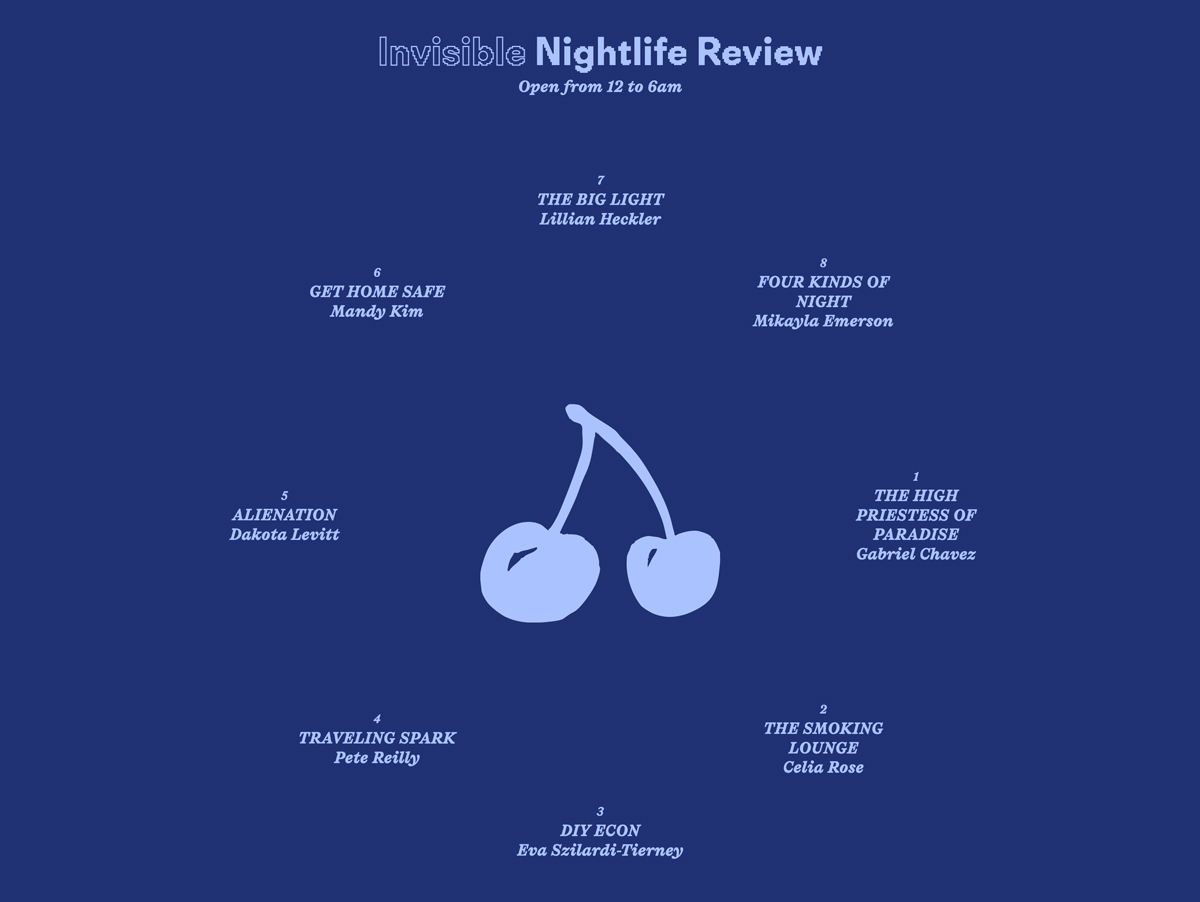
Invisible Nightlife Review is a speculative writing and publishing project I taught at The New School, developed in collaboration with Dirt, an experimental media company.

The project asked students to treat fiction as a design tool. Inspired by Italo Calvino’s Invisible Cities, students created 800-word essays in the form of poetic logs, imagined histories, diary entries, or hybrids about nightlife experiences that never happened. The goal wasn’t to document nightlife, but to explore how people move through visibility, intimacy, and risk after dark, and how fiction can surface emotional truths that are hard to express in literal terms.

The project culminated in a public anthology on Dirt, giving selected students professional bylines and the chance to work with editor Daisy Alioto. I served as co-editor and designed the anthology’s microsite. Some stories were adapted into interactive formats—Google Maps as narrative or an audio based experience—extending the themes of disorientation, memory, and blurred realities.

In 2025, when generative tools are speeding everything up and flattening creative voice, speculative writing slows things down. It gives students a way to make something memorable and their own, while contributing humanities based research outside of the classroom.

This design research is presented at Design Incubation Colloquium 12.2: Annual CAA Conference 2026 (In-person only) on Thursday, February 19, 2026.

Make, Print, Share: Collective Learning Through Risograph Printing 

Finding ways to make design learning more tactile, experimental, and accessible.

Kyla Paolucci
Assistant Professor

St. John’s University

Vic Rodriguez Tang
Assistant Professor
Texas State University

Motivation/Problem/Opportunity 

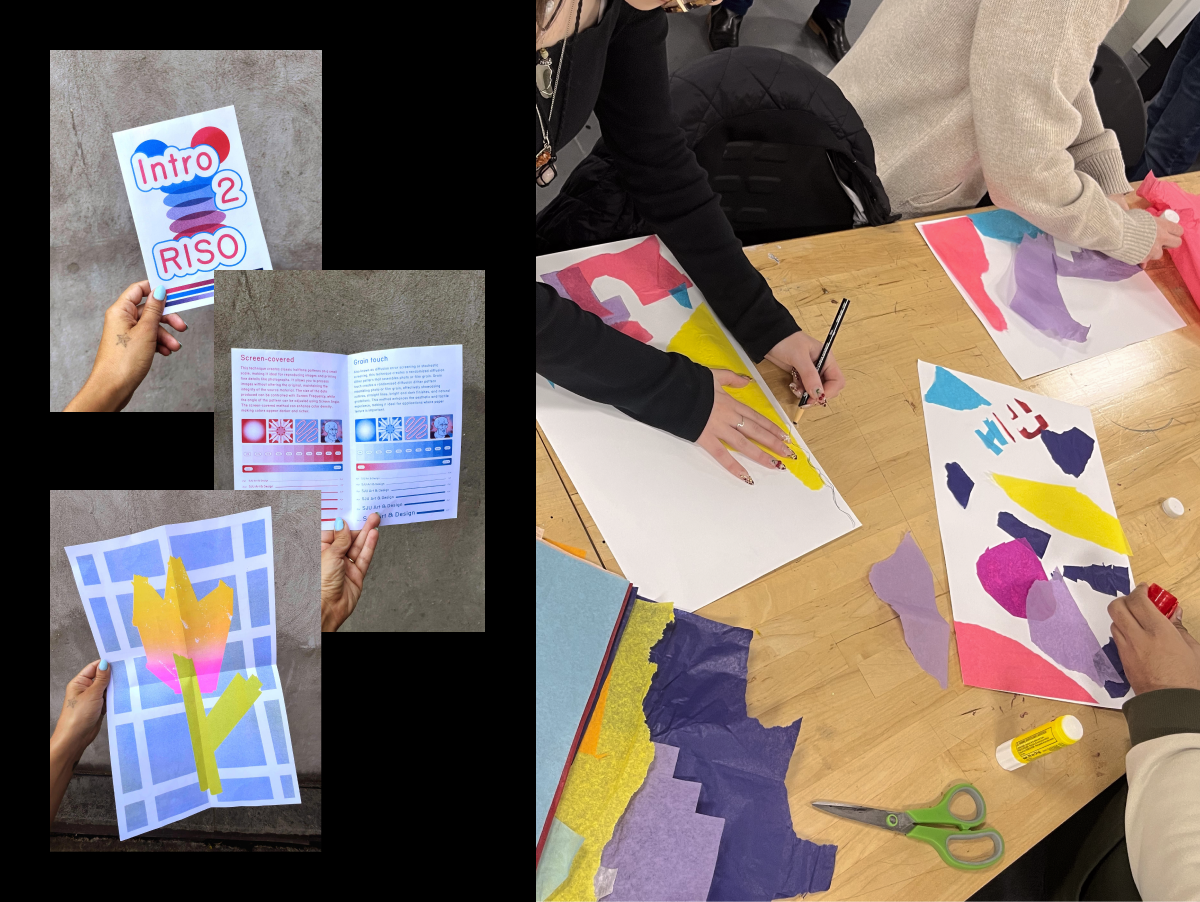
Risograph printing is having a moment. As a technology-based duplication process—often compared to a hybrid of screen printing and photocopying—it is recognized for its vibrant colors, layered textures, and presence in independent publishing and community printshops. While Riso is often celebrated as a trendy or aesthetic tool within design and art contexts, its pedagogical potential remains underexplored. There is an opportunity to frame Riso as a low-stakes, accessible teaching method that fosters technical literacy, collaboration, and community connection. Risograph printing can serve as an entry point into creative-related careers for students with little to no prior experience in art or design technologies. By offering a process-oriented environment where curiosity is enough to begin, Riso broadens participation in creative practice and helps learners reimagine design through experimentation and collective making. 

Thesis 

This project argues that constraint-driven, prompt-based Risograph printing can function as a model for pedagogy by combining technical skill-building, collaborative practice, and community engagement while moving beyond trend-based or perfection-oriented applications. 

Approach/Methodology 

Two educators respond to the same prompts—printing on black paper, executing a four-color separation, or working exclusively on the flatbed—without sharing approaches in advance. The paired responses form a prompt-based archive including prints, prompts, and reflections on similarities, differences, and lessons learned. Over time, this archive evolves into a toolkit of adaptable prompts for classrooms and community workshops, framing Riso printing as both teaching and research practice. 

Results/Outcomes/Analysis 

Unlike short-term workshops, this project cultivates a sustained, evolving body of work that operates as both practice and pedagogy. Outcomes include collaborative prints, adaptable exercises, and a reflective zine compiling process documentation. The project demonstrates how structured experimentation can reduce gatekeeping, promote curiosity, and support equitable access to design education.

Conclusion 

This project reframes Riso as a tool for approachable experimentation and shared authorship, showing how analog technologies can support creativity, inclusion, and critical reflection in design pedagogy.

This design research is presented at Design Incubation Colloquium 12.1: Virtual Online on Friday, November 14, 2025.