
Design Edu Today

The Design Edu Today podcast is a biweekly interview with design professionals discussing topics concerning the state of interactive design education at institutions of higher learning.

The Design Edu Today podcast is a biweekly interview with design professionals discussing topics concerning the state of interactive design education at institutions of higher learning. In order to help define interactive design for classroom instruction, guests are chosen based on their contributions—whether technical or theoretical—and leadership within the interactive design field. With the goal of diversity in experience and perspective, guests range from junior designers, to art/creative directors, studio owners both large and small, in-house or freelance designers, and everything in-between.

Launched in June 2015, the podcast’s initial goal was to discover the balance between instructing visual principles for digital design, such as flexible grids and screen-based typography and iconography, and instructing one of the core mediums of digital design: HTML, CSS and JavaScript. All of this must be accomplished in a limited number of credits within a graphic design program. Since the launch, the scope of the podcast has grown beyond its initial goal of finding this instructional balance to include broader research topics that include the overview of the entire process of interactive design, from the initial client meeting to final site launch. This expanded research also targets in depth discussions about each phase of the interactive design process, including information architecture, content strategy, user research, designing for performance, design workflow, and interactive prototypes.

Now over a year into the research project, the Design Edu Today podcast is a vast resource for design educators that includes over thirty episodes, complete with audio files, transcripts, and links to people, topics, and tools discussed during each episode.

designedu.today

Gary Rozanc is an assistant professor of graphic design at the University of Maryland, Baltimore County and the Education Director for AIGA Baltimore. Gary received his BA in Graphic Design from Cleveland State University and his MFA in Visual Communications from the University of Arizona. In May 2013, Gary was awarded the AIGA DEC Design Faculty Research Grant to uncover necessary competencies for entry level interactive designers to successfully transition from student to industry professional. As a result of this grant, Gary’s current research includes hosting the bi-weekly Design Edu Today podcast that discusses the current state of interactive design education at institutions of higher learning. Gary’s past research activities include identifying contextual methods of creating solutions through inquiry and problem-based learning, and his findings have been presented at international and national peer-reviewed conferences. Gary’s personal work ranges from responsive web design to letterpress.

Recipient of recognition in the Design Incubation Communication Design Awards 2016.
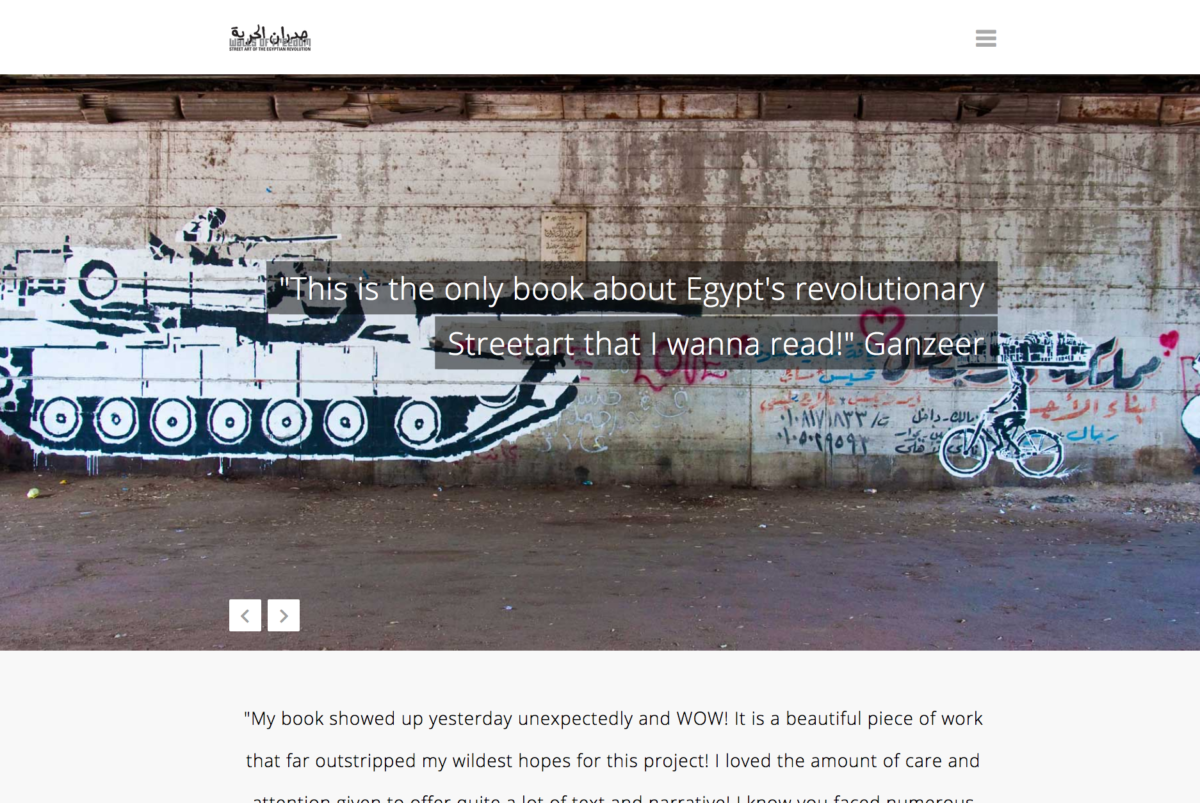
Walls of Freedom: Street Art of the Egyptian Revolution

The book contextualizes the streetart movement of the Egyptian Revolution historically, politically and socially creating a document that contributes to both historiography and activism.

Walls of Freedom: Street Art of the Egyptian Revolution is a project by Don Karl and Basma Hamdy that encompassed three years of intensive research. The book can be considered a hybrid format combining academic research with extensive visual documentation. Its goal is, not only to document, but to contextualize the streetart movement of the Egyptian Revolution historically, politically and socially creating a document that contributes to both historiography and activism. To support the book’s proposed production –260 pages, with over 500 images– a crowd-funding campaign was initiated in 2013 and was supported by 746 funders from 43 countries raising almost double its goal.

The reception of Walls of Freedom has been phenomenal but, unfortunately, in February 2015 a shipment of 500 books was confiscated by Egyptian authorities for ‘instigating revolt’ triggering powerful discussions on freedom of speech and human rights violations in Egypt. Although distributed and sold in many countries it is ironically unavailable and unofficially banned in Egypt. The design component of this project is combinatorial and transcends layout or typography to include participation, curation, authorship, historiography and collaboration. It consists of contributions from 100 photographers, work by 100 artists and essays by 20 specialists approaching the topic from various angles. The ultimate design and research of Walls of Freedom is manifested in its curatorial process where ideas are woven together to present a multifaceted view of the Egyptian Revolution through its street art.

This project was possible because of the contribution and participation of Graphic designer Torge Peters, Artist Ammar Abo Bakr and many others inluding: Caram Kapp, Najwa Sabra, Ganzeer, Hanaa El Degham, Hany Khaled, Magdy El-Shafee, eL Seed, Ahdaf Soueif, Aya Tarek, Yasmin El Shazly, Rana Jarbou, Bahia Shehab, Chad Elias, Basma El Husseiny, Ahmed Aboul Hassan, Sad Panda, El Zeft, Omar Robert Hamilton, Mykala Hyldig Dal, Amber Grünhäuser, Christine Rose, Rachel Sampson as well as the many outstanding photographers and artists who contributed their images and work.

www.wallsoffreedom.com

Basma Hamdy (MFA, Maryland Institute College of Art) is an Assistant Professor of graphic design at Virginia Commonwealth University Qatar. She is a research-based designer, author and educator who produces work that bridges historical, political and social issues with archival, documentarian, participatory, and critical mechanisms.

She has been interviewed and featured extensively in prominent international media –such as The New York Times, Fast Company, Jadaliyya, Huck, Der Spiegel and Print– and exhibited and spoke at several art and design festivals and conferences around the world, most recently, Spielart Festival Munich and The Graphic Design Festival Breda.

Recipient of recognition in the Design Incubation Communication Design Awards 2016.
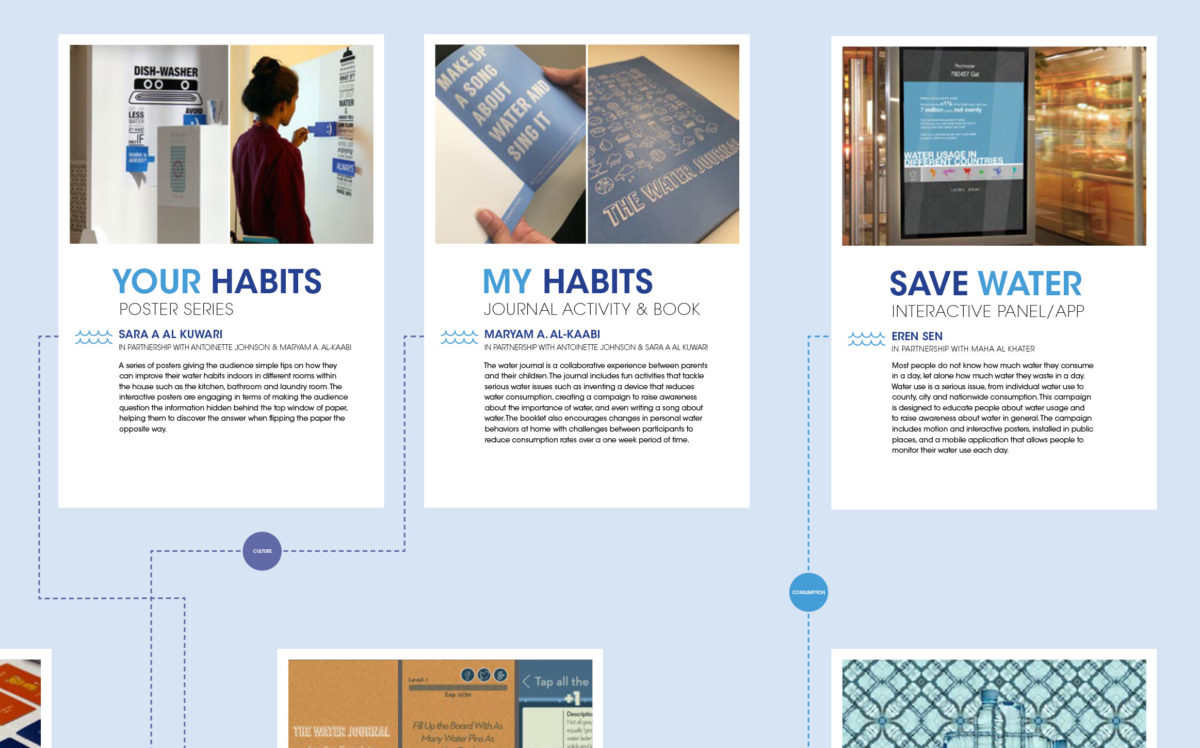
Intercultural Design Collaborations in Sustainability

Working remotely as cross-cultural teams, students explore ways design can address sustainable behaviors and lifestyle choices around diverse topics such as food, water, environmental degradation, social justice and cultural preservation.

Kelly Murdoch-Kitt and Denielle Emans work together in an ongoing series of semester-long collaborations with their respective students to make meaningful connections between the concept of sustainability and people’s day-to-day lives. Working remotely as cross-cultural teams, students explore ways design can address sustainable behaviors and lifestyle choices around diverse topics such as food, water, environmental degradation, social justice and cultural preservation. The semester typically culminates in a public exhibition on each campus, enabling students to share their concepts and communications with their local communities. Additionally, the most recent student exhibition, “Co-creating sustainable futures: American and Middle Eastern visual design students explore behavior change” was presented at the 2015 Association for the Advancement for Sustainability in Higher Education (AASHE) Conference in Minneapolis, MN, USA.

gulftogreatlakes.org
restartexhibit.com

Kelly Murdoch-Kitt is Assistant Professor in the Graphic Design program at Rochester Institute of Technology’s College of Imaging Arts and Sciences. She teaches and works primarily in the areas of user experience and service design. Her recent collaborations exploring the socio-cultural benefits of cross-cultural design education and the benefits of integrating sustainability challenges into project-based design courses. Kelly and her collaborator, Denielle Emans, recently presented research at Spaces of Learning: AIGA Design Educators Conference and the 2015 Association for the Advancement of Sustainability in Higher Education (AASHE) Conference and Expo, “Transforming Sustainability Education.” Recent journal publications include “Design Nexus: integrating cross-cultural learning experiences into graphic design education” in Studies in Material Thinking 11: Re/materialising Design Education Futures (co-authored with Prof. Denielle Emans, 2014) and “Sustainability at the forefront: educating students through complex challenges in visual communication and design” in Interdisciplinary Environmental Review (co-authored with Kelly Norris Martin & Denielle Emans, 2015).

Denielle Emans is an Assistant Professor in the Graphic Design Department at Virginia Commonwealth University in Qatar, specializing in the area of experiential design in relation to the conceptualization, development, and execution of visual messages for social change and sustainability. As a designer, she has worked to create print, web, and motion design solutions for clients ranging from software specialists to international institutions. Denielle has published her research in a number of academic journals and presented at numerous conferences across the world. She holds a Master of Graphic Design from North Carolina State University’s College of Design and a Bachelor of Arts in Communications from the University of North Carolina, Chapel Hill. Denielle is currently a Ph.D. Candidate within the Centre for Communication and Social Change at the University of Queensland in Brisbane, Australia.

Recipient of recognition in the Design Incubation Communication Design Awards 2016.
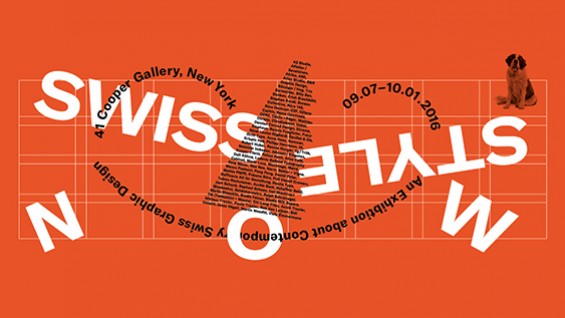
Swiss Style Now September 07 – October 01, 2016

The Swiss style of graphic is perhaps the most influential movement of the 20th century. It came to fame in the 1950s, as a clear graphic language of communication, and became a hallmark style internationally.

http://www.cooper.edu/events-and-exhibitions/exhibitions/swiss-style-now

The Swiss style of graphic is perhaps the most influential movement of the 20th century. It came to fame in the 1950s, as a clear graphic language of communication, and became a hallmark style internationally.

The “Swiss Style Now” exhibition provides a current view of the graphic design scene in Switzerland from the last five years and features more than 120 works from different generations of Swiss designers. Pieces by a hundred currently working Swiss designers, including Ludovic Balland, Stephan Bundi, Büro Destruct, Melchior Imboden, NORM, Felix Pfäffli, Tania Prill, Ralph Schraivogel, Niklaus Troxler, Martin Woodtli, Jonas Vögeli and more, will be on view. Posters, books, brochures, flyers and more make up the body of printed matter being highlighted.

Opening Reception: Tuesday, September 6, 2016, 6:30pm – 9:00pm

Ongoing Exhibition: September 7 – October 1, 2016
Monday – Saturday 10:00am – 7:00pm
Sunday 12:00pm – 5:00pm

Look Closer: Interaction, Interpretation, Environmental Storytelling

John Delacruz
Professor of Advertising
School of Journalism and Mass Communications
San Jose State University

The creative industries rely on interdisciplinary practices. They require team working skills and the ability to learn, support and help others in an increasingly inter-disciplinary environment.

Students at San Jose State University who aim to enter the creative industries have been working on a project with Santa Clara County Parks creating interactive and interpretive story tree installations on the Coyote Creek Parkway Trail at Hellyer County Park. This is the Coyote Creek Fables, part of a bigger project of artworks to be sited in Hellyer Park.

Our presentation will explore how the student team has evolved and produced a body of work that will exist in a real space, enhancing the trail and the Ranger-led talk, and online, supplementing the Coyote Creek fables with information and interactive elements shaping the user experience. How did the design process unfold? How did the experiential and improvisational pedagogical approaches help shape the outcomes? What are the Coyote Creek fables?

The concept, inspired by the Ohlone tribes of California and their associations with totem poles, is intended to enhance existing interpretive programs, while encouraging trail users to take a closer look at the wildlife found along the multi-use Coyote Creek Parkway Trail.

Our design team is a diverse mix group of undergraduate and graduate students with backgrounds in graphic design, journalism, photography, advertising, and mass communications. The project has enabled them to engage in collaborative, experiential practices where different skill sets have allowed peer mentoring to drive them to their final products.

The student team has engaged in peer to peer collaboration, and found ways to work remotely at times. They have developed awareness of natural history and environmental stewardship as they flex their creative muscles. The overall learning experience has provided them with a skill set that will help them navigate their future careers in the creative industries successfully.

This research was presented at the Design Incubation Colloquium 3.1: Kean University on Saturday, Oct 22, 2016.

How Much is Too Much?

Mark Zurolo
Associate Professor Graphic Design, UConn Storrs
Liz DeLuna
Associate Professor Graphic Design, St. John’s University

Motion design has evolved into a discipline that requires a complex skill set including, but not limited to, an expert command of typography and illustration, technical ability including expertise in software, understanding of narrative structures, an animator’s sense of motion, timing and sound, and formal design acumen. Whew! That’s a lot. Motion graphics emerged from graphic design with pioneers like Saul Bass, trained as a traditional graphic designers who saw graphic design not as static compositions, but kinetic orchestrations captured in a moment of stasis. New technologies have created not only the potential for new visual languages, but entirely new skill sets. Who is best equipped to wield these languages? What should they learn and how should they learn it? Taste or Technology? Software or gestalt? Is the horizon endless or ending? This presentation will explore techniques and briefs that investigate strategies for creating thoughtful and articulate skill sets driven by the principles of graphic design in the context of motion.


This research was presented at the Design Incubation Colloquium 3.0: Massachusetts College of Liberal Arts (MCLA) on Saturday, Sept 24, 2016.

Visualizing Pesticide Use in Controlling Zika

Courtney Marchese
Assistant Professor of Interactive Media + Design
Quinnipiac University

Information graphics help condense large amounts of data into comprehensive visuals. One of the most critical topics for the general public to understand is issues of public health. Zika virus has come to the forefront as one of the most threatening mosquito-transmitted diseases in the Americas, with proven complications that include microcephaly and Guillain-Barré syndrome. Although there is currently no cure for Zika, there are a number of pesticides used in the affected areas in hopes of controlling the spread of the virus. In collaboration with scientists and other experts in the field, I will harvest and deliver the most important data to the general public. Through data visualization, we can track which pesticides are being used where, and how efficiently they are controlling the spread of the virus-carrying mosquitos.

My methodology in creating the information graphics is to research both data visualization techniques as well as pesticide use in the Americas as it related to controlling Zika transmission. I will also interview and collaborate with experts as I collect and analyze the necessary layers of data. From there, many iterations of potential visualizations will be created and critiqued until the best possible solutions have been created. My hope is that these graphics will help provide a comprehensive overview of the relationship between various pesticide use and the spread of Zika virus.

This research was presented at the Design Incubation Colloquium 3.0: Massachusetts College of Liberal Arts (MCLA) on Saturday, Sept 24, 2016.

The Rise of the Design Entrepreneur

Denise Anderson
Assistant Professor
Michael Graves College
Kean University

Graphic designers who aspire to become entrepreneurs can achieve their ambition by tapping into their well-cultivated ability to think creatively, generate ideas, and help clients bring their concepts to market through the creation and execution of commercialized branding programs.

In many cases, however, both students and professionals simply lack the fundamental knowledge or experience to translate original ideas into viable and actionable business opportunities. Graphic designers who want to bring their ideas to market need to know what to do, how to do it, and where to find the network and resources necessary for launching and building a sustainable enterprise. They need to think and act more like traditional entrepreneurs, and to accomplish this, they need supplemental business education that fully considers the life cycle of a product or service as it makes its way from idea to market. They must learn how to evaluate risk and the impact it may have on their business. Additionally, they should understand the traits common to entrepreneurs, as well as how to draw upon or develop similar qualities in the context of their role as graphic designers.

The Rise of the Design Entrepreneur will feature yet-to-be-launched business projects, survey results that reveal the business fundamentals that design practitioners say are essential bringing ideas to market, and recommendations for resources that will help graphic designers achieve their aspirations.

This research was presented at the Design Incubation Colloquium 3.1: Kean University on Saturday, Oct 22, 2016.

Robin Landa Joins Design Incubation

Design Incubation is pleased to announce that Robin Landa, Distinguished Professor and author will join the governance team as Chair.

Design Incubation is pleased to announce that Robin Landa, Distinguished Professor in the Michael Graves College at Kean University and author of more than 20 books, will join the governance team as Chair. We are excited to enlist Ms. Landa’s creative energy, enthusiasm, professional experience and design expertise in the organization.

Ms Landa has received high praise as one of the “Great Teachers of Our Time” by The Carnegie Foundation, as well as being honored by The National Society of Arts and Letters. In 2013, Ms. Landa received Kean University’s Professor of the Year Award.

CAA Conference Invites Design Topics

The CAA Conference 2017 in New York City has an open call for participation. The deadline for proposals of papers and presentations is August 30, 2016.

College Art Association (CAA) has recently created the Committee on Design, to address the needs and scholarly efforts of design academics.

The CAA Conference 2017 in New York City has an open call for participation. The deadline for proposals of papers and presentations is August 30, 2016.

For session topics and details, check out the listing of session descriptions.