Designing Immersive Experiences with Empathy

Ed Johnston
Assistant Professor
Michael Graves College
Robert Busch School of Design
Kean University

One essential component in the vast majority of design thinking methodologies is the importance of empathy. As designers, we have the opportunity to understand and share the feelings of another, articulate pain points within a situation and develop solutions to those pain points.

With the emergence of mobile virtual reality and augmented reality, designers can begin to develop novel solutions to some daunting and exciting questions. What if we could help someone travel through time to the past and see things as they once were? What if we could transport someone into a space, which they cannot reach? What if we could help distract someone from feeling chronic pain or loneliness?

I have been working with students and creative researchers on projects to respond to some of these questions. In my Liberty Hall 360 research initiative, I have been using immersive technologies, including 360-degree video and augmented reality, to address a variety of needs within Liberty Hall Museum. These needs include accessibility and enrichment of the museumgoer’s experience to feel a stronger sense of presence within historic moments.
In this presentation, I will share the development of my collaborative projects and some inspirational projects by other creative researchers, which are establishing the experiential and therapeutic significance of the application of immersive technologies. In addition, I will put forth an argument for the importance of incorporating immersive technologies into design education curricula.

This research was presented at the Design Incubation Colloquium 3.1: Kean University on Saturday, Oct 22, 2016.

Fashioning The Brand

Summer Doll-Myers
Graphic Design
Kutztown University

Ann Lemon
Advertising
Kutztown University

The good, the bad and the beautiful of fashion advertising.

What does it mean to wear a label, a logo, a brand – across your chest or on your back pocket? Consumers, especially millennials, are becoming more invested in the brands they love by following, liking, and pinning products in addition to wearing them. The entire brand “story” is built from an archive of images that support an ongoing narrative. Fashion is a $1.2 trillion global industry according to a report from the U.S. Joint Economic Committee.

“Fashion apparel for the teenager is not the first considered purchase,” Wissink said. Teens see electronics as “popularity devices, not utilities.” –International Business Times

It isn’t just about “did you see what he’s wearing?” but more about “can you believe she still has an iPhone 4”?! Millennials are more skeptical about what they see as inauthentic or contrived messages.

The majority of ads for brands found in fashion magazines and online are non-conceptual. With the trend moving toward believing in a brand, ads need to be more than just pretty – they need to be designed around a solid brand concept.

After years of this Intro-Level Advertising Design assignment being used to teach students the power of the image in an ad, this brief got a revamp. First and foremost, students needed to have a concept. They were required to research positioning, and identify a specific audience. Beginning with sketches, they were not allowed to move on to shooting before a big, insightful, on-brand concept was approved. Students then explored the collaborative realities of production by taking on the roles of art director, photographer, casting director, writer, and stylist. We will show the project process award-winning student examples.


This research was presented at the Design Incubation Colloquium 3.1: Kean University on Saturday, Oct 22, 2016.

A Selfish Communication

Brian Dougan
Associate Professor of Architecture
American University of Sharjah, United Arab Emirates

From within the hasty pace of academic change, the absence of certain platitudinous expertise in design education together with an emphasis in nascent design technologies has resulted in an unavoidable deficit in terms of how students work. The contemporary attack is often cold, hurried and lackluster. I am impressed by student’s many technological and sociological advantages and their fluencies in calculation and fabrication methods, but disappointed with their abilities to negotiate their own human sensitivities. My default role in most every creative academic endeavor is to teach students how-to-do whatever it is that requires doing. How-to work might be a better way to describe the role or even, how-to communicate – communicate to the immediate community, the professor and most importantly, to themselves. How to speak well about what it is they are trying to say. My role is to teach them that how they say something fundamentally effects what that something is.

I am developing an approach for teaching design students how to be drawers. It is about learning to draw and drawing to learn. In a first year drawing studio, I orchestrated a series of lessons about “seeing” in relation to coordination; a craft based approach emphasizing how one cooperates and coordinates with tools. The lessons are concerned with hand/tool coordination and with hand/eye coordination. I initially rely on blind contour exercises stressing an honest relationship between the seer and the seen. Eventually the seers are liberated from exclusive blindness to varying degrees of judgment. I have been calling this process, ‘the spectrum of judication’. Through the student’s virgin eyes, the poles of the spectrum are in diametrical opposition – immeasurable quality and calculated recognition. The intentionally gradated engagement has produced a generally high quality of product and a rather large collection of seemingly confident young drawers.

This research was presented at the Design Incubation Colloquium 3.1: Kean University on Saturday, Oct 22, 2016.

Webinar: The Writing and Publishing Challenge @RGD

A webinar discussing design scholarship with an emphasis on the intersection of professional practice and writing.

A webinar discussing design scholarship with an emphasis on the intersection of professional practice and writing. Information about discipline specific journals and book publishers.

As design educators we are increasingly asked to do it all. We need to excel in the classroom, provide service to our institution, maintain a professional practice and publish and engage in design-related scholarship.

See more at: http://www.rgd.ca/events-and-programs/rgd-events/events/

logo

Developing Agency in Art and Design

Mitch Goldstein
Assistant Professor
School of Design 
Rochester Institute of Technology

As the bar for entry to art and design becomes lower, it is easier than ever for anyone to call themselves a “creative.” One way to separate ourselves from the dilettantes is by creating a sense of agency as makers and thinkers — understanding who we are, how and why we act within our chosen fields, and what our criticisms of art and design are. Art and design school is an intense experience, where students are exposed to dramatic shifts in social, environmental, and intellectual contexts. Educators must help our students navigate these new realities, while also assisting in their development into future artists and designers. We must educate our students to move past trends and superficial technical acumen, into a more inquisitive, exploratory, and critical approach to creative practice. Developing agency informs how a student can approach creative inquiry, and how they can process and manifest work within their creative practice. This presentation will examine projects, outcomes, and critical frameworks used to teach agency.

This research was presented at the Design Incubation Colloquium 3.0: Massachusetts College of Liberal Arts (MCLA) on Saturday, Sept 24, 2016.

Design Incubation Colloquium 3.1: Kean University

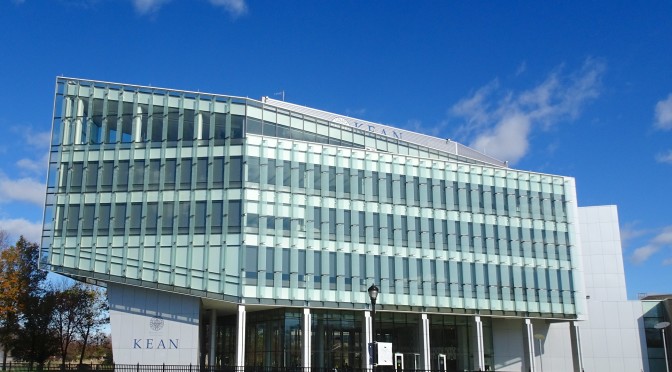
Design Incubation Colloquia 3.1 (#DI2016oct) will be held at the Kean University in Union, New Jersey on Saturday, Oct 22, 2016. This event is open to all interested in Communication Design research.

Hosted by Robin Landa

Saturday, Oct 22, 2016
Time: Starts 12:30pm
Kean University
Green Lane Academic Building 6th Floor
1000 Morris Avenue
Union, NJ

Design Incubation Colloquia 3.1 (#DI2016oct) will be held at the Kean University in Union, New Jersey. This event is open to all interested in Communication Design research. RSVP with name and affiliations if you plan on attending.

Abstract submission for presentations deadline Oct 1, 2016.  For details visit the Call for Submissions, and Submission Process description.

Directions
The Green Lane Building houses Barnes & Noble. It is on Green Lane (across the street from the main campus), adjacent to the new NJ Transit stop. People can take NJ Transit/Raritan Valley Line from Penn Station.


From Union Station: Located at 900 Green Lane in Union, N.J., the station is directly across the street from Kean’s main campus. Union Station is on NJ Transit’s Raritan Valley line, which runs northeast to Newark Penn Station, and southwest to High Bridge in Hunterdon County.For a Raritan Valley line train schedule, click here.

Presentations

Look Closer: Interaction, Interpretation, Environmental Storytelling
John Delacruz
Professor of Advertising
School of Journalism and Mass Communications
San Jose State University

The Rise of the Design Entrepreneur
Denise Anderson
Assistant Professor
Michael Graves College
Kean University

Fashioning The Brand
Summer Doll-Myers
Graphic Design
Kutztown University
Ann Lemon
Advertising
Kutztown University

Eat Your Vegetables: Sneaking in Conceptual: Thinking during Technical Instruction
Suzanne Dell’Orto
Adjunct Lecturer
Fine & Performing Arts
Baruch College, CUNY

Designing Immersive Experiences with Empathy
Ed Johnston
Assistant Professor
Michael Graves College
Robert Busch School of Design
Kean University

BREAK (2:00PM)

The City of You
Robert J. Thompson
Assistant Professor, Graphic & Interactive Design
Department of Art, College of Creative Arts & Communications
Youngstown State University

How Hard Is It To Navigate A Rectangle? Harder Than You Think
Neil Ward
Assistant Professor of Graphic Design
Drake University

A Selfish Communication
Brian Dougan
Associate Professor of Architecture
American University of Sharjah, United Arab Emirates

Idea Incubator: The Architectural Design Studio Experience and the Nurturing of Creativity
Craig Konyk AIA
Assistant Professor of Architecture
School of Public Architecture, Michael Graves College
Kean University

A Start Up Simulator: Collaborative Design Studio
Efecem Kutuk
Program Coordinator Industrial Design, University Lecturer
Robert Busch School of Design
Michael Graves College
Kean University

Trianimals
Ned Drew
Professor

Department of Arts, Culture and Media
Rutgers University

Brenda McManus

Assistant Professor Graphic Design

Dyson College of Arts & Sciences
Pace University

Thinking Through The Pencil: The Primacy Of Drawing In The Design Thinking Process

Pattie Belle Hastings
Chair of Interactive Media + Design
School of Communications
Quinnipiac University

The research and ideation phases of the Design Thinking process typically incorporate forms of drawing, which can include thumbnails, sketches, comprehensives, wire frames, mind maps, storyboards, paper prototypes, and collaborative methods. It is from this collection of visualized ideas that a design project moves forward toward implementation. The basic purposes of design drawing can be summarized as generating, visualizing, documenting, collaborating, and analyzing. I’ve broken this down into three main drawing and thinking practices:

  1. thinking of and through ideas

This includes visualizing and recording ideas to externalize and convey the process of thinking. The goal for this kind of drawing is for idea generation and exploration. The best approach is to start with deep research and then freeform brainstorming of ideas on paper in which quantity is pursued in order to reach quality.

  1. thinking to improve ideas

Once the flow of ideas begins to form on the page, the processes of analysis, comparison, iteration, elaboration, reflection, and development can begin. Sometimes generation and analysis occurs simultaneously and sometimes it is successive. Reflection on the drawings reveals relationships, strengths and weaknesses that allow for refinement, reduction, and reiteration.

  1. thinking about ideas with others

Design drawings are often created for the purpose of collaboration, communication, and conversation. They are used to explain ideas to others and to engage discussion around the project or problem. Through their ephemeral nature, design drawings convey an idea that is in process not completion, which invites reflection, responses, criticisms, and alternatives.

This framing of “design drawing,” grounded in ideation, iteration and development, will be the foundation used to gather case studies, best practices, in addition to visual libraries of examples and methods. Another broad and hopeful goal of this research is the creation of a drawing curriculum and handbook for introducing and integrating “design drawing” methods into interaction design programs.

This research was presented at the Design Incubation Colloquium 3.0: Massachusetts College of Liberal Arts (MCLA) on Saturday, Sept 24, 2016.

Making Small Things: Robots, Cracks, and Hamburgers

Whether exploring meditations on a single theme, embracing new materials or studying the affects of repetition and reproduction, designer Chris St. Cyr’s work exploits both the familiar and the unknown.

Chris St.Cyr
Assistant Professor of Graphic Design
The College of Saint Rose

cracksMake some thing. Somewhere between morning routines, client projects and preparing for a class there is time to create something… a small something. Over time, these creations may evolve into larger projects or they can remain a collection of random ideas waiting for connections to given them form. The trick is to think small— a two-minute sketch, a single bullet item, one typeface, one principle, two constraints, no command z, a page, or one post.

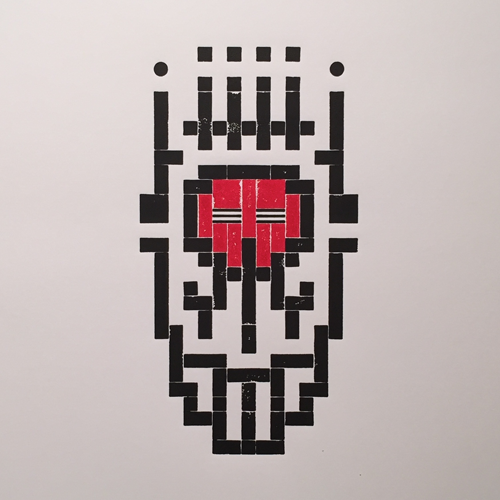
hamburgersOver the past five years I’ve developed a series of small personal projects that continue to evolve and grow. Social media is part of the production process. It is used to start conversations and provides a place for my creations to exist on their own and to engage with a globally networked community. One project, an investigation of the efficiency of modular design systems and has evolved from building 3D Lego structures to using Lego block printing to create a system of robot symbols for use on T-shirts, stickers, and in augmented reality. In another project (perhaps a reaction against the Lego project) old rub down press type is used as a catalyst for the investigation of randomness, reaction, and flow. Here there is very little control and rubbing cracked letterforms onto sketchbook paper gives form to the compositions which are then scanned, manipulated and printed, all of which adds another layer of uncertainty to the outcome. robotsA third, and more recent project, is a meditation on the mobile menu symbol—affectionately known as the “Hamburger Menu.” More specifically it involves a series of motion design experiments that explore how three horizontal lines can transition into the shape of an “X.” As the projects have changed over time one thing remains consistent—they all started as a single small exploration of a design principle, material, tool or technique.

This research was presented at the Design Incubation Colloquium 3.0: Massachusetts College of Liberal Arts (MCLA) on Saturday, Sept 24, 2016.

Graphic Design Histories of the Olympics

By examining the role of the Olympics in different geographical and political contexts, I focus on how communication design becomes a vehicle for the promotion of new national identities and even new forms of citizenship.

As a scholar interested in understanding space, I see acts of spatial representation as primary means of creating the realm of “spatial conception”—where communication design plays a key role expanding from place-marketing campaigns to unofficial and often subversive spatial imaginaries.

By examining the role of the Olympics in different geographical and political contexts, I focus on how communication design becomes a vehicle for the promotion of new national identities and even new forms of citizenship. My research proposes the term “Olympic design milieu” as a way of understanding the multiplicity of design generated by the Olympics—this includes officially created symbols and constructions that aim to facilitate the Olympics and induce civic pride, but it also incorporates unauthorized acts by political or civil society groups that question or oppose the Olympics.

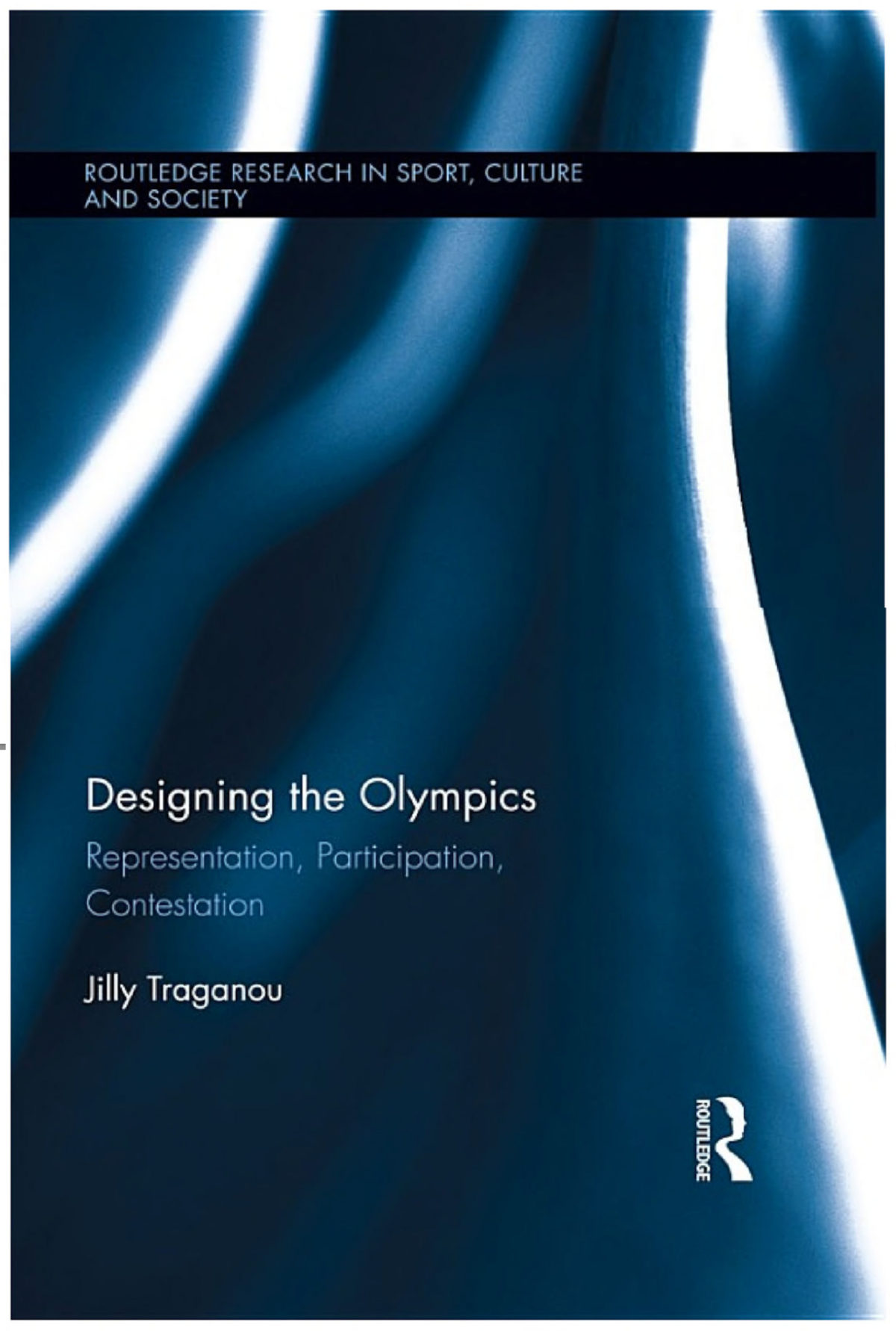
“Graphic Design Histories of the Olympics” includes chapters of my recently published book Designing the Olympics: Representation, Participation, Contestation as well as a film I produced with director Marija Stojnic titled Olympic Design: Mexico 1968: Visual Identity: Lance Wyman (2014).

The three chapters featured focus on three elements of the Olympic design milieu. Chapter 1, “Through the Lens of Graphic Design: Nationalism, Internationalism, and Universalism in the Tokyo 1964 Design Program,” reveals how the Tokyo 1964 graphic design program played an important role in re-articulating Japan’s postwar identity. The next chapter, “Not for a Nation, but for the People: London 2012 Brand Design as a New Paradigm of Olympic Design,” looks at Wolff Olins’ design as the first conscious effort of Olympic designers to induce public participation in the design process. This marked the expansion of the Olympic design operation from an exclusive affair (a sponsors-only right to Olympic properties) to a matter of engagement across society. Finally, the chapter titled “Opposing the Olympic City: Designerly Ways of Dissenting” demonstrates the potential of design to induce alternative forms of participatory citizenship by looking at materialized practices of Olympic opposition.

The accompanying film features Lance Wyman describing how his official Mexico 1968 Olympic designs convey a “sense of place.” Appropriating these official symbols, powerful subversions by the student movement of the same era show the blurring of the official and the unofficial, the authoritative and the subversive in the Mexico 1968 Olympic milieu.

Jilly Traganou was born in Athens and studied architecture at the Aristotle University of Thessaloniki. A scholarship from Japan’s Ministry of Education brought her to Japan in the early ‘90s and inspired her PhD work (University of Westminster) on the representation of space through travelling, resulting in the book The Tokaido Road: Traveling and Representation in Edo and Meiji Japan (Routledge 2003). Her interest in theorizing travel led to a co-edited volume with Miodrag Mitrasinovic titled Travel, Space, Architecture (Ashgate 2009).

Living in Athens in 2003-2004, Jilly experienced the making of an Olympic City and began new research into Olympic design. Her new book Designing the Olympics: Representation, Participation, Contestation was published this year. This summer, she continued her research in the Olympics as a Fulbright scholar in Brazil during the 2016 Games. Her work has been supported by the Bard Graduate Center, The Japan Foundation, The Seeger Center for Hellenic Studies at Princeton, Design History Society, and the Graham Foundation for Advanced Studies in the Fine Arts among others. She is an associate professor of spatial studies at Parsons School of Design, The New School.


Recipient of recognition in the Design Incubation Communication Design Awards 2016.

The Phaistos Project — 45 Symbols

the drive to teach visual literacy, which is based on the idea that pictures, in the broadest sense, can be read and communicate meaning through the process of reading.

Pascal Glissmann (Parsons School for Design), Olivier Arcioli and Andreas Henrich (Academy of Media Arts, Cologne) initiated the The Phaistos Project, an exploration of visual language that unites students, teachers, scholars, and ideas from across the world. All participating academic partners share the drive to teach visual literacy, which is based on the idea that pictures, in the broadest sense, can be read and communicate meaning through the process of reading. Students must learn to excel in finding and applying their own visual language, embrace diversity, and propel their identity in order to vigorously influence their own creative practice. This can be achieved through using open environments to better invite students to explore ethnographic backgrounds, and to initiate critical thinking through encountering the unknown, which can range from utopian visions of our future living to the unanswered phenomena of our past.

A prominent example of unresolved visual code—and a milestone in the history of visual language and typography—is the Phaistos Disc. Even though its purpose and authenticity is still discussed it is considered to potentially be an early, if not the earliest, document of movable type printing. The clay-impressed notation is assumed to be a textual representation and comprises 45 unique and recurrent symbols. Participating students explored this ancient disc, its visual principles and symbolic forms. Inspired by its cryptic yet powerful character, they developed collections of 45 unique symbols to represent the essence of their identity, the spirit of a culture or social change.

Their mission is not to create additions to the endless repertoire of functional pictograms. Instead, they are driven by personal storytelling and creating ethnographic visual anecdotes that are subjective, stimulating and inviting.

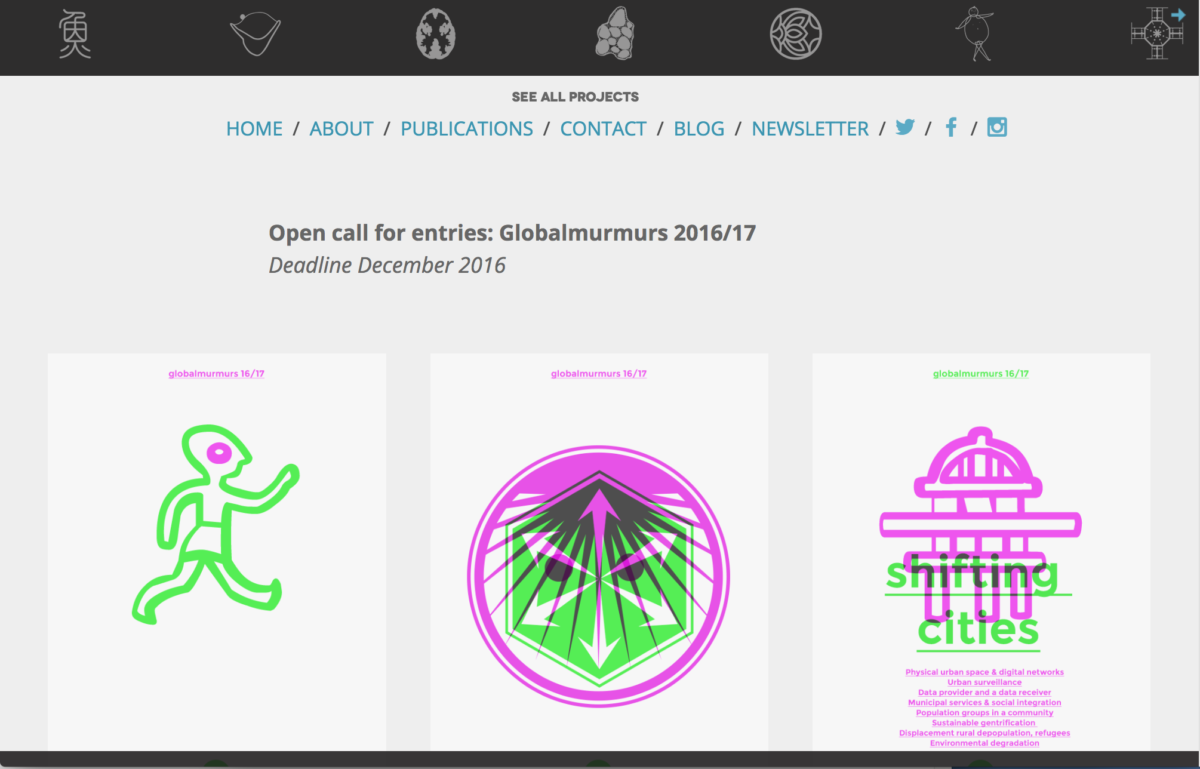
The Phaistos Project now is accepting new entries: Deadline is December 15, 2016. This international call is open to → art & design faculty interested in integrating the project into their teaching and → currently enrolled undergraduate or graduate students in visual communication, visual arts, design, typography, and related areas.
www.45symbols.com

Pascal Glissmann is a media designer, artist, scholar and founder of the studio subcologne. He is currently Assistant Professor of Art, Media and Technology at Parsons The New School for Design. He holds an MFA in Media Arts/Media Design from the Academy of Media Arts Cologne and a BFA in Communication Design from the University of Applied Sciences Duesseldorf. He joined the Academy of Media Arts Cologne as a full-time faculty in 2001 and focused on creative approaches to new media and technology within applied design projects and emerging installations. He became Assistant Professor at the Hong Kong Baptist University, Academy of Visual Arts, in 2007 where he set up the curriculum and infrastructure for the areas of media design and media arts. In 2010 and 2011 he was Visiting Assistant Professor at the Lebanese-American University, School of Architecture and Design, in Beirut.

Olivier Arcioli is a book designer, editorial designer and founder of the studio ateliergrün. He holds an MFA in Media Arts/Media Design from the Academy of Media Arts Cologne and a BFA in Communication Design from the University of Applied Sciences Duesseldorf and the Ecole Cantonal d’art de Lausann. Olivier is currently Assistant, Lecturer and Researcher of Media Design at the Academy of Media Arts Cologne as a full-time faculty with the main focus on book design, print media and typography.

Andreas Henrich is professor emeritus of graphics and media design and retired from the Academy of Media Arts Cologne in 2015. The curriculum of the Academy covers all artistic disciplines including new and traditional media, the different areas of film and moving image, as well as the arts and media sciences. The course is taught at different levels and even offers a PhD. He has been in leading positions at this school and was the president for several years.

Recipient of recognition in the Design Incubation Communication Design Awards 2016.