Data in Motion: Storytelling with Data and Motion Graphics through a Graphic Design Practice & Pedagogy

Students were trained in preparing the dataset through cleaning and enriching it with other relevant metadata

Eugene Park
Associate Professor
University of Minnesota, Twin Cities

This paper proposes a forward-thinking pedagogical approach that brings motion graphics into the practice of data visualization within a graphic design studio classroom. The intention behind this pedagogical approach is to address the need to effectively communicate complex data through visual narratives that enriches design research and practice with data literacy and storytelling.

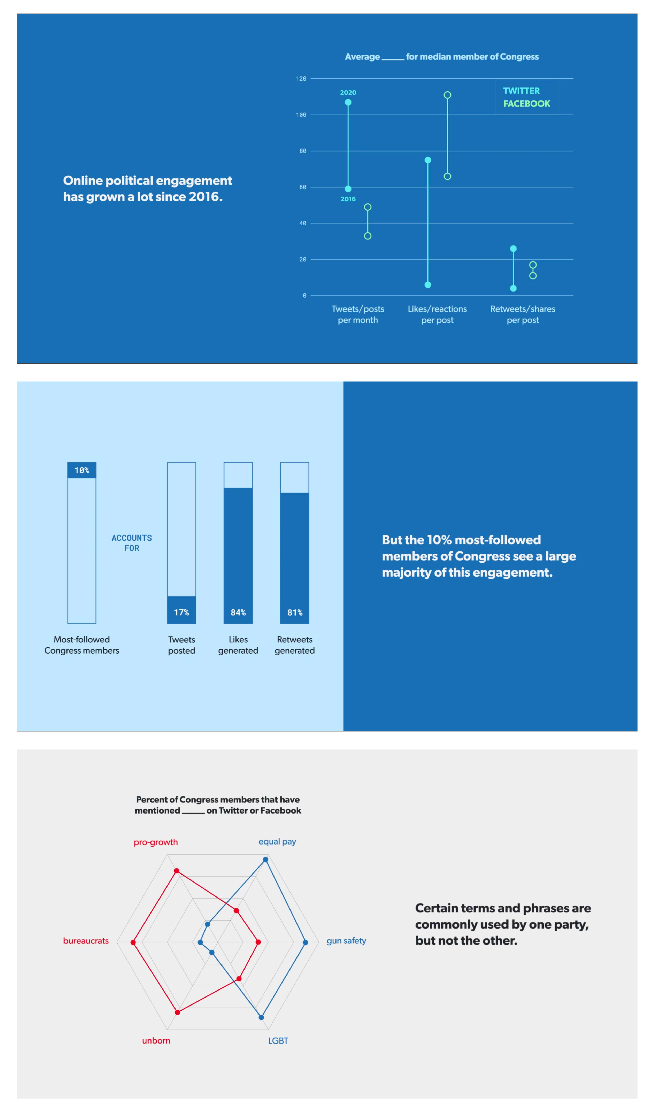
At the heart of this exploration is a case study that tasked junior and senior graphic design students with creating a one minute video to explain a selected topic. Students had to utilize open source data published by government agencies and nonprofits. By working with these datasets, they were trained in preparing the dataset through cleaning and enriching it with other relevant metadata to enhance their intended narrative. In addition to using common analysis tools like Tableau, machine learning algorithms written in Python were also utilized for specialized datasets (i.e. textual data).

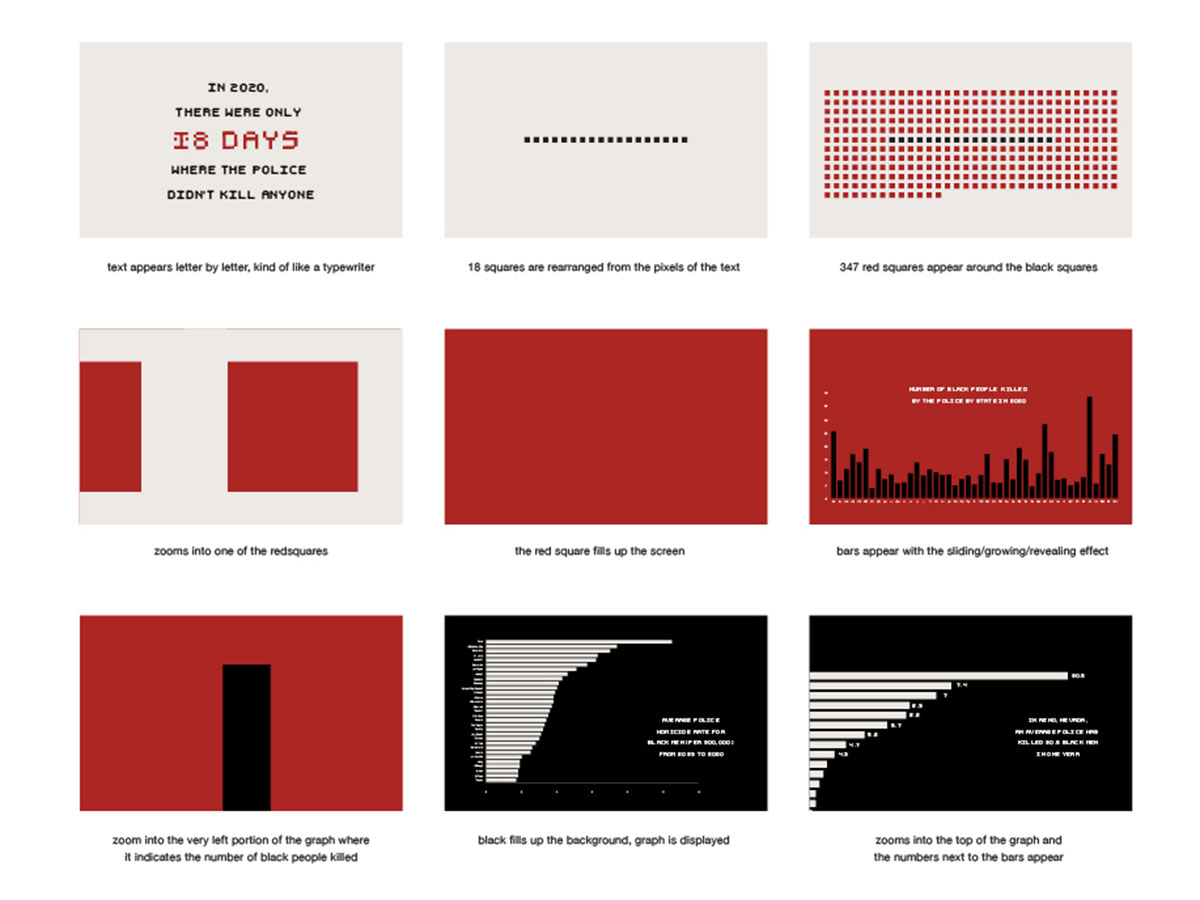
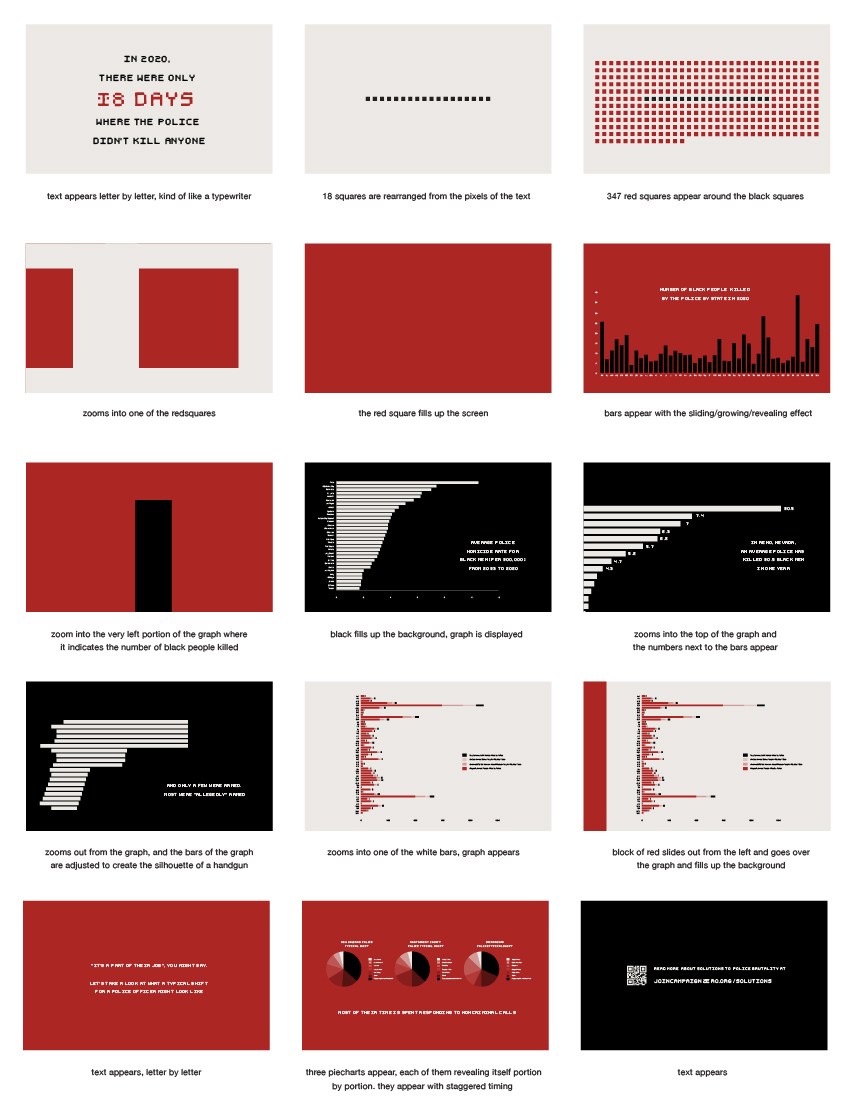
After the analysis stage, students proceeded to storyboard their animations using the graphs they generated. Along the way, they were challenged to design their scenes with the text-to-graph relationships in mind, and strategically plan out their scenes to optimize information retention and minimize cognitive overload. Afterwards, the final animations were created using After Effects. Due to the focus on the analysis, visualization, and animation, there wasn’t time to explore how sound can enhance the animated experience.

This project challenges graphic design students to engage in statistical analysis and apply dual-coding theory where both written text and accompanying images are utilized in creating an explanatory visualization. It also equips students with the skills and insights necessary to create clear, engaging, and informative visual narratives with both traditional practices and modern design tools. Ultimately, this reinforces the importance of graphic designers to expand visual communication beyond the static mediums in order to make complex information accessible.

This design research is presented at Design Incubation Colloquium 10.3: Tenth Anniversary, St. John’s University (Hybrid) on Friday, June 7, 2024.

Mining for Ideas: Collaborative Collages as Spaces of Opportunity

A method founded in play and inspired by design history

Anna Jordan
Assistant Professor
Rochester Institute of Technology

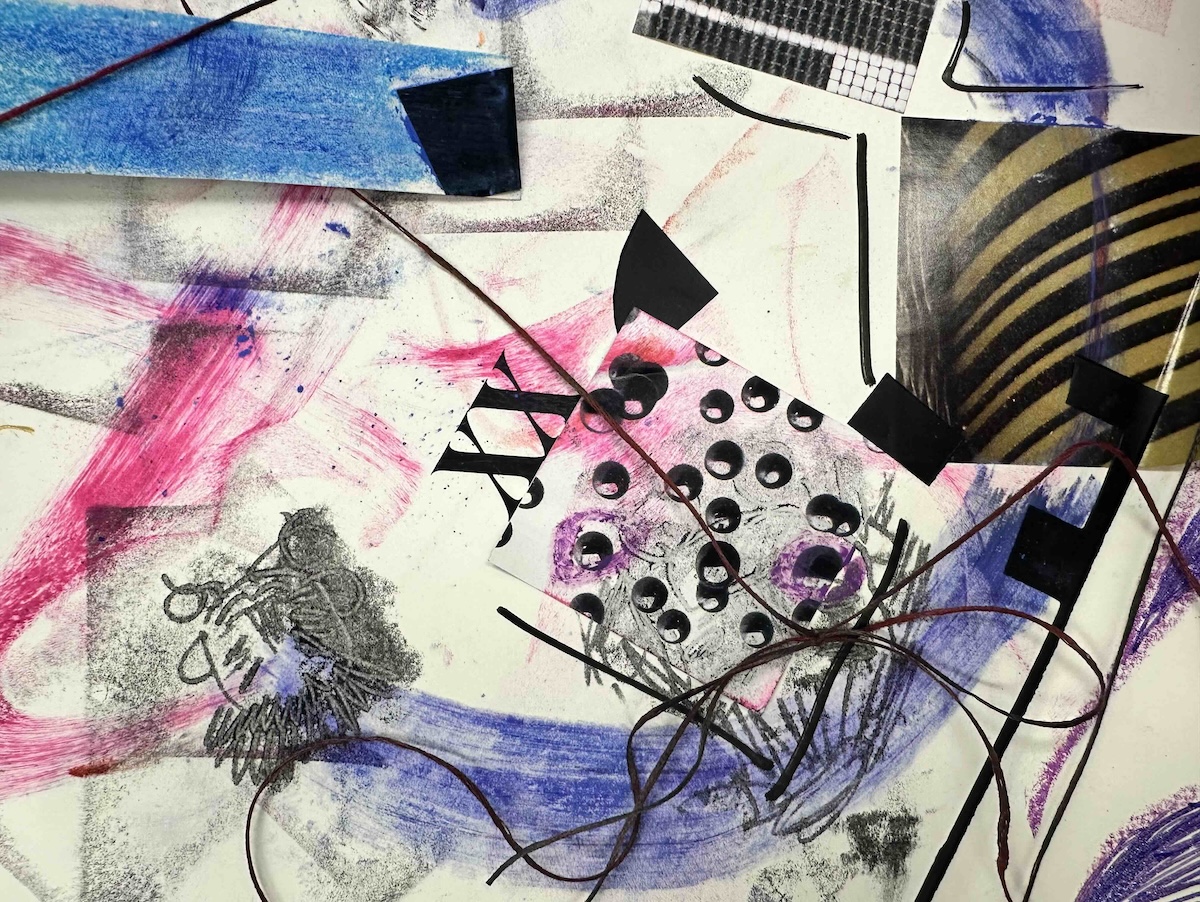
I will present a method that I designed to help students and practicing designers come up with new and surprising ideas. The method, called “Mining for Ideas,” is grounded in collaboration and experimentation. It can be used in a classroom or design studio setting to effectively generate ideas about both form and concept. Designers begin with a collaborative collage game, involving an enormous selection of unconventional tools and materials, leading to spectacular sculptural creations. Each sculptural collage is altered by each designer, leading to truly collaborative pieces. Next, designers photograph the sculptures to create two-dimensional images that are mined for ideas, similar as to how a miner would chip away at earth to reveal valuable gems. Very quickly, designers generate many surprising ideas, each with corresponding examples of concrete design elements such as typography, grid, texture, color, and image. Then, the raw ideas are expanded into applied pieces of graphic design via a flexible morphology that is structured around these concrete design elements. The method is founded in play and inspired by design history precedent including my personal design practice, the Surrealists’ exquisite corpse drawing game, and Skolos-Wedell’s form-to-content method for designing posters. In this presentation, I will illustrate how the method works with several examples from my classroom, explain how the method could be applied to various design problems, and cite student interviews as evidence proving that the process is successful.

This design research is presented at Design Incubation Colloquium 10.3: Tenth Anniversary, St. John’s University (Hybrid) on Friday, June 7, 2024.

Navigating Web Accessibility: Lessons Learned from a Community of Practice

The American Disability Act (ADA) prohibits discrimination based on disability, its website does not provide legal details on complying with US web accessibility laws, only suggestions.

Dannell MacIlwraith
Assistant Professor
Kutztown University

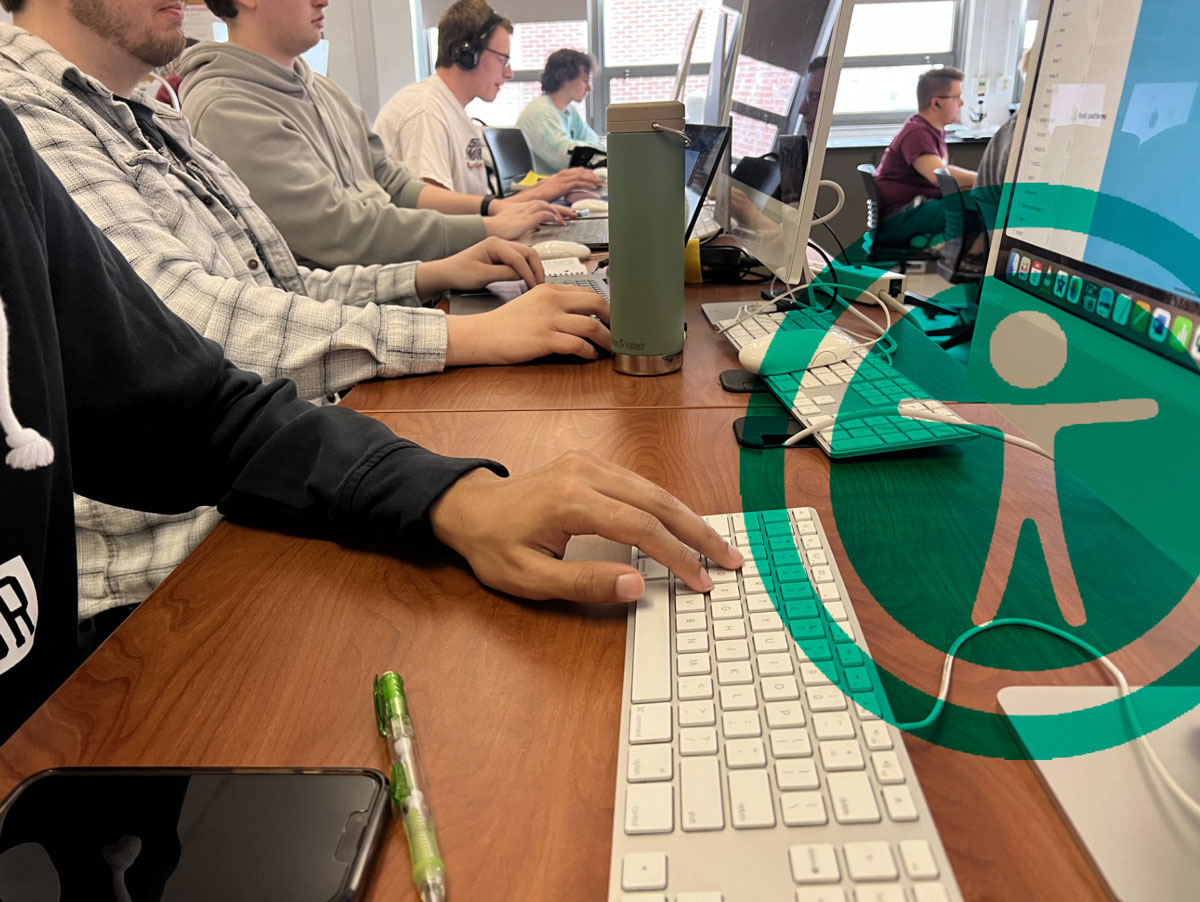
Our college dove deep into a Community of Practice (CoP) on Diversity, Equity, and Inclusion (DEI) in the 2022-2023 academic year. Higher education has embraced CoPs to encourage change and provide opportunities for faculty growth. They build community, enhance cross-discipline collaboration, promote new knowledge, and foster innovation among faculty. Our college asked faculty from different departments and majors to volunteer to meet monthly to discuss improving the DEI in one of their courses or a specific project. In my Interactive Design class, I investigated a website redesign project. My curiosity lay in how much students prioritized accessibility in their designs and their understanding of web accessibility. Our emphasis revolved around acquiring knowledge of practices and tools aiding user accessibility, evaluating internet connection speed, and catering to the needs of the visually impaired. These themes formed the focal points of our group discussions and research.

In the United Kingdom and Canada, web accessibility is required by law. In the United States, the American Disability Act (ADA) prohibits discrimination based on disability. Still, its website does not provide legal details on complying with US web accessibility laws, only suggestions. In the United States, class action suits for ADA violations are on the rise. In 2019, 2285 lawsuits were filed, an increase of 181% from the previous year. Most cases have been settled out of court, with companies agreeing to make the necessary changes to their website. My presentation will demonstrate how my research examined several of these lawsuits (including Netflix and Dominos) and how a better, more inclusive communication design would have avoided these problems.

The Web Content Accessibility Guidelines (WCAG) are recommendations for making online content accessible and more inclusive. The advice is for websites to be:

  • perceivable,
  • operable,
  • understandable,
  • and robust.

In my presentation, I will detail how a Community of Practice (COP) facilitated my examination of our class project while guiding students to assess their designs using WCAG recommendations. For example, for a site to be understandable, users “must be able to understand the information as well as the operation of the user interface.” To maximize the understandability of text, designers should avoid using pure black (HEX #000000) for text, as it makes the eyes work harder due to the extreme contrast on a white background. Another example is being mindful of colorblind individuals and how websites would appear to anyone with a visual impairment.

I aim to illustrate to designers how minor design adjustments can significantly enhance a website’s inclusivity.

This design research is presented at Design Incubation Colloquium 10.3: Tenth Anniversary, St. John’s University (Hybrid) on Friday, June 7, 2024.

Design Incubation Colloquium 10.3: Tenth Anniversary, St. John’s University

Friday, June 7, 2024
Time: 1:00pm–5:00pm EST
St. John’s University, Manhattan Campus
101 Astor Place, New York, NY

Hosted by Liz DeLuna, Professor, St. John’s University

Presentations will be published on the Design Incubation YouTube Channel after May 29, 2024. This hybrid conference will be held on Friday, June 7, 2024 at 1pm EST at St. John’s University, Manhattan Campus.

Eventbrite Tickets, in-person and virtual attendance:

Agenda

1:00pmLiz DeLuna: Welcome
Evolution in Content Creation: 10 years of The Design Writing Fellowship
Aaris Sherin, Professor, St. John’s University
Cultures of Excellence: Lessons Learned from Eight Years of the Communication Design Educators Awards
Steven McCarthy, Professor Emeritus, University of Minnesota
10 Years of Design Incubation’s Colloquium Presentations
Camila Afanador Llach, Peer Review Director, Design Incubation
Associate Professor, Florida Atlantic University
1:45pm– 2:45pmResearch Presentations
Navigating Web Accessibility: Lessons Learned from a Community of Practice 
Dannell MacIlwraith, Assistant Professor, Kutztown University 
Mining for Ideas: Collaborative Collages as Spaces of Opportunity 
Anna Jordan, Assistant Professor, Rochester Institute of Technology 
Data in Motion: Storytelling with Data and Motion Graphics through a Graphic Design Practice & Pedagogy 
Eugene Park 
Associate Professor 
University of Minnesota, Twin Cities 
2:45–3:15pmBREAK
3:15pmOn the Consideration of a Black Grid
Keynote Presentation
Silas Munro, Partner at Polymode, Artist, Design Author, and Design Educator
Practical Tips for Research Success and Remaining Sane
Robin Landa, Distinguished Professor, Michael Graves College, Kean University
3:45pm – 4:45pmResearch Presentations
Federico: Embracing Outside Influences 
Kyla Paolucci, Assistant Professor, St John’s University
Fuzzy Modes, Clear Communication – Radio as a Process, Tool, and Language for Graphic Design 
Matthew Flores, Graphic Design Fellow, School of Design, University of Tennessee-Knoxville 
Revitalizing Symbolic Urbanism: Digitalizing the Vernacular Visual Language of Detroit’s Urban Landscape 
Dho Yee Chung, Assistant Professor, Oakland University 
Old World, New Forms: Extrapolating 19th Century American Wood Type 
Javier Viramontes, Visiting Lecturer, Rochester Institute of Technology

Colloquium 11.1: Boston University, Call for Submissions

Call for design research abstracts. Deadline: June 1, 2024.

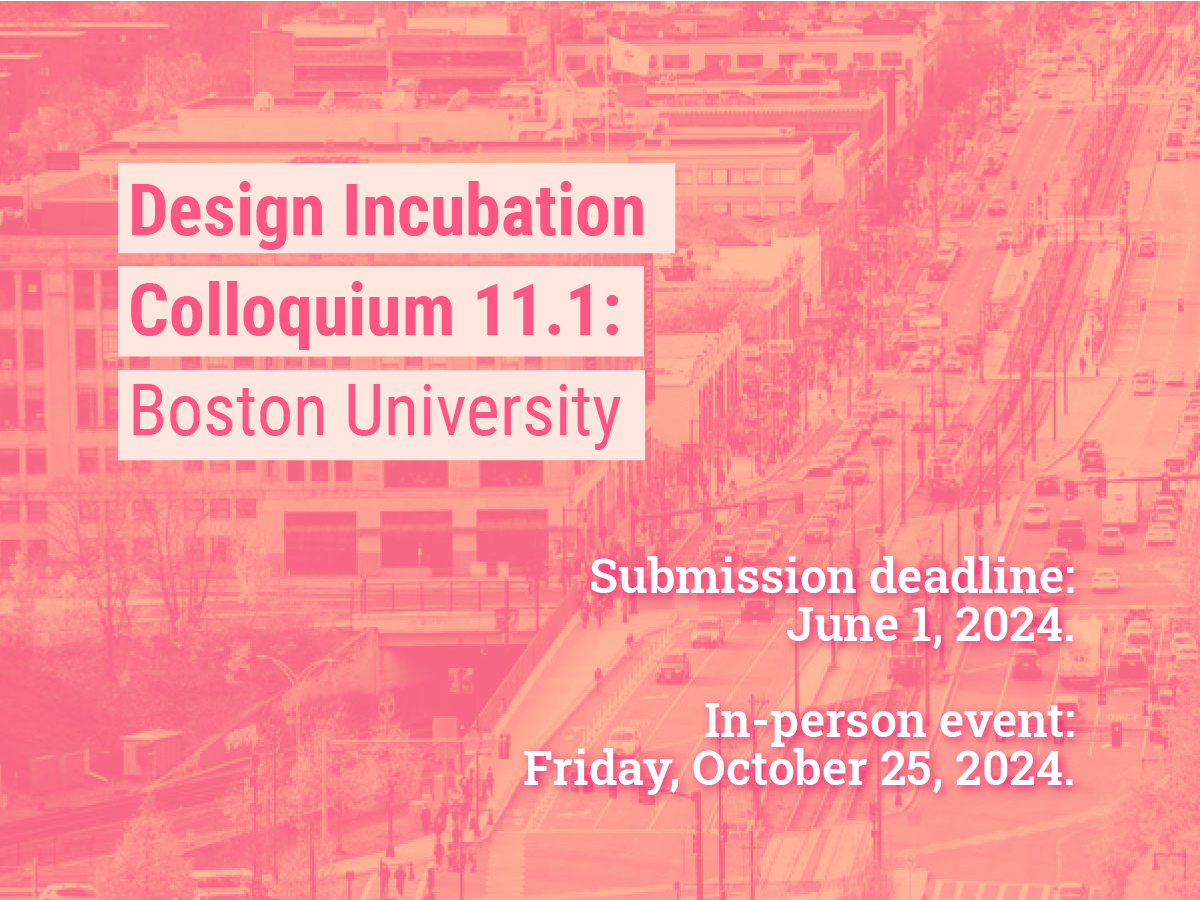
Submission Deadline: Saturday, June 1, 2024.

Event date: Friday, October 25, 2024
Format: In-person Only
Location: Boston University, College of Fine Art, School of Visual Arts

Design + ____________

What is design research?

In honor of Design Incubation’s 10th anniversary, we are examining the ways design and design research has changed over the past decade. How do we define design research, as designers, scholars and educators?

We invite designers — practitioners, creators, educators and students — for a live, in-person event, to examine their own creative research and practice and the adjacencies that touch their work. Design + Social Justice, Design + Curation, Design + Performance …what are some of the subjects that drive your own design curiosity? How does the intersection of such content areas inform your creative practice, your pedagogy, your research? 

The 2024 Colloquium will be organized to showcase your design research in lively, interactive sessions that may take the form of presentations, performances, workshops and / or demonstrations. 

Interact with us!

Submit abstracts describing your Design + __________. 

We invite designers—practitioners and educators—to submit abstracts of design research. This is an in-person event.

Double-blind peer-reviewed colloquium abstracts will be published online. Please review the articles, Quick Start Guide for Writing Abstracts and Writing an Academic Research Abstract: For Communication Design Scholars prior to submitting.

Accepted presentations are videotaped in-advance by the researchers for publication online on the Design Incubation channel which is due by August 1, 2024.

A day-long colloquium will be held at Boston University, College of Fine Art, School of Visual Arts on Friday, October 25, 2024. This event is open to all interested in Communication Design research.

Hosts: Kristen Coogan and Mary Yang.

Moderators: Liz DeLuna, Camila Afanador Llach, Dan Wong.

Maternal Health Hackathon: Community-Led Design for Reproductive Justice in Arkansas

Participants from across the state were gathered to identify the root causes of the maternal health crisis and generate actionable visions for change

Bree McMahon
Assistant Professor
University of Arkansas

Alison Place
Assistant Professor
University of Arkansas

Since 2019, the maternal mortality rate in the United States has increased by more than 15%, according to the CDC. While the number of women who die during or after childbirth has fallen globally in recent decades, it has nearly doubled in the U.S. since 1987. In Arkansas, the maternal death rate is one of the highest in the nation. Arkansas also ranks fourth among states where a majority of women live in a maternal healthcare desert, with 37 counties that do not have a single OB/GYN. Furthermore, Arkansas has the highest teen pregnancy rate in the country and, since the Dobbs decision in June 2022, the fourth strictest anti-abortion laws in the country. The lack of access to providers coupled with laws that lead to forced birth has created a complex crisis of reproductive justice in the state, which disproportionately affects women who are poor, Black, and live in rural areas.  

Understanding the crisis of maternal health in the United States is difficult due to a lack of data, as well as a lack of access to data, because there is no national system for tracking maternal health issues, and laws and guidelines vary from state to state. In 2020, funded by a federal legislative proposal, the Arkansas Maternal Mortality Review Committee published findings that cited a distinct lack of data in the state as a key barrier to improving outcomes. In Arkansas, another significant challenge is the disparate and disconnected nature of birth worker communities. The experiences and perspectives of stakeholders vary widely, and there is a lack of collective understanding of the roots of problems or possible solutions. 

As designers, we explored how design can help untangle the complexities of birth and motherhood and dismantle the systems that perpetuate oppressive and manipulative practices. We were interested in how disparate stakeholders might provide valuable perspectives on this crisis, which could help to articulate a path forward. When it comes to complex systems, designers have a unique ability to approach issues from a collaborative mindset while also keeping in mind users and desirable (and undesirable) outcomes. 

Since 2022, we’ve teamed up with a group of researchers at the University of Arkansas with backgrounds in nursing, business, and design to generate various community-led design approaches to addressing the maternal health crisis. Inspired by the 2014 “Make the Breast Pump Not Suck!” Hackathon at the MIT Media Lab, we hosted the Arkansas Maternal Health Community Hackathon in 2023. Traditionally, hackathons are multi-day events attended by multidisciplinary professionals, such as programmers, designers, and engineers. While typical hackathons are rooted in patriarchal tech culture, feminist researchers and designers have recently co-opted them as participatory spaces for social change. With an emphasis on relationship-building and care, feminist hackathons lay the groundwork for a plurality of community-led solutions to complex problems that are equitable, sustainable, and inclusive.  

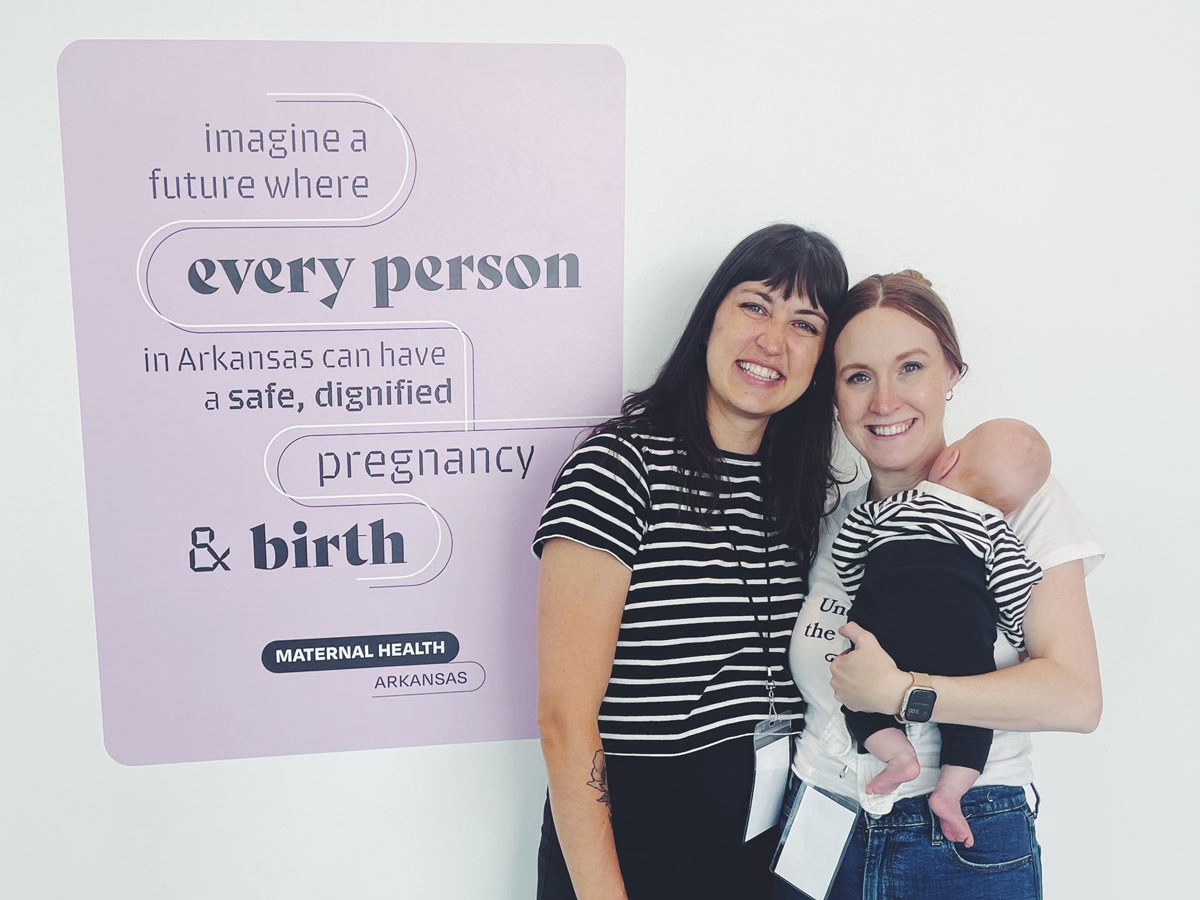
The Arkansas Maternal Health Community Hackathon was a free one-day event that brought participants from across the state together to identify the root causes of the maternal health crisis and generate actionable visions for change. The two primary goals of the hackathon were to start conversations and build connections, so we designed the event to make people feel comfortable and to accommodate a wide variety of needs. Nearly 100 people registered for the event, and 72 of them attended. Attendees included parents of all genders, birth workers, nurses, doctors, midwives, doulas, public health experts, legal experts, policymakers, journalists, designers, and artists. We were strategic in our promotion of the event, focusing especially on inviting people from rural areas of the state and practitioners with expertise in marginalized populations. Funding was provided to cover travel and lodging for attendees who came from other areas of the state.  

Programming was focused on clearly framing the maternal health crisis and providing opportunities for attendees to form deep connections and dialogues. The day’s events included two keynote speakers; an advocacy session on how to talk to legislators about maternal health; a documentary screening by Every Mother Counts, a national organization devoted to maternal health; a networking and storytelling space; a resource room; a pre-/post-natal yoga session; and free childcare. With the support of facilitated activities and an on-site makerspace, some participants formed teams to address specific problems related to maternal and infant health. Volunteer designers worked with practitioners and organizations to strategize ways to approach various problems and discuss possible outcomes. Projects completed as a result of the hackathon included promotional materials for a local midwife, information design about prenatal care options for a local hospital, screen-printed tote bags with home birth kits for a local midwife, and a strategy and prototype for a website for the women’s hospital. We captured the perspectives of attendees by inviting them to participate in a qualitative research study about the barriers to maternal health in the state. We also produced a short documentary about the event (link in PDF). 

The impact of the event was evident in the overwhelmingly positive feedback we received. We heard from dozens of participants during and after the event that it was incredibly meaningful for them to come together in a supported space to work toward addressing this enormous problem. Many said they would like the hackathon to be an annual event. We are excited by the relationships formed and the community built through this one event. With the feminist hackathon as a guide, we are continuing to build a model for participatory design with diverse communities to build coalitions in the uphill battle toward reproductive justice in the South.

This project was the 2023 Design Incubation Educators Awards winner recipient in the category of Service.

Bree McMahon is a designer and educator driven by examining complex topics through dialogical prompts that encourage conversation, critical perspective, and collective learning. She is an assistant professor of graphic design at the University of Arkansas School of Art and currently serves as the inaugural director of graduate studies for the Master of Design in Communication Design program. Her research is situated within design pedagogy and the state of the design discipline. After the birth of her first child, she established an additional research trajectory concerned with maternal health, health literacy, and storytelling for improving birth outcomes in the United States. Prior to teaching, she worked with start-ups, small businesses, and non-profits within her various communities across the country. She received her M.G.D. from North Carolina State University College of Design and previous degrees in graphic design and art history from Carthage College in Kenosha, Wisconsin.

Alison Place is a designer, educator, and researcher who works at the intersection of feminism and design to create spaces for critical making and radical speculation. She is the author of Feminist Designer: On the Personal and the Political in Design published by MIT Press in 2023. She is an assistant professor of graphic design at the University of Arkansas School of Art, where she also serves as the director of the graphic design program. She has held several leadership roles in the design community, including two terms on the AIGA Design Educators Community National Steering Committee, and has earned multiple national awards for her scholarship and creative work. Previously, she worked for more than ten years as a creative director and designer for nonprofit and higher education institutions. She earned an M.F.A. in experience design from Miami University of Ohio, as well as degrees in graphic design and journalism from the University of Cincinnati College of Design, Architecture, Art, and Planning.

Colloquium 10.3: Tenth Anniversary Edition June 2024, Call for Submissions

Call for design research abstracts. Deadline: Friday, April 26, 2024

Submission Deadline Extended: Friday, April 26, 2024.

Event date: Friday, June 7, 2024
Location: St John’s University, Manhattan Campus

We invite designers—practitioners, creators, and educators—to submit abstracts of design research, creative investigations, and productions. This is a hybrid event format. In-person will be located at St. John’s University, Manhattan Campus.

Double-blind peer-reviewed colloquium abstracts will be published online. Please review the articles, Quick Start Guide for Writing Abstracts and Writing an Academic Research Abstract: For Communication Design Scholars before submitting.

Accepted presentations will be videotaped by the researchers and published online on the Design Incubation channel which is due by Friday, May 10, 2024. A moderated discussion will be held virtually on Friday, June 7, 2024. We encourage all attendees to watch the videos in advance of the moderated discussion. This event is open to all people interested in Communication Design research.

Presentation format is Pecha Kucha.

For more details, see the colloquia details and description. Abstracts can be submitted online for peer review.

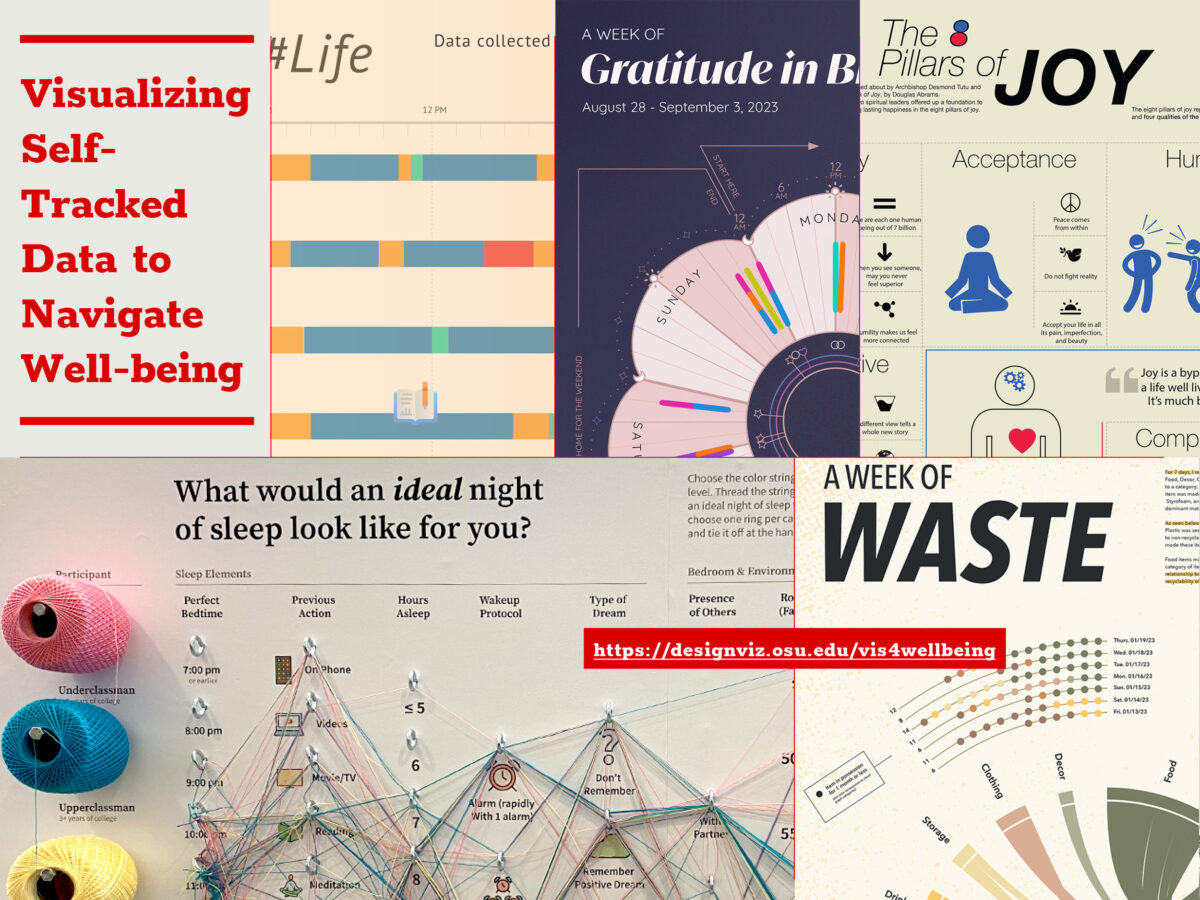
Visualizing Self-Tracked Data to Navigate Well-being

An explorative process, grounded in Positive Psychology’s core concepts like gratitude, acts of kindness, goal-setting, and mindfulness

Yvette Shen
Associate Professor
Ohio State University

As a visual communication design educator specializing in Information Design and Data Visualization, Shen views teaching as a collaborative journey of discovery with her students. The journey in education here goes beyond honing technical skills, venturing into an enlightening realm where learning outgrows traditional methods and tools.

Since 2018, students entering her classroom have embarked on this explorative process, grounded in Positive Psychology’s core concepts like gratitude, acts of kindness, goal-setting, and mindfulness. Through meticulously structured visualization projects that involve tracking and visually rendering their behavior and emotion over time, they not only learn design skills but also engage in profound self-reflection, leading to meaningful well-being insights. In these classes, students engage in the active self-tracking of their daily experiences, encompassing everything from emotional states and physical activities to altruistic behaviors and environmental interactions. This process, supported by a combination of manual logging and digital tools and rooted in Positive Psychology principles, yields a rich dataset. This data becomes a canvas for each participant to visualize and analyze, offering unique insights into students’ narratives.

This educational strategy bridges the practical application of data visualization with the theoretical constructs of Positive Psychology. During the COVID-19 pandemic, for instance, students’ self-tracked metrics evolved beyond mere numbers. Interpreted through Positive Psychology principles, these metrics narrated stories of resilience, coping, and the joy found in everyday interactions. Acts of kindness, when quantified and analyzed, transformed into powerful reflections of character strengths such as empathy and compassion. The synergy of data visualization with Positive Psychology equips students with a dual-lens: the self-tracking acts as a reflective mirror, while Positive Psychology offers interpretive tools to decipher these reflections. More than 180 students have engaged with this pedagogical model over the years, revealing that the alignment of daily actions with personal values fosters a sense of purpose. Moreover, the act of savoring positivity encourages students to cultivate an appreciative outlook on life.

Navigating through the data visualization process presents its challenges. Students must make coherent sense of raw data and determine the most impactful visual representations. Dissecting qualitative data to discern patterns and crafting personal stories from it remains a continuously evolving puzzle, demanding critical engagement and thoughtful interpretation. While the course centers on the foundational principles of information design—including the gathering, sorting, categorization, and analysis of information—the incorporation of Positive Psychology highlights a vibrant nexus between data visualization and personal well-being. Students not only master design intricacies but also witness the empowering effect of design on individual well-being. They emerge with enhanced data literacy, design thinking skills, and a strengthened culture of introspection and ongoing personal development.

This educational journey in Information Design and Data Visualization aims to transcend scholarly pursuit; it seeks to become a transformative experience that enriches student lives. It cultivates an appreciation for the storytelling power of data and deepens the significance of introspection in personal growth. The hope is that this approach to Information Design will exemplify how the meticulous art of visual communication, in synergy with human-centered design philosophy, can illuminate the path to holistic wellness and enlightened self-awareness.

This project was the 2023 Design Incubation Educators Awards runner-up recipient in the category of Teaching.

Yvette Shen is an Associate Professor in the Department of Design at the Ohio State University and the program coordinator in the area of Visual Communication Design. The focus of her current creative and research pursuits is centered on the field of information design and information visualization. Specifically, she is interested in exploring how design can facilitate a deeper understanding of complex information and foster increased interest in learning, as well as how visualization and user experience can promote positive behaviors and emotions. Yvette holds an M.F.A. degree in Visual Communication Design and a B.S. degree in Computer Science.

You Look Like the Right Type

In a daily ritual since 2008, exact-dialogue fragments of overheard conversations are made into illustrated quotes

Mark Addison Smith
Associate Professor
DePaul University

On November 23, 2008, in the Chicago downtown loop, while hurrying to catch the subway, a young woman approached Mark Addison Smith and asked for a cigarette. “I don’t smoke,” he said. She snapped her fingers and replied: “Ahhh, you look like the right type.” Suddenly and strangely inspired by the exchange, he raced home and illustrated their brief conversation with expressive hand lettering, and a daily artistic practice was born.

In a daily ritual since 2008, Smith redraws exact-dialogue fragments of overheard conversations as 7×11-inch India ink works-on-paper, combining verbatim, hand-drawn text with visual and tonal embellishment; he often draws more than one quote per day. For gallery installations and artist’s books, Smith edits the single drawings into larger, theme-based conversations between people who have never met or exchanged words. When amassed together as modular narratives, the black and white drawings—voiced by strangers and collectively titled You Look Like The Right Type—share grayscale conversations across time, place, age, and gender (the who, what, when, where, why, and how of documentary storytelling). And the audience, as interlocutor, triangulates the conversation by reading that which was once spoken (a tenet of grammatology) and making their own non-linear, grayscale associations between text, image, and completion of what’s left unsaid.

https://www.markaddisonsmith.com/you-look-like-the-right-type

November 2023 marked the fifteenth anniversary of Mark Addison Smith’s You Look Like The Right Type archive, now containing over 6,000 works-on-paper; he has never missed a day of eavesdropping and drawing other people’s words since he first began this series.

Select exhibitions:

In 2023, McMaster Gallery, within the School of Visual Art and Design at the University of South Carolina, celebrated the fifteenth anniversary of You Look Like The Right Type with an exhibition of Smith’s drawings, artist’s books, and sketchbooks. The exhibition spotlighted drawings Smith generated during the 2020 COVID-19 lockdown, in which he held remote conversations with strangers across the world and translated their words into drawn, visual essays of how they were grappling with the pandemic.

In 2019, The Bakery Atlanta, co-presented by Atlanta’s Eyedrum Gallery, celebrated the tenth anniversary of You Look Like The Right Type with an exhibition of 365 drawings.

Other solo exhibitions include Chicago’s Center on Halsted Gallery, where Smith showcased the original 24 drawings from his Years Yet Yesterday drawing series, sourced in language spoken by gay rights activist Larry Kramer, to commemorate World AIDS Day.

Group exhibitions include the Center for Book Arts in New York, Co-Prosperity in Chicago, Hegyvidék Gallery in Budapest, the Kinsey Institute in Bloomington, Leslie-Lohman Museum of Art in New York, and Minnesota Center for Book Arts (MCBA).

Mark Addison Smith’s type specimens and broadsides are included in the permanent collections at Emory University, the Kinsey Institute, Leslie-Lohman, Ringling College of Art and Design, and Virginia Commonwealth University.

Select interviews with Mark Addison Smith about this work:

Steven Heller, “The Daily Heller: Drawing to Manage Stress,” PRINT, July 1, 2022.

Debbie Millman, “Illustrating Sound,” The Mic, produced by NYCxDesign, episode one, October 30, 2020. 

Mark S. King, “This gay artist draws what he (secretly) hears you say on the streets,” Queerty, September 5, 2020.

Steven Heller, “The Daily Heller: Typographic Eavesdropping,” PRINT, May 5, 2020.

Kathryn Weinstein, “Sharing Loudly,” Designer, University & College Designers Association, Volume 24, Number 2, Summer 2017.

This project was the 2023 Design Incubation Educators Awards winner recipient in the category of Scholarship: Creative Works.

Mark Addison Smith is a queer artist whose design specialization is typographic storytelling: allowing illustrative text to convey a visual narrative through printed matter, artist books, and site installations. With his on-going, text-based archive, You Look Like The Right Type, he has been drawing snippets of overheard conversations every single day since 2008 and exhibiting the works as larger-scale conversations between strangers exchanging words on topics never spoken. You Look Like the Right Type has been featured in All Things Letters, Deadline, Design Sponge, Goodtype, Hyperallergic, I Love Typography, PRINT Magazine’s The Daily Heller, Queerty, MAGMA Brand Design’s Slanted Magazine, and in conversation with Debbie Millman for the very first episode of NYCxDesign’s podcast, The Mic. His artist’s books are housed in over 80 permanent collections and library archives, including Brooklyn Museum Artists’ Books Collection, Center for Book Arts, Cooper Hewitt Smithsonian Design Museum, Getty Research Institute, Guggenheim Museum Library and Archives, Joan Flasch Artists’ Book Collection, Library of Congress, The Metropolitan Museum of Art Thomas J. Watson Library, MoMA Franklin Furnace, Museum of Contemporary Art (MCA) Chicago, ONE National Gay and Lesbian Archives at the University of Southern California, Smithsonian American Art and National Portrait Gallery Library Artists’ Book Collection, Walker Art Center Archives and Library, and the Whitney Museum of American Art Frances Mulhall Achilles Library. Smith holds a Master of Fine Arts in Visual Communication Design from the School of the Art Institute of Chicago (SAIC).

Making History: Teaching Design History Methods in Studio

Learning outcomes emphasized gathering information, examining sources, interpreting evidence, connecting design to social contexts, and crafting historical narratives in text and image

Aggie Toppins
Associate Professor
Washington University in St. Louis

In Spring 2023, Toppins introduced a new course called “Making History” in which students had the opportunity to learn historical research methods and use them in their studio work. At the time, WashU had only one design history course, an elective survey of graphic design, which one student in my class had taken. An ungraded quiz on the first day of class showed that most students had no sense of what was (or was not) considered canonical. None were familiar with prevailing themes in graphic design history. Unlike a survey course, which tasks students with absorbing a broad scope of historical content, this course focused on making inquiries into the past. Learning outcomes emphasized gathering information, examining sources, interpreting evidence, connecting design to social contexts, and crafting historical narratives in text and image. 

Toppins’ teaching methods were hands-on and high-impact. Having secured a $2500 Sam Fox School teaching grant, she was able to bring in a number of guest speakers and take students on field trips. Students visited local archives, museums, and historical sites. They listened to scholars and designers with diverse backgrounds discuss their research methods and outcomes. They got to physically handle historical objects from cuneiform tablets to mid-century paste-ups. Students also read historical texts, critical essays, and watched documentaries to prepare for in-class discussions and debates. After each of these activities, students responded to prompts in a provided sketchbook. The sketchbook served as the “field notes” component of the course, in which students recorded their ongoing reflections and took notes on research. In most cases, the sketchbook helped students locate the topic for their final, self-guided project. Throughout the semester, leading up to this project, students engaged in four workshops that instilled specific methods. Each workshop resulted in a short outcome, like a zine or broadside, that kept students connecting the dots between making historical inquiries and making graphic design. The final project asked students to pursue a topic of their own interest. Students became primary investigators, forming their own questions and mapping out their own research approaches.

Student work from this class was strong in terms of formal design and critical positioning. Students could articulate their goals, match appropriate research methods to their questions, and translate their findings into criteria for design projects. They also became familiar with graphic design history’s prevailing themes by thinking critically about historiography and methodology.  Another important outcome of this course is that it gave Toppins the chance to test exercises and content for her forthcoming book, Thinking Through Graphic Design History. Some student work from this class will be published in the book, which will reach market in 2025.

This project was the 2023 Design Incubation Educators Awards winner recipient in the category of Teaching.

Aggie Toppins is an Associate Professor of Communication Design and Chair of Design at the Sam Fox School of Design and Visual Arts at Washington University in St. Louis. She combines studio practice and critical writing to explore the social life of graphics. Aggie’s creative work has been internationally exhibited and garnered national design awards including the Type Director’s Club ‘Certificate of Typographic Excellence,’ and the SECAC Outstanding Achievement in Graphic Design award. Her recent writing has been published by Design and Culture, Design Issues, Diseña, Slanted, Eye, and AIGA Eye on Design. She has written essays for Briar Levit’s book Baseline Shift: Untold Stories of Women in Graphic Design History and Ali Place’s recent volume, Feminist Designer. Her first book Thinking Through Graphic Design History will be published by Bloomsbury in 2025.