Exploring the Research Map: Thoughts on Design Research Investigations

An Affiliated Society Meeting at the 110th Annual CAA Conference

Join Design Incubation – Business Meeting on Thursday, March 3, 2:00 PM – 3:00 PM at the 110th Annual CAA Conference. Free and open to the public.

Design Incubation Directors Jessica Barness, Liz DeLuna, Camila Afanador-Llach, and Dan Wong will moderate a discussion on the mapping of design research and its development trajectory.

Design Incubation recently launched a new initiative to map current activities in Communication Design Research and Scholarship (R&S). We kicked off this project at the international Design Research Society (DRS) Festival of Emergence 2021, and workshopped a second phase with AIGA DEC November 2021. This map is a collaborative, living, visual document that will further establish historical precedents and future trajectories for Communication Design R&S. Join us as we share progress, generate dialogue, and continue to shape this project.

Interdisciplinary Human-Centered Design Research – Overcoming Practical Challenges Before and During The Pandemic Time – A Pragmatic Approach to Design Education and Practice

A project to improve VA technology for veterans with spinal cord injuries

Sam Anvari
Assistant Professor
California State University Long Beach

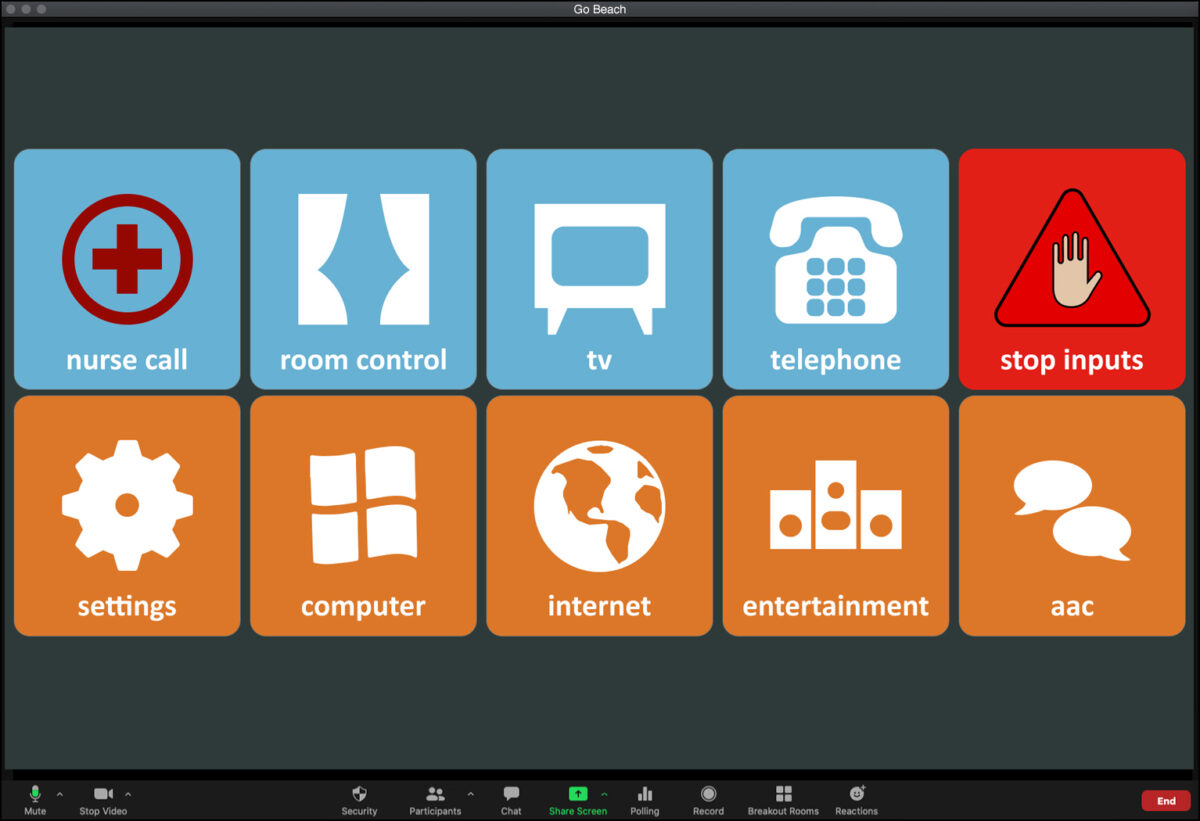
This presentation proposal covers the practical approach and various pedagogical measures taken to form a team of fourteen students and two faculty from Graphic Design and Psychology to improve VA technology for veterans with spinal cord injuries. This multidisciplinary project is ongoing research between California State University Long Beach, the Spinal Cord Injuries and Disorders (SCI/D) Center at the Long Beach VA Hospital, and the device manufacturer, Accessibility Services, Inc. in Florida. The project’s goal is to improve the design usability of the Environmental Control Unit (ECU), which patients with SCI/D use to complete everyday tasks such as making a phone call, calling the nurse, controlling the TV, adjusting the bed, etc. The project started in 2019 by performing heuristic evaluations on the ECU device with a team of seven students and faculty from psychology, health science, and graphic design. Findings from this work identified system elements needing improvement for better user experience and visual interfaces design.

Despite the pandemic and its associated lockdown conditions, the research team successfully transitioned to the project’s next phase, design A/B testing, online. The faculty leaders scheduled virtual weekly meetings with the team and developed an alternative plan to continue the project. In 2020, students worked tirelessly to a digital prototype of the device that is accessible remotely online within the safe space of the home. The ECU device’s online prototype made it possible for the research team to apply design changes and prepare for remote user testing. In the meantime, the research team grew more extensive, with five students from the graphic design program, eight students from the Psychology Human Factors program, and another two students from the university’s undergraduate research opportunity program (UROP). This presentation will discuss various tools and methods for human-centered applied design and networking with the industry.

This research was presented at the Design Incubation Colloquium 8.2: Annual CAA Conference on Thursday, March 3, 2022.

Design Incubation Colloquium 8.2: Annual CAA Conference 2022 (Virtual)

Presentations and discussion in Research and Scholarship in Communication Design at the 110th Annual CAA Conference 2022

Recent research in Communication Design. Presentations of unique, significant creative work, design education, practice of design, case studies, contemporary practice, new technologies, methods, and design research. A moderated discussion will follow the series of presentations.

The colloquium session is open to all conference attendees.

Thursday, March 3, 2022
 10:00 AM – 11:30 AM

CHAIRS
Heather Snyder Quinn
DePaul University

Camila Afanador-Llach
Florida Atlantic University

DISCUSSANT
Jessica Barness
Kent State University

Presentations

Pakistani TVCs: How Local Advertisers are Coding Messages for Young Consumers 
Nida Ijaz
Lecturer
Ph.D. Scholar (Fine Arts) in Research Center for Art & Design, Institute of Design & Visual Arts, Lahore College for Women University, Pakistan

Architecture and Design Students Envision the Post-COVID Built Environment
Denise Anderson
Assistant Professor
Michael Graves College, Kean University

Craig Konyk
Associate Professor
Michael Graves College, Kean University


Kylie Mena
Michael Graves College, Kean University

Varrianna Siryon
Michael Graves College, Kean University

Colored Bodies: Cultural Constructs in Standard Color Theory Pedagogy
Aaron Fine
Professor
Truman State University

Interdisciplinary Human-Centered Design Research – Overcoming Practical Challenges Before and During The Pandemic Time – A Pragmatic Approach to Design Education and Practice
Sam Anvari
Assistant Professor
California State University Long Beach

The Black Experience in Design
Kelly Walters 
Assistant Professor
Parsons, The New School

Anne H. Berry
Assistant Professor
Cleveland State University

A Theory of Design Identity
Colette Gaiter
Professor
Departments of Africana Studies and Art & Design, University of Delaware

Bringing Peace (Circles) to (Design) Practice, Revisited
Dave Pabellon
Assistant Professor
Columbia College Chicago

Academic Marginality and Exclusion for Graphic Design Educators of the United States
Yeohyun Ahn
Assitant Professor
University of Wisconsin-Madison

Collective Mapping of Communication Design Research and Scholarship

This is a collaborative, living, visual document that will further establish historical precedents and future trajectories.

November 12, 2021, 3-4pm EST 
Zoom link

AIGA DEC edition with Design Incubation Chairs Jessica Barness, Liz DeLuna, Heather Snyder Quinn, and Dan Wong. Design Incubation recently launched a new initiative to map current activities in Communication Design Research and Scholarship (R&S). We kicked off this project at the international Design Research Society Festival of Emergence last month, and for this second phase, we are bringing it to the AIGA DEC. This map is a collaborative, living, visual document that will further establish historical precedents and future trajectories for Communication Design R&S. Join us as we share progress, generate dialogue, and continue to shape this project.

Moderated by Rebecca Tegtmeyer

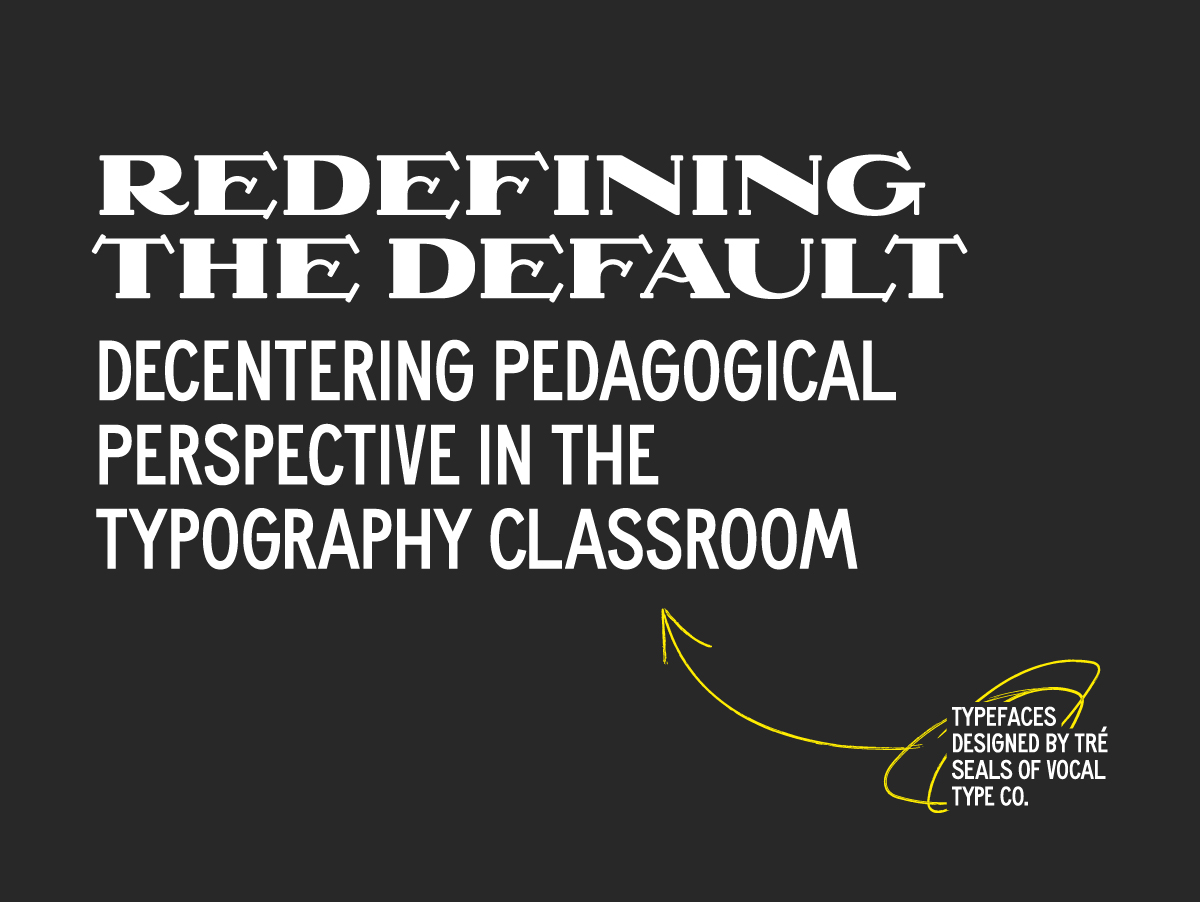
Redefining The Default: Decentering Pedagogical Perspective in the Typography Classroom

Educators need diverse representation in course materials—students must feel seen in order to truly succeed.

Mia Culbertson
Assistant Professor
Kutztown University

Typography is central to design, yet the standard curriculum centers around Western, able-bodied, straight, white, and male figures, frequently misrepresenting or excluding marginalized communities. In educational and professional spaces, this can have harmful effects on BIPOC, LGBTQ+, and disabled designer and student communities. Creating a typography classroom that prioritizes equitable representation will avoid alienating minority student communities and reduce stereotyping through uninformed design decisions.

There has been a recent push in our discipline to decenter and decolonize our curriculum with the publication of resources like Decentering Whiteness in Design History Resources (Pass et al., 2020) and Extra Bold (Lupton et al., 2021); in this presentation I will discuss the importance of doing so specifically within the realm of typography. As the visual preservation of language, typography can be intricate, particularly when positioned within the larger context of world history. As often seen in other fields, minority communities’ contributions are often excluded from the canon despite frequently serving as the foundation on which Western designers expanded on; for example, facets of typography in the Belgian Art Nouveau movement can be linked to traditional Congolese motifs.  

To send emerging designers out into the world who truly understand the cultural nuances of typography and creating with rather than for communities, educators need diverse representation in course materials—students must feel seen in order to truly succeed. Teaching non-Latin communications such as the ancient Vai syllabary and introducing designers from marginalized communities like Angel DeCora empowers students and ensures these significant contributions to the development of typography are not forgotten or “othered”; it also helps ensure students’ broad perspective and historical context as they develop their own typographic practices, avoiding stereotypes and appropriation in design. Decentering pedagogical perspective in the typography classroom has widespread implications for marginalized student communities and our discipline at large.

Colloquium 8.1: Seton Hall University

Saturday, October 23, 2021
Time: 1:00pm–2:00pm
Online ZOOM event

Hosted by Christine Lhowe, Assistant Professor and Christine Krus, Professor of Art & Design, College of Communication and the Arts, Seton Hall University.

Presentations will be published on the Design Incubation YouTube Channel after October 5, 2021. Virtual Conference will be held online on Saturday, October 23, 2021 at 1pm EST.

Moderators

Camila Afanador Llach
Assistant Professor
Florida Atlantic University

Christine Lhowe
Assistant Professor
Seton Hall University

Christine Krus
Professor
Seton Hall University

Presentations

Towards a Typographic Pluriverse
Laura Rossi García
Professional Lecturer
DePaul University

Social Media as Design-Writing Process Tool
Dori Griffin
Assistant Professor
University of Florida

Utterly Butterly Propaganda: An Analysis of Illustration as a Tool of Persuasion in Amul™ Ads
Kruttika Susarla
Graduate Student
Washington University in St. Louis

Mash Maker: Improvisation for Design Student Studios 
Ryan Slone
Assistant Professor
University of Arkansas

Bree McMahon
Assistant Professor
University of Arkansas

Redefining The Default: Decentering Pedagogical Perspective in the Typography Classroom
Mia Culbertson
Assistant Professor
Kutztown University

Interactive Storytelling for Packaging: Design Using Augmented Technology to Explore Personal and Social Identities
Linh Dao
Assistant Professor
California Polytechnic State University


Let’s Talk Teaching Strategies and Pedagogy for Design and Art Direction

Design education strategies and pedagogical methods for remote, online, hybrid, and face-to-face learning

June 16, 2021
3pm – 4:30pm

This event offers the opportunity for an open discussion of successful activities and challenging teaching scenarios during these chaotic academic transitions. Come join us to discuss your experiences with design education strategies and pedagogical methods for remote, online, virtual, hybrid, and asynchronous learning. Ideas for discussion include conventional vs. unconventional instructional methodologies, student warm-ups, interstitial exercises, laboratory assignments, minor and major course projects, critiques, rubrics, collaboration, discussions, challenges, and serendipity. Share your experiences and stories.

Robin Landa, Distinguished Professor in the Michael Graves College at Kean University and author of the newly published 4th edition of Advertising by Design (Wiley) and 6th edition of Graphic Design Solutions (Cengage) will moderate this workshop.

Presentation and Directives
Robin Landa, Kean University

Breakout Room Facilitators:

  • Anne H. Berry, Cleveland State University
  • Deborah Ceballos, Kean University
  • John Delacruz, San Jose State University
  • Neil Ward, Drake University
  • Li Zhang, Purdue University

Colloquium 8.1: Seton Hall University, Call for Submissions

Call for design research abstracts. Deadline: Saturday, July 24, 2021.

Submission Deadline: Saturday, July 24, 2021.

Event date: Saturday, October 23, 2021.

We invite designers—practitioners and educators—to submit abstracts of design research. This is a virtual event format.

Double-blind peer-reviewed colloquium abstracts will be published online. Please review the articles, Quick Start Guide for Writing Abstracts and Writing an Academic Research Abstract: For Communication Design Scholars prior to submitting.

Accepted presentations will be videotaped by the researchers and published online on the Design Incubation channel which is due by October 2, 2021. A moderated discussion will be held virtually on October 23, 2021. We encourage all attendees to watch the videos in advance of the moderated discussion. This event is open to all interested in Communication Design research.

Hosted by Christine Lhowe, Assistant Professor and Christine Krus, Professor of Art & Design, College of Communication and the Arts, Seton Hall University.

Presentations format is Pecha Kucha.

For more details, see the colloquia details and description. Abstracts can be submitted online for peer review.

Design Incubation Colloquium 7.3: Florida Atlantic University

A Virtual Conference Saturday, April 10, 2021, 1PM EST.

Presentations will be published on the Design Incubation YouTube Channel after April 3, 2021. Virtual Conference will be held online on Saturday, April 10, 2021 at 1pm EST.

Colloquium 7.3: Florida Atlantic University (#DI2021apr) will be held online. Registration for this event below.

Virtually hosted by Camila Afanador-Llach, Assistant Professor + Graduate Coordinator, Graphic Design, the Dorothy F. Schmidt College of Arts and Letters at Florida Atlantic University. This event is open to all interested in Communication Design research.

Please view research presentations before attending the moderated discussion on Saturday, April 10, 2021.

Presentations

Forensic Abstraction in Israel/Palestine: the Graphic Representations of Bodies in Citizen Media
Liat Berdugo
Assistant Professor
University of San Francisco

The Spectacle of Violence: Illustrating Surpanakha’s Mutilation
Shreyas R Krishnan
Sam Fox School of Design & Visual Arts
Washington University in St.Louis

Visual and Verbal Communication on Sustainable Packaging As a Vehicle for Public Education and Awareness
Hyena Nam
Adjunct Professor
Visual Communication Department
Kent State University

Stories from the Mchafukoge: Kanga as a Form of Visual Communication
Ziddi Msangi
Associate Professor
University of Massachusetts Dartmouth
Vermont College of Fine Arts

Addressing Opportunity: The Landscape of Inequality
Mia Cinelli
Assistant Professor
The University of Kentucky

Shoshana Shapiro
PhD Candidate
University of Michigan

Understanding Racial And Gender Bias In Ai And How To Avoid It In Your Designs And Design Education
Sarah Pagliaccio
Adjunct Professor
Lesley University
College of Art and Design
Brandeis University

Designing Products of the Future Through Speculative Design
Mehrdad Sedaghat-Baghbani
Assistant Professor
Florida Atlantic University

Design Thinking X Medical Education: Empowering Empathy for Patient-Centered Care

An interdisciplinary collaboration to develop a series of interactive Design Thinking (DT) learning modules for medical learners

Hannah Park
Assistant Professor
School of Architecture and Design
University of Kansas

Blake Lesselroth, School of Community Medicine, University of Oklahoma-Tulsa
Maria Jose Cardona Giraldo, School of Architecture and Design, University of Kansas
Denise Chiao, School of Architecture and Design, University of Kansas
Kaitlyn M Jerome, School of Architecture and Design, University of Kansas
Arturo Erasmo Pinilla Perez, School of Architecture and Design, University of Kansas
Shant Thomas, School of Architecture and Design, University of Kansas
Jane Jarshaw, School of Community Medicine, University of Oklahoma-Tulsa

Empathy is a crucial trait for medical learners working towards their medical education competencies in (1) Patient Care; (2) Communication; and (3) Systems-Based Practice. Although medical schools typically teach about empathy during the preclinical years, research has shown that empathy erodes during the clinical years as a function of stress, fatigue, and a “hidden curriculum” that can foster emotional compartmentalization. Responding with an evidence-based and patient-centered plan that addresses the social determinants of health, future medical curricula must teach learners how to co-create solutions with their patients that address the needs and concerns of society at large.


In Spring 2020, a group of designers, a physician, and a medical student from two public universities chartered an interdisciplinary collaboration, Design Thinking X Medical Education, to develop a series of interactive Design Thinking (DT) learning modules for medical learners. DT is a methodology for creative problem-finding and solving that emphasizes empathy and a people-centered approach. The team hypothesizes DT can empower clinicians’ empathy and systems thinking ability to support the ethnically and socioeconomically diverse patient populations.

Through empathy-building intervention via DT, the project aims to enable the medical learners to (1) recognize their biases; (2) apply practicable skills to understand patients’ perspectives; and (3) use the feedback to deliver context-sensitive care. The final design deliverables of the project include teaching materials, evaluation forms, and instruction guides. By sharing the process and outcomes of the project, the presentation will showcase a range of DT strategies to prepare medical learners for supporting vulnerable populations. Furthermore, we will also discuss how DT education can attract non-design disciplines such as medicine.

This research was presented at the Design Incubation Colloquium 7.2: 109th CAA Annual Conference on Wednesday, February 10, 2021.