
The Design Incubation Communication Design Awards 2016

Design Incubation is pleased to announce the results of the inaugural Communication Design Educators Awards!

Design Incubation is pleased to announce the results of the inaugural Communication Design Educators Awards

Design Incubation Communication Design Educators Awards is a competition. We offer recognition in 3 categories: Scholarship (design research, creative production, and/or professional practice), Teaching, and Service  (departmental, institutional, community) in the field of Communication Design. The purpose of these awards is to showcase design excellence and ingenuity in the academic study of design.

Category: Scholarship (winner)

Graphic Design Histories of the Olympic Games

Jilly Traganou
Associate Professor
Parsons School of Design

Category: Teaching (winner)

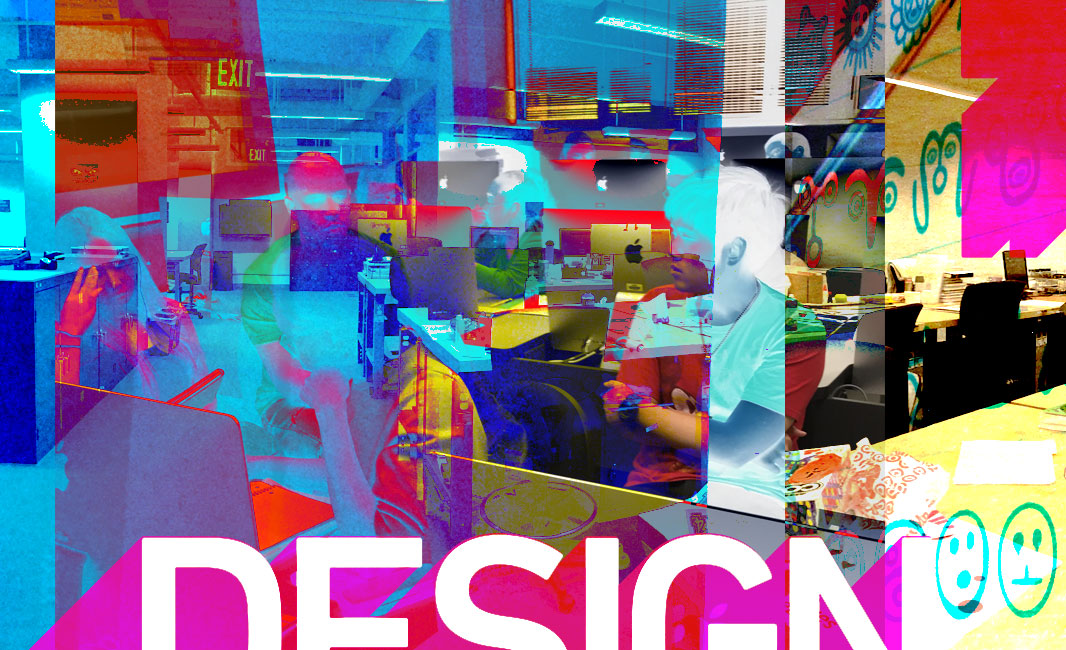
The Phaistos Project — 45 Symbols

Pascal Glissmann
Assistant Professor
Parsons School for Design

Olivier Arcioli
Lecturer and Researcher
Academy of Media Arts Cologne

Andreas Henrich
Professor
Academy of Media Arts Cologne

Category: Service (winner)

Design Edu Today

Gary Rozanc
Assistant Professor of Graphic Design
University of Maryland

Category: Scholarship (runner-up)

Walls of Freedom: Street Art of the Egyptian Revolution

Basma Hamdy
Assistant Professor
Graphic Design Department

Virginia Commonwealth University in Qatar

Category: Teaching (runner-up)

Intercultural Design Collaborations in Sustainability

Kelly Murdoch-Kitt
Assistant Professor, Graphic Design
College of Imaging Arts & Sciences
Rochester Institute of Technology

Denielle J Emans
Assistant Professor
Graphic Design Department
Virginia Commonwealth University in Qatar

Jurors

Steven McCarthy (Chair)
Professor of Graphic Design
University of Minnesota

Elizabeth Guffey
Professor of Art History
Purchase College, SUNY
Founding Editor of Design and Culture

Elizabeth Resnick
Professor of Graphic Design
Massachusetts College of Art and Design

Maria Rogal
Professor of Graphic Design
University of Florida

David Shields
Associate Professor & Chair of Department of Graphic Design
Virginia Commonwealth University

For details, visit the awards page at DesignIncubation.com/educator-awards/

Deadline: Submission deadline is May 30, 2016. The application form can be downloaded here.

Announcement of Awards
The awards will be announced the first week of September 2016.

 

Designing Across Cultures

Joshua Korenblat
Assistant Professor of Graphic Design
Art Department
State University of New York at New Paltz

Designers can leverage the mind’s visual processing centers, transcending boundaries of written language. At the same time, some aspects of graphic design function more like written language, a cultural construct. Words have evolved from pragmatic concerns, and a pictorial tradition began to communicate with increasing levels of abstraction from intuitive source imagery. Some designers, such as Otto Neurath, an early twentieth-century Austrian utopian, attempted to bridge the universal aspects of graphic communication with writing. His collaborators created a language called “Isotype,” a visual esperanto that informs contemporary explanation design to this day. Designers who work in the isotype tradition often work in the field of explanation design.

How can graphic design communicate across cultures to further understanding between communities? These designers must align with the human mind’s active need to create stories from visual experiences, while also being mindful of a practice that resembles written language, with its attendant miscommunications. This presentation will detail case studies of graphic design applied toward information-rich educational experiences, across cultures and academic disciplines. The case studies will be drawn from first-person experience in the Art Department of National Geographic Magazine, in Washington, DC, a community that encourages international design projects and collaborations between artists and scientists.

National Geographic Magazine Art combines the isotope tradition of communication with a process more akin to written storytelling, with its attendant problems of miscommunication between cultures. This case study will also yield a more subtle form of intercultural communication, between designer, artist, and scientist, and how designers can provide context and clarity for specialized topics, making them accessible to wider, non-specialist audiences.

This research was presented at the Design Incubation Colloquium 2.5: Fashion Institute of Technology (FIT) on Saturday, March 12, 2016.

Nimble: Thinking Creatively and Strategically in the Digital Age

Robin Landa
Distinguished Professor
Michael Graves College
Robert Busch School of Design
Kean University

Employers want to hire nimble thinkers—people who are not only content experts but who also are agile in adapting to new technology and new directions in their fields. With rapid technological changes and globalization, the ability to think creatively and strategically is crucial. What employers want are creatives who can generate big ideas—platforms that build community, branded utilities, unique content as branded entertainment that is so good it competes with all entertainment, disruptive business models that benefit everyone, marketing as service, and products that make lives better.

To prepare students to be nimble thinkers, advertising design education in the digital age must incorporate problem finding and imagination preparation. Students must learn to be content creators, storytellers, and create brand experiences people want to share. Students need to learn to create “pull marketing,” content that pulls people in and that is shareworthy.

Advertising design pedagogy needs to address:

  • imagination preparation so that original ideas and works can emerge
  • the methods to teach content creation people will find engaging, relevant or beneficial
  • advertising as content creation, with the credo: entertain; inform; be useful; or do good.

This presentation focuses on advertising design pedagogy, on teaching students to be nimble.


This research was presented at the Design Incubation Colloquium 2.5: Fashion Institute of Technology (FIT) on Saturday, March 12, 2016.

Making Places: Design Methods And Practices In Interdisciplinary Scholarship Labs

Amy Papaelias
Assistant Professor of Graphic Design
Art Department
SUNY New Paltz

Interdisciplinarity is the ability to combine, cross or think through multiple disciplines in order to create new bodies of knowledge. Environments that foster interdisciplinary scholarship and critical making explore innovative pedagogical and research approaches in the liberal arts, sciences, and humanities. Although these interdisciplinary scholarship labs (and related environments including makerspaces and digital humanities centers) exist at many institutions, few have explicitly brought design thinking and visual design strategies into their practices and research. By definition, design includes the collaborative creation of experiences, processes, systems, services, through the study of human behavior, social research methods, and critical thinking. Across a variety of disciplines, these design activities can benefit and enhance research and scholarship as integral to the dissemination and communication of new knowledge.

What is design’s role in these spaces? How are design methods and practices being implemented, engaged with, and applied to the liberal arts and sciences? In what ways can design help communicate complex visual messages, ideate physical artifacts, and build digital tools within these contexts? What are some of the challenges of integrating design methods or practitioners in cross-disciplinary projects and how might we encourage more collaboration between design and other disciplines within our institutions?

This presentation will discuss the role designers and design methods can play in interdisciplinary scholarship labs, centers, and spaces. I will share some of my current research that seeks to understand how design is integrated into these environments at colleges and universities. By examining design’s role in research and pedagogy outside of our own field, we can expand the possibilities for future emergent scholarly practices within design and beyond.

This research was presented at the Design Incubation Colloquium 2.5: Fashion Institute of Technology (FIT) on Saturday, March 12, 2016.

Worry Quest: Adventure Games for Fighting Anxiety

Matthew Bambach
MFA candidate, Graphic Design
Maryland Institute College of Art

Worry Quest is an app that helps fill gaps in mental health care experienced by young adults. It uses joy and technology to combat anxiety with simple, proven, psychotherapy techniques. The app lets youth envision themselves as a hero and their anxieties as a personalized monster. From there, they can choose between three different therapy adventures to “defeat their demons,” depending on how they prefer to cope with their own anxiety. Users are directed through a rousing dialogue with their “anxiety demon” and are rewarded along the way with pleasant visuals, sounds, and animations upon completing both tactile and self-reflective activities.

Activities in the app have been conceptualized from participatory research prompts, and are backed by approaches such as Cognitive Behavioral Therapy, Narrative Therapy, humor and mindfulness practice. The app continues to be developed in consultation with public input, beta testers, and mental health professionals. The app blends information design, interaction design, motion design, game design, user research and cognitive science—accessible through a device that nearly every millennial uses every day. By doing so, Worry Quest will help youth contextualize negative thoughts in an empowering way that affirms psychological agency and encourages positive self-care.

This research was presented at the Design Incubation Colloquium 2.5: Fashion Institute of Technology (FIT) on Saturday, March 12, 2016.

Slow Plastic

Freedom Baird
MS in Media Arts and Science from the Media Lab at MIT
MFA candidate, Sculpture/Installation, Massachusetts College of Art and Design

Plastic is a material, and also a social and cultural construct. It arrives to most of us fully formed out of the “black box” of manufacturing. Plastic’s history—only a few generations old—is also something of a mystery to us despite plastic’s ubiquity in every facet of our lives. With this presentation we reclaim our awareness of the origins and manufacture of plastic, and how it can be made differently, including at home in the kitchen! We’ll look at plastic’s early role as an imposter, it’s emergence into our awareness as a material of convenience for an efficiently lived life, and it’s lingering reputation as a tawdry substitute. We’ll dig into the meaning of the word “synthetic” and consider that plastic might actually be a product of nature. We’ll investigate plastic’s impact in the design world, our expectations for plastic as consumers, and our responsibility to use it sustainably. And we’ll consider the environmental tactic of venerating plastic. The artist will bring samples of her Slow Plastic dinnerware, synthesized at home from cow’s milk, vinegar, rubbing alcohol and hot water.

This research was presented at the Design Incubation Colloquium 2.5: Fashion Institute of Technology (FIT) on Saturday, March 12, 2016.

You Look Like The Right Type

Mark Addison Smith
Assistant Professor
Electronic Design and Multimedia
The City College of New York, CUNY

An illustration manifests “thought” through the viewer’s decoding of visual-based representation—be it text-based, image-based, or a combination of both. Logocentrism holds that original thought generates a need for spoken communication and, in turn, speech generates a need for writing. In a daily ritual since 2008, I redraw exact-dialogue fragments of overheard conversations as 7×11-inch India ink illustrations (combining direct-quote text with visual and tonal embellishment) and combine the single illustrations into larger, theme-based conversations between people who have never met or exchanged words. When amassed together as modular narratives, my black and white drawings—collectively titled You Look Like The Right Type—start having grayscale conversations with one another across time, place, age, and gender (the who, what, when, where, why, and how of journalistic-narrative documentation). And the audience, as interlocutor, triangulates the conversation by reading that which was once spoken and making their own non-linear, grayscale associations between text, image, and completion of what’s left unsaid. Thus, original thought emerges not only through my reinterpretation of other voices, but also through z-axis, non-linear readability (or, Scott McCloud’s “infinite canvas”).

In his 1967 text, Of Grammatology, Derrida argues for a definition of grammatology in which written language is not derivative of spoken language, but, rather, the two become independent, legitimate signifiers for original thought. Thus, the written word (including text-based illustration) can be understood from a stance as comprehensive as the spoken word. Within my You Look Like The Right Type series, I’ve been archiving daily conversation fragments as black and white illustrations since 2008 in a ritualistic effort to not only bring permanence to the spoken form, but also to manifest original thought—via the recycled thoughts of others—within illustrated type-and-image works on paper. In keeping with the principles outlined in Derrida’s text, I argue—using my archive of 3,000+ illustrations coupled with theories of documentary-style narrative, montage editing, logocentrism, and the z-axis of non-linear comic paneling—that spoken language and written language are autonomous and equal forms of communication, feeding off of one another to generate new storytelling.

An archive of these daily works can be found at YouLookLikeTheRightType.com.

This research was presented at the Design Incubation Colloquium 2.5: Fashion Institute of Technology (FIT) on Saturday, March 12, 2016.

Colloquium 2.5: Call for Submissions

Abstract Submission Deadline: February 21, 2016.
 For more details, see the Submission Process description. Email 300 word abstract to submissions@designincubation.com.

We invite all Communication Design researchers to submit abstracts for consideration by our panel of peers. Consider doing a remote presentation!  It’s only 6 minutes + 4 minutes for questions. Skype or GoogleHangouts.

Design Incubation Colloquium 2.5

Hosted by C.J. Yeh
Saturday, March 12, 2016
Time: TBD
Fashion Institute of Technology (FIT)
227 W 27th Street
Room SR9
New York, NY 10001

Check back for details.

Please RSVP if you plan on attending. Space is limited.

Design Incubation Colloquium 2.5: Fashion Institute of Technology (FIT)

Hosted by C.J. Yeh

Saturday, March 12, 2016
Time: 12:30PM – 3:30PM
Fashion Institute of Technology (FIT)
227 W 27th Street
Room SR9
New York, NY 10001

Design Incubation Colloquia 2.5 (#DI2016mar) will be held at the Fashion Institute of Technology (FIT) in the garment district of Manhattan. This event is open to all interested in Communication Design research. RSVP with name and affiliations if you plan on attending.

Abstract submission for presentations deadline Feb 21, 2016.  For details visit the Call for Submissions, and Submission Process description.

Presentations

Nimble: Thinking Creatively and Strategically in the Digital Age
Robin Landa
Distinguished Professor
Michael Graves College
Robert Busch School of Design
Kean University

Making Places: Design Methods And Practices In Interdisciplinary Scholarship Labs
Amy Papaelias
Assistant Professor of Graphic Design
Art Department
SUNY New Paltz

Freedom Baird
MS in Media Arts and Science from the Media Lab at MIT
MFA candidate, Sculpture/Installation, Massachusetts College of Art and Design

You Look Like the Right Type
Mark Addison Smith
Assistant Professor
Electronic Design and Multimedia
The City College of New York, CUNY

Worry Quest: Adventure Games for Fighting Anxiety
Matthew Bambach
MFA candidate
Graphic Design, Maryland Institute College of Art

Teaching Students Enough HTML & CSS to be Dangerous
Ben Hannam
Associate Professor,
School of Communications
Elon University

Designing Across Cultures
Joshua Korenblat
Assistant Professor of Graphic Design
Art Department
State University of New York at New Paltz

Attendees
  • Phyllis Rosenblatt, CityTech
  • Christie Shin, FIT
  • Kathryn Weinstein, Queens College
  • Dimitry Tetin, SUNY New Paltz
  • George Garrastegui, CityTech
  • Elizabeth Guffey, SUNY Purchase
  • Genevieve Hitchings, CityTech
  • Pascal Glissmann, Parsons
  • Liz DeLuna, St. John’s
  • Ann Morris, Pratt Institute
  • Joe Wight
  • Matt Ferranto, Westchester CC
  • Jerron Smith, CityTech
  • Dan Wong, CityTech
  • Aaris Sherin, St. John’s

Never Use Futura

Douglas Thomas
MFA Candidate in Graphic Design
Maryland Institute College of Art

Never Use Futura explores the cultural history and uses of the typeface Futura, one of the foundational typefaces of modern graphic design. The project is a playful yet passionate rebuttal to the perceived dominance of Helvetica as the typeface of modern design. Futura not only went to the Moon, and advertised for countless companies, it has been the face of German communism, British conservatism, and American politicians of all stripes. Futura became one of the most popular and iconic designs of the twentieth century in spite of a world-wide economic depression, trade embargoes, political boycotts, government prohibitions, and many knockoffs and competitors.

The project chronicles the cultural history witnessed (and recorded) by the typeface Futura from its avant-garde beginnings to its mid-century triumph and its present-day nostalgic, critical, and forward-looking uses. Even now, Futura remains the iconic typeface of tomorrow. Countless designers have used the type to signal progress and promise change but also to critique capitalism and subvert authority. Futura has sold millions of people their dreams and hopes (and shoes and cars), and ever since the Apollo missions it has embodied our cosmic aspirations. The story of Futura is more than a story of geometric shapes and Paul Renner, it is the secret history of modern public life.

This research was presented at the Design Incubation Colloquium 2.4: CAA Conference 2016, Washington, DC on Wednesday, February 3, 2016.