
Place Into Words: An Unconventional Approach To Communicating The Story of Human Space Flight

Alan Walker
MFA Candidate & Adjunct Instructor
School of Visual Communication Design
Kent State University

Alex Catanese
MFA Candidate & Adjunct Instructor
School of Visual Communication Design
Kent State University

Jordan Kauffman
MFA Candidate & Adjunct Instructor
School of Visual Communication Design
Kent State University

Many of us have experienced moments where we can’t help but stop. We slow down to take in our surroundings; the single sliver of orange hanging onto the end of a sunset, or the subtle shift in colors on a lush rolling countryside. It’s hard to describe or identify why these locations express beauty, but they move us all the same. Place Into Words challenges viewers to imagine Mars, a planet often characterized as desolate and barren, as beautiful terrain. One day future generations may know nothing other than Mars’s vast canyons or sheer volcanos. Could a distant planet offer their most beautiful place?

Place Into Words was originally produced as a part of Kent State University’s School of Visual Communication Design MFA exhi bit, inspired by NASA’s O rion program, titled Survey’s: A Design Exhibition Immersed In The Journey Between Earth and Mars. The exhibit was backed by a semester long research process of secondary and primary methods, including interviews with NASA personnel and a visit to The Glenn Research Center.

Visitors to the exhibit were met with a 20ft projection collaging archival NASA footage and landscape photography of Earth and Mars, combined with documentary style audio of ordinary people’s responses to what they consider their most beautiful place. Visitors were also encouraged to participate by typing a response into the projection display. The installation created a distinct space in hopes to provoke and stir a sense of curiosity and wonder surrounding space travel.

This presentation will include insights gained through the process of research and creation. In addition, designers will present the companion Place Into Words online interface and screen a preview of the video component. Attendees will gain a broader understanding of how speculative design might be applied to experimental installations.

Link To Video/Live Site:
http://weareletters.co/mars/

This research was presented at the Design Incubation Colloquium 3.3: Kent State University on Saturday, March 11, 2017.
Fusing Hand and Hi-Tech for Hi-Touch

Denise Anderson
Assistant Professor
Robert Busch School of Design
Kean University

Edward Johnston
Assistant Professor
Robert Busch School of Design
Kean University

Graphic design academic programs must respond to contemporary society’s relentlessly growing need for digitally designed solutions.  According to the Creative Group’s 2017 Salary Guide, starting salaries will increase this year by more than 5% for visual designers and more than 6% for mobile and UX designers.  This poses a challenge to design educators, whose students necessarily embrace an ever-changing array of technical solutions, which can lead to distraction, stress, and loss of creativity.  Surrounded by multiple devices that inhibit their creative workflow, students are relentlessly tempted to multitask, which can decrease productivity and increase stress, according to recent studies.   “Highly physiologically arousing emotions associated with stress” rouse our instinct “to stay away from excitement and seek comfort instead,” depressing, rather than fostering, creative thinking.

Two ways to provide much-needed relief are drawing and listening to music.  As discussed by Robin Landa in a recent HOW article, “Drawing allows you to disappear into the act of creation,” and “sustained focus while drawing acts to quiet any internal noise.”  Dedicated sketching sessions can enable a designer to focus on growing a concept without the noise of multitasking.  The second, listening to music—especially beloved music—is a proven and well-documented way to relax mind and body, slow heart rate, lower blood pressure, and decrease stress hormone levels.

Student Marc Rosario has created a mobile app experience (currently at the designed prototyping phase) that aims to combine these two stress-releasing options to increase creativity.  “Sharpen” boosts creativity through drawing, sketching, and listening to music.  Brainstorming an idea within the timeframe of a song, users can take pictures of their process, upload the work to Sharpen or other social media channels, and share or solicit feedback of their work.

This presentation provides a two-pronged approach to this challenge of fostering creativity while responding to industry needs.  It focuses on the curricular value of fusing “hand” skills outside 
of the computer (focused sketching, research, user testing, surveys, written reflections, and 
brand development) with “hi-tech” digital design (brand identity, mobile design, and prototyping).

Also, it explores, through example, the “hi-touch” results of that fusion, using Marc’s app prototyping project, which celebrates hand skills and entices young people to draw and sketch more frequently.

This research was presented at the Design Incubation Colloquium 3.2: Parsons Integrated Design on Thursday, Feb 16, 2017.

Critical Practices as Design Scholarship: Strategies and Opportunities

Jessica Barness
Assistant Professor
School of Visual Communication Design
Kent State University

Steven McCarthy
Professor
College of Design
University of Minnesota

Conventional academic scholarship typically involves publishing one’s research findings in journals and books, or in the arts, performing or exhibiting creative work. Design straddles these worlds and adds its own cultural norms, such as industry competitions that seek the commercial work of professional practitioners, or the fine arts tradition with its emphasis on gallery shows. Design scholarship, whether written or visual, does not always fit these models: How might design faculty approach the dissemination of creative work that is neither client-based nor fine art?

Over the past decade, another path to knowledge formation and scholarly productivity has emerged: critical making. Involving a speculative approach to design (experimental, future-oriented, expressive), critical making combines an authorial point-of-view with the tangible aspects of media, technology, materials and process. Critical making is experiential and uses design to create knowledge across disciplines.

Through critical making, some design faculty have found diverse scholarly venues to share their creative and intellectual work. These dissemination venues often take their cues from other disciplinary cultures like the humanities, the arts, science, engineering and business, and can include publications, exhibitions, performances, and conferences. These venues can be an advantage to design scholars as they are already generally recognized and legitimized by academic culture. However, faculty may not fully understand the opportunities for an enhanced, rigorous approach to scholarship – a strategic integration of making and writing – that moves beyond industry practice and fine arts traditions yet remains distinctly relevant to the design discipline.

Considerations of this presentation will include faculty effort, the scholarly product, the selection process, dissemination venues, scope (local, regional, national, international), and the resulting impact. The challenges in assessing interdisciplinary work and the roles in collaborative projects will be discussed, as will the implications for tenure and promotion.

This research was presented at the Design Incubation Colloquium 3.3: Kent State University on Saturday, March 11, 2017.
Design Incubation Colloquium 3.2: Parsons Integrated Design

Parsons Integrated Design in Manhattan on Thursday, Feb 16, 2017, 4PM-7PM.

Hosted by Andrew Shea

Design Incubation Colloquium 3.2 (#DI2017feb) will be held at Parsons, the New School in Manhattan. This event is open to all interested in Communication Design research.

Thursday, February 16, 2017
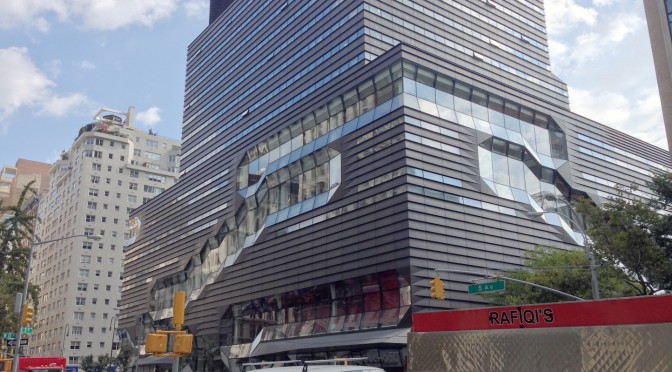
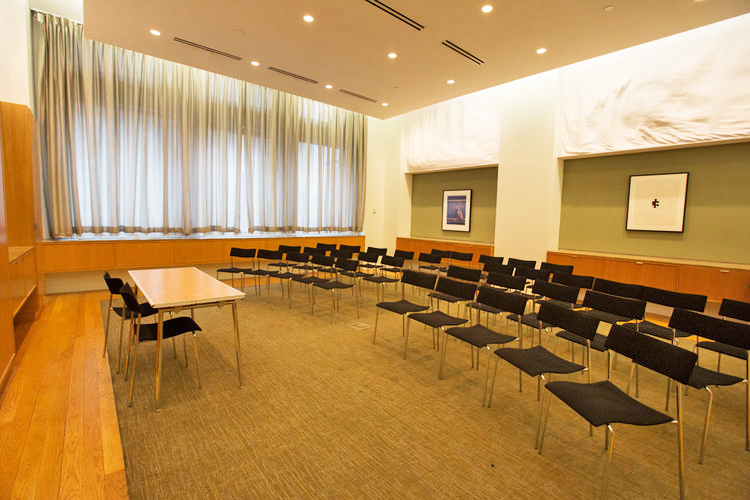
Dorothy Hirshon Suite, Room I-205
Arnhold Hall
55 West 13th Street

Abstract submission for presentations deadline January 26, 2017.  For details visit the Call for Submissions, and Submission Process description.


Presentations

Fusing Hand and Hi-Tech for Hi-Touch
Denise Anderson

Assistant Professor
Robert Busch School of Design

Kean University

Edward Johnston

Assistant Professor

Robert Busch School of Design
Kean University

Not Just Playing Around: Game Design In The Interaction Design Classroom
Liese Zahabi 

Assistant Professor of Graphic/Interaction Design

University of Maryland, College Park

Addressing Racial Disparity in Design Education
Audra Buck-Coleman
Associate Professor
Graphic Design Program Director
University of Maryland College Park

Teaching Design in the Age of Convergence
Robin Landa
Distinguished Professor
Michael Graves College, Kean University  

The Avant-Garde of Iranian Graphic Design
Pouya Jahanshahi
Assistant Professor of Graphic Design
Department of Art, Graphic Design and Art History
Oklahoma State University

Light Switch Graphically-Assisted Nudge
Niyati Mehta
Adjunct Lecturer
New York City College of Technology
Nassau Community College
Lehman College 

From Design as Artifact to Design as Process: Applying an Open Model to Community Engagement in Social Design 
Cat Normoyle

Assistant Professor
Memphis College of Art

Data Visualization Research: How It Informs Design and Visual Thinking
Joshua Korenblat
Assistant Professor, Graphic Design
SUNY New Paltz

Design Crew Course: Human Context and Service Learning in Visual Communication 
Mark DeYoung
Professor
Kalamazoo Valley CC

Colloquium 3.2: Parsons, Integrated Design, Call for Submissions

Parsons, The New School, Integrated Design program will be hosting a Design Incubation Colloquium. Abstract submission deadline January 26, 2017.

Parsons, The New School, Integrated Design program will be hosting a Design Incubation Colloquium on Thursday, February 16, 2017, 4-7PM. All are welcome to attend. Details and agenda can be found on the Colloquium 3.2: Parsons page.

We are accepting abstract submissions for presentations. Abstract submission deadline: January 26, 2017.

We invite designers—practitioners and educators—to submit abstracts of design research.  Presentations are limited to 6 minutes + 4 minutes for questions.
For more details, see the Submission Process description.

Email 300 word abstract to submissions@designincubation.com.  Questions can be directed to info@designincubation.com.

Graphic Arts in the Liberal Arts: Panel Discussion @TypeDirectors

Educators discuss Graphic Design Programs at the Type Directors Club, Saturday, November 12, 2016. 2pm–5pm.

What challenges and obstacles do graphic design programs encounter today as they work to balance the multitude of critical thinking, and conceptual and technical skills needed to help students grow into thoughtful, adept and culturally aware design practitioners? How do programs housed in liberal arts institutions differ from those in art schools? We invite you to join educators in a conversation on the teaching of design in institutions with varied pedagogies and student communities.


Moderators

Liz Deluna
Associate Professor of Design
St. John’s University

Mark Zurolo
Associate Professor of Design
University of Connecticut

Panelists

Robin Landa
Distinguished Professor
Robert Busch School of Design
Michael Graves College
Kean University

Allan Espiritu
Associate Professor Graphic Design

Graphic Design Program Director

Rutgers University

Dan Wong

Associate Professor
Communication Design

New York City College of Technology, CUNY


Nick Rock
Assistant Professor Graphic Design

Boston University


Jessica Wexler
Assistant Professor Graphic Design

Purchase College, SUNY


Kelly Walters

Assistant Professor Graphic Design
University of Connecticut

Event Details

aiganySponsored by AIGA/NY

tdc-logoHosted by Type Directors Club

Saturday, November 12, 2016
2pm–5pm
Type Directors Club
347 West 36th Street, Suite 603
New York, NY 10018

Please register on AIGA/NY events page here.

Trianimals

Ned Drew
Professor
Department of Arts, Culture and Media
Rutgers University

Brenda McManus
Assistant Professor Graphic Design
Dyson College of Arts & Sciences
Pace University

This letterpress project encompasses the traditional printing method with a contemporary and modular printing system. Inspired by the minimalist children’s book design of artists such as Blexbolex, Bruno Munari and Paul Rand, we set out to develop a narrative, and its accompanying visual vocabulary, based on a simple shape—the triangle. Using this shape we developed a unique story, generated through a system of expanding interpretations and multiple combinations.

The overall concept and design of this project revolves around our dedication to the foundations of design. Basic design principles, such as color, shape, abstraction and layering are at the core of this initiative. We developed a printing system based on a single unit, a one-inch right triangle. Like building blocks, we set out to create a series of simplified illustrations that were comprised of this single unit (the triangle).

Although conceived as a letterpress project, our process started with a more contemporary tool, the computer. We used Adobe Illustrator to design the animal illustrations, this process would later serve as a digital blueprint to work from when translating the various layers to the press bed. Once we worked through the design we produced one hundred, type high, 1” x 1” right triangles. To implement this system we produced 3D printed 1×1” triangular counter forms or “slugs”. These slugs enabled us to easily “lock up” different configurations on the press bed. We also custom cut a set of plywood “furniture” in various sizes that acted to fill and organize the unused areas of the press bed. This marriage of old and new technologies allowed for exciting possibilities, a departure from the conventional pica based printing process.

The use of digital tools in the design phase was instrumental in the success of our illustrations and in implementing and managing the printing process.

We often discuss with our students the concept of “1+1=3”. This simple concept helps to illustrate that, in design, basic elements can be combined to make unique combinations. In our printing process this is was also true. A major design consideration was the correct and balanced layering of colors to achieve the different components of the animals’ portraits. These whimsical and simplified representations came to life through the subtle layering and manipulation of various color combinations.

How Hard Is It To Navigate A Rectangle? Harder Than You Think

Neil Ward
Assistant Professor of Graphic Design
Drake University

Wayfinding and signage are important pieces of a buildings structure and interior space, especially on college/university campuses. They provide a visual blueprint that informs students, administrators, faculty, and public visitors where they are and attempts to direct them to classrooms, galleries, labs, performance spaces, and offices. When the signage is missing, incomplete, or inconsistent, all who enter the space are left confused and quite possibly frustrated as they wander around. A missing/poor wayfinding system can intensify these feelings when an individual is mobility challenged and unable to use the stairs. Especially when the building in question is rectangular in shape.

This is a particular problem senior level graphic design students encountered during a Research and Application class in the Fall semester of 2016. Using photo ethnography, observational research, and visual anthropology, students learned and observed how and why visitors entered, moved through, and exited the Fine Arts Building (A building that is rectangular in shape). Based on their findings, students designed a wayfinding system for the building that heavily considered those who are mobility challenged.

An individual (we will call her Jane) from the Office of Student Disabilities, who is mobility challenged, volunteered to test the wayfinding systems. During the user test, dialogue ensued between both parties about what was missing, what could be done better, and what to think about for future iterations. Upon debriefing, students passionately discussed their systems and the building as a whole through Jane’s point of view. Experiencing movement through the building with Jane they unanimously decided the current systems are unacceptable for a campus deemed accessible. Furthermore, they were inspired by Jane’s encouragement and the notion of how their wayfinding could continually and positively impact a large audience.

“How hard is it to navigate a rectangle? Harder than you think” will feature project visuals, the unexpected drive to design for social good, and the issue of accessibility to inspire empathy through wayfinding.


This research was presented at the Design Incubation Colloquium 3.1: Kean University on Saturday, Oct 22, 2016.

Eat Your Vegetables: Sneaking in Conceptual Thinking During Technical Instruction

Suzanne Dell’Orto
Adjunct Lecturer
Fine & Performing Arts
Baruch College, CUNY

“Eat Your Vegetables: Sneaking in Conceptual Thinking during Technical Instruction” is an experiential progression of graphic design projects that helps to introduce and refine the technical skills essential to professional practice. More important, it overlays other 21st century skills, adding pedagogical depth to the skill-building through an implicit layer of meaning-making, critical thinking, and abstract and symbolic thinking.

My introductory graphic design class is mandated to build the skills to communicate ideas and cover the essence of branding (a highly competitive game of attention-getting, recognition and trust), and the class is enriched by the addition of a critical thinking element. Students imagine, conceptualize, then filter and form allegiances to a random “theme word” assigned at the beginning of the semester. The challenge of deepening the development of this key word threads through 15 weeks of instruction, intersecting critical thinking with learning technical skills. This approach also allows the mimicking of a real-life designer/client relationship, using the theme word as a surrogate client. Students also learn and use tools for thinking in the curricular sequence, some borrowed from other domains such as the writing process of “word mapping”.

Attendees will learn, in this illustrated lecture, that the complexities of contemporary professional practice and the competitive global business context demand a critical and creative approach to foundational coursework––well-prepared hands, eyes, and minds.

This research was presented at the Design Incubation Colloquium 3.1: Kean University on Saturday, Oct 22, 2016.

A Start-Up Simulator: Collaborative Design Studio

Efecem Kutuk
Program Coordinator Industrial Design, University Lecturer
Robert Busch School of Design
Michael Graves College
Kean University

In recent years collaboration has become a fundamental of the design industry. In the start-up business environment, the corporate structure has been replaced by a passionate, skilled and capable 24/7 work force of risk-taking design entrepreneurs.

Everyday we witness independent design collaborations that capture recognition by launching their products through powerful tools such as social media and crowd funding, the innovate nature of which are several steps ahead of their market majority corporate competitors. What if we can simulate these collaborations at an earlier stage, during undergraduate education? What if we can mimic the experience of a start-up in the classroom?

I have been teaching “Collaborative Design Studio” the past three years, utilizing team-building and problem solving techniques to produce imaginary start-ups, which incorporate the full spectrum of the start-up model- user experience, branding and packaging by Graphic Designers, design development, prototyping by Industrial Designers, and exhibition of the product by Interior Designers. At certain points in the process, the team divides and conquers by their specialization within the design field. At other points, they work as a team to make common decisions. They follow a road that intermittently splits and merges throughout the journey. The course offered a window on how start-ups run, and gave students the ability to practice before graduating, rather than figuring out design entrepreneurism on the job.

My presentation will include examples of student work, from initial ideations to a finalized solution, by focusing on team members’ key decisions throughout the project. I will also substantiate my argument by highlighting the success of collaborative creative teams by other researchers findings. Finally, the importance of having a collaborative course in the design curricula, especially for institutions that have various design programs, will be open to discussion.

This research was presented at the Design Incubation Colloquium 3.1: Kean University on Saturday, Oct 22, 2016.