Breaking Down Biases with Toys: An Interdisciplinary Design Project

Courses from three different schools collaborated on the project: Applied Infancy Development, Machine Design, and Graphic Design 3.

Nancy Wynn
Associate Professor
Merrimack College

Nicholas Paolino
Undergraduate Design Researcher
Merrimack College

Much child development research is biased towards privileged, white, mid-socioeconomic cultures. For example, data suggests mothers should use child-directed speech to promote language development (Rowe, 2008). Yet, recent evidence shows this type of talk is not promoted universally (Rowe, 2012). As a result, educational and clinical practices​, as well as policies​, ​may not address the needs of non-white, under-privileged populations. During the spring semester of 2019, three Merrimack College professors created an interdisciplinary project to promote positive development in infants/toddlers. The project’s goal was the development of a toy prototype that addressed specific developmental domains and considered various populations.

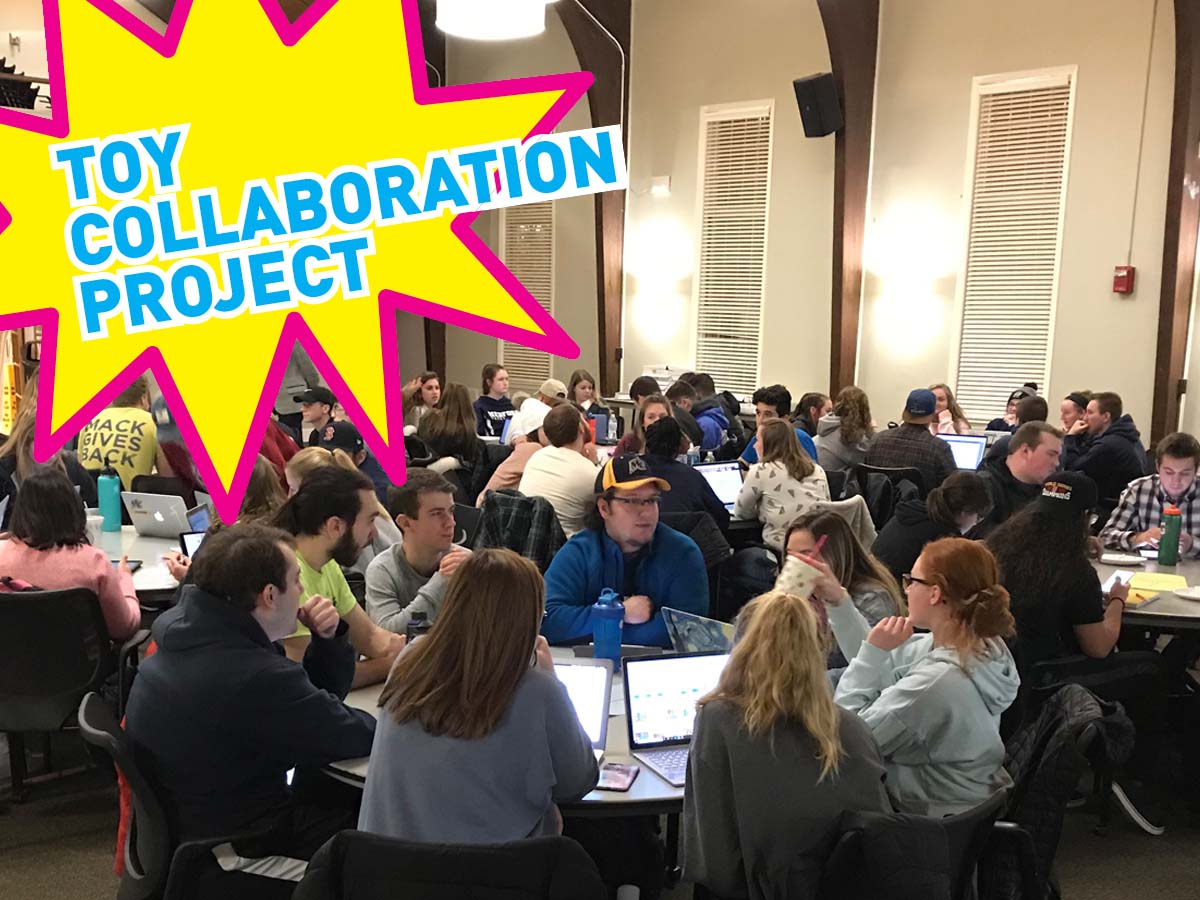
Courses from three different schools collaborated on the project: Applied Infancy Development, Machine Design, and Graphic Design 3. Students enrolled in discipline-specific courses were divided into eight groups, each consisting of one Graphic Design student and multiple students from Education and Mechanical Engineering. The modes for assessment were completion of the toys, marketing materials, and the development of collaboration skills.

Education students were the researchers and “clients.” Engineering students created the toy prototypes. Graphic design students designed marketing materials including branding, packaging and advertising. Throughout the semester, students met in large group meetings, virtual group meetings, made oral presentations, and publicly demonstrated their final designs. The pedagogical plan was to adopt a peer model whereby students could teach their peers what they learned in their respective disciplines and work together to synthesize their ideas.

Despite some challenges, the teams completed their prototypes and branding with much success. Afterwards, project assessment included: What changes should be implemented? Were the virtual meetings beneficial? Who might gain from inclusion—business students and marketing faculty? Additional funding?

The project captured the professional world of toy design quite well, and the faculty members are planning for round two in 2022.

This research was presented at the Design Incubation Colloquium 6.3: Fordham University on May 16, 2020.

Fusing Old and New: Visual Communication for the Liberal Arts

Teaching Award Winner

Evelyn Davis-Walker
Assistant Professor
Valdosta State Universit
y

I have always been interested in the melding of the historical and the contemporary—tradition with experimentation. When designing new and exciting methods of engagement with my design students, I wanted a unique experience that was not offered anywhere else. Upon my arrival to Valdosta State University, I wrote a grant to help acquire letterpress equipment and supplies used in the late 1800s and early 1900s. 

My initial interest was to preserve a vital part of graphic design history for students to study and appreciate. What I ended up developing was a proposal in which I infused 100-year old historic machinery with today’s 3D printing and laser cutting technology capabilities. Once I was able to restore the vintage printing press, I recreated type  (letters) through the use of 3D printers and laser cutters. Ensuring the letters were the exact size for utilization on the press, I printed specific type/fonts currently unavailable in our library of letters. The ability to customize and create three-dimensional letters and eventually illustrations is game-changing. Students will have the capabilities to print in a traditional method of graphic design while using ideas, styles and messages of a 21st century student.  

I am also honored to be featured alongside my fellow Art & Design colleagues in the 4th issue of the 2019 Valdosta State Magazine for my imaginative pairing of old and new processes. In the article, Changing How Art is Made: VSU Merges Old-School Techniques and New Technology to Revolutionize Creative Instruction, I discuss my desire to merge old and new processes in my classroom. My job as an educator is to present content of today to my students, acknowledge what had been done in the past on a historical level, and most importantly, make new pathways for learning for the future.

Students in ART 3091, Introduction to Graphic Design 1, spend the first four weeks off the computer; understanding the history of graphic design through hand-lettering and letterpress printing. This is both frustrating and freeing to the students upon learning of the scheduled structure on the first day of class. 

Students are exposed to the historic practice of arranging and printing letters on paper to communicate a message. The process is painstaking, complex and imperfect—all aspects that become substantially easier once the computer is introduced in week five. In addition to the incorporation of the computer, students have been integrating 3D printing and laser cutting as means of experimentation – the blending of traditional and technology. My on-going research and scholarship regarding traditional and contemporary processes (integration of traditional and technology), has been fascinating. Below is a breakdown of the multi-phased project introducing students to the art of typography.

PROJECT 1 – Structure and Breakdown
This first assignment in Graphic Design 1 began with each student choosing one word that described their unique personality. 

PHASE ONE: HAND LETTERING
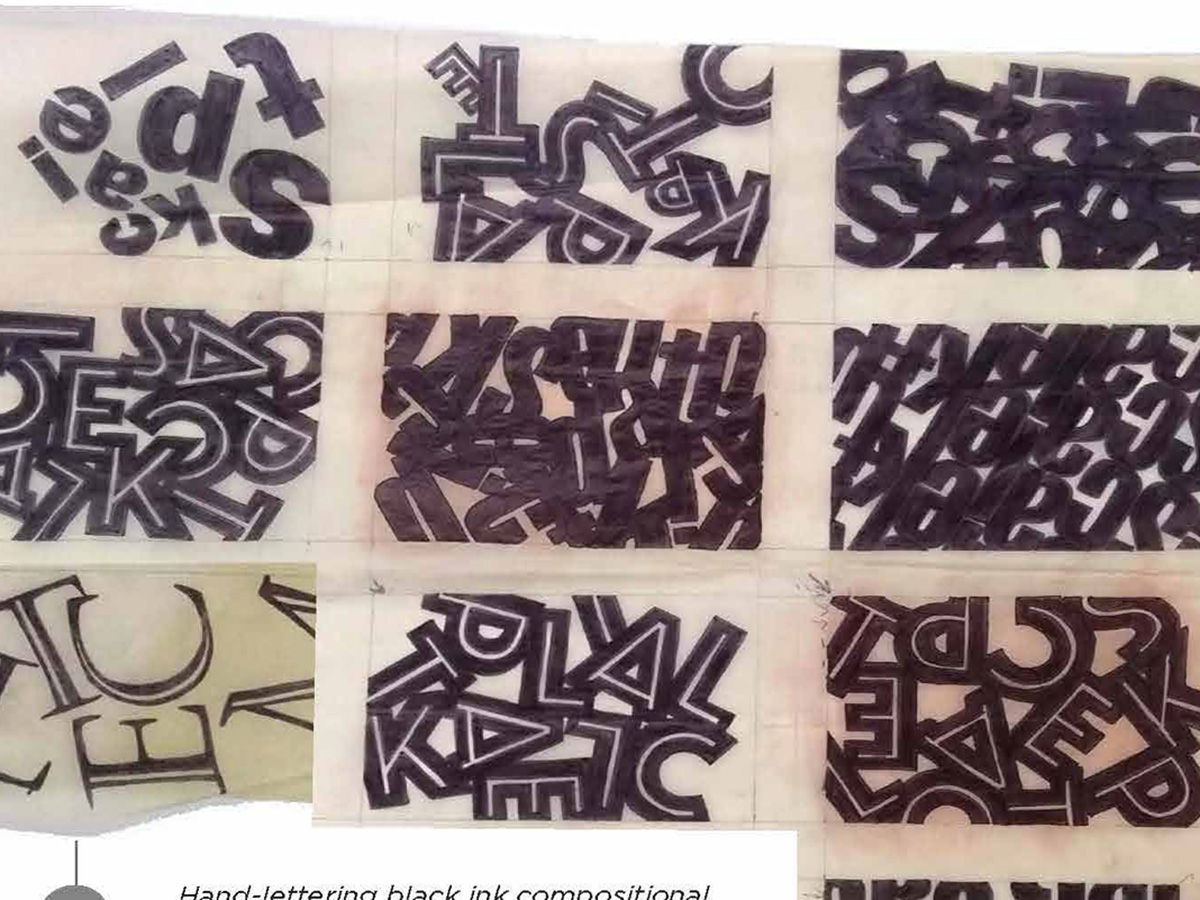
Each student created 20 abstracted 4” x 6” compositions by hand with black ink. The students were expressive by using only letters that helped spell their word. By restricting the designer to create abstract compositions, students focused on pattern, repetition, scale and unity as design principles in a non-representational expression through the use of typography. 

PHASE TWO: CUT PAPERA
critique of the hand-lettering compositions were discussed as a class and the strongest three compositions were chosen to move forward into cut-paper iterations. (1-class vote, 1-professor vote, 1-individual designer vote.) The cut paper pieces were direct facsimiles of the hand-lettering designs, however color theory and relationships of positive and negative were addressed specifically with this phase.

PHASE THREE & FOUR: LASER CUT & HAND STAMPING
Technology was introduced in these two phases by scanning the strongest cut paper design and digitally preparing it for laser cutting in the wood-shop. Students glued their wooden letters onto a board, thus creating a mirrored design for hand-stamping. Using ink and rollers, designers stamped their digitized wooden blocks onto 4” x 6” cards.

PHASE FIVE: LETTERPRESS
The final phase involved understanding one of the oldest forms of graphic design, letterpress printing. While the first few phases involved focusing on the abstracted word, the letterpress printing was a direct and literal compositional print of the word’s definition. Students were trained on type-setting, inking and operation of the century-old machine. To successfully complete this phase, their focus involved typographical rules such as leading, kerning, line flow and line direction.


Evelyn Davis-Walker holds a B.A. in Visual Communication and Computer Art from Otterbein University and an M.F.A. in Advertising Design from Marywood. 

In 2010, Evelyn was awarded 25 for 25 AOL International Art Grant where 25 winners (9,000 applicants) were funded $25,000. Evelyn designed individual memory games for 200 Alzheimer’s patients. In 2015, Evelyn received the Otterbein University Young Alumni Recipient for Community Engagement. 

She was a graphic design professor at Virginia State University before coming back to Otterbein to teach Communication Design for eight years. In 2016, Evelyn moved to South Georgia where she currently oversees the Graphic Design area of Valdosta State University’s Art & Design department.  

Along with her commercial design work, Evelyn has a strong affinity for all things paper – from mixed media collage, to creating typographic prints on her letterpress machine. She has received numerous awards and has exhibited in solo, group and juried exhibitions.

Recipient of recognition in the Design Incubation Communication Design Awards 2019.

[Dis]embodied Senses: Interaction Beyond the Screen

research shows virtual connections has led to negative impacts on mental and physical well-being

Tristen Click
Graduate student
Vermont College of Fine Arts

Connection—here defined as experience, learning, socializing—is one of the primary drivers of human social behavior; over the past decade, we have experienced a major paradigm shift in how we connect. One main driver behind this change is advancing technology—primarily our reliance on smartphones and the internet. We have replaced physical connection with virtual connection, and while this has provided some societal advances and benefits, research shows this also has led to negative impacts on mental and physical well-being.

Perhaps inevitably technology will continue to advance at a rapid pace. Can we embrace this change while simultaneously being mindful of design methods for reconnecting the physical and the virtual beyond the screen, through the use of the full multisensory experience? Would this enhanced experience improve our sense of connection?

As designers we often limit ourselves to the visual—form, texture, color—but we are surrounded by options for using mixed reality. Alexa, Siri, and other sources of conversational design, as well as advanced haptics (vibrating phones, for example) are cases in point. In a visually overstimulated world what would happen if designers more deeply considered all five senses?

The author’s recent body of work investigates these questions through a variety of methods and tools including Makey Makeys, conductive ink, Play-Doh, scratch-and-sniff wallpaper, and video explorations. Designers communicate and build connection(s) through their work. Immersive experiences can build connections by having no (or low) barriers to entry, creating layers of meaning, and engaging all of the senses. In this presentation, the author will showcase her extensive research and body of work titled “[Dis]embodied Senses” which seeks to address some of these questions. Additionally, she will showcase simple methods and tools that can be used for prototyping sensory experiences both in the classroom and in one’s design practice.

This research was presented at the Design Incubation Colloquium 6.3: Fordham University on May 16, 2020.

Is the Future Online Classes?

Teaching methods based on tutorials, cumulative projects, and concept based learning strategies.

Dannell MacIlwraith
Assistant Professor
Kutztown University

More and more colleges and universities are beginning to explore offering traditional studio art and design courses online. At Kutztown University, first year students are required to take an online Digital Foundations course. This course gives a solid grounding in basic computer skills, software knowledge, and visual thinking, a framework for more complex areas of digital media. By giving the flexibility of an online class — students can still have hands-on techniques, experience constructive critique, hand-in physical prints, and have a good mentor/student relationship.

As the curriculum designer, I based my teaching methods on tutorials, cumulative projects, and concept based learning strategies. The short tutorials are designed to maintain attention. I have abandoned the traditional discussion forums of online education, instead utilizing social media for critiquing techniques. Finally, through surveys, quizzes and an ‘artifact’ project the faculty assess Digital Foundations for tweaking and modifying for future sections.

Many colleges and universities are moving classrooms online for financial savings. What are the most effective strategies for teaching art & design online? What about ensuring the same rigor and quality as an in-person course? We’ll explore possible solutions to these problems that are facing the early pioneers of online education in design.

This research was presented at the Design Incubation Colloquium 6.3: Fordham University on May 16, 2020.

Design Incubation Colloquium 6.3: Fordham University

Design Incubation Colloquium 6.3: Fordham University (#DI2020mar)
Virtual Conference May 16, 2020, 1PM EST.

Presentations will be published on the Design Incubation YouTube Channel after April 24, 2020. Virtual Conference will be held online on Saturday, May 16, 2020 at 1pm EST.

Due to COVID, this event was moved online for our first virtual Design Incubation Colloquium. Please join us. View the presentation videos, and register for the live moderated discussion.

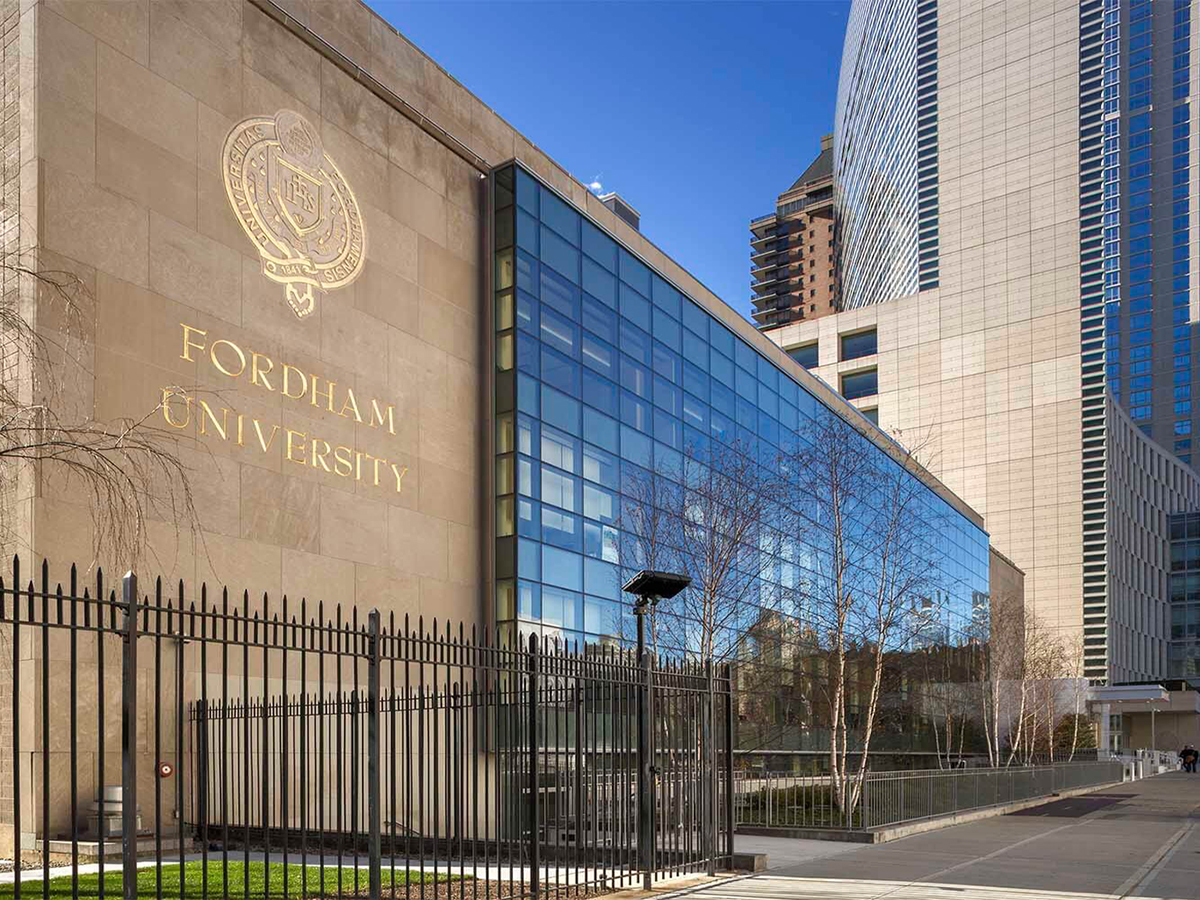
Design Incubation Colloquium 6.3: Fordham University (#DI2020mar) will be held at Department of Theatre and Visual Arts at Fordham University, Lincoln Center on Saturday, March 28, 2020.

Hosted by Abby Goldstein and the Department of Theatre and Visual Arts at Fordham University. This event is open to all interested in Communication Design research.

Saturday, March 28, 2020
1:00 PM – 4:00 PM

Fordham University, Lincoln Center
Leon Lowenstein Center
113 W 60th St
New York, NY 10023

Presentations

Stir Copenhagen: design, culture + your senses
Stephanie Grey
Associate Professor
Framingham State University

Call and Response | Equitable Design Frame Work
Omari Souza
Assistant Professor
Texas State University

Gabriela Disarli, Graduate Candidate, Texas State University
Dillion Sorensen, Graduate Candidate, Texas State University
Leslie Harris, Graduate Candidate, Texas State University

Breaking Down Biases with Toys: An Interdisciplinary Design Project
Nancy Wynn
Associate Professor
Merrimack College

Nicholas Paolino, Undergraduate Design Researcher, Merrimack College

[Dis]embodied Senses: Interaction Beyond the Screen
Tristen Click
Graduate Candidate
Vermont College of Fine Arts

Is the Future Online Classes?
Dannell MacIlwraith
Assistant Professor
Kutztown University

Tangible Type with 3D printing
Taekyeom Lee
Assistant Professor
Illinois State University

Design, Food and Human Connection
Nicholas Rock
Assistant Professor
Boston University

Deconstruct + Reconstruct: The Value of Mimicking Reverse Engineering in UI/UX Pedagogy
Dave Gottwald
Assistant Professor
University of Idaho

Redesigning an Appropriated Brand Identity in a Complex Polarized Culture
Clinton Carlson
Associate Professor
University of Notre Dame

Teaching Design Team Collaboration Through Group Projects
Christine Lhowe
Assistant Professor
Seton Hall University

Access as Design Requirement: Improving Attitudes and Commitment
Rebecca Mushtare
Associate Professor
State University Of New York At Oswego

Parking and Transportation

Daily parking for students around Lincoln Center campus is available at selected parking garages by having your parking ticket validated by a security guard at the Lowenstein lobby front desk.

Alfred Car Park, LLC
161 West 61 Street off of Amsterdam Avenue
$15 for 12 hours (until midnight) with validation

Allied Garage
425 West 59 Street off of Columbus Avenues
$18 for 12 hour with validation

Regent Garage
45 West 61 Street between Broadway and Columbus Avenue
$16 for 12 hours (until midnight) with validation

Kinney Parking System
345 West 58 Street between Broadway and Columbus Avenue
$16 for 12 hours (until midnight) with validation

Visit the University’s Transportation website for a list of additional parking garages.

Public Transportation

Please see the MTA Website for public transportation directions to the Lincoln Center campus.

Between Heritage and Modernity: Modernity in Arabic Type Design

The Center for Book Arts is hosting a series of 3 seminars dedicated to Arabic type design and typography, curated by Dr. Nadine Chahine, taking place on March 5, 7, and 19.

The theme of the series revolves around concepts of modernity in Arabic type design, the heritage of Arabic letterforms in the context of current technologies, contemporary Arabic branding design, and the history of Arab graphic design. The series brings together renowned and award winning designers working with Arabic type, both from the US and the Middle East.

The first panel discussion of the 2020 History of Art Series will be on Modernity in Arabic Type Design. The evening will feature Wael Morcos, with a talk entitled Right to Left: A Practice, Dr. Nadine Chahine discussing The Politics of Arabic Graphic Design, and Thomas Jockin, who will be presenting Two Decades of Type Directors Club Award-Winning Arabic Typefaces.

This History of Art seminar will be on Contemporary Arabic Graphic Design. The afternoon will feature Tarek Atrissi, who will be discussing Branding with Arabic Typography; Tala Safié will be presenting, “Haza al Massa” (or “Tonight”), a documentation of the golden years of Lebanese cinema through posters, zines, press books, and film ephemera; and Bahia Shehab, who will be giving a discussion entitled, From Calligraphers to Type designers: Arabic Script in Transition.

The final panel discussion of the 2020 History of Art Series will be on Technology and Heritage. The evening will feature Dave Crossland who will discuss Variable Fonts, and Mamoun Sakkal, who will discuss Calligraphy, Type, Image: A Journey into Arabic Script.

Center for Book Arts
28 West 27th St. Third Floor
New York, NY
10001

RSVP: https://www.eventbrite.com/e/between-heritage-and-modernity-technology-and-heritage-tickets-86609363939

Supporting the Chicago Design Community | Design Incubation Affiliated Society Meeting @CAA

Identifying strategies, filling gaps in organizational offerings, andcollaboratively expand reach of local organizations.

 Friday, February 14, 2020
12:30 PM – 1:30 PM
Hilton Chicago – Lower Level – Salon C-1

Design Incubation will host the College Art Association (CAA) conference business meeting for “Supporting the Chicago Design Community | Design Incubation Affiliated” at the Hilton Chicago on Friday, February 14th from 12:30–1:30 pm. There is no cost to attend this meeting.

Leaders from midwest design organizations including The Society of Typographic Arts, IxDA, AIGA, The New Media Caucus, Chicago Speculative Futures, The Society of Typographic Aficionados, Hexagon, The Chicago Design Archive, SEGD, and others will discuss industry, academic, and educational needs in the region. We hope this conversation will identify strategies for filling gaps in our organizational offerings, find opportunities for Design Incubation to support these long-standing groups, and collaboratively expand all of our reach.

Design Incubation is a volunteer academic organization whose focus and mission is the facilitation of research and scholarship in communication design. Our aim is to foster discussion and collaboration among academics and industry professionals. We are a resource for those working and studying within the field.

With a Cast of Colored Stars – A Talk with Kelly Walters @tdc

DATE: Tuesday, March 10, 2020
TIME: 6:30 pm – 8:30 pm
LOCATION: Type Directors Club
347 W 36th St.
Suite 603
New York, NY 10018

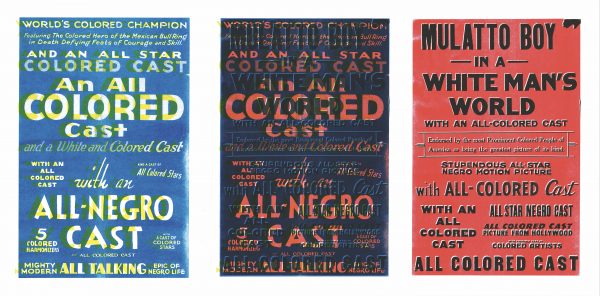
Through historical archival research and the act of experimental printmaking, Kelly Walters research aims to highlight the linguistic phrases used in promotional Black film posters during the Jim Crow through Blaxploitation eras. By extracting typographic elements such as “an all colored cast” or “with a cast of colored stars,” Kelly Walters is able to closely examine examples of segregation while also re-contextualizing them for new alternative platforms. In looking closely at typographic details, language, and gestures, identifiable patterns emerge pointing to shifts in communication styles and cultural representation in this area of poster design.

https://www.tdc.org/event/with-a-cast-of-colored-stars-a-talk-with-kelly-walters/

Designing for the Visually Impaired

Affordable accessibility design.

Min Choi
Adjunct Professor
San Diego State University
San Diego City College

Low vision is a part of the natural aging process, and we all have the potential to face it at some point in our lives. Though there are many exceptional high-tech devices to help people with visually impaired and blind, there has not been enough attention given to applying accessible design when creating affordable everyday products to benefit them.  The statistic shows that in the U.S., only around 30%1 of people with a visual disabilities are fully employed, and cannot afford to buy assistive technologies that may be awesome for them, but costs hundreds or even thousands of dollars.

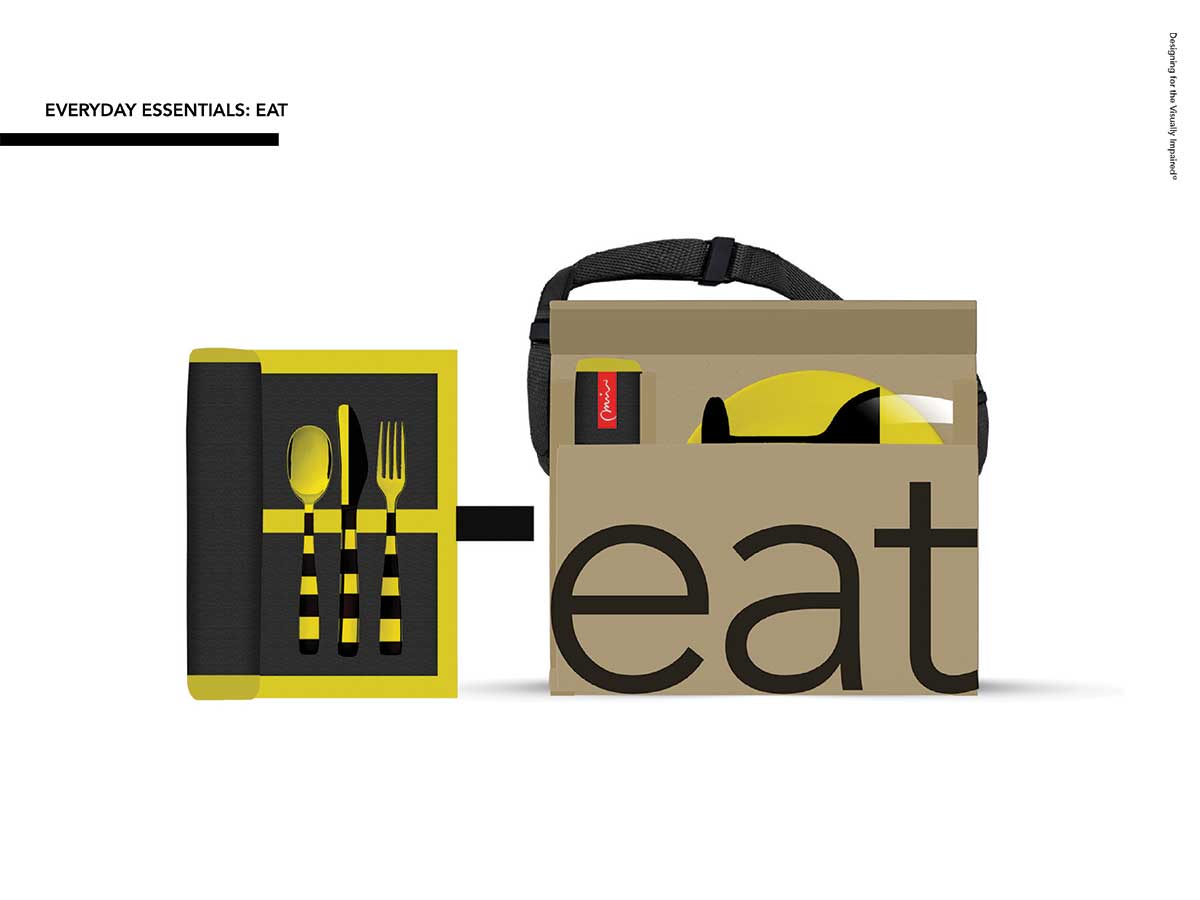
To address this issue, I am researching how people with low vision could experience high-contrast colors and basic shapes with tactility at a reasonable price. In-person, human-centered design approach guided me to build a deep empathy towards my audience and explore design process and solutions that would help celebrate their disabilities.

A home product line incorporates high-color contrasts and tactility using universal symbols for people with visual impairment. It is an experiment to help them to be independent and empower their everyday activities those of us with good vision often take for granted—including eating, getting ready for bed, and getting dressed in style.

At its heart, we must identity what the audiences’ needs are—and the only way to create design solutions is to connect with those who will benefit the most. Design with purpose and function is beneficial for everyone—especially those with disabilities.

This research was presented at the Design Incubation Colloquium 6.2: CAA 2020 Conference Chicago on February 14, 2020.

A Peace of Mind: Design Research for Pervasive Healthcare

User Interface and User Experience in Industry Design education.

Hyuna Park
Assistant Professor
University of Kansas

Although User Interface and User Experience (UIUX) design has generally been taught as part of visual communication (VisCom) design education, its principles including human-centered approach and systems thinking can also complement the other design disciplines’ curricula such as industrial design (ID). A design department in a Midwestern state university has recognized an unexpected tendency; an increasing number of the department’s ID graduates becomes UIUX designers. In support of this non-traditional ID career path, the department initiated to integrate UIUX design into one of its required ID courses.

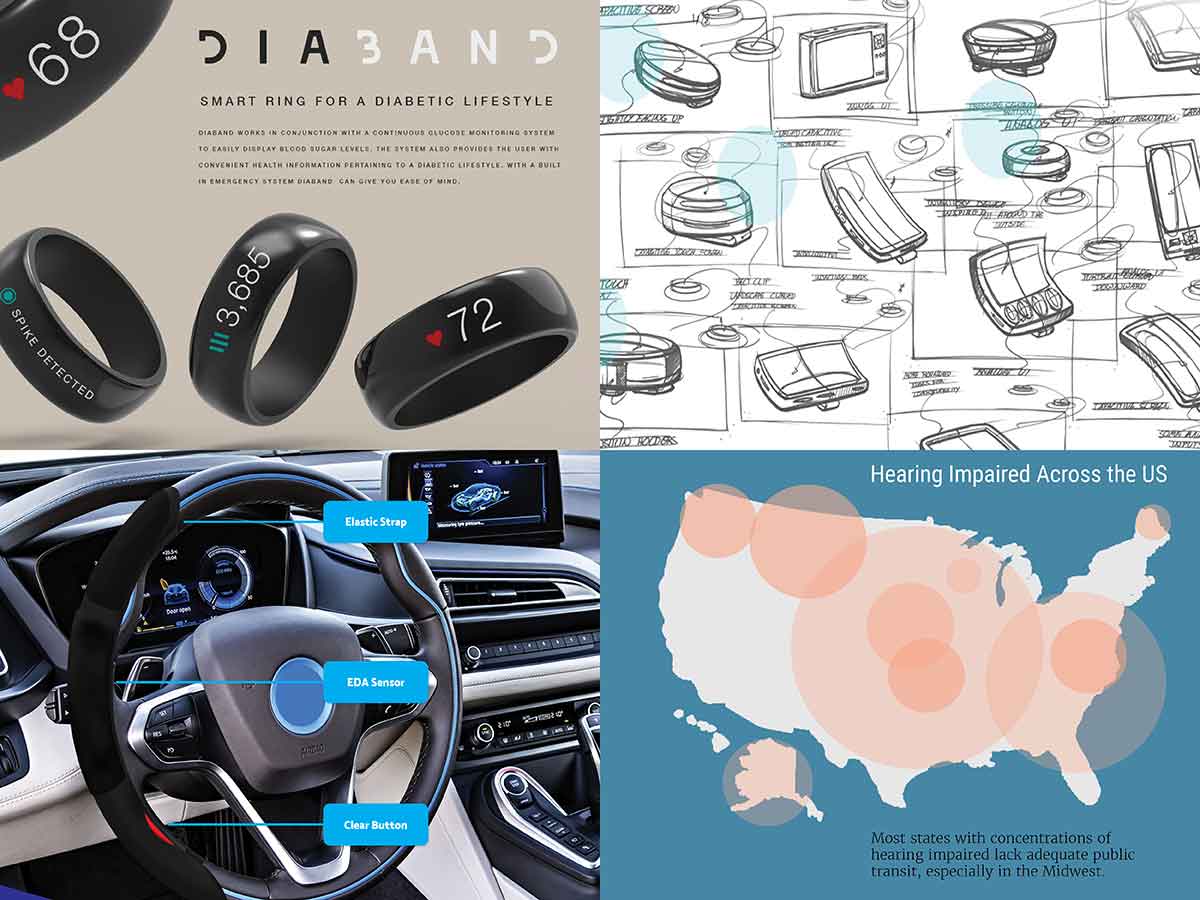
As a pilot project of this initiative, a group of ID students participated in a UIUX design project, Peace of Mind, which aims to provide pervasive healthcare products for people with disabilities. Pervasive healthcare refers to the remote healthcare monitoring and management system that removes locational and time restraints. The students had to understand their users’ lifestyles as well as the existing technologies to deliver the healthcare service successfully. This multifaceted project focused on design research methods including A/B test, convergence map, daily journey map, empathy map, prescriptive value web, and semantic differences, to gain a deeper understanding of the stakeholders’ needs.

Through this design project, the ID students designed various pervasive healthcare products including a smart lap desk for helping stroke survivors’ rehabilitation and a smart ring for a diabetic lifestyle in conjunction with a continuous glucose monitoring system. The students presented the project outcomes to the administrators of community engagement and telemedicine programs at the university’s medical center. By sharing the process and outcomes of Peace of Mind project, the presentation will address the critical attributes for successful UIUX design introduction to ID students. Furthermore, we will also discuss the benefits of integrating UIUX design into the ID curriculum and the challenges the educators may be faced.

This research was presented at the Design Incubation Colloquium 6.2: CAA 2020 Conference Chicago on February 14, 2020.