Yara Khoury Nammour
Assistant Professor
American University of Beirut, Lebanon
Khajag Apelian
Lecturer
American University of Beirut, Lebanon
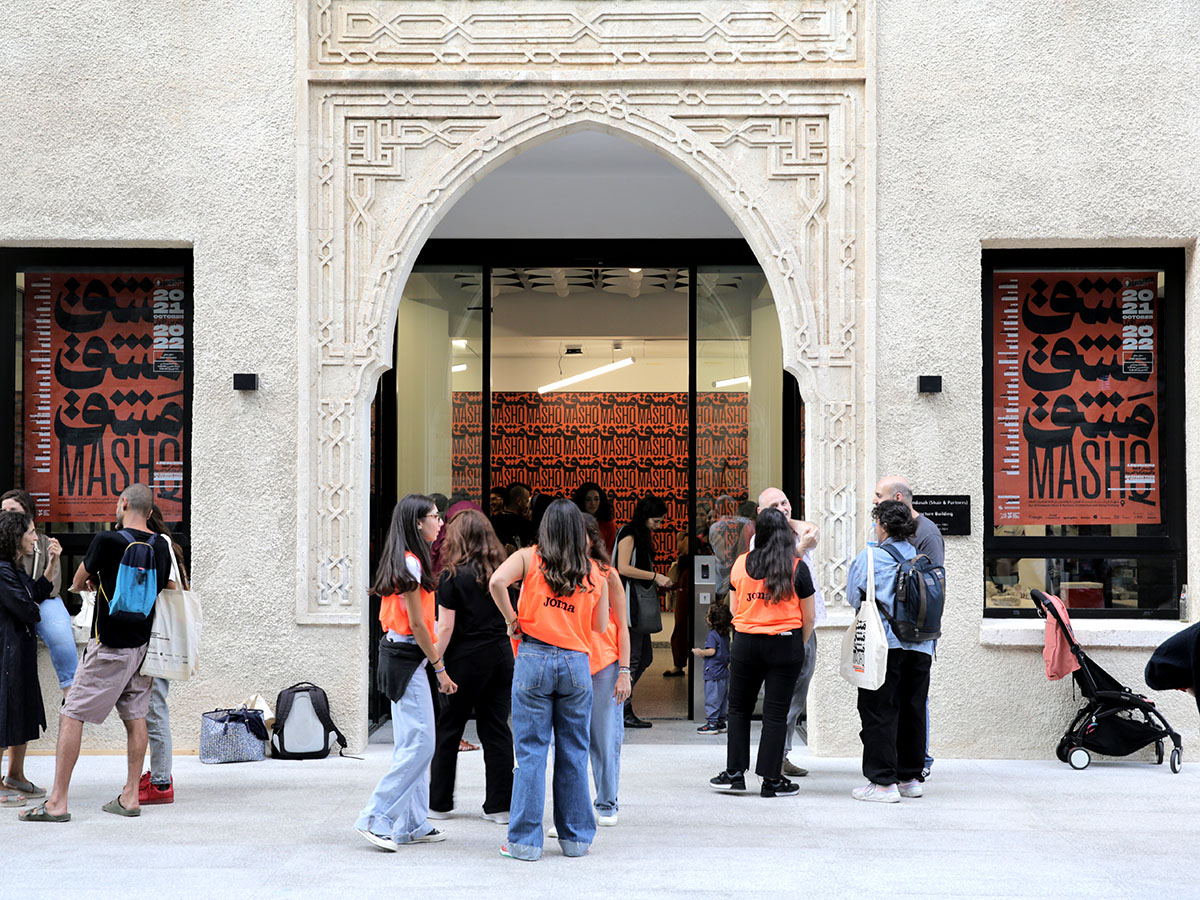
Mashq 2022 conference was held on October 20–21, 2022 at the American University of Beirut [AUB]. It was the first event dedicated entirely to Arabic type and typography. Organized by AUB’s Arabic Type Unit, a research body committed to advancing Arabic type and typography, the conference marked a groundbreaking milestone in the Arab region.
AUB has long been at the forefront of design education. More than thirty years ago, it pioneered the first graphic design program in the Arab world and was the first to integrate the graphic use of Arabic script into its core curriculum. Building on this legacy, the Arabic Type Unit was established in 2018. Naturally, Mashq 2022 served as an extension of these efforts that provides a platform to explore the historical evolution, current practices, and future directions of Arabic typography in the region.
The organizers made sure that the event spotlighted regional expertise that has long been overlooked, with more than 80% of the speakers being of Arab origin while talks by non-Arab speakers were curated to focus exclusively on Arabic type and typography. The team also made sure to design and develop a dedicated conference bilingual website [www.mashqconference.org], with a strong emphasis on Arabic, further reflected the conference’s dedication to its cultural and linguistic roots. All conference talks were made freely available on the Arabic Type Unit’s dedicated YouTube channel [www.youtube.com/@ATU_org], to extend the event’s reach to a global audience. A summarized video is here: https://www.youtube.com/watch?v=gcNUw5HOgH4&t=17s
Attendees and Participating Institutions
Mashq 2022 succeeded in attracting over 400 attendees, including students (62%), professionals (38%), and professors (13%). Participants mostly came from Lebanese universities such as the Lebanese American University, Notre Dame University, Middle East University, Lebanese University, and Académie Libanaise des Beaux-Arts. International attendees included those from Egypt, Turkey, Iraq, and the United Arab Emirates.
Speakers and Sessions
The conference featured presentations from 15 distinguished speakers, with a diverse spectrum, from seasoned pioneers in Arabic typography to emerging younger practitioners and academicians. This mix fostered a rich exchange of perspectives, blending deep-rooted expertise with fresh, innovative approaches to Arabic type design and visual communication.
Among the speakers, Kameel Hawa’s presentation, “The Spring of Arabic Type,” showcased his innovative efforts to rejuvenate Arabic script through type design and calligraphy, reflecting on its potential for both tradition and modernity. Lara Assouad discussed the graphic visual expression of language and its alphabet, offering insights into how typographic design can shape visual communication. Hatem Imam analyzed the relationship between cultural production and graphic arts, proposing methods to bridge the gap between these two domains. While Onür Yazıcıgil explored the history of Ottoman naskh and its spread beyond the borders of Istanbul in order to contextualize the influence of these typefaces on Turkish and Arabic printing and publishing in Beirut and Cairo. Naïma Ben Ayed also presented collaborative new research that aims to expand Arabic type design pedagogy, emphasizing the importance of ‘self-organized knowledge’ under the School of Commons.
Exhibitions and Workshops
The conference hosted two exhibitions: 100 Best Arabic Posters which celebrated contemporary Arabic poster design of 2021-2022, while the Granshan Type Design Competition Winners exhibition highlighted award-winning Arabic typefaces from 2019 and 2021/2022.
Complementing the exhibitions, workshops were also planned to provide participants with hands-on learning opportunities. Azza Alameddine guided attendees through the complexities of harmonizing Arabic and Latin scripts in logo design during her workshop, “Arabic/Latin Logo Matchmaking.” Georg Seifert introduced participants to the creation of Arabic fonts using Glyphs software in his workshop, “Introduction to Glyphs.”
Diversity and Inclusion
The organizers made it a priority to amplify diverse voices within the Arabic typography community. They took special care to give a platform to the older generation of Arabic typographers and designers, many of whom had not previously been afforded the opportunity to share their work on such a prominent stage. This effort ensured their invaluable contributions and experiences were recognized, preserving their legacy while inspiring a new generation of practitioners.
Additionally, the speaker lineup reflected a wide range of experiences and expertise, spanning seasoned pioneers to emerging practitioners and academicians. This intentional curation fostered an inclusive dialogue that bridged generations and enriched the discussions with diverse perspectives.
Sponsors and Support
Sponsors contributed a total of $12,000 from different entities in the profession and the educational sector. Their contributions were essential to the success of the event. Key sponsors included:
- Gold Sponsor: Commercial Type
- Silver Sponsors: Glyphs and TypeTogether
- Brass Sponsors: Rosetta Type, ISType, Koein, and Morcos Key
Impact and Reflection
Mashq 2022 challenged the dominance of Eurocentric design paradigms by fostering a space where Arabic typography and regional practices took center stage. It offered a compelling alternative to the often homogenized global design landscape. The conference highlighted the possibilities of moving beyond standardized, Westernized approaches in design education and practice, encouraging attendees to rethink the role of cultural identity as an intrinsic element in the creative process rather than a background influence.
Through it all, Mashq demonstrated how design can transcend corporate functionality to serve as a medium for personal narratives, cultural preservation, and regional storytelling. It explored the potential for a design philosophy rooted in local visual culture.
This project was the 2024 Design Incubation Educators Awards runner up recipient in the category of Service.
Biography
Yara Khoury Nammour — Assistant Professor of Graphic Design, Arabic Type Unit, AUB
Yara is a graphic and type designer, author and educator. She is an assistant professor of graphic design at the American University of Beirut and an independent designer since 2017 after a long-standing career of 20 years as design director at Al Mohtaraf design house. Her work is published in several international books and has authored a book titled ‘Nasri Khattar: A Modernist Typotect’ from Khatt Books. She heads the Arabic Type Research Unit and co-organizes the biennial Mashq conference on Arabic typography at AUB.
Khajag Apelian — Part-time Lecturer of Graphic Design, AUB
Khajag is a lettering artist, type and graphic designer. Khajag has developed typefaces in various scripts, including Arabic, Armenian, and Latin. He designed Arek, a typeface that was awarded the Grand Prize at Granshan 2010 Type Design Competition, and was among the winners of Letter.2, the 2nd international type design competition organized by the Association
Typographique Internationale. He currently operates under the name “debakir” Armenian for “printed type”. He …. and co-organizes the biennial Mashq conference on Arabic typography at AUB.