Backward by Design: Reframing AI Literacy through Systems Thinking and Critique Pedagogy

Training students to treat generative models as tools and as systems of meaning-making.

Lingyi Kong
Adjunct Professor
Parsons School of Design

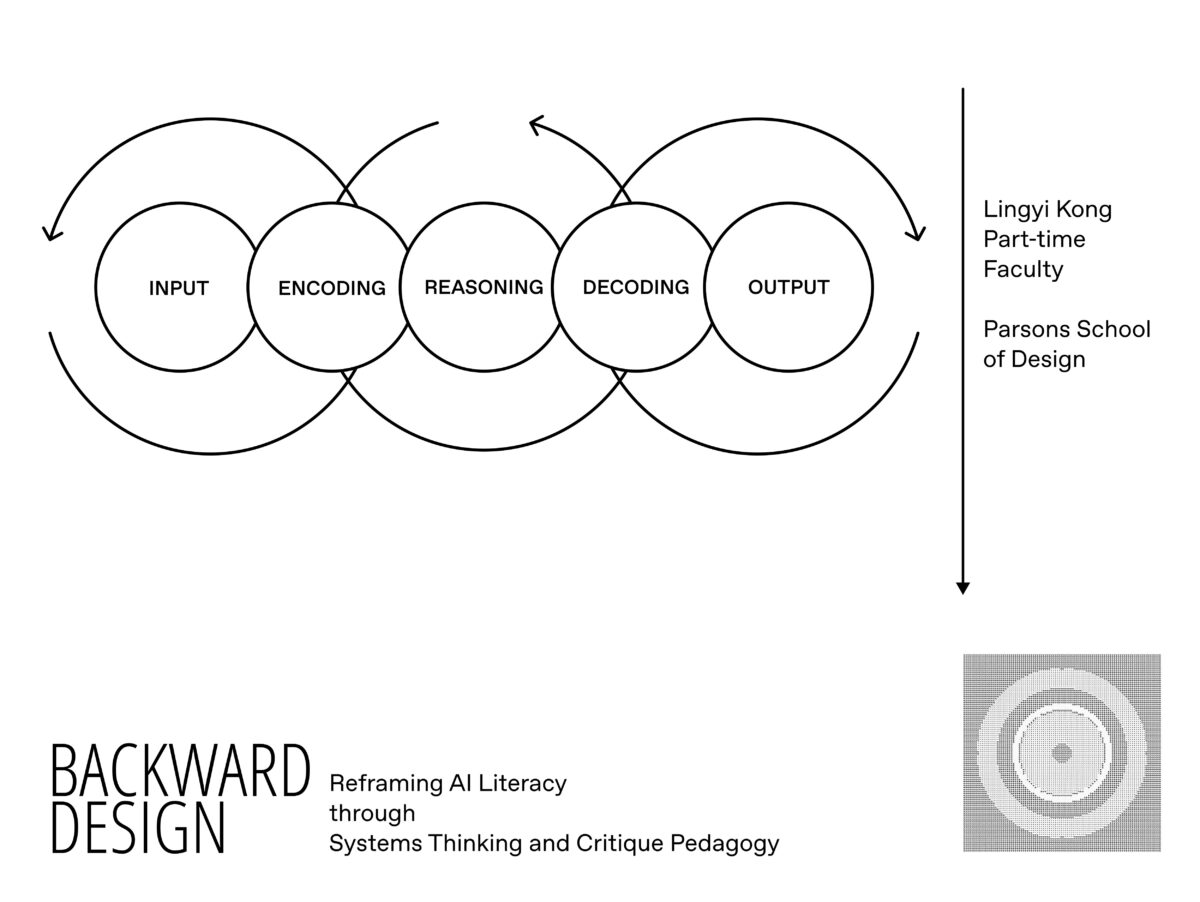
The underlying logic of generative AI—structured prompts, output predictability, and system feedback—is not unlike the foundations of critical design education: both rely on linguistic construction, syntactic control, and traceable iterations. This project explores that shared grammar as a pedagogical entry point, training students to treat generative models not just as tools, but as systems of meaning-making.

The framework introduces a “backward design” pedagogy in which students begin with AI outputs and work backward to decode the system’s structural assumptions. They analyze how prompt phrasing affects visual/linguistic output, how cultural bias surfaces in training data, and how interface design foregrounds certain logics while obscuring others. This method draws on theories of language, semiotics, and critical interface design to guide students through comparative mappings between AI-generated outputs and traditional design structures (e.g., grids, typographic rhythm, narrative sequencing).

Crucially, students are not passive recipients of AI assistance. They use AI as a reflective instrument to reframe and critique existing design workflows—extracting embedded design grammars, stress-testing stylistic assumptions, and making strategic use of the model’s generative excess. Students build speculative tools, experimental interfaces, and annotated systems that visualize not just results but the underlying decision tree behind them.

Through this process, students achieve more than tool fluency—they cultivate a critical authorship grounded in system thinking, capable of navigating the noise of generative output with informed judgment. The outcomes show that once AI is treated as an epistemological partner rather than a shortcut, students are empowered to articulate design decisions with greater clarity, ethics, and intentionality.


This design research is presented at Design Incubation Colloquium 12.2: Annual CAA Conference 2026 (In-person only) on Thursday, February 19, 2026.
Typographic Thresholds: Addressing Climate Urgency

Design methodology and outcomes for two projects—a group exhibition and a large-scale installation.

Megan Irwin
Assistant Professor
Washington University in St. Louis

As the climate crisis accelerates, designers are faced with pressing questions concerning how design contributes to awareness and action. Typography—bridging language and visual form—offers a unique capacity to make environmental issues tangible. This presentation examines how experimental typographic practice—through material processes, formal disruption, and spatial installation—can move beyond representation to translate the urgency and complexity of our ecological moment.

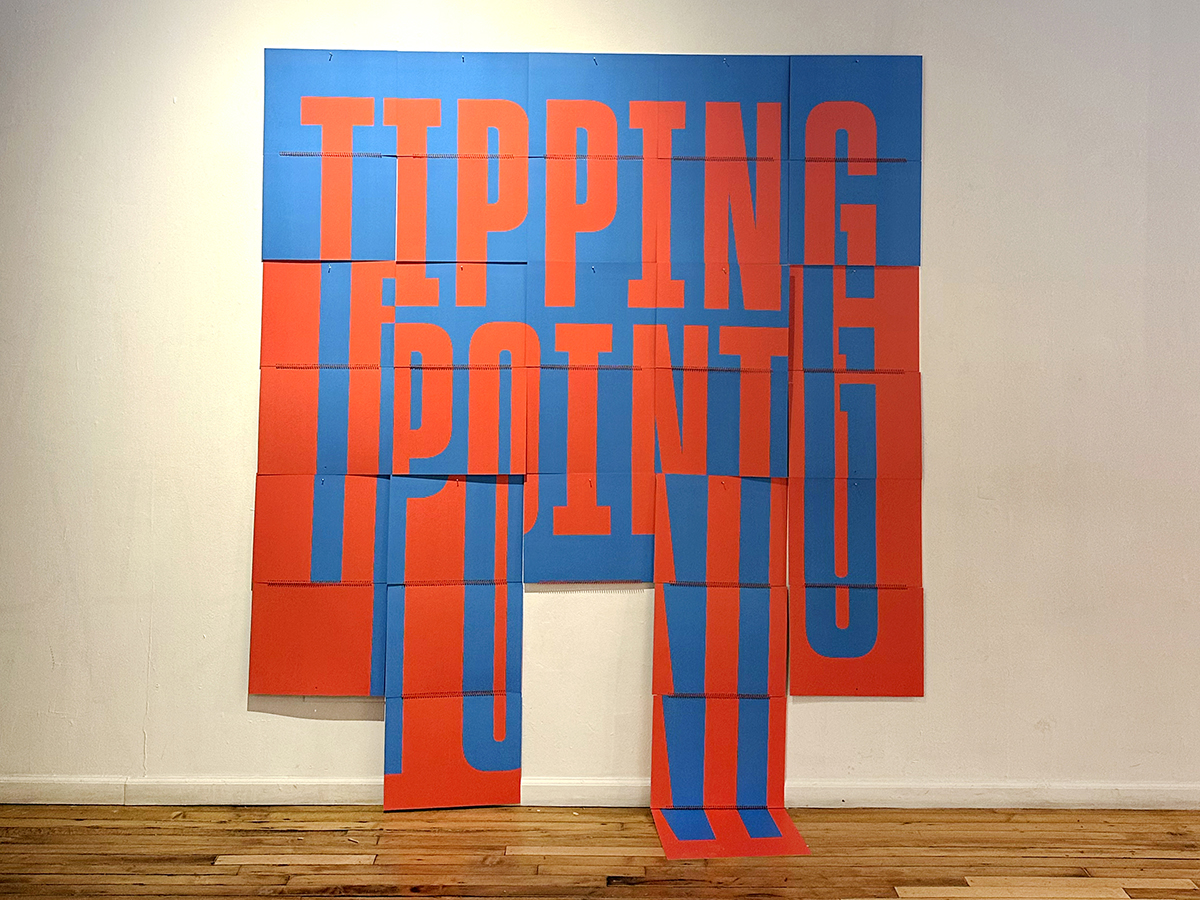
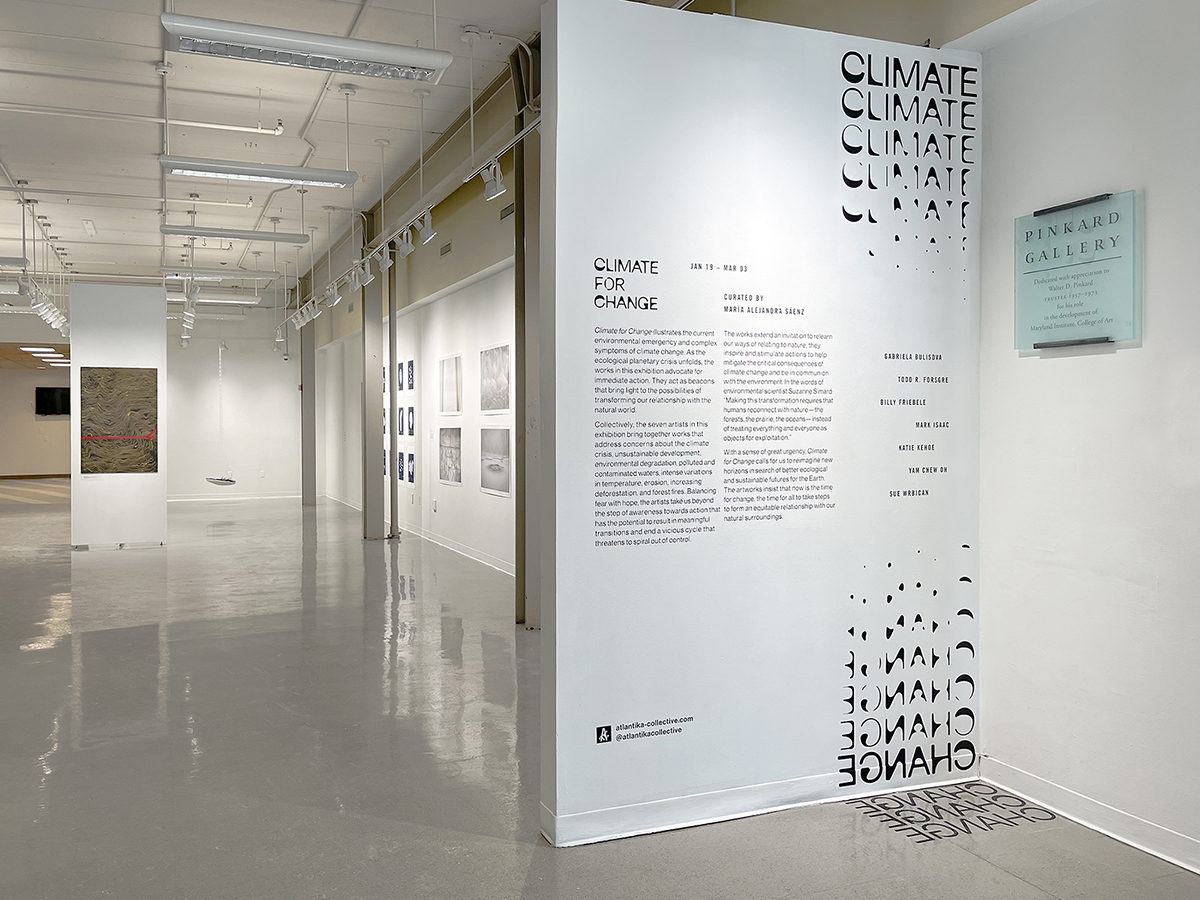
This presentation features design methodology and outcomes for two projects: Climate for Change and Tipping Point. Climate for Change, a group exhibition addressing the current environmental emergency, employed an expressive typographic language across the exhibition design. Physical manipulations with water and melted letterforms worked alongside digital experiments to distort and dissolve type—evoking themes of fragility and urgency. The typography disintegrates and then rebuilds, carrying an additional message of change, restoration, and hope.

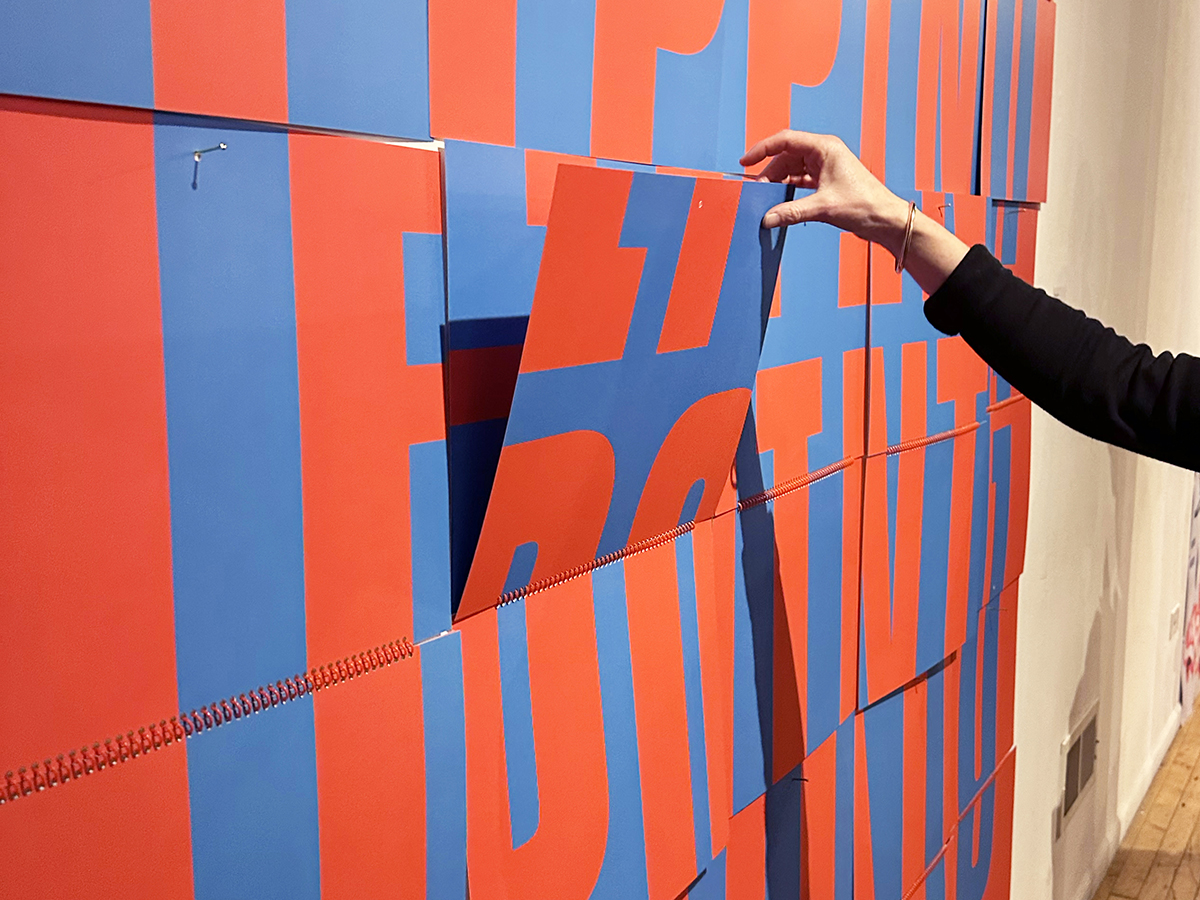
Tipping Point, a large-scale typographic installation, evolved from research on ecological thresholds. The typography spans a grid of 25 panels, each representing a vulnerable environmental system. As viewers engage with the work, panels flip and disrupt the typography, triggering a transformative cascade of events from the wall to the floor. This participatory experience invites action and reflection upon this ecological instability.

Together, these projects demonstrate typography’s power to engage the public with urgent climate issues. By synthesizing language and visual form, designers can mediate between scientific discourse and public understanding—offering frameworks for reflection, engagement, and collective action.

This design research is presented at Design Incubation Colloquium 12.2: Annual CAA Conference 2026 (In-person only) on Thursday, February 19, 2026.
Invisible Nightlife Review: Teaching Fiction as Design Practice

Poetic logs, imagined histories, diary entries, or hybrids about nightlife experiences that never happened.

Nika Simovich Fisher
Assistant Professor
Parsons / The New School for Design

Invisible Nightlife Review is a speculative writing and publishing project I taught at The New School, developed in collaboration with Dirt, an experimental media company.

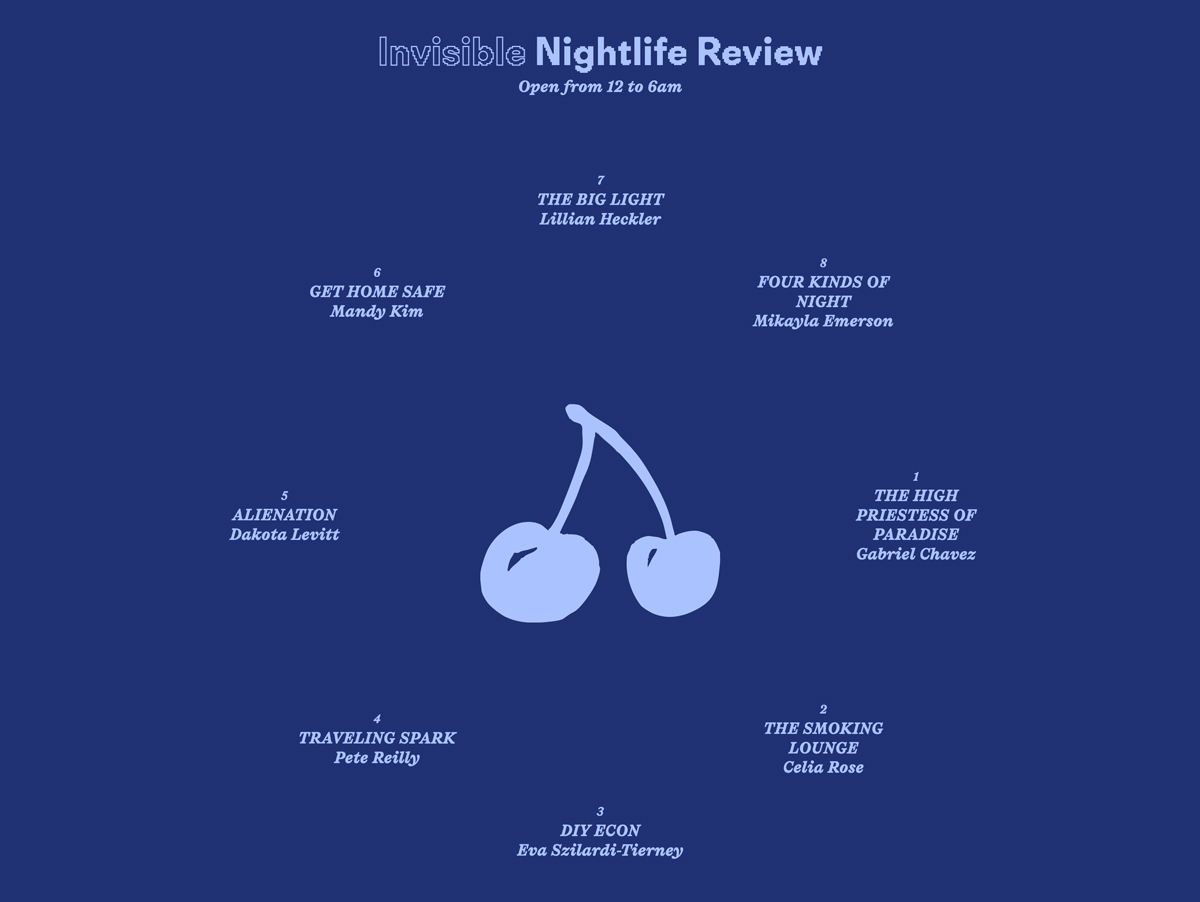
The project asked students to treat fiction as a design tool. Inspired by Italo Calvino’s Invisible Cities, students created 800-word essays in the form of poetic logs, imagined histories, diary entries, or hybrids about nightlife experiences that never happened. The goal wasn’t to document nightlife, but to explore how people move through visibility, intimacy, and risk after dark, and how fiction can surface emotional truths that are hard to express in literal terms.

The project culminated in a public anthology on Dirt, giving selected students professional bylines and the chance to work with editor Daisy Alioto. I served as co-editor and designed the anthology’s microsite. Some stories were adapted into interactive formats—Google Maps as narrative or an audio based experience—extending the themes of disorientation, memory, and blurred realities.

In 2025, when generative tools are speeding everything up and flattening creative voice, speculative writing slows things down. It gives students a way to make something memorable and their own, while contributing humanities based research outside of the classroom.

This design research is presented at Design Incubation Colloquium 12.2: Annual CAA Conference 2026 (In-person only) on Thursday, February 19, 2026.
Shearing Layers: A Framework for Reframing Contemporary Graphic Design Education

Builing upon Ethics, Theory, Methods, Profession, Technology, and Visual Trends layers, each operating on distinctive temporal cycles of change.

Jarrett Fuller
Assistant Professor
NC State University

This presentation examines applying Stewart Brand’s “Shearing Layers” as a theoretical framework for restructuring graphic design education amid contemporary challenges. With technological disruptions including artificial intelligence and broader sociopolitical instabilities, design educators must develop curricula preparing students for sustainable career trajectories in uncertain futures, not merely immediate employment.

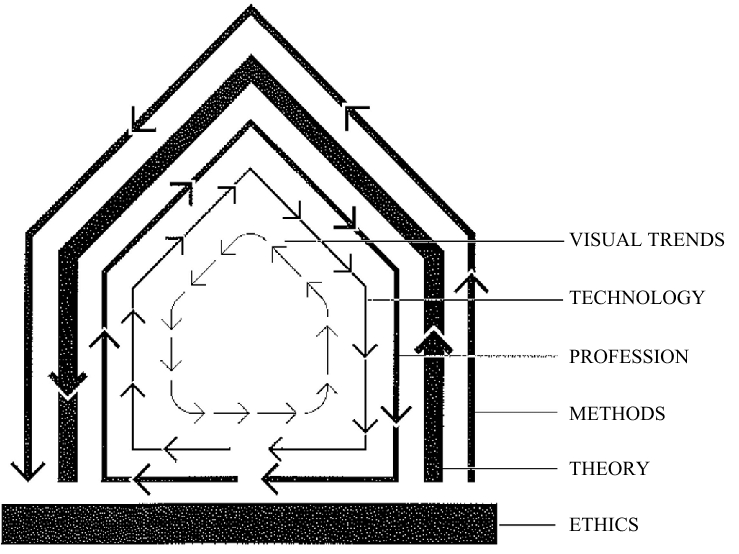
The proposal adapts Brand’s architectural model—originally conceptualized by Frank Duffy to describe buildings as systems with components evolving at different rates—to establish a multi-layered pedagogical structure. Just as buildings comprise Site, Structure, Skin, Services, Space Plan, and Stuff, this curriculum framework is built upon Ethics, Theory, Methods, Profession, Technology, and Visual Trends layers, each operating on distinctive temporal cycles of change.

The framework fundamentally inverts traditional design education by positioning theoretical seminars as the stable core around which experimental, responsive studio courses orbit. This restructuring enables programs to maintain philosophical and methodological continuity while simultaneously accommodating emerging technologies and shifting professional demands—addressing what Drucker and McVarish (2013) identified as “the perpetual crisis of design education.”

While not yet implemented, this speculative framework provides design educators with a conceptual tool for navigating curricular decisions in contexts of persistent change. The proposal contributes to design pedagogy discourse by offering a theoretical model that reconciles paradoxical demands for both stability and adaptability in curriculum development.

These structures prepare designers to address complex societal challenges with both historical perspective and future-oriented skills, enabling educational programs to respond dynamically to rapid disciplinary evolution while maintaining foundational integrity.

This design research is presented at Design Incubation Colloquium 12.2: Annual CAA Conference 2026 (In-person only) on Thursday, February 19, 2026.
The Empathy Points Method: Integrating Identity and Bias Recognition Into Design Education

Leveraging the diverse experiences of design teams.

Andrea Hempstead
Associate Professor
Texas A&M University-Corpus Christi

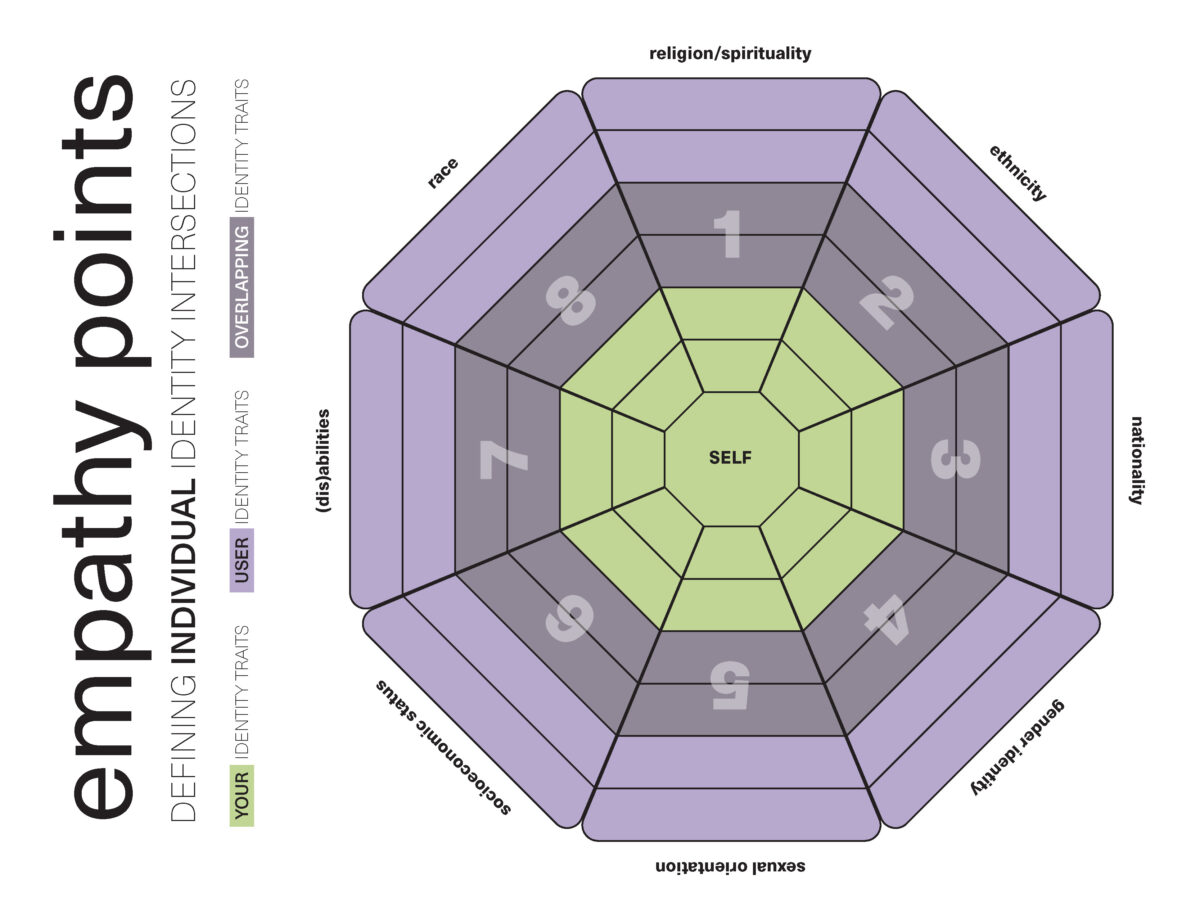
This presentation reviews practical tools and methods for guiding students through an understanding of identity and bias definitions and connecting these concepts to the design process. Delivered in a workshop format, the approach combines identity reflection with design methods that foreground empathy and critical awareness. A central focus is the Empathy Points method, which challenges conventional assumptions about empathy in design. This method argues that genuine empathy requires shared lived experiences, applying this idea through the identification of overlapping social identity traits between designers and users. By leveraging the diverse experiences of design teams, group members can establish more authentic connections with users and increased inclusive solutions, particularly in contexts where students lack direct access to end users.

The workshop also emphasizes how implicit bias shapes design interpretations. Participants are guided through an examination of their biases in relation to their social identities. They assess how these align or diverge from user identities and connect the impact of user identities to the design problem. The process concludes with creating a strategic plan, by using team empathy points effectively while continuously checking for bias throughout the design process. Workshop outcomes will be revealed via classroom examples, results, and student reflection.

The integration of identity, empathy, and bias into design education equips students with tools to critically engage with users’ perspectives while remaining mindful of their own positionalities. By framing empathy as relational and grounded in shared experience, the Empathy Points method expands the potential for inclusive and socially responsive design practices.

This design research is presented at Design Incubation Colloquium 12.2: Annual CAA Conference 2026 (In-person only) on Thursday, February 19, 2026.
m(other)ing: Creating Design Research Space for Work on Parenting and Reproductive Journeys

New frameworks within design scholarship that validate personal, embodied, and politically entangled perspectives.

Meaghan Dee
Associate Professor
Virginia Tech

Bree McMahon
Associate Professor
University of Arkansas

Design research has historically marginalized work connected to motherhood, reproductive health, and the lived experiences of womb-bearing and caregiving bodies, due in part to cultural stigma, institutional disinterest, and limited venues for scholarly dissemination. Yet these issues are central to human experience and deserve academic attention, especially within a field centered on systems, communication, and care.

This presentation introduces m(other)ing, a research and curatorial initiative that explores the potential of design to foreground reproductive experiences—from infertility and pregnancy to transgender and non-binary parenting, and the choice to live childfree. Motivated by the growing urgency of these topics,—this work advocates for new frameworks within design scholarship that validate personal, embodied, and politically entangled perspectives.

We will share curatorial outcomes from two exhibitions at Virginia Tech and James Madison University, including posters, zines, digital platforms, and speculative systems submitted by designers responding to reproductive justice and parenting. Through this body of work, we ask: How can design research expand to include projects that emerge from personal reproductive narratives? What methodologies and systems are needed to share and document this work ethically and in a care-centered way?

By positioning m(other)ing as both a scholarly platform and community-building effort, this presentation argues for expanding the scope of what counts as design research. We aim to spark dialogue on how design can bear witness to, and intervene in, the most intimate and contested aspects of contemporary life, and recognize designers and researchers as their whole selves.

This design research is presented at Design Incubation Colloquium 12.2: Annual CAA Conference 2026 (In-person only) on Thursday, February 19, 2026.
The Significant Others: Women’s Contributions to the Private Press Movement

A pivotal role in shaping typography and fine printing as works of art in the 20th century.

Maria Smith Bohannon
Associate Professor
Oakland University

This paper argues that in the early twentieth century, American women played a critical role in shaping the material output and aesthetics of the Private Press movement, which built upon the Arts and Crafts movement and the ethos of William Morris’ Kelmscott Press to reject mass printing in favor of handcraft, high-quality materials, artistic layout, and limited-edition books. Women in the field did it all—typesetting, page layout, proofing, printing, and day-to-day operations—yet, like the legacies of women in the history of typography and book arts more generally, their work is often overshadowed by the eminence of the men with whom they worked. This presentation draws on physical and digital archival artifacts, period articles, and rare books to show how Bertha Goudy (1869-1935) of The Village Press, among others, played a pivotal role in shaping typography and fine printing as works of art in the 20th century. By looking at the professional life of Goudy and other women in the Private Press Movement, their work, and their labor practices, and centering them as authorial rather than peripheral, this paper offers an expanded discussion on women who influenced fine printing, book design, typesetting, and typography—and a few of the women at its core. Analyzing historical and cultural context, this paper contributes to contemporary efforts to diversify and expand design history.

image credit: Goudy Collection Broadside #115, Rare Book and Special Collections Division of the Library of Congress, Washington, DC.

This design research is presented at Design Incubation Colloquium 12.2: Annual CAA Conference 2026 (In-person only) on Thursday, February 19, 2026.
Design Incubation Colloquium 12.2: Annual CAA Conference 2026 (In-person only)

Presentations and discussion in Research and Scholarship in Communication Design at the 114th Annual CAA Conference 2026

Thursday, February 19, 2026
4:30PM – 6:00PM CST
Hilton Chicago – Lower Level
Salon C-6

Recent research in Communication Design. Presentations of unique, significant creative work, design education, practice of design, case studies, contemporary practice, new technologies, methods, and design research. A moderated discussion will follow the series of presentations.

The colloquium session is open to all conference attendees. Be sure to watch the online video presentations before attending this event.

CHAIRS

Cat Normoyle
East Carolina University

Heather Snyder Quinn
DePaul University

Camila Afanador-Llach
Florida Atlantic University

Discussants

Anne Hostetler Berry
University of Illinois Chicago


Jessica Meharry
DePaul University

PRESENTATIONS

The Significant Others: Women’s Contributions to the Private Press Movement
Maria Smith Bohannon
Associate Professor
Oakland University

m(other)ing: Creating Design Research Space for Work on Parenting and Reproductive Journeys
Meaghan Dee
Associate Professor
Virginia Tech

Bree McMahon
Associate Professor
University of Arkansas

The Empathy Points Method: Integrating Identity and Bias Recognition Into Design Education
Andrea Hempstead
Associate Professor
Texas A&M University-Corpus Christi

Shearing Layers: A Framework for Reframing Contemporary Graphic Design Education
Jarrett Fuller
Assistant Professor
NC State University

Typographic Thresholds: Addressing Climate Urgency
Megan Irwin
Assistant Professor
Washington University in St. Louis

Invisible Nightlife Review: Teaching Fiction as Design Practice
Nika Simovich Fisher
Assistant Professor
Parsons / The New School for Design

Backward by Design: Reframing AI Literacy through Systems Thinking and Critique Pedagogy
Lingyi Kong
Adjunct Professor
Parsons School of Design

Colloquium 12.2: CAA Conference 2026 Call for Submissions

114th CAA Annual Conference, In Person Format.
Deadline for abstract submissions: August 29, 2025.

We invite abstract submissions on presentation topics relevant to Communication Design research. Submissions should fall into one or more of the following areas: scholarly research, case studies, creative practice, or design pedagogy. We welcome proposals on a variety of topics across the field of communication design.

Submit an abstract of 300 words using the Design Incubation abstract submission form found here:
https://designincubation.com/call-for-submissions/

Submissions are double-blind peer-reviewed. Reviewers’ feedback will be returned. Accepted presentation abstracts will be published on the Design Incubation website.

Accepted researchers will be required to produce a 6-minute videotaped presentation that will be published on the Design Incubation channel. The CAA conference session will consist of a moderated discussion of those presentations.

The session will involve a quick 3-minute presentation overview from each accepted submission researcher, followed by a moderated group discussion.

114th CAA Annual Conference
In Person

Hilton Hotel, Downtown
Chicago, IL
February 18-21, 2026

Presentations and Moderated Discussion

Presenters will follow the basic membership and fee requirements of CAA.

We are accepting abstracts for presentations now until August 29, 2025.