Design Incubation Colloquium 3.0: MCLA

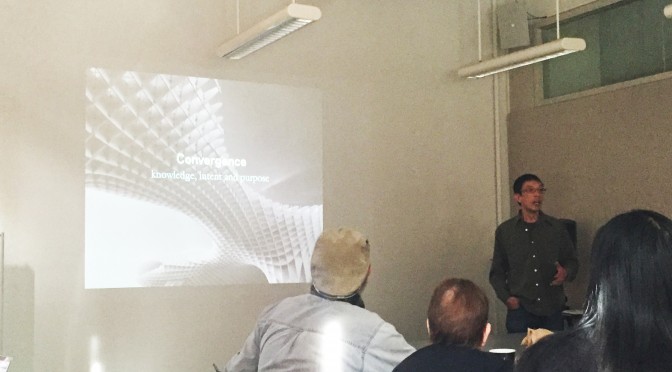
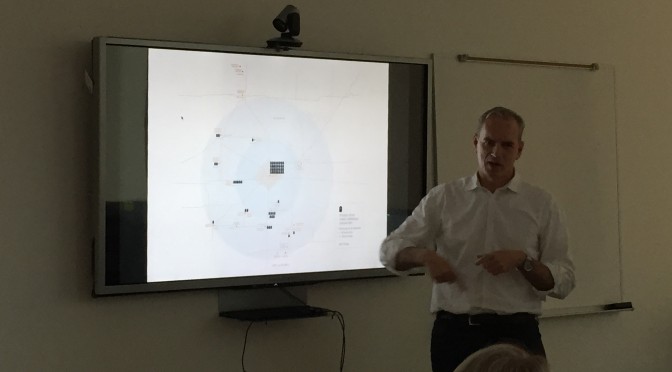
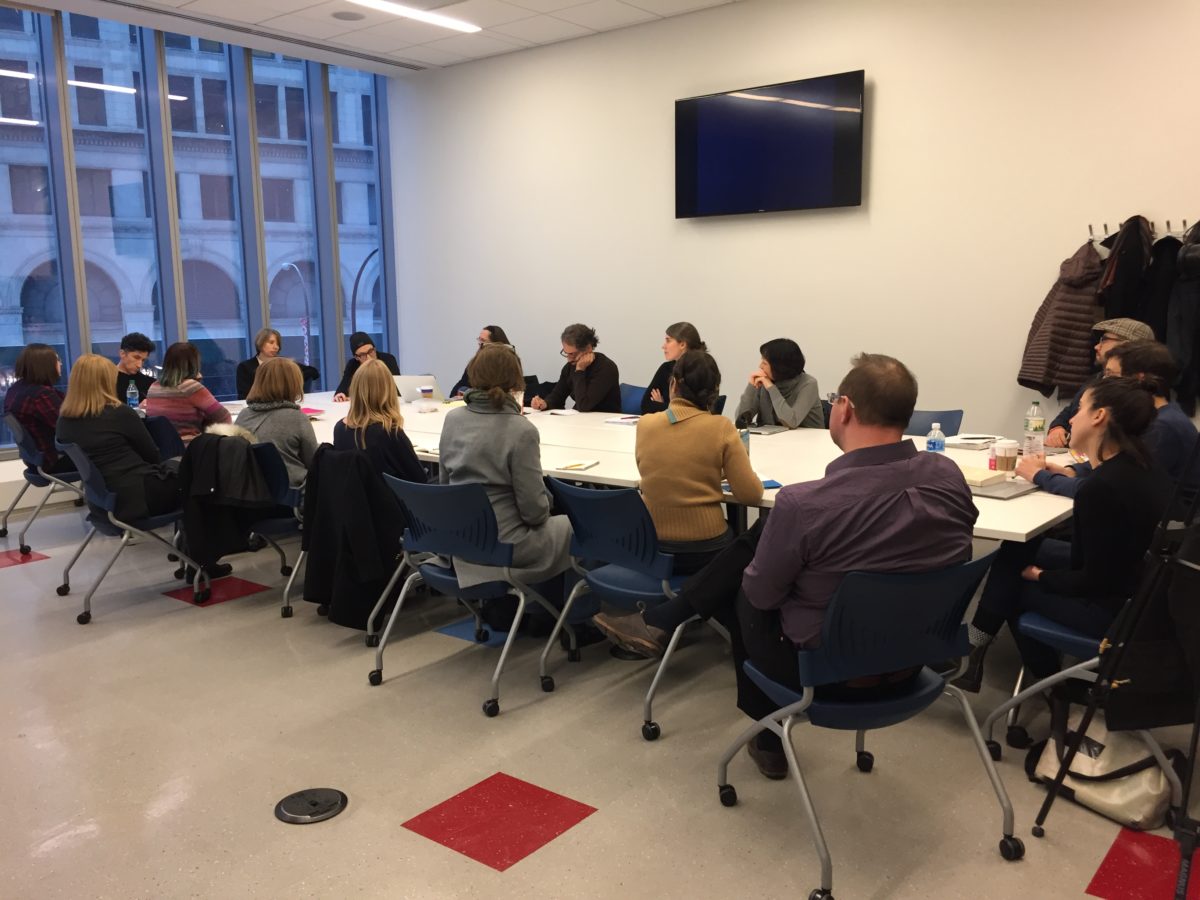
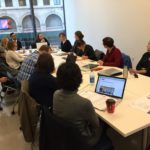
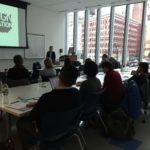
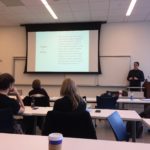
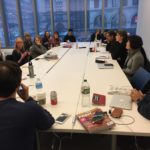
Design Incubation Colloquia 3.0 (#DI2016sep) at the Massachusetts College of Liberal Arts in North Adams, Massachusetts on Saturday, Sept 24, 2016.

Hosted by Josh Ostraff

Saturday, Sept 24, 2016
Time: 12:30pm–4pm
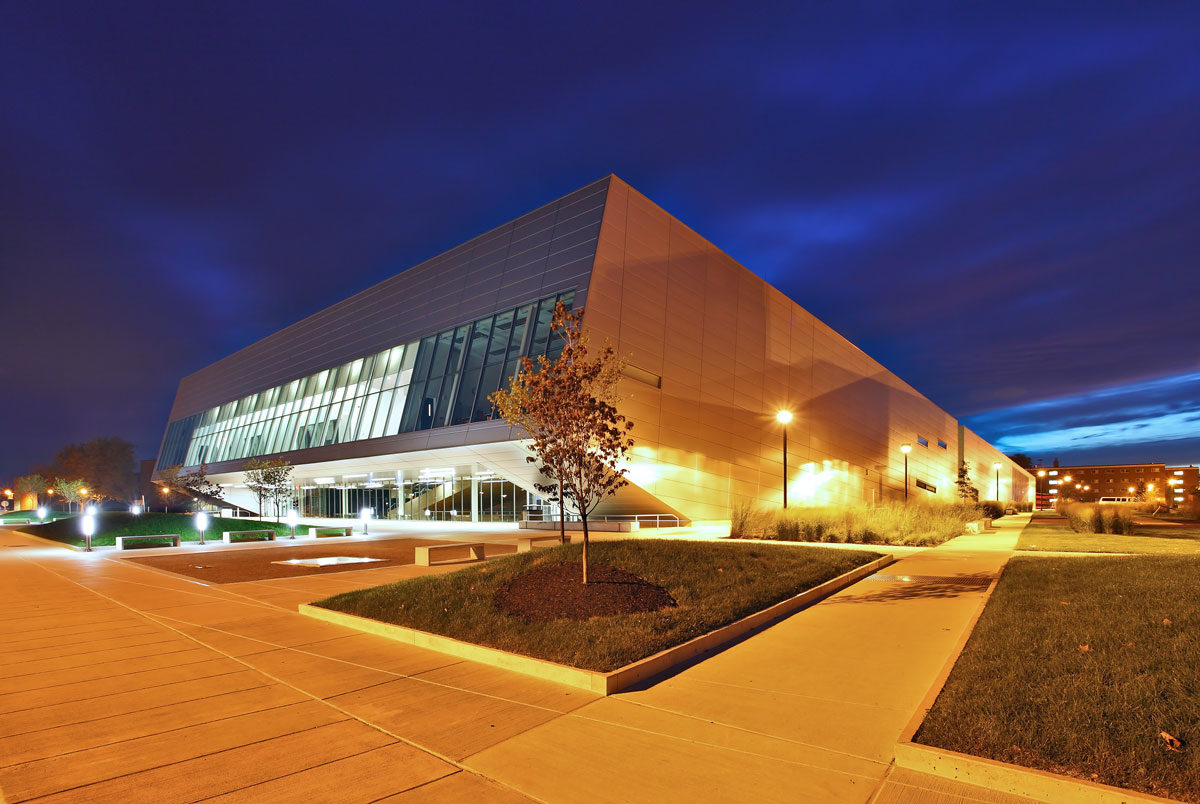
Feigenbaum Center for Science & Innovation, Room 121
Massachusetts College of Liberal Arts
71 Blackinton St
North Adams, MA 01247

Design Incubation Colloquia 3.0 (#DI2016sep) will be held at the Massachusetts College of Liberal Arts in North Adams, Massachusetts. This event is open to all interested in Communication Design research. RSVP with name and affiliations if you plan on attending.

Parking: There is a lot across the street from the Feigenbaum Center for Science & Innovation on Blackinton Street or the lot behind the Church Street Center between Elmwood & Porter Streets.

Abstract submission for presentations deadline Sept 3, 2016.  For details visit the Call for Submissions, and Submission Process description.

Guest Presentation

Making Small Things: Robots, Cracks, and Hamburgers
Chris St.Cyr
Assistant Professor of Graphic Design
The College of Saint Rose

Presentations

How Much is Too Much?
Mark Zurolo
Associate Professor Graphic Design, UConn Storrs
Liz DeLuna
Associate Professor Graphic Design, St. John’s University

Visualizing Pesticide Use in Controlling Zika
Courtney Marchese

Assistant Professor of Interactive Media + Design
Quinnipiac University

Would You Take This Course? A Case Study in Instructional Design
Gerol C. Petruzella Ph.D.
Associate Director, Academic Technology
Massachusetts College of Liberal Arts

Major and Life Design for a Wild New World
Karen M. Cardozo, M.Ed., PhD
Assistant Professor of Interdisciplinary Studies
Massachusetts College of Liberal Arts

Thinking Through The Pencil: The Primacy Of Drawing In The Design Thinking Process
Pattie Belle Hastings

Chair of Interactive Media + Design
School of Communications
Quinnipiac University

Developing Agency in Art and Design
Mitch Goldstein
Assistant Professor, School of Design 
Rochester Institute of Technology

The City of You

Robert J. Thompson
Assistant Professor
Graphic & Interactive Design
Department of Art
College of Creative Arts & Communications
Youngstown State University

Youngstown State University in partnership with the City of Youngstown was approved for a two year federal grant from the Economic Development Administration supporting the development of an economic development and marketing/advertising strategy. Putting this purpose into action, an interdisciplinary team of economic strategists, researchers, community organizers, and graphic designers was developed to finalize an economic development strategy and marketing/advertising campaign.

The collaborative, multi-disciplinary strategy offers a new future-focused narrative for Youngstown, visually portrayed through a multi-point advertising campaign that offers intelligent and meaningful expressions across all print and digital media channels. This campaign, titled “The City of You”, was developed by RJ Thompson, Assistant Professor of Graphic & Interactive Design and his Youngstown Design Works students at Youngstown State University. Youngstown Design Works is an elite-level, student-run graphic & interactive design agency that provides affordable, high quality design services to Youngstown-area civic and business organizations.

All advertising and design concepts created by Thompson and his students were subjected to extensive stakeholder critique, public presentation, critical observation and in-depth analysis through the use of target-specific focus groups, user testing scenarios, and experimental, in-person data collection techniques. Campaign deliverables include, but are not limited to, a completely new brand identity, advertising, printed and digital billboards, a newly redesigned City of Youngstown government website, and a centralized “City of You” campaign website that highlights crowdsourced stories of Youngstown citizens.

Launching in late April 2016, it is expected that the conceptual potential and significant financial investment supporting the campaign will permit it to run for a minimum of 5 years with local, regional, and national exposure.

This research was presented at the Design Incubation Colloquium 3.1: Kean University on Saturday, Oct 22, 2016.

Colloquium 3.1: Kean University Call for Submissions

Kean University, in the Union County region of New Jersey will be hosting a Design Incubation Colloquium on Saturday, October 22, 2016.

Kean University, in the Union County region of New Jersey will be hosting a Design Incubation Colloquium on Saturday, October 22, 2016. All are welcome to attend. Details and agenda can be found on the Colloquium 3.1: Kean University page.

We are accepting abstract submissions for presentations. Abstract submission deadline: October 1, 2016.

We invite designers—practitioners and educators—to submit abstracts of design research. Remote presentations are also acceptable.  Presentations are limited to 6 minutes + 4 minutes for questions. (Skype or Google Hangouts.)

For more details, see the Submission Process description. Email 300 word abstract to submissions@designincubation.com.  Questions can be directed to info@designincubation.com.

Please RSVP@designincubation.com if you plan on attending. Space is limited.

Would You Take This Course? A Case Study in Instructional Design

Gerol C. Petruzella Ph.D.
Associate Director
Academic Technology
Massachusetts College of Liberal Arts

One of the contexts in which design can have a vital and immediate impact in education is in the design of the online course space. As higher education expands to more meaningfully accommodate the role of instructional design in developing pedagogy and curricula, there is an increasing opportunity for such work to be put into practice, not only in specifically design-focused curricula, but across majors and programs generally. Longstanding research points toward a significant correlation between well-designed environments and improved educational experiences and effectiveness. As digital environments, not just physical ones, have become a mainstream part of the student experience, we have compelling reason to mindfully and intentionally apply design principles to those spaces as a matter of course, rather than as a specialized or ‘add-on’ practice.

This presentation offers a comparative case study in the effectiveness of applying basic considerations of design to an online course space, and offers some preliminary analysis. The same 200-level philosophy course, taught first in 2012 with no explicit attention paid to issues of design, and then taught again in 2015, with intentional consideration of visual, accessibility, web, and mobile design issues, will form the basis of the investigation. Analytics data and trends collected by the learning management system, including direct and proxy measurements of participation, engagement, and assessments, will undergird some conclusions about the efficacy of including intentional and explicit design work as a standard element of course creation.

This research was presented at the Design Incubation Colloquium 3.0: Massachusetts College of Liberal Arts (MCLA) on Saturday, Sept 24, 2016.

Major and Life Design for a Wild New World

Karen M. Cardozo, M.Ed., PhD
Assistant Professor of Interdisciplinary Studies
Massachusetts College of Liberal Arts

Some undergraduate institutions offer an interdisciplinary or special major where students integrate their interests and passions to design their own programs of study. In Finding Your Way in a Wild New World (2013), this method is recommended to everyone by social scientist and life coach Martha Beck. Arguing that social structures (including those related to work) are changing faster than conventional education or strategic planning processes can keep pace, Beck suggests that we can best navigate this rapidly shifting landscape by following our instincts and using all five senses in a more fluid, situationally responsive way. This dovetails with Daniel Pink’s thesis in A Whole New Mind (2006) that we have entered a Conceptual Age in which the most successful enterprises will be “high touch” (providing face to face or interactive services that cannot be outsourced) and/or “high concept” (tapping the creative, visual capacities of the right brain in addition to the analytic, verbal capacities of the left brain that are most elicited by educational systems). Barbara Sher (2006) agrees, adding that integrative or interdisciplinary orientations of the polymath types she calls “scanners” will be particularly in demand. Design communication serves as an ideal nexus for all of these insights.

Inspired by Stanford’s Design your Stanford and Design Your Life courses, this presentation argues that 21st century pedagogy should relinquish an outmoded “information age” attachment to content coverage in favor of more self-reflexive learning in which students apply open-ended and iterative design principles to fully maximize their own curiosity, inclinations and opportunities—in college and beyond. As a concrete case study, we’ll look at MCLA’s Interdisciplinary Studies (IDST) program as helpful “design your major” intervention, and present a scaled-up counterpart in life design from one IDST World of Work course, whose final research project requires students to design their lives in two alternate universes: one, the life they think they are planning and the other a path that might unfold from a different point of departure and in response to unpredicted setbacks, risks taken, or plain dumb chance. The resulting insights reveal that while the future is unpredictable, the value of design thinking as a method for navigating the unknown is quite clear.

This research was presented at the Design Incubation Colloquium 3.0: Massachusetts College of Liberal Arts (MCLA) on Saturday, Sept 24, 2016.

Idea Incubator: The Architectural Design Studio Experience and the Nurturing of Creativity

Craig Konyk AIA
Assistant Professor of Architecture
School of Public Architecture
Michael Graves College
Kean University

The Education of an Architect in unlike many other disciplines in that the primary vehicle for the teaching of Design is the Architectural Studio. The Architectural Studio has its roots in the Beaux-Arts Atelier model from turn of the century France, where young architectural students would work in the design office of their Architectural Instructors, learning by emulation and association from like-minded colleagues. It was an informal affair, but actually a very encouraging model for creative enterprise.

Growing out of the model of the Artists’ Studio, where leftover, underutilized spaces (mansard attic spaces in Paris, basement space in Coenties Slip and lofts in Soho, Lower Manhattan, etc.) became places of creative production, and even urban rejuvenators, the Architect’s Studio became formalized in American Architectural Professional Education as the central component of a young architect’s path to licensure and professional standing. Without the Architecture Studio, one could not become an Architect.

Additionally, another significant component of the Studio system is the amount of time that is spent in the Studio working on design projects, discussing potential solutions, crafting submissions for final evaluation. The intensity and complete focus of the effort in one place for a sustained period of time creates an atmosphere not unlike a laboratory, where anexperiment is pursued to its logical conclusion. In our increasingly distracted and undirected society, the ability to combine time, singular focus and a space to achieve something of quality is a rare occurrence; one could even say it is a “luxury”. But in fact it is a necessity for one to achieve any significant break through in design.

This presentation will explain the unique properties of the Architectural Studio format, its history and development pedagogically and how elements of it may have application in other focus intensive design disciplines. It will argue that the Architecture Design Studio was a Design Incubator even before the term was given definition.

This research was presented at the Design Incubation Colloquium 3.1: Kean University on Saturday, Oct 22, 2016.

Colloquium 3.0: MCLA Call for Submissions

Design Incubation is excited to be traveling to the Berkshires to kick off the 2016-2017 academic year at the Massachusetts College of Liberal Arts. We look forward to meeting local designers and educators to see and hear about visual communication design projects and research.

Design Incubation is excited to be traveling to the Berkshires to kick off the 2016-2017 academic year at the Massachusetts College of Liberal Arts. We look forward to meeting local designers and educators to see and hear about visual communication design projects and research.

Abstract Submission Deadline: September 3, 2016.

We invite graphic designers, illustrators, videographer, photographers, web designers and other visual communication practitioners and educators to submit abstracts of design presentations. Remote presentations are also acceptable.  Presentations are limited to 6 minutes + 4 minutes for questions. (Skype or GoogleHangouts.)

Design Incubation Colloquium 3.0: MCLA
Hosted by Josh Ostraff
Saturday, Sept 24, 2016
Time: TBD
Massachusetts College of Liberal Arts (MCLA)
375 Church Street
North Adams, MA 01247

For more details, see the Submission Process description. Email 300 word abstract to submissions@designincubation.com.  Questions can be directed to info@designincubation.com.

Please RSVP@designincubation.com if you plan on attending. Space is limited.

Design Incubation at AIGA’s Nuts and Bolts Conference

This workshop focuses on how to structure communication design scholarship with an emphasis on the intersection of professional practice and writing.

Tuesday, June 14, 2016
3:00 – 4:30pm
Bowling Green State University, Ohio

Design Incubation’s Director of Fellowships, Aaris Sherin will be offering a preconference workshop on design research and scholarship at AIGA’s Nuts and Bolts conference in Bowling Green, Ohio.

Structuring Scholarship with Design Incubation: methodologies and techniques for design writing

This workshop focuses on how to structure communication design scholarship with an emphasis on the intersection of professional practice and writing. Information about discipline specific journals and book publishers will be included as well as detailed descriptions of time allotment, word counts and other practical resources relevant to design writing and publishing. Participants will explore the competencies needed to successfully develop encyclopedia entries, reviews, journal articles, book proposals and manuscripts. They will also have the opportunity to share and develop project ideas while receiving constructive feedback from the workshop facilitator and peers.

Participants can also sign up for short one-on-one sessions with Aaris to discuss their scholarship and receive advice about particular publishing venues.

Registration Now

Bowling Green, Ohio is located 25 miles from Toledo Express Airport (TOL) in Northwest, Ohio and is 75 miles south of Detroit Metro Airport (DTW).

Design Incubation Fellowship 2017

January 12 –14, 2017. New York City. A three-day workshop facilitating academic writing and publishing for designers.

The Fellowship Program at Design Incubation

The mission of Design Incubation is to support and facilitate the development of research in the field of communication design. The organization works with academics and practitioners to create scholarly discourse and publications focused on creative projects, critical analysis, historical perspectives, technological advances and other topics relevant to design studies.

Visit the Fellowship Program Format page for details on the fellowship and program format.

Application Deadline: September 1, 2016. Visit the Fellowship Application page for details to apply.

2017 Design Incubation Fellowship
January 12 –14, 2017
St. John’s University’s Manhattan campus

Program Agenda 

The 2017 Design Incubation Fellowship Workshop will include sessions with Elizabeth Guffey, Professor of Art and Design at SUNY Purchase and author of Posters: A Global History and Retro: The Culture of Revival and Maggie Taft, Managing Editor of the journal Design and Culture as well as guest appearances by a number of authors and publishers. Aaris Sherin is director of the Design Incubation Fellowship program. Sherin is a Professor of Graphic Design at St. John’s University in New York and author of a number of books including her most recent titles Elaine Lustig Cohen: Modernism Reimagined and Sustainable Thinking: Ethical Approaches to Design and Design Management. (See below for schedule.)

2017 Fellows List

Peter Lusch
Assistant Professor
Penn State University

Dori Griffin
Assistant Professor
Ohio University School

Sherry Saunders Freyermuth
Assistant Professor
Lamar University

Zachary Kaiser
Assistant Professor
Michigan State University

Yeohyun Ahn
Assistant Professor
Valparaiso University

Pouya Jahanshahi
Assistant Professor
Oklahoma State University

Jennifer Vokoun
Assistant Professor
Walsh University

Lillian Crum
Assistant Professor
Lawrence Technological University

Jessica Hawkins
Assistant Professor
Centenary College of Louisiana

Kimberly Hopkins
Lecturer
Towson University, CA

Danielle Fouschee
Assistant Professor
Arizona State University

Joshua Korenblat
Assistant Professor
State University of New York at New Paltz

George Garrastegui
Assistant Professor
New York City College of Technology

Program Schedule

Schedule: Design Incubation Fellowship Workshop 2017
January 12-14 2017
Location: St. John’s University Manhattan Campus, 101 Astor PL, New York

Facilitators: Aaris Sherin, Maggie Taft and Elizabeth Guffey

Hosts: Liz Deluna and Dan Wong

Featured presentations by: Aaris Sherin, Andrew Shea, Elizabeth Guffey, and Robin Landa

Day 1: Thursday, January 12th

9:00-12:30PM  Introductions. Structuring Scholarship: presentation by Aaris Sherin

12:30PM Lunch

1:30-5:30PM   Writing for Journals workshop session with Maggie Taft, Managing Editor of Design and Culture

Day 2: Friday January 13th

9:00-12:30PM Break out session / working groups:

12:30PM Lunch

1:30-2:00PM Presentation: Andrew Shea, Assistant Professor at Parson’s School for Design, author of Design for Social Change and founder of the design studio MANY

3:30-5:30PM Breakout sessions and 1 year planning

Day 3: Saturday January 14th

9:00-12:30 Breakout session / working groups

12:30PM Lunch

1:30-2:00PM Presentation: Robin Landa, Distinguished Professor Robert Busch School of Design Michael Graves College and author over twenty books including Nimble: Creative Thinking in the Digital Age

2:00-2:30PM Presentation: Elizabeth Guffey, Professor of Art & Design History, State University of New York at Purchase, author of Posters: A Global Perspective,  Retro: The Culture of Revival and founding editor of Design and Culture

3:00-4:30PM Presentation of participant’s work/progress. Feedback and wrap up

6:30PM Group Dinner (attendance optional)

Please note: Schedule is tentative and is subject to change.

Design Incubation Fellowship 2017: Call for Applications

Design Incubation is currently accepting applications for the January 2017 Fellowship and Workshop Sessions. The application deadline is September 1, 2016.

Application Process

Design Incubation is currently accepting applications for the January 2017 Fellowship and Workshop Session. The application deadline is September 1, 2016.

The upcoming 2017 Design Incubation Fellowship will be held January 12–14, 2017 at the Manhattan campus of St. John’s University, 51 Astor Place, New York, NY 10003.

Applicants are required to provide contact information, title/current rank, institutional affiliation, a CV, and a 200-word biography. Candidates also need to indicate for which of the 2 tracks they are applying. (see Fellowship Program Format.)

Preference will be given to full-time faculty currently employed by accredited colleges or universities. Adjuncts and independent scholars are also encouraged to apply.

There is no fee to apply for the Design Incubation Fellowship. However upon acceptance there is a $100 fee for the 3-day workshop and all Fellows must be available to participate in person at the Design Incubation Fellowship workshops. A formal letter of acceptance will be provided so attendees can apply for travel funds from their home institutions and pay the workshop fee to reserve their place.

Fellowship Program Format

Design Incubation Fellows commit to working on a research project for six months. The Fellowship begins with a three-day workshop (see below) where participants learn about different modes of publishing and writing strategies. During the six months following the Workshop, Fellows pledge to continue to work on their projects during which time they receive feedback and group checkin’s. The 2017 Design Incubation Fellowship Workshop will take place at St. John’s University’s Manhattan Campus on January 12-14 2017. All Fellows are required to participate in the Fellowship Workshop.

Ways to Apply
Applicants who wish to apply to the Design Incubation Fellowship may choose to pursue one of two modes for engaging with original research projects.

Track 1
In the first scenario participants bring a manuscript or draft of an article to the fellowship and receive feedback from workshop mentors and other attendees. These participants submit a draft of their writing as part of their application and receive feedback on their work during the Fellowship workshop.

Track 2
The second option allows participants who may not have a project in progress to take part in the fellowship and benefit from the experience of the workshop mentors and the group. These applicants will choose to work on an exhibition, book review or statement of practice with the goal of publishing finished work in an academic or trade journal. They will complete a draft of the review prior to arriving at the workshop but do not need to have a review started in order to apply for the Fellowship.

Who can apply: Design Incubation Fellowships are open to academics in one or more of the following areas: graphic design, information design, branding, marketing, advertising, typography, web, interaction, film and video, animation, illustration, game design.

See Fellowship Application Process page for full details.

Interested but still have questions?
Contact Aaris Sherin at fellowship@designincubation.com.