A Theory of Design Identity

We are moving away from melting pot identity metaphors toward the idea of a rainbow

Colette Gaiter
Professor
Departments of Africana Studies and Art & Design, University of Delaware

Racial and other identity connotations are essential in design and visual communication analysis. Just as historical and economic conditions contextualize designed objects, omitting identities causes incomplete and biased design history. A look at the designs commissioned for the 2021 Oscars examines how minimizing some designers’ identities when talking about their work creates de-facto hierarchies and inside/outside attitudes toward creators.

Generally, unless a visual communication product is clearly biased in its presentation and intent, embedded social connotations are considered benign. Examining all identity representations is essential for insightful design analysis. In the news coverage examples presented, the Black designer’s heritage is most clearly connected to elements in his work.

“Design Identity Theory” is analogous to applying Critical Race Theory to law practice. Expanding Laswell’s Model of Communication that considers (1) Who (2) Says What (3) In Which Channel (4) To Whom (5) With what effect?, a thorough analysis of “Who” and “To Whom” would include all socially defining identities. Analysis does not automatically imply bias but expands historical and cultural context. Explicitly naming aspects of all designers’ backgrounds deflects stereotyping by foregrounding identity’s complexity.

We are moving away from melting pot identity metaphors toward the seemingly trite but accurate idea of a rainbow, where colors blend but are still individually visible and essential to the entire effect—acknowledging and celebrating difference. “Design Identity Theory” fills in historical gaps, expands culture, and helps build a more equitable society.

This research was presented at the Design Incubation Colloquium 8.2: Annual CAA Conference on Thursday, March 3, 2022.

Interdisciplinary Human-Centered Design Research – Overcoming Practical Challenges Before and During The Pandemic Time – A Pragmatic Approach to Design Education and Practice

A project to improve VA technology for veterans with spinal cord injuries

Sam Anvari
Assistant Professor
California State University Long Beach

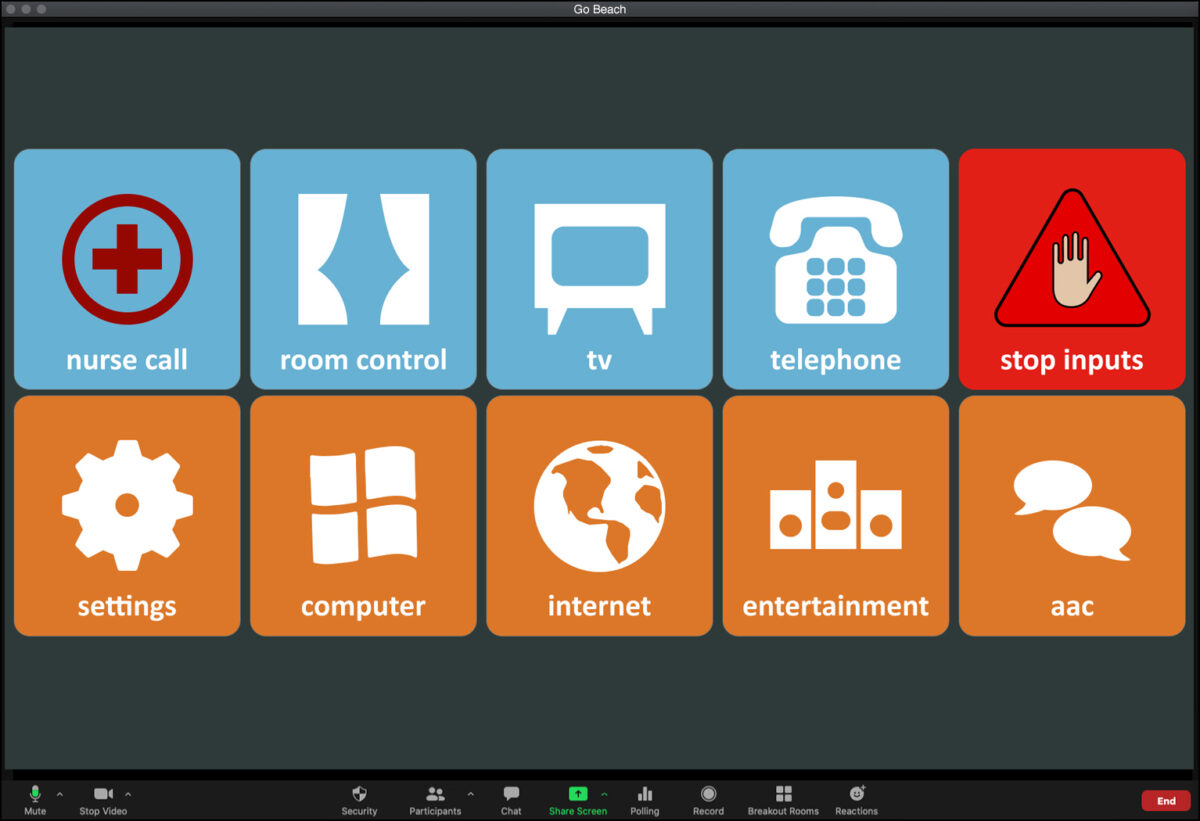
This presentation proposal covers the practical approach and various pedagogical measures taken to form a team of fourteen students and two faculty from Graphic Design and Psychology to improve VA technology for veterans with spinal cord injuries. This multidisciplinary project is ongoing research between California State University Long Beach, the Spinal Cord Injuries and Disorders (SCI/D) Center at the Long Beach VA Hospital, and the device manufacturer, Accessibility Services, Inc. in Florida. The project’s goal is to improve the design usability of the Environmental Control Unit (ECU), which patients with SCI/D use to complete everyday tasks such as making a phone call, calling the nurse, controlling the TV, adjusting the bed, etc. The project started in 2019 by performing heuristic evaluations on the ECU device with a team of seven students and faculty from psychology, health science, and graphic design. Findings from this work identified system elements needing improvement for better user experience and visual interfaces design.

Despite the pandemic and its associated lockdown conditions, the research team successfully transitioned to the project’s next phase, design A/B testing, online. The faculty leaders scheduled virtual weekly meetings with the team and developed an alternative plan to continue the project. In 2020, students worked tirelessly to a digital prototype of the device that is accessible remotely online within the safe space of the home. The ECU device’s online prototype made it possible for the research team to apply design changes and prepare for remote user testing. In the meantime, the research team grew more extensive, with five students from the graphic design program, eight students from the Psychology Human Factors program, and another two students from the university’s undergraduate research opportunity program (UROP). This presentation will discuss various tools and methods for human-centered applied design and networking with the industry.

This research was presented at the Design Incubation Colloquium 8.2: Annual CAA Conference on Thursday, March 3, 2022.

Colored Bodies: Cultural Constructs in Standard Color Theory Pedagogy

Some of the most problematic aspects of standard color theory education

Aaron Fine
Professor
Truman State University

Color theory is often presented as a purely formal matter, with no suggestion that the color we are speaking of might apply to our bodies and all that they entail in terms of race, class, and gender. Despite the availability of focused research on isolated aspects of this problem, and more inclusive chapters being added to standard color theory textbooks, our default mode is to privilege a narrative that invokes the color science of Isaac Newton. We often imply that color wheels, primaries, and secondaries are universally applicable phenomena. But the truth is that each of these is a cultural construct with at best a tenuous connection to the natural laws of physics. And when Winckelmann stated, in his discipline founding writings, that “a beautiful body will, accordingly, be the more beautiful the whiter it is” he made perfectly clear that the more (or less) white bodies he was speaking of were our own. 

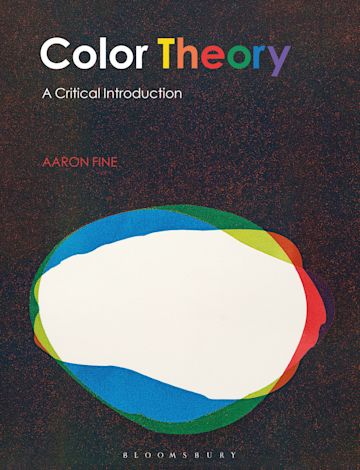
Drawing on content from my recently published book Color Theory: A Critical Introduction, I will discuss briefly some of the most problematic aspects of standard color theory education and suggest some of the ways we might improve our theory, practice, and pedagogy in this area. Topics include the rise of colorimetry in the mid 20th century, the embrace of spiritual notions about color, and colonialist views of certain cultures being more “colorful” than others. Grounded in scholarly research this presentation is relevant to design theory and pedagogy, but also has implications for creative practice. 

This research was presented at the Design Incubation Colloquium 8.2: Annual CAA Conference on Thursday, March 3, 2022.

Architecture and Design Students Envision the Post-COVID Built Environment

How designers can prepare for the next pandemic by looking at it as a human-centered design initiative

Denise Anderson
Assistant Professor
Michael Graves College, Kean University

Craig Konyk
Associate Professor
Michael Graves College, Kean University

Kylie Mena
Michael Graves College, Kean University

Varrianna Siryon
Michael Graves College, Kean University

Humanity will call upon architects and designers to respond to the resulting modified human behaviors and built environment in the post-COVID-19 world. These areas include the need for flexibility of public spaces and interior layouts, rethinking product designs, and strategies for informational campaigns and digital safety platforms using an integrated design approach.

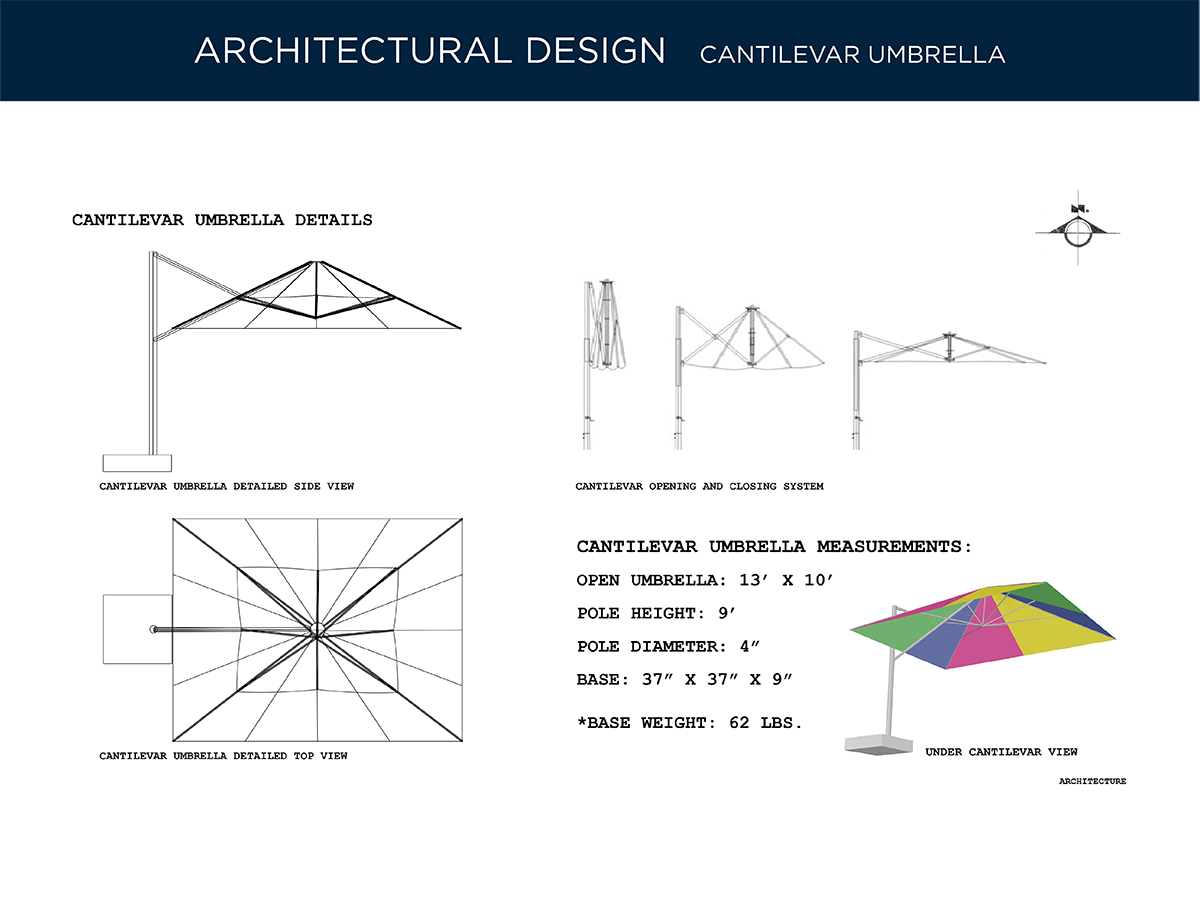
In spring 2021, a team of interdisciplinary students and faculty at the Michael Graves College were awarded a grant to explore how designers can prepare for the next pandemic by looking at it as a human-centered design initiative. The objective was to utilize the expertise areas of Architecture, Graphic Design, Industrial Design, and Interior Design to research the pandemic’s effects on public spaces and propose design strategies to improve communities. For example, as part of a university-wide initiative on pandemic research, students proposed design solutions for the safe opening of Kean’s childcare center.

In the summer, as the world managed and changed due to the Delta variant and the anti- vaccine movement, further investigations into two areas hit hardest by the pandemic were explored: education and mental health. Extended research was conducted on special needs children and the increased anxiety that led to panic buying.

The presentation will examine the interdisciplinary design thinking process and solutions for the childcare center. It will present methodology soliciting support in undergraduate and graduate courses to identify pandemic-related problems and solutions. Furthermore, it will answer how design and architecture can help envision what communities need to manage and thrive in a post-COVID-19 environment.

This research was presented at the Design Incubation Colloquium 8.2: Annual CAA Conference on Thursday, March 3, 2022.

Pakistani TVCs: How Local Advertisers are Coding Messages for Young Consumers

In Pakistan, 66% of households have at least one teenage consumer

Nida Ijaz
Lecturer
Ph.D. Scholar (Fine Arts) in Research Center for Art & Design, Institute of Design & Visual Arts, Lahore College for Women University, Pakistan

Advertisement is one of the major factors for a company to make it successful, unbeatable, and unforgettable. At the same time advertisement can play this role completely contrary ailment and advertisers know how to sell the product. They attach the product to the emotions, bonding, and happiness of a family or an individual.

TVCs code messages for consumers as it is essential to monitor the delivery of the coded message and what is the impact on the young consumers after listening and seeing these advertisements, which leads to devastating behavior in the lifestyle of young consumers.

The content analysis method has been used on dialogues of TVCs which has been on-air in the local channels of Pakistan. We surveyed those brands’ advertisements that target children as their consumers to find what they feel about those advertisements and what message they perceived from them. As a reference, we discussed the Lifebouy shampoo, hand wash, and Horlicks advertisements as they are FMCG and targets young consumers from the age of 4 to 11 years.

In Pakistan, 66% of houses have at least one teenager as a buyer and they cannot handle the increasing blitz of advertising. Young minds cannot understand the meaning of advertisements and can easily be manipulated. This research reveals how showcasing the bully’s behavior and portraying negative messages can affect the child’s life. Moreover, how impulsive exposure to advertisements is making them more materialistic.

This research was presented at the Design Incubation Colloquium 8.2: Annual CAA Conference on Thursday, March 3, 2022.

Bringing Peace (Circles) to (Design) Practice, Revisited

Derived from aboriginal and native traditions, circles bring people together

Dave Pabellon
Assistant Professor
Columbia College Chicago

This presentation explores the use of peace circles in graphic design curricula as a pedagogical framework to conduct a graphic design seminar (F’19) and a graphic design studio course (F’21), both with an exhibition design component that involved student design contributions. 

Derived from aboriginal and native traditions, circles bring people together in a way that creates respect, intimacy, goodwill, belonging, generosity, mutuality, and reciprocity. Two groups have made profound contributions to practices in the field – the First Nations people of Canada, and the Maori of New Zealand, by using peace circles as a means to manage conflict resolution in their communities as an alternative to the retributive criminal justice system practiced in the United States. In an academic setting, peace circles in the classroom become a tool to level the faculty-to-student power dynamic by creating a non-hierarchal environment. By doing so, greater participant engagement is achieved by welcoming the sharing of human experiences, positive and negative, without judgment. Over time trust is built to transform the studio into a safe space of understanding and learning by stressing empathy and the power of active listening.   Examples of circle practice, as a community-building tool from peer institutions such as Dominican University (IL), non-profit sectors like  Precious Blood Ministries of Reconciliation, and community-based arts organizations like Prison + Neighborhood Arts Project will be referenced. 

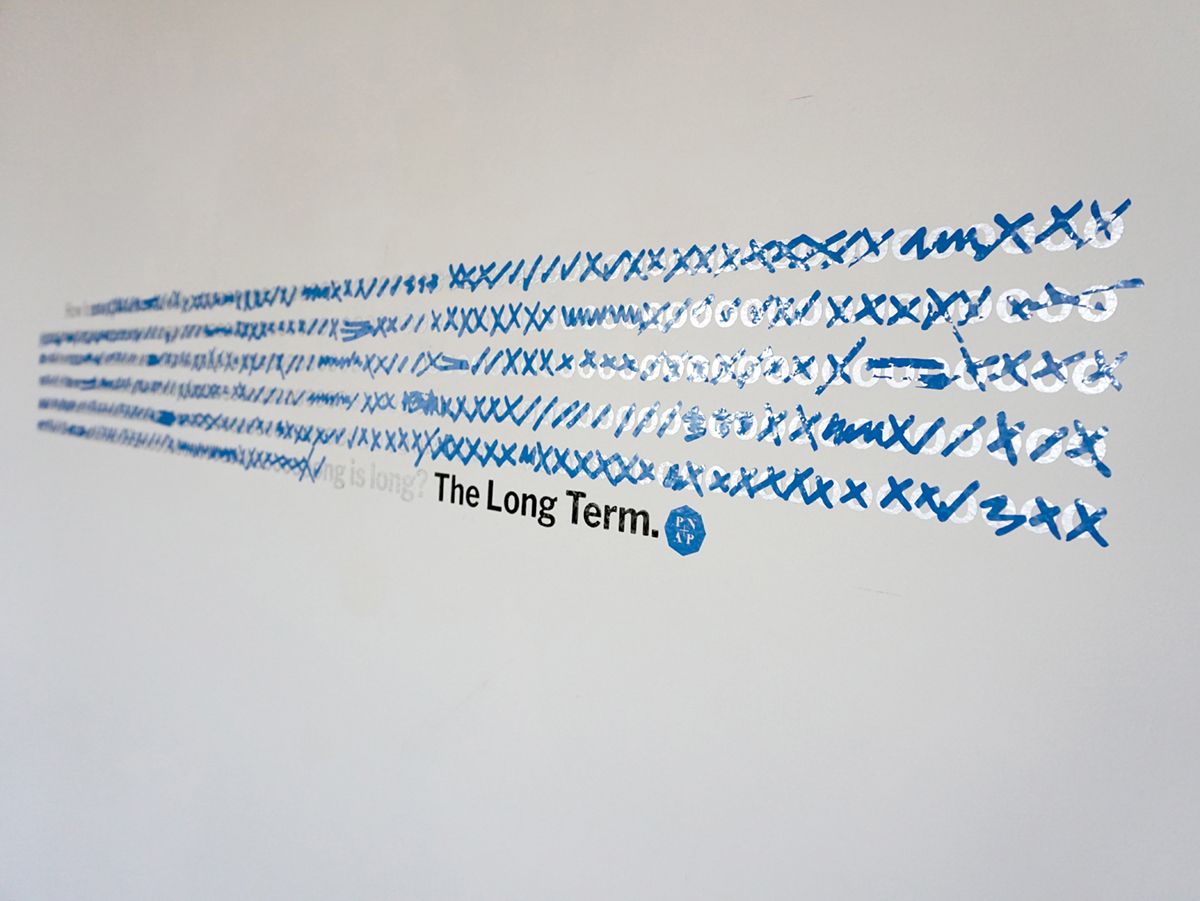
In the 2019 course, students from the Hispanic Serving Institution (HSI) learned about the injustices of long-term prison sentencing in the state of Illinois by digesting assigned texts, visual responses in the form of exhibition artwork produced by the incarcerated, and films related to the subject. Circles, lead by formerly incarcerated circle keepers and BIPOC faculty, became the purposefully slow-paced, self-reflective format of discussion and interpretation of the media mentioned above. Peace circles were also used in the planning and refinement processes of new work that was included in the closing exhibition. This presentation argues for the use of peace circles to encourage deeper human-centered relationships with students by supporting discussion, discourse, and critical thought through self-reflection and immersive storytelling. Using the exit interviews supplied by the students a comparison analysis is shared showing the impact peace circles have when utilized in a design studio environment. 

This research was presented at the Design Incubation Colloquium 8.2: Annual CAA Conference on Thursday, March 3, 2022.

Design Incubation Colloquium 8.2: Annual CAA Conference 2022 (Virtual)

Presentations and discussion in Research and Scholarship in Communication Design at the 110th Annual CAA Conference 2022

Recent research in Communication Design. Presentations of unique, significant creative work, design education, practice of design, case studies, contemporary practice, new technologies, methods, and design research. A moderated discussion will follow the series of presentations.

The colloquium session is open to all conference attendees.

Thursday, March 3, 2022
 10:00 AM – 11:30 AM

CHAIRS
Heather Snyder Quinn
DePaul University

Camila Afanador-Llach
Florida Atlantic University

DISCUSSANT
Jessica Barness
Kent State University

Presentations

Pakistani TVCs: How Local Advertisers are Coding Messages for Young Consumers 
Nida Ijaz
Lecturer
Ph.D. Scholar (Fine Arts) in Research Center for Art & Design, Institute of Design & Visual Arts, Lahore College for Women University, Pakistan

Architecture and Design Students Envision the Post-COVID Built Environment
Denise Anderson
Assistant Professor
Michael Graves College, Kean University

Craig Konyk
Associate Professor
Michael Graves College, Kean University


Kylie Mena
Michael Graves College, Kean University

Varrianna Siryon
Michael Graves College, Kean University

Colored Bodies: Cultural Constructs in Standard Color Theory Pedagogy
Aaron Fine
Professor
Truman State University

Interdisciplinary Human-Centered Design Research – Overcoming Practical Challenges Before and During The Pandemic Time – A Pragmatic Approach to Design Education and Practice
Sam Anvari
Assistant Professor
California State University Long Beach

The Black Experience in Design
Kelly Walters 
Assistant Professor
Parsons, The New School

Anne H. Berry
Assistant Professor
Cleveland State University

A Theory of Design Identity
Colette Gaiter
Professor
Departments of Africana Studies and Art & Design, University of Delaware

Bringing Peace (Circles) to (Design) Practice, Revisited
Dave Pabellon
Assistant Professor
Columbia College Chicago

Academic Marginality and Exclusion for Graphic Design Educators of the United States
Yeohyun Ahn
Assitant Professor
University of Wisconsin-Madison

CALL – Key Topics and Sustained Research Programs in Communication Design

Visible Language 56.1 -Special Issue

The essence of a field entails its scope, actions, and outcomes. Communication Design entails conveying ideas using visual words and pictures, or typography and symbology. 

Therefore, it is reasonable that all the features of typographic embodiment from reading to interpreting, from social and cultural lenses to physical constraints of lighting and reading distance, from physicality of paper and ink to impression of high resolution led displays, from legibility of letterforms to rhetorical forms of writing, and more, should be well understood by communication designers. The same could be said of all the features of pictures, symbols, and icons, and in addition, all the features of the ways pictures and words combine in layouts across media from print to time-based to interactive media, and in addition to that, all the ways people interact with these features in a multitude of contexts. You get the idea. There is a lot to know about the extent, mechanisms, and impacts of Communication Design. 

But because Communication Design is a young discipline we know relatively little about almost all the aforementioned features, at least we ‘know’ little with the degree of precision or rigor that characterizes so many other disciplines. Because adolescent Communication Design knowledge has a wealth of unanswered questions and a broad expanse of topics needing investigation, to advance, Communication Design needs sustained research programs that focus on the key features of the discipline. 

Visible Language seeks to promote Communication Design research by exposing both what has been studied in-depth and what needs to be studied in-depth. 

This is a call for papers for the Summer 2022 issue of Visible Language that report on one of two related things: either a paper describing a series of related research studies spanning several years centered around a single topic – in other words a sustained research program, or a paper reporting research into what communication design topics are important enough that they should be researched for a sustained period – in other words, key topics that should have sustained research. 

Articles reporting sustained Communication Design research programs may be much different from article proposals reporting topics that need study. The report of a sustained research program will be retrospective and will cover not one study but where, how, what, and why a series of related studies have been conducted and may feature the role of collaboration, funding sources, and the nature of a rich topic worthy of sustained study. 

Articles describing Communication Design topics that merit sustained research should likewise be based on systematic study but will be prospective in nature, using some form of gathered and analyzed evidence to support why a particular topic merits sustained investigation including the topic’s definition and known parameters. 

Article proposals should be in the form of a one-sentence summary of the article followed by an outline of the manuscript argument in the general form: 

  • Introduction/Background – where this is grounded, why the subject is/was important; 
  • Methods – how this has been/might be studied; 
  • Results – what was/might be found; Discussion – why what was/would be found matters. 

Submit article proposals to: 
Mike Zender, Editor, Visible Language 
mike.zender@uc.edu 

  • Article proposals due by Feb, 28, 2022. 
  • Notification of acceptance of article concept by Mar 15th, 2022. 
    *acceptance of concept means the manuscript will be sent for peer-review, only articles accepted by the peer-reviewers will be publish. 
  • Manuscripts due for peer-review on May 15th, 2022. 
  • Peer-reviews to authors: Jun 1st, 2022. 
  • Revised manuscripts due Jun 15th, 2022 publication – August 2022.

Collective Mapping of Communication Design Research and Scholarship

This is a collaborative, living, visual document that will further establish historical precedents and future trajectories.

November 12, 2021, 3-4pm EST 
Zoom link

AIGA DEC edition with Design Incubation Chairs Jessica Barness, Liz DeLuna, Heather Snyder Quinn, and Dan Wong. Design Incubation recently launched a new initiative to map current activities in Communication Design Research and Scholarship (R&S). We kicked off this project at the international Design Research Society Festival of Emergence last month, and for this second phase, we are bringing it to the AIGA DEC. This map is a collaborative, living, visual document that will further establish historical precedents and future trajectories for Communication Design R&S. Join us as we share progress, generate dialogue, and continue to shape this project.

Moderated by Rebecca Tegtmeyer

Design Writing Fellowship

The 2022 Design Writing Fellowship will be hosted by Writing Space, a community-based writing center for artists and designers run by Fellowship facilitator Maggie Taft. The program remains the same as it was in previous years and will be complemented by the other writing and editorial services Writing Space offers. Aaris Sherin, who led the DI Fellowship, continues to lead the Design Writing Fellowship at Writing Space and looks forward to working with a new group of design writers as they work to publish reviews, articles and books.

If you have a writing project you need help with or are a newer design writer looking for where to publish first, The Design Writing Fellowship has three tracks: Books, Articles and Reviews. Participants take part in a 3-day virtual writing workshop where they receive feedback, learn about the publishing process and commit to working on their writing projects for 3-6 months. The Design Writing Fellowship is for design faculty, researchers, writers, and academics.

Applications will be accepted 10/15-12/15

Fellowship Workshop will be held June 2, 3, 4 2022