A panel discussion by design scholars about their research journeys.
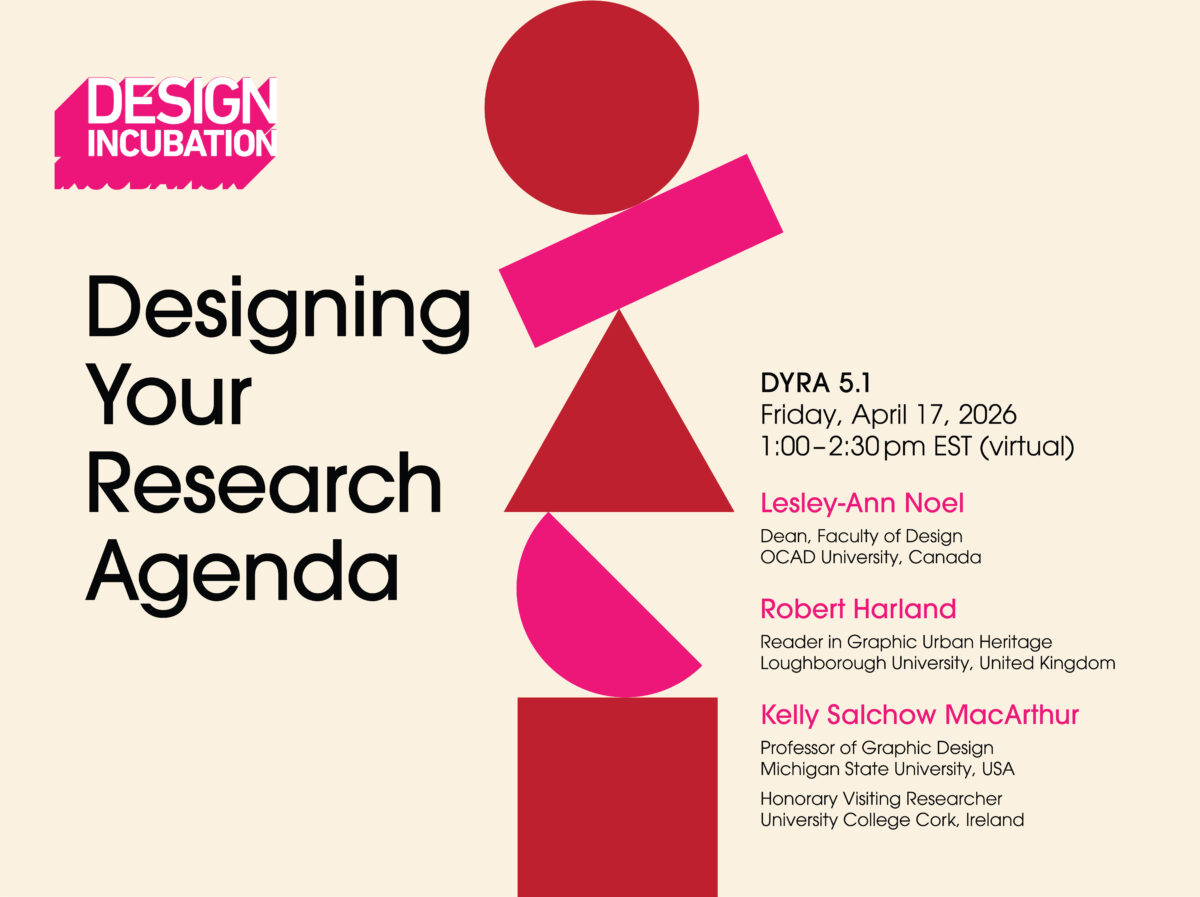
Designing Your Research Agenda (DYRA) 5.1 Friday, April 17, 2026 1:00PM EST Virtual Event
Designing Your Research Agenda (DYRA) is a panel discussion and open forum for design scholars and researchers to discuss aspects of their research agendas. We aim to open a dialogue regarding the challenges of discovering one’s design research inquiry. DYRA is a design research webinar series.
Researchers:
Lesley-Ann Noel, OCAD University, Canada
Robert Harland, Loughborough University, UK
Kelly Salchow MacArthur, Michigan State University, USA
Presentations plus an open Q+A and informal discussion.
Some of the questions we are asking our panelists include:
How did you determine your research agenda (high level timeline of your career/trajectory)
How do you define research and why do you think it matters/for society, the field, yourself?
How do your department and institution define and support the work you do?
How would you describe/categorize your department and institution?
If you were going to position your work within a category, would you say your research addresses: design theory, design history, design practice, design research (traditional graphic design, speculative design, UXUI, typography, AR, VR, creative computing, design solutions, etc.), design pedagogy, or something else?
What barriers (if any) exist at your institution or in the field for creating and disseminating your research?
This event brings together academics from various stages in their careers and from different types of institutions. We hope that by sharing experiences, we can support others on their journeys.
Designing Your Research Agenda (DYRA) 4.2 Friday, March 7, 2025 2:00PM EST Virtual Event
Designing Your Research Agenda (DYRA) is a panel discussion and open forum for design scholars and researchers to discuss aspects of their research agendas. We aim to open a dialog regarding the challenges of discovering one’s design research inquiry. DYRA is a design research webinar series.
This event focuses on Fulbright scholars in our Communication Design community.
Panelists
Sarah Edmands Martin Assistant Professor University of Notre Dame
Natalia Ilyin Professor Cornish College of the Arts and VCFA
Natacha Poggio Associate Professor University of Houston–Downtown
Some of the questions we will discuss with panelists include:
How did you determine your research agenda (high-level timeline of your career/trajectory)?
If you were going to position your work within a category, would you say your research addresses: design theory, design history, design practice, design research (traditional graphic design, speculative design, UX, UI, typography, AR, VR, creative computing, design solutions, etc.), design pedagogy, or something else?
What led you to pursue a Fulbright?
What are some highlights from your Fulbright experience?
How has the Fulbright affected your creative/research trajectory?
Moderators
Jessica Barness Kent State University
Heather Snyder Quinn DePaul University
Biographies
Sarah Edmands Martin
Sarah Edmands Martin is Assistant Professor of Visual Communication Design at the University of Notre Dame where her practice unfolds at the intersections of speculative design, digital storytelling, and media aesthetics. She has received fellowships that include a 2024 Fulbright, a 2023 Design Writing Fellowship at Chicago’s Writing Space, and a 2021–22 Research Fellowship at the Institute for Digital Arts + Humanities. She has published in books and journals such as CounterText, Ethics in Design and Communication: New Critical Perspectives, Digital Transformation in Design: Processes and Practices, and AIGA’s Eye on Design. Her current book projects include Beautiful Bureaucracy: A Design Brief for Civic Life (MIT Press, 2025) and Otherworldly Games: An Atlas of Playable Realities. Her design work has been recognized and published by PRINT, Graphis, the Paris Design Awards, London International Creative, and the Creative Communication Awards. Her industry-facing work spans clients from Citibank to AMC’s The Walking Dead.
Natalia Ilyin teaches design history and criticism, design for social activism, and transition design at Cornish College of the Arts in Seattle, Washington. She and her former co-teacher Liz Patterson created the Parallel Narratives curriculum and published the Parallel Narratives anthology. These are extensive annotated historical bibliographies created by third-year undergraduate students on topics not covered in the contemporary canon of design history. A second volume is in production. Natalia is also Founding Faculty for the MFA in Graphic Design at Vermont College of Fine Arts, where she advises candidates in histories, criticism, and critical writing. She has taught at Rhode Island School of Design, Yale University, The Cooper Union and the University of Washington, and has acted as Critic for the MFA in Graphic Design at Yale University and at Rhode Island School of Design. Her most recent book, Writing for the Design Mind, is available from Bloomsbury Publishing. Her new book will be available in 2027 from the same publisher, should no new thing arise.
Fulbright Scholar to the Brno University of Technology Architecture Program in Czech Republic.
Natacha Poggio
Natacha Poggio is an Associate Professor of Design at the University of Houston-Downtown, inspiring socially responsible citizens through design. In 2008, she founded Design Global Change, a collaborative focused on planet-centered solutions for global health, environmental, and social justice issues, impacting communities across Latin America, Africa, and Asia. A three-time recipient of Sappi’s Ideas that Matter award, she has secured over $76,000 in funding to support design for social good. In 2022, she was awarded a prestigious Fulbright U.S. Scholarship for a marine conservation project in Ecuador. A 2013 TEDx speaker and advocate for social impact design, she lectures internationally, judges competitions, and volunteers with the Winterhouse Institute Council. She holds an M.F.A. in Experience Design from the University of Texas at Austin and a B.F.A. in Graphic Design from the University of Buenos Aires. Originally from Argentina, Natacha considers herself a global citizen.
Fulbright Scholar to the Universidad de las Artes del Ecuador, in Guayaquil, Ecuador.
Design scholars and researchers discuss various aspects of their research agendas
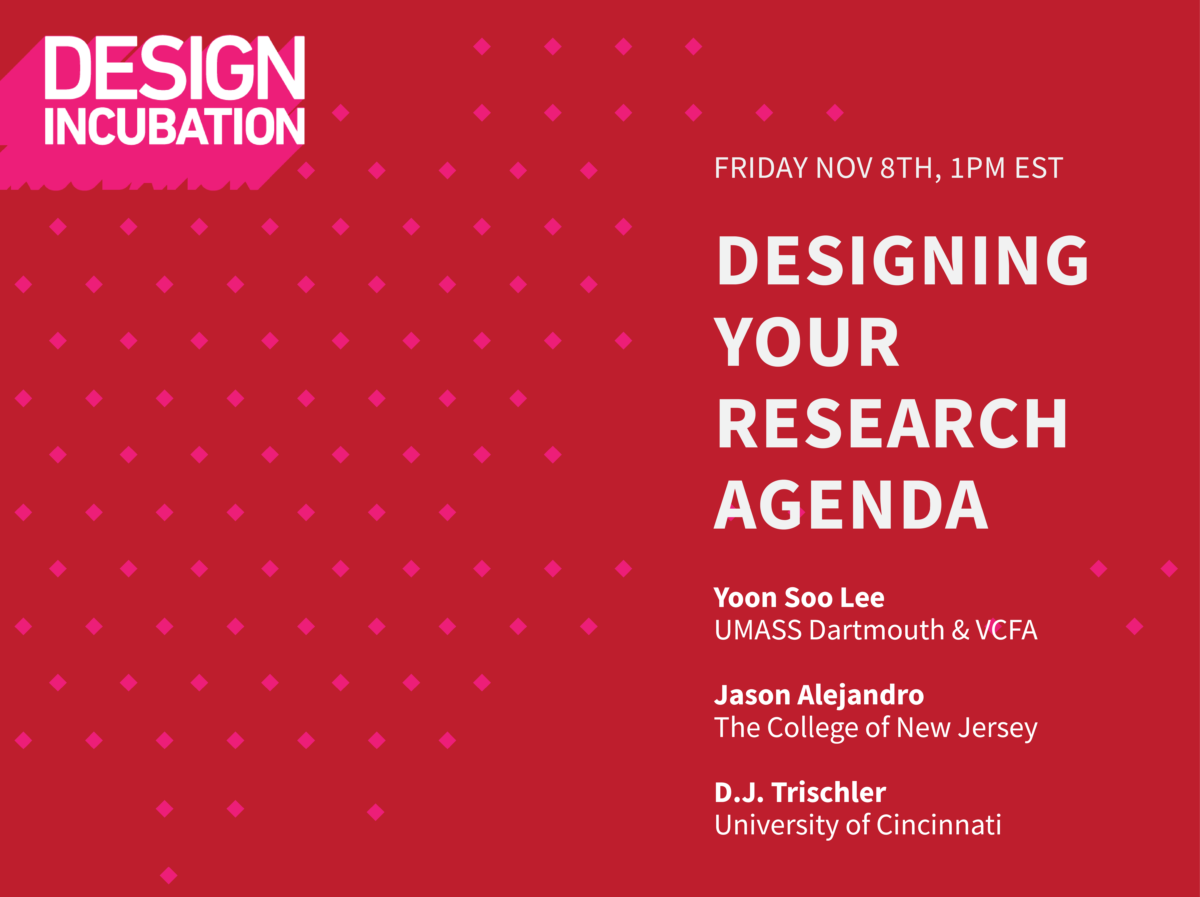
Friday, November 8, 2024 1:00pPM Eastern / 12:00PM Central Virtual Event
Designing Your Research Agenda is a panel discussion and open forum for design scholars and researchers to discuss various aspects of their research agendas. We aim to open a dialog regarding multiple challenges of discovering one’s design research inquiry. Designing Your Research Agenda is an ongoing design research event series.
Some of the questions we will discuss with panelists include:
How did you determine your research agenda (high-level timeline of your career/trajectory)
How do you define research and why do you think it matters/for society, the field, and yourself?
How do your department and institution define and support the work you do?
How would you describe/categorize your department and institution?
If you were going to position your work within a category, would you say your research addresses: design theory, design history, design practice, design research (traditional graphic design, speculative design, UXUI, typography, AR, VR, creative computing, design solutions, etc.), design pedagogy, or something else?
What barriers (if any) exist at your institution or in the field for creating and disseminating your research?
Moderators
Jessica Barness Kent State University
Heather Snyder Quinn DePaul University
Biographies
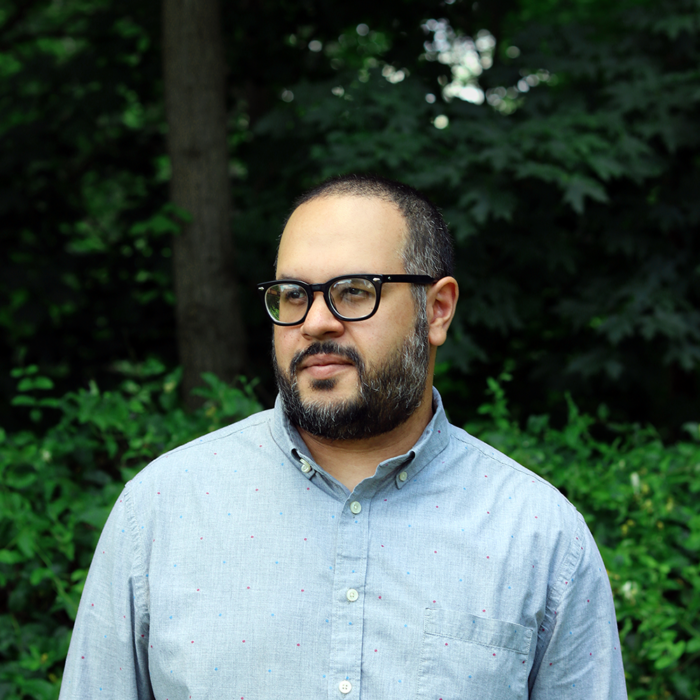
Jason Alejandro is a Puerto Rican graphic designer and Associate Professor of Graphic Design at The College of New Jersey. His academic research explores intersections of cultural identity, design history, and critical pedagogy, with a focus on how these topics shape visual communication. Alejandro is particularly interested in using graphic design to address social and cultural narratives, including underrepresented communities in design education. His work spans writing, publishing, and visual projects, including contributions to both academic and professional design discussions on identity and collaboration in design practice. He is horrified at how well ChatGPT generated this bio, even if it is somewhat generic.
Yoon Soo Lee is a Professor of Art and Design. She has been teaching at the University of Massachusetts Dartmouth since 2001, and also at Vermont College of Fine Arts since 2011.
Yoon Soo’s practice moves around three core areas of study: the art of pedagogy, how to work in dialogue cross-discipline, and how to create art and design that is based on self-knowledge. These investigations have led to presentations at the AIGA Educators Conference, UCDA Design Educators Conference, grants from the National Institute of Health, presentations at the Cognitive Science Society and papers such as “Functional Criticism in the Graphic Design Classroom” published in “Design Principles and Practices: An International Journal”.
Yoon Soo studied at Seoul National University where she received her BFA and MFA, and she also studied at Western Michigan University where she received her second MFA in graphic design.
D.J. Trischler is an Assistant Professor of Communication Design for the University of Cincinnati’s Ullman School of Design in the College of Design, Architecture, Art, and Planning. He teaches typography, design research methods, and an introduction to design lecture. His research addresses the “dis-placed” sentiments familiar to the contemporary human experience, experimenting with possibilities to use design to “place” people in their surrounding ecologies. Through his research, he aims to increase place attachment, a sense of community and belonging, grow neighborliness and community engagement, and ultimately strengthen quality of life and well-being. D.J.’s work in this niche originated from his graduate thesis research into Neighborhood-Centered Design.
Design scholars and researchers discuss various aspects of their research agendas
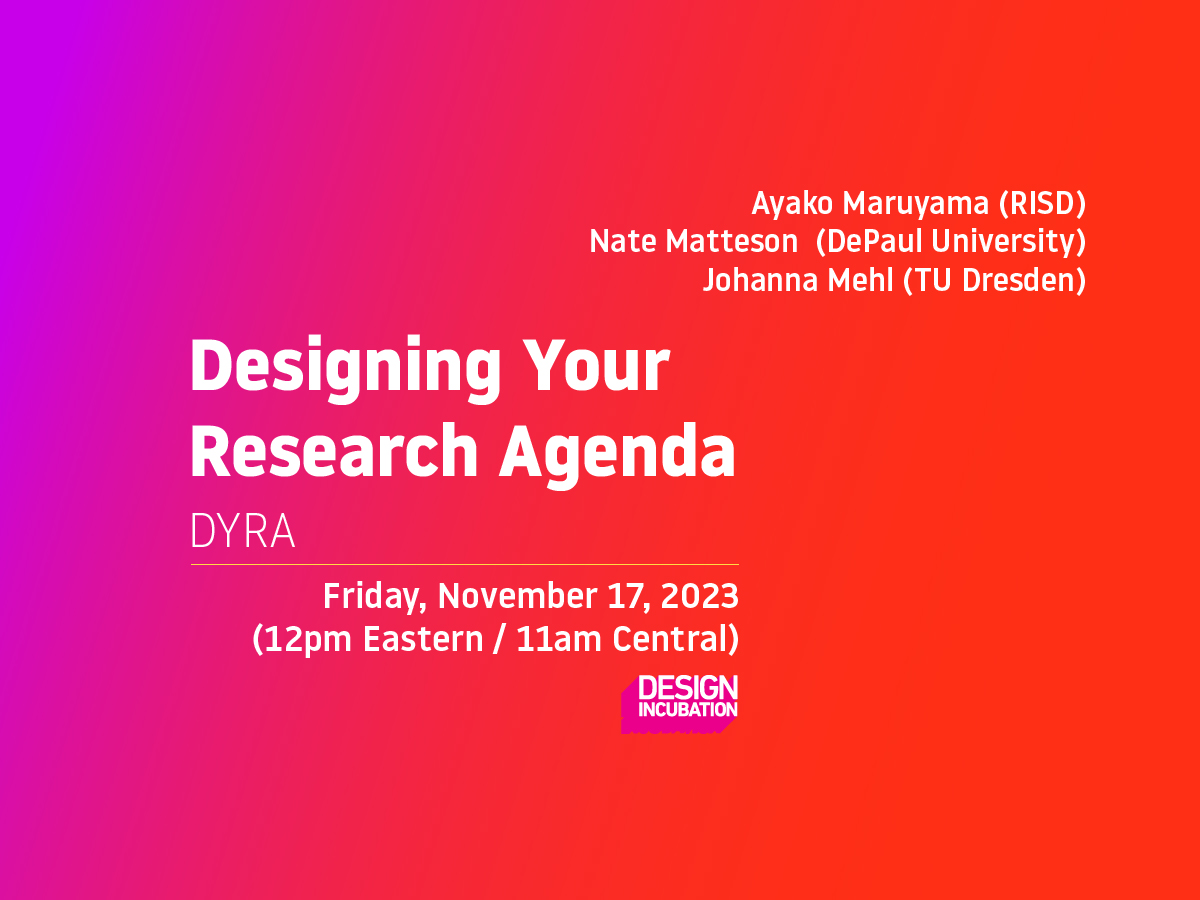
Friday, November 17, 2023 12pm Eastern / 11am Central Virtual Event
Designing Your Research Agenda is a panel discussion and open forum for design scholars and researchers to discuss various aspects of their research agendas. We aim to open a dialog regarding multiple challenges of discovering one’s design research inquiry. Designing Your Research Agenda is an ongoing design research event series.
Ayako Maruyama (RISD)
Nate Matteson (DePaul University)
Johanna Mehl (TU Dresden)
Some of the questions we will discuss with panelists include:
How did you determine your research agenda (high-level timeline of your career/trajectory)
How do you define research and why do you think it matters/for society, the field, and yourself?
How do your department and institution define and support the work you do?
How would you describe/categorize your department and institution?
If you were going to position your work within a category, would you say your research addresses: design theory, design history, design practice, design research (traditional graphic design, speculative design, UXUI, typography, AR, VR, creative computing, design solutions, etc.), design pedagogy, or something else?
What barriers (if any) exist at your institution or in the field for creating and disseminating your research?
Moderators
Jessica Barness Kent State University
Heather Snyder Quinn DePaul University
Biographies
Ayako Maruyama Rhode Island School of Design
Ayako Maruyama (she/her) is a Filipina-Japanese designer, educator, and illustrator whose practice revolves around intentional collaboration, reflection, collective recovery, maintenance, and repair within the design domain. Working with organizers, artists, designers, students, and planners, Ayako’s involvement with the Design Studio for Social Intervention commenced in 2012. Notably, she recently co-authored and co-illustrated the published book, “Ideas Arrangements Effects: Systems Design and Social Justice.”
Ayako and her team at the Design Studio for Social Intervention focus on creating public engagement strategies that prioritize community development without displacement, along with reimagining public spaces at the Design Gym. With a rich background, Ayako has conducted numerous zine workshops, contributed as a faculty member at Boston University’s City Planning and Urban Affairs program since 2013, and initiated the annual Experience of Public Engagement studio at RISD in 2017.
Having served as an Urbanist in Residence and currently being part of the Collective Recovery Team at the University of Orange, Ayako holds a position as a Board Member at the institution. Additionally, she serves as an Assistant Professor in the Industrial Design department at the Rhode Island School of Design, where she imparts knowledge through teaching graduate thesis studio, foundational, and advanced design studios.
Nate Matteson DePaul University
Nathan Matteson is an Associate professor at DePaul University’s School of Design; a co-director of DePaul’s ‘Scandinavia: design, landscape, and society’ study abroad program; a researcher with the Center for robust decision-making in climate and energy policy at the University of Chicago; and a principal and designer at Obstructures. He is a ruthlessly collaborative designer whose work merrily ignores the perceived boundaries among disciplines, and is currently engaged with dead Swedish architects, guitars, the US energy sector, obstacles, and objects in the distance. His practice situates itself at an intersection amongst intersections, dead ends, superhighways, and goat paths, wringing its metaphorical hands over the relationships among computation, intention, materiality, and immateriality.
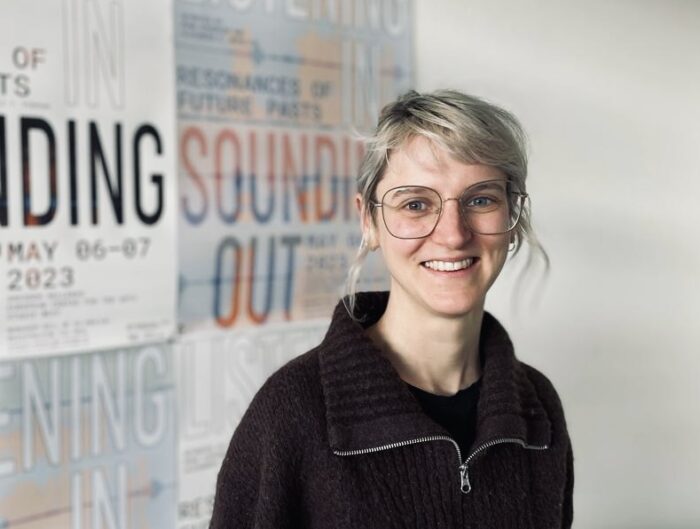
Johanna Mehl TU Dresden
Johanna Mehl (she/her) is a designer, scholar, and educator interested in the politics and relations that take shape through and around design practices. She holds a B.A. in Communication Design and an M.A. in Art and Design Studies. Besides her artistic and curatorial practice, she has taught in the fields of digital media, culture studies, and design theory at different design schools across Europe. She is an editorial board member of the Design+Posthumanism Network and part of the research group Against Catastrophe. She holds research fellowship at TU Dresden where she is a PhD candidate at the Chair for Digital Cultures. Her dissertation is about design responses to the climate crisis and stems from critiques of design that acknowledge its entanglements not only with the material realities, but also the geopolitical, psychological, and social conditions of climate change.
Friday, October 29, 2021
4PM EST
Online ZOOM Event
Designing Your Research Agenda is an panel discussion and open forum for design scholars and researchers to discuss various aspects of their research agendas. We aim to open a dialog regarding multiple challenges discovering one’s design research inquiry. Design Incubation will also be discussing some of their ongoing work with the mission and focus of supporting design research. Designing Your Research Agenda is an ongoing design research event series.
Some of the questions we will discuss with panelists
How did you determine your research agenda (high level timeline of your career/trajectory)
How do you define research and why do you think it matters — for society, the field, yourself?
How do your department and institution define and support the work you do?
How would you describe/categorize your department and institution?
How do you position your research: design theory, design history, design practice, design research (traditional graphic design, speculative design, UX/UI, typography, AR, VR, creative computing, design solutions, etc.), design pedagogy, or something else?
What barriers (if any) exist at your institution or in the field for creating and disseminating your research?
Moderators
Jessica Barness and Heather Snyder Quinn
PANELISTS
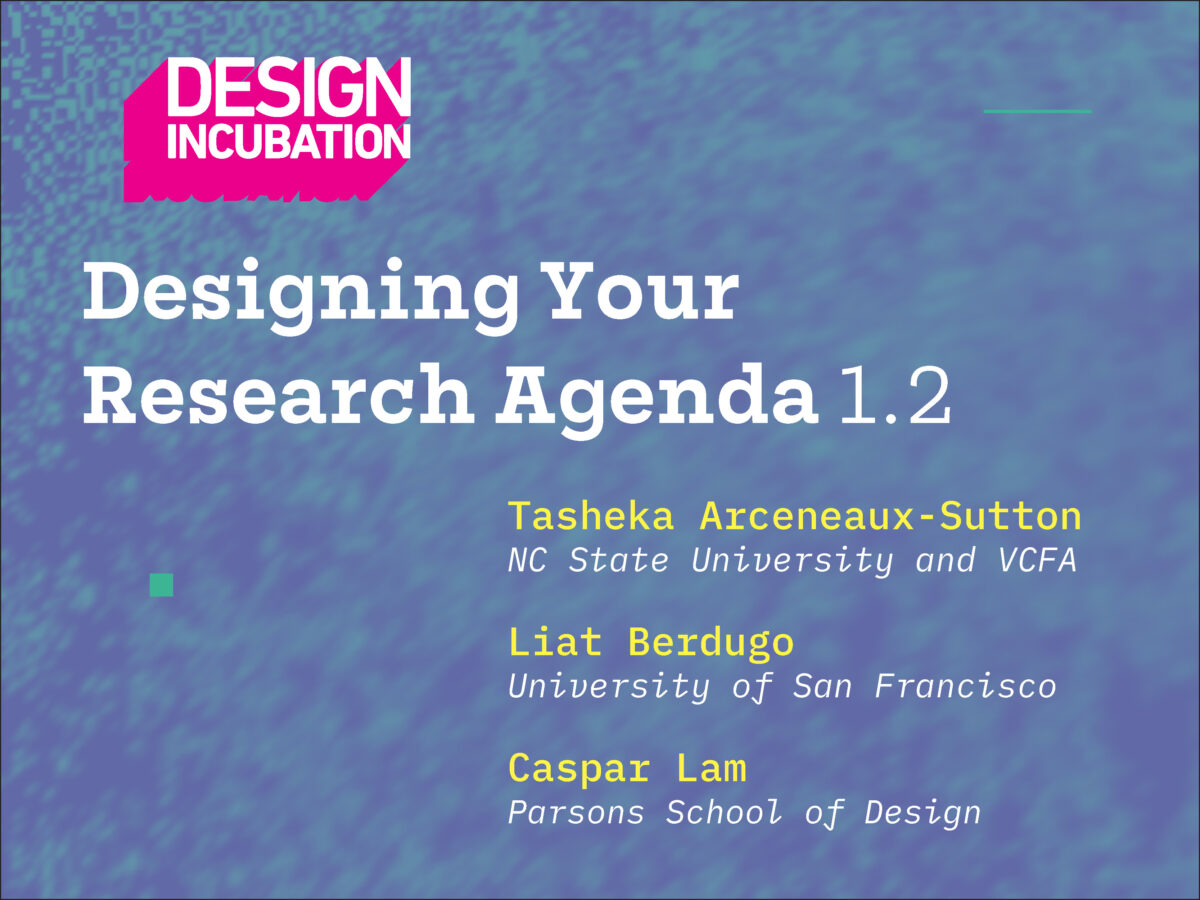
Tasheka Arceneaux-Sutton Associate Professor of Graphic Design North Carolina State University and Faculty at Vermont College of Fine Arts
Tasheka Arceneaux-Sutton is an Associate Professor of Graphic Design at North Carolina State University. She has taught graphic design at Southeastern Louisiana University and Typography at Loyola Marymount University. She is also a faculty in the low-residency MFA program in Graphic Design at Vermont College of Fine Arts. In addition, Arceneaux is the principal at Blacvoice Design, a studio specializing in branding, electronic media, identity, illustration, print, and publication design for educational institutions, non-profit organizations, and small businesses. Arceneaux’s research focuses on discovering Black people omitted from the graphic design history canon. Recently, her research is focused on Black women who have made significant contributions to the graphic design profession. She is also interested in the visual representation of Black people in the media and popular culture, primarily through the lens of stereotypes.
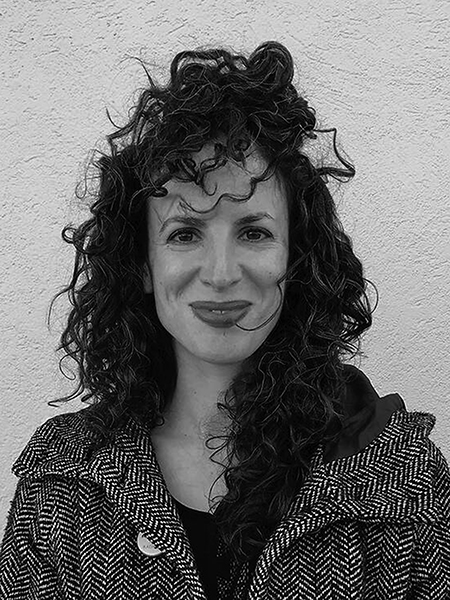
Liat Berdugo Associate Professor of Art and Architecture University of San Francisco
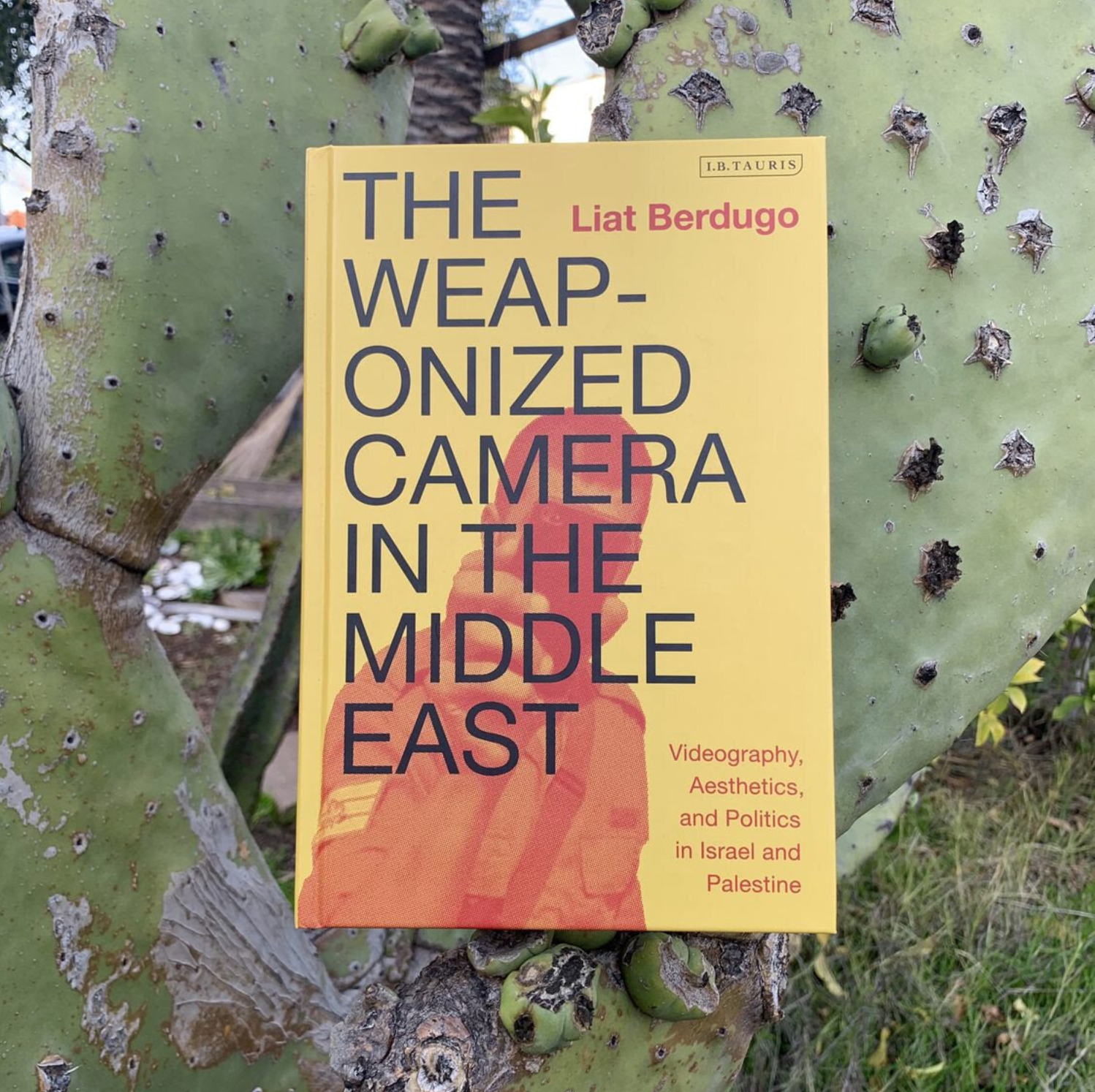
Liat Berdugo is an artist and writer whose work investigates embodiment, labor, and militarization in relation to capitalism, technological utopianism, and the Middle East. Her work has been exhibited and screened at Yerba Buena Center for the Arts (San Francisco), MoMA PS1 (New York), Transmediale (Berlin), V2_Lab for the Unstable Media (Rotterdam), and The Wrong Biennale (online), among others. Her writing appears in Rhizome, Temporary Art Review, Real Life, Places, and The Institute for Network Cultures, among others, and her latest book is The Weaponized Camera in the Middle East (Bloomsbury/I.B.Tauris, 2021). She is one half of the art collective, Anxious to Make, and is the co-founder of the Living Room Light Exchange, a monthly new media art series. Berdugo received an MFA from RISD and a BA from Brown University. She is currently an Associate Professor of Art + Architecture at the University of San Francisco. Berdugo lives and works in Oakland, CA. More at www.liatberdugo.com
Caspar Lam Assistant Professor Director of the BFA Communication Design Program Parsons School of Design
Caspar Lam is an Assistant Professor and the Director of the BFA Communication Design Program at Parsons. He is also a partner at Synoptic Office, an award-winning design consultancy working globally with leading cultural, civic, and business organizations. His research and practice explore the systematic relationships among graphic design, data, language, and their influence on visual culture. Caspar holds an MFA from Yale and degrees in biology and design from the University of Texas at Austin. He formerly led design and digital strategy at Artstor, a Mellon-funded non-profit developing digital products related to metadata and publishing for institutions like Harvard and Cornell. Adobe, AIGA, and the ID Annual Design Review have recognized his work. He has been a visiting critic at the Hong Kong Design Institute and served as an Adjunct Associate Research Scholar at Columbia University ́s GSAPP. He sits on the board of directors of AIGA NY.
This open forum will have design scholars and researchers discuss various research topics, offer their ideas, discuss opportunities for contributors/participants/collaborators, and open dialog regarding multiple challenges within the design research field.
Friday, February 12, 2021 12:30 PM Eastern Time (the US and Canada) OnlineZOOM Event
This is the Affiliated Society meeting of the 109th CAA Annual Conference. The meeting is open to non-conference attendees as well. Please register in advance for this event.
Overview:
Please join us at The College Art Association (CAA) Design Incubation Affiliated Society meeting | Connecting Scholars, Building Community, Design Research Network(ing) virtually on Friday, February 12, from 12:30-1:30 pm (EST).
Design Incubation is a volunteer academic organization whose focus and mission are facilitating research and scholarship in design. We aim to foster discussion and collaboration among academics and industry professionals. We are a resource for those working and studying within the field.
This open forum will have design scholars and researchers discuss various research topics, offer their ideas, discuss opportunities for contributors/participants/collaborators, and open dialog regarding multiple challenges within the design research field. Design Incubation will also be discussing some of their ongoing work with the mission/focus of supporting design research.
Some of the questions we will discuss with panelists include:
How did you determine your research agenda?
How do your dept and institution define and support the work you do?
How would you describe/categorize your dept and institution?
If you were going to position your research within a category, would you say your work addresses: design theory, design history, design practice, design research (traditional graphic design, speculative design, UXUI, typography, AR, VR, creative computing, design solutions, etc.), design pedagogy, something else?
MODERATOR:
Dan Wong Associate Professor, New York City College of Technology, CUNY Co-founder/Executive Director, Design Incubation
Dan’s research considers the forms and methodologies of communication design research and innovates through the practice of communication design.
PANELISTS:
Heather Snyder Quinn Assistant Professor, DePaul University’s School of Design Director of Design Futures, Design Incubation
Heather’s research uses design fiction and speculative design to question the ethics of emerging technologies, challenge technocratic power, and imagine possible futures.
Jessica Barness Associate Professor, School of Visual Communication Design, Kent State University Director of Research Initiatives, Design Incubation
Jessica’s research focuses on social media, publication practices, and the design of scholarship, and how these relate to issues of power and representation.
Ayako Takase Assistant Professor of Industrial Design, Rhode Island School of Design Director of Master Program Co-Founder, Observatory Design
Ayako’s design research focuses on evolving relationships between people, objects, and technology in the context of work.