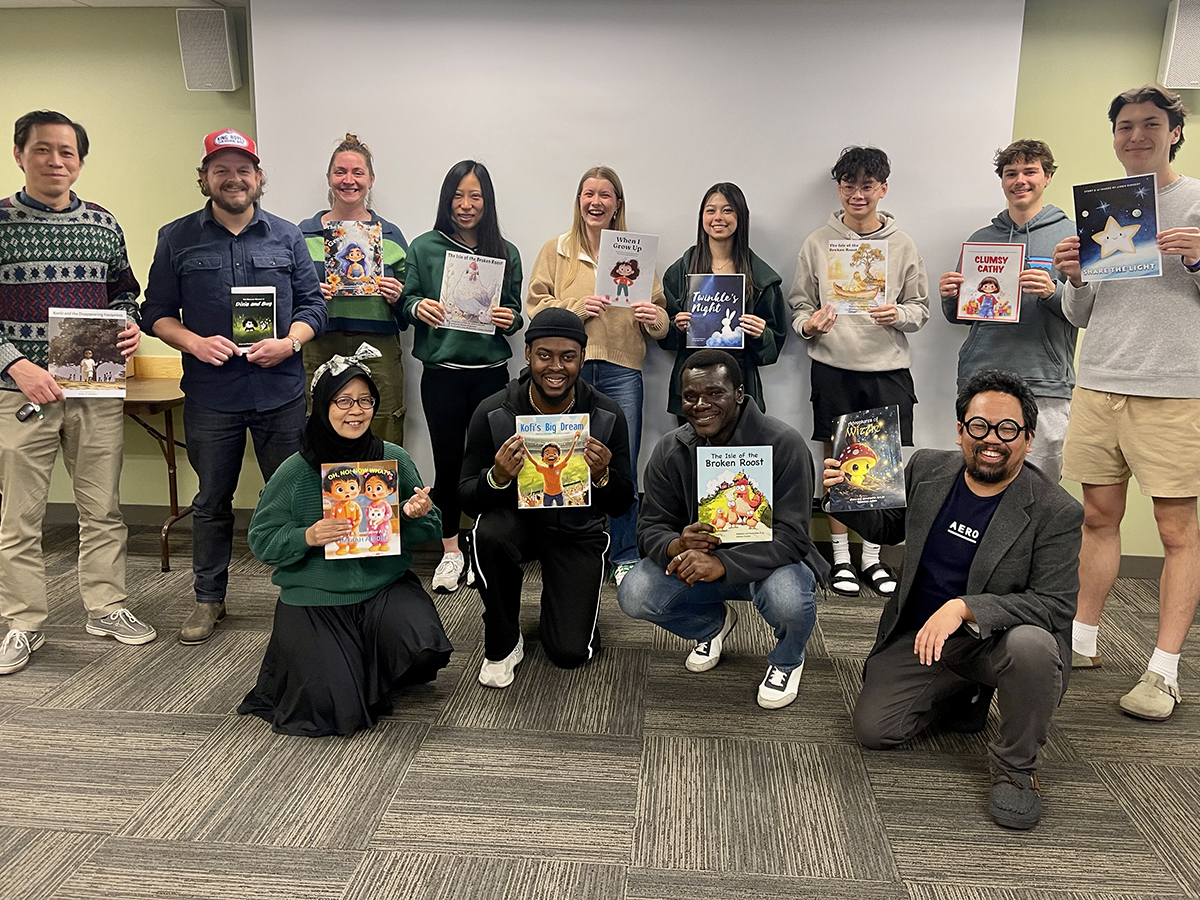
Generative AI for Visual Communication: Designing Human-Centered, AI-First Pedagogy

An introduction to foundational concepts such as training data, bias, authorship, and algorithmic influence.

Adonis Durado
Associate Professor
Ohio University

VICO 3456 / VICO 5456: Generative AI for Visual Communication is a vertically integrated studio course that brings together undergraduate, master’s, and doctoral students in a shared learning environment. Designed as a yoke course, it intentionally collapses traditional academic hierarchies to create a collaborative space where emerging and advanced designers learn alongside one another. The course reimagines how artificial intelligence can be taught within design education by positioning AI not as a shortcut or productivity tool, but as a collaborative system that reshapes authorship, decision-making, and creative responsibility.

The course was developed in response to a widening gap between the rapid adoption of generative technologies in professional practice and the limited pedagogical frameworks available to support meaningful learning with them. Students often encounter AI informally through social media or commercial platforms, without guidance on ethical, cultural, or conceptual implications. By bringing undergraduate and graduate students together, the course leverages varied levels of experience and disciplinary perspectives while modeling how learning communities function in professional and research contexts.

At its core, the course is grounded in the belief that meaningful engagement with AI requires intentional design and critical awareness. Students work with generative image, video, and multimodal tools while examining how these systems shape authorship, aesthetics, and power. Early modules introduce foundational concepts such as training data, bias, authorship, and algorithmic influence. These shared conceptual anchors allow students at different academic stages to engage in layered ways, contributing diverse insights while working toward common learning goals.

Instruction is structured around three scaffolded projects that move from exploration to authorship to public-facing communication. Early projects emphasize experimentation and inquiry, allowing students to test tools within defined constraints while observing their limitations. Subsequent projects demand increasing conceptual clarity, ethical reasoning, and intentional design decisions. Graduate students are challenged to operate at a meta-level, articulating frameworks and critiques, while undergraduate students build foundational fluency and confidence through guided practice. This vertical integration fosters mentorship, peer learning, and shared accountability across experience levels.

The culmination of the course is a public exhibition titled Generative Sparks, which serves as both a learning milestone and a platform for community engagement. The exhibition features work developed across all three major projects and invites audiences to reflect on authorship, ethics, and creativity in the age of generative AI. By situating student work in a public context, the exhibition reinforces professional standards and positions students as contributors to broader cultural conversations around emerging technology.

Reflection functions as a central design practice throughout the course. Students regularly document their processes through written and visual reflections that examine how AI influences their thinking, choices, and creative identity. These reflections support metacognition and allow students to trace their evolving relationship with generative tools. Peer critique further deepens this process by encouraging dialogue across experience levels, fostering a studio culture grounded in mutual learning and critical exchange.

Pedagogically, the course integrates experiential learning, studio critique, and inquiry-based practice. Students learn through cycles of making, testing, revising, and reflecting. Guided constraints prevent overreliance on automation and encourage engagement with the affordances and limitations of generative systems. Faculty guidance emphasizes authorship, accountability, and ethical responsibility, reinforcing that AI-generated work remains a human-centered practice shaped by values and intent.

A significant outcome of the course is a shift in student mindset. Many enter viewing AI as either a threat to creativity or a shortcut to production. Over time, students develop a more nuanced understanding of human–AI collaboration, recognizing both its possibilities and its limitations. This shift is evident in reflective writing, process documentation, and increasingly sophisticated visual outcomes that demonstrate intentionality rather than automation.

The course has produced strong and visible outcomes. Students generate portfolio-ready work that demonstrates conceptual depth, technical experimentation, and reflective authorship. Projects have been exhibited publicly through Generative Sparks and shared in academic and professional contexts. Students report increased confidence navigating emerging technologies, and many leverage coursework for internships, interdisciplinary collaborations, and advanced research.

Beyond individual outcomes, VICO 3456/5456 functions as a transferable pedagogical model. Its structure, assignments, and assessment strategies have informed broader curricular conversations around AI literacy, ethical design, and experiential learning. By bringing undergraduate and graduate students into a shared learning environment, the course models how design education can cultivate mentorship, complexity, and critical engagement across levels of expertise.

Ultimately, VICO 3456/5456 positions design education as a space for intentional experimentation rather than technological reaction. Through its vertically integrated structure and the public-facing exhibition Generative Sparks, the course demonstrates how educators can guide students to engage emerging technologies thoughtfully, creatively, and responsibly within contemporary design practice.

Durado_Documentation__Evidence

Biography

Adonis Durado is an Associate Professor in the School of Visual Communication at Ohio University, where he teaches design, storytelling, and generative AI–driven creative practice. His work centers on human-centered pedagogy, ethical technology use, and the thoughtful integration of emerging tools into design education. He developed one of the university’s first AI-first courses, positioning generative systems as collaborators in learning rather than replacements for human judgment. His teaching emphasizes reflection, authorship, and critical inquiry, preparing students to engage creative technologies with intention, accountability, and agency. Durado’s pedagogy bridges theory and practice through experiential, project-based learning and community engagement. His work has contributed to curricular innovation, interdisciplinary collaboration, and the development of AI literacy frameworks in design education. He is also an award-winning designer and writer whose research explores authorship, visual culture, and the cultural implications of artificial intelligence.


This project was the 2025 Design Incubation Educators Awards runner-up recipient in the category of Teaching.
Design In the Posthuman Age / Biomorphic Typography

Students develop in-depth knowledge of machine learning, data politics, emerging technology, and climate change.

Anastasiia Raina
Associate Professor
Rhode Island School of Design

Anastasiia Raina’s course Design in the Posthuman Age has been taught since 2018 and has become a platform for transdisciplinary exchange, bringing together graduate and undergraduate students from RISD and Brown University. The course has been consistently popular among students across art and design departments as well as Brown University majors.

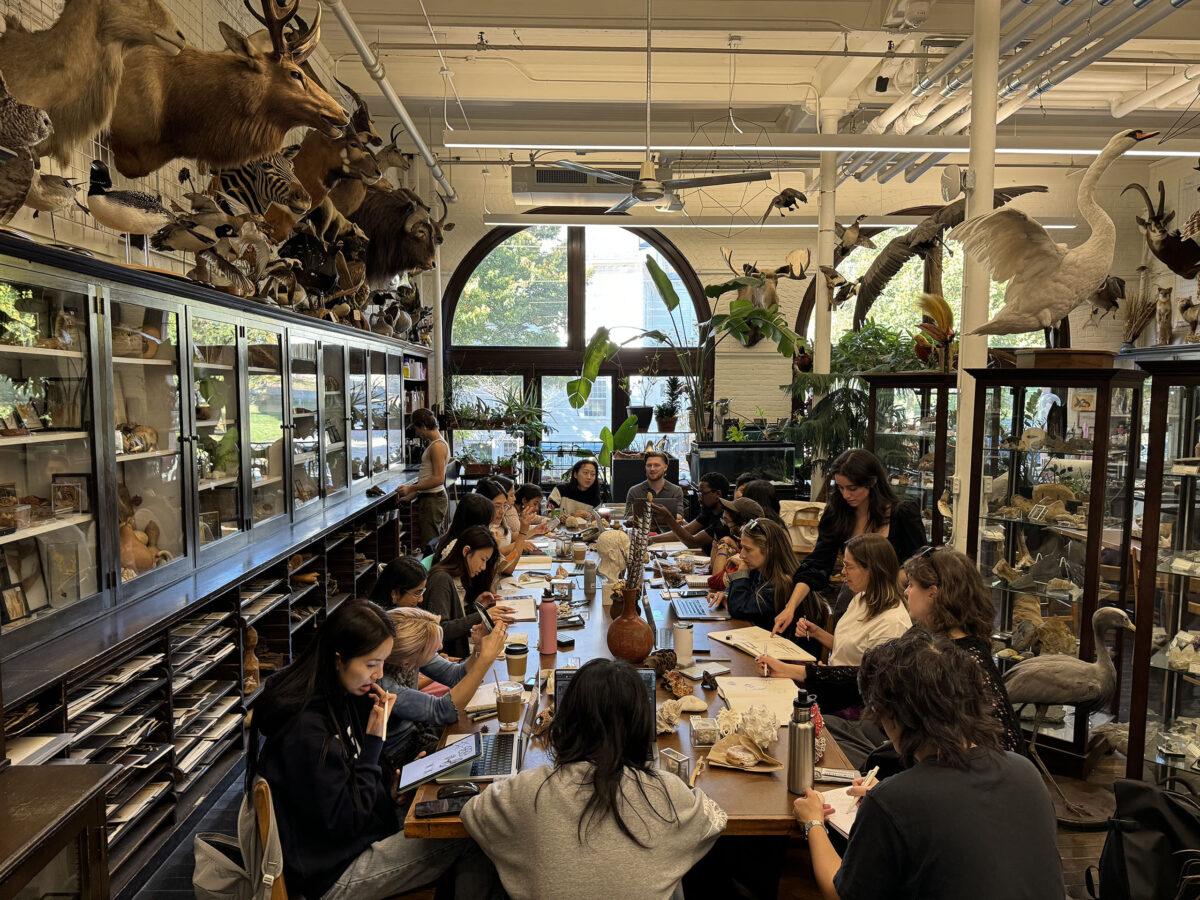
In the course, students develop in-depth knowledge of machine learning, data politics, emerging technology, and climate change, and critically examine the implications of these forces on the design field. The class also draws on RISD’s Nature Lab as a core resource, where students work with nature specimens, microscopy for close observation, visual research, and form making. Biomorphic Typography workshop invites students to look closely at the structures found in nature and translate them into typographic form; this assignment becomes a way to think with living systems.

What is most inspiring about this course is how it functions as a visual research lab— it balances a strong theoretical framework and rigorous making. New design methodologies emerge through the use of tools that both science and design have to offer. The course stays focused on the ethical dimensions of emerging technologies as they inscribe our social, educational, cultural, and biopolitical landscapes. 

Learning outcomes include: expanding what constitutes design; surveying collaborations between art, design, biology, and other sciences; imagining new roles for designers in the age of AI and gene editing; gaining perspectives from non-human organisms and environments; challenging inherited aesthetic norms and formats; and developing bold experimental methods that value meaningful risk-taking and productive failure.

Contemporary graphic design is formed by two significant forces: machine vision and climate change. Emerging designers now enter a profession in which form and meaning are mediated by automated perception, including cameras, datasets, recognition models, platform ranking, and generative systems. Simultaneously, climate change redefines design responsibilities, reshaping materials and production, and how designers communicate climate change to the public.

Design In The Posthuman Age addresses both challenges through a defined methodology. Machine vision is approached as a design instrument. Students examine machine learning and datasets, construct reality, and explore how classification can generate bias and exclusion. Machine learning is introduced as a visual method, and students learn to build custom datasets and train models, moving beyond reliance on off-the-shelf models like Midjourney. This method changes students from passive users of artificial intelligence to designers capable of critically engaging with emerging technologies.

Climate change is addressed by introducing students to nature systems, environmental sensing, satellite imagery, scientific imaging, and the visualization of climate data in design processes. Students develop skills to translate complex environmental and biological information into visual systems that support climate action.

To develop a new visual language necessary to address these issues, students generate forms derived from natural specimens and employ processes such as crossover and mutation, using both analogue drawing and machine-learning. These formal systems are developed into typefaces, books, posters, motion pieces, and interactive works. This workflow engages observation, biological metaphor, and iterative design, which in turn, develops new visual methods for typography and visual identity that are living, dynamic, and adaptive.

The Design In The Posthuman Age course expands the definition of graphic design by incorporating data, code, and biomaterials into the visual method. It enables students to:

  • create novel visual forms using scientific tools, nature specimens, and machine learning.
  • articulate the ethical implications of emerging technology
  • collaborate across disciplines, preparing students to address technical complexity and social responsibility.
PosthumanClass-work-OPT

https://posthuman.design

https://eyeondesign.aiga.org/what-does-posthuman-design-actually-mean

https://www.risd.edu/news/stories/graphic-design-faculty-anastasiia-raina-on-posthumanism-and-design

Biography

Anastasiia Raina is a Ukrainian-born biodesigner, researcher, and Associate Professor at RISD. She holds an MFA in Graphic Design from the Yale School of Art. Anastasiia integrates living organisms, natural systems, and data into her practice, inspiring the audience to connect with science and the environment in transformative ways. Her research delves into the aesthetics of technologically mediated nature, machine vision, evolutionary biology, and biomaterials to create new methodologies that redefine design possibilities.

As an Associate Professor at the Rhode Island School of Design (RISD), Raina directs Nature-Culture-Sustainability Studies with over 170 students from 17 departments. Her work has been exhibited in New York, Los Angeles, Shanghai, and Seoul. Raina has also lectured and served as a critic at Yale University, Columbia University, Stanford University, Parsons, Pratt Institute, Otis College of Art and Design, the University of Southern California (USC), and the Maryland Institute College of Art (MICA). Additionally, Anastasiia consults international organizations and companies, including the Hyundai Motor Group where she worked a three-year project exploring the Future of Mobility and Sustainable Cities.

This project was the 2025 Design Incubation Educators Awards winning recipient in the category of Teaching.
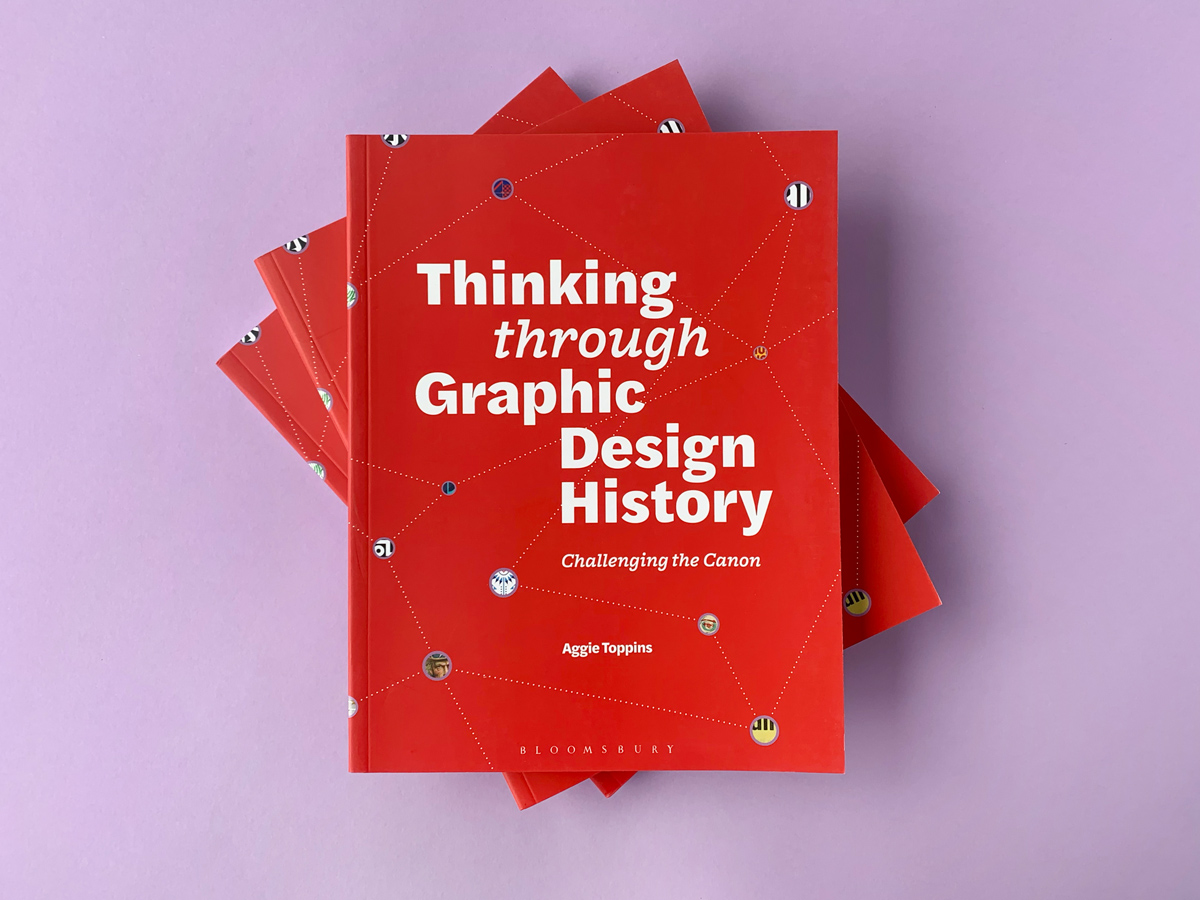
Thinking Through Graphic Design History: Challenging the Canon

Informed by intersectional feminism, materialism, and post-structuralism, the author advocates for social and cultural orientations to graphic design history.

Aggie Toppins
Associate Professor
Washington University in St. Louis

Thinking Through Graphic Design History sketches the terrain where historical thinking and graphic design practice meet. Written for college students, design educators, and designers, this 336-page survey combines theoretical exploration with practical application. The author interrogates traditional approaches to graphic design history and explains how historical research methods help designers shape socially engaged, critical practices.

The book makes a contribution to graphic design and design history by bridging scholarship and practice. It advocates for a “social turn” with insights and case studies from all over the world. Consider, for instance, how a typeface can carry forward stories of past political struggles; how AR and VR animate static objects in a museum; how letterpress printing addresses the “unfinished business” of the past; and how designers make and use archives.

In the introduction, the author provides a brief historiography to situate graphic design history within an art historical literature which has long championed individuals and their aesthetics. This orientation, while relevant forty years ago, is limiting in today’s changing field. Traditional graphic design history instills connoisseurship and attempts to elevate the field’s cultural cachet to be on par with art and architecture, but it does not adequately help students grapple with issues of power and agency. Using lenses informed by intersectional feminism, materialism, and post-structuralism, the author advocates for social and cultural orientations to graphic design history. These approaches illuminate change over time, contingency, and complexity in matters of everyday life, including labor, resistance, and the use of design by audiences. Throughout its 14 chapters, the book shows how history and theory come to life in global projects that respond to present-day and future-sighted issues.

The author’s research methods include a literature review, archival research, interviews with dozens of designers and historians, and testing exercises with students in the classroom. The content is informed by the author’s working-class background, her perspective as a designer, educator, and scholar, as well as the insights of more than 60 contributors whose work is shown or cited. The accomplished British historian Grace Lees-Maffei endorsed the book, writing, “Toppins encourages designers to deepen and strengthen their design practice through engaging with history in a variety of ways. This book is an essential part of the graphic designer’s toolkit.”

Published by Bloomsbury in February 2025, Thinking Through Graphic Design History is already making an impact in the classroom. Educators from Leeds to Louisiana have added it to their syllabi, and the book has been collected by more than 50 institutions worldwide. Toppins has been invited to discuss the book with audiences of peers across the US and Europe, including the School of Visual Arts’ D-Crit program, the Design Principles & Practices conference in Singapore, and Svenska Tecknare in Sweden. The author, who also designed the book, was recognized by the University & College Designers Association (UCDA) with a Silver Award. Toppins has also appeared on the Underscore podcast and, as a former guest on Scratching the Surface, was interviewed by Jarret Fuller for the podcast’s substack.

This book was made possible with funding support from the Sam Fox School of Design & Visual Arts and the Office of the Provost at Washington University in St. Louis.

Toppins_Outcomes

Biography

Aggie Toppins is a designer, collagist, and researcher who explores where graphics come from, what they do, and how they change over time. She is the author of Thinking Through Graphic Design History, published by Bloomsbury in 2025. Aggie’s creative work has been internationally exhibited and garnered national design awards including the Type Director’s Club “Certificate of Typographic Excellence,” STA100, and the SECAC Outstanding Achievement in Graphic Design award. She has contributed to several books and has written for leading design journals including Design and Culture, Design Issues, Diseña, Eye, and AIGA Eye on Design. An award-winning educator, Toppins teaches at the Sam Fox School of Design & Visual Arts at Washington University in St. Louis. She earned a Bachelor of Science in graphic design from the University of Cincinnati in 2003 and a Master of Fine Arts in graphic design from the Maryland Institute College of Art in 2012.

This project was the 2025 Design Incubation Educators Awards winning recipient in the category of Scholarship: Research Publication.

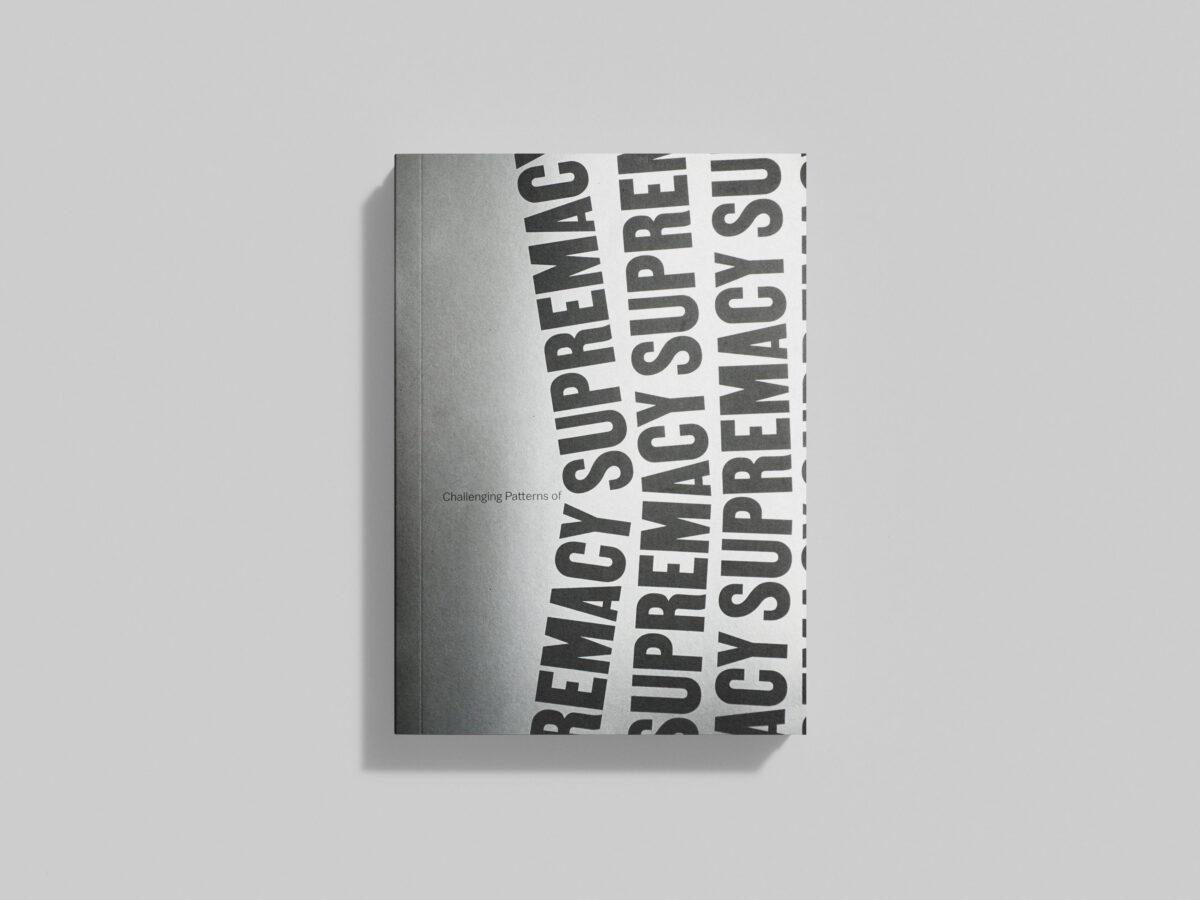
Challenging Patterns of Supremacy: Provocations from Collective Pedagogy, Practice, and Organizing

A book design, in collaboration with MAS Context, It Is Just Dave LLC, and Dark Matter U.


Dave Pabellon
Assistant Professor
University of Notre Dame

From the Authors:

This book is a transcript, a conversation, a guide, an example, a reference, an archive, and hopefully many more things to many people. It takes, as a point of departure, the transcript of a lecture by the five of us (Bz Zhang, Lisa C. Henry, Shalini Agrawal, Shawhin Roudbari, and Tonia Sing Chi), members of the collective Dark Matter U, given in September 2022 at the University of California, Berkeley, College of Environmental Design, at the invitation of Berkeley architecture students. Following the lecture, we hosted a workshop where we applied frameworks that addressed power structures and issues identified by students from both Berkeley and the California College of the Arts. After these events, we held two virtual panels with DMU organizers from across the country in dialogue with Master of Architecture students.

The original lecture represents both our individual perspectives as five members of DMU as well as the collective work and insights of hundreds of built environment practitioners, scholars, students, and organizers. The text incorporates perspectives from additional DMU collective members who were not present in the lecture hall. Here we expand on the lecture with additional references, build on it through a series of exercises to support activism and reflection, and experiment with the book as a medium—in both form and content—for challenging patterns of supremacy. We invite you to join us in the margins and take space across entire pages (and beyond them) in shaping these conversations, and we look forward to imagining and building the futures and worlds we have been dreaming of together.

Supported by:

This book has been generously supported by the Graham Foundation for Advanced Studies in the Fine Arts, Public and Community-Engaged Scholarship (PACES) at the University of Colorado Boulder, the University of Utah College of Architecture + Planning, and DMU.

Production notes from the designer:

Total Run:
750 copies

Pages:
132

Publishers:
Dark Matter U (DMU) and MAS Context

Printing and Binding:
die Keure, Brugges, Belgium

Ink, Color, and Finishes:
Body: PMS 801 (Fluorescent Blue), PMS 807 (Fluorescent Pink), PMS 877 (Metallic Silver), and Black.
Cover: Coldfoil silver, Black, and All-over Aqueous Lacquer

Size:
5.825 inches x 8.27 inches

ISBN:
978-1-7367436-5-2

Typefaces:
Garamond, designed by Claude Garamond; Balto, designed by Tal Leming; and Martin, designed by Tre Seals

dmu_mas_context_samples_references

Authors/Collaborators

Shalini Agrawal (she/her) is a facilitator, educator and an interdisciplinary designer based in unceded Ohlone territory, also known as the Bay Area. Her practice is grounded in spatial justice, self-reflection and embodied healing.

Lisa C. Henry is an artist, associate professor, and associate dean of the College of Architecture + Planning at the University of Utah. Her research is focused on how critical gender, race, queer, and disability theory intersect with architectural education, pedagogy, design, production, and activism.

Tonia Sing Chi is an architect, memory worker, and builder based in Oakland on Ohlone land. Her design practice, Peripheral Office, is rooted in reciprocity and shared authorship, weaving together storytelling, place-based building practices, and community organizing. Her projects include Nááts’íilid Initiative and Storytelling Spaces of Solidarity in the Asian Diaspora (SSSAD).

Shawhin Roudbari studies and teaches about ways designers organize to address social problems. He bridges studies of social movements and race with architectural theory. His research contributes to theories/practices of contentious politics around race and design. His work with the DissentXDesign research collective is published in architectural, sociological, and interdisciplinary journals.

Bz Zhang is an architect, organizer, and artist based in Tovaangar (so-called Los Angeles). In their own practice, they use documentation and speculation to unravel physical and cultural constructions of place. As part of the Los Angeles Neighborhood Land Trust, they work with communities toward environmental justice through design, construction, and stewardship of our public green spaces.

Biography

Dave Pabellon is a design educator, researcher, and practitioner under the moniker It Is Just Dave LLC.

As a practitioner, Pabellon’s studio work primarily consists of identity, publication, and exhibition design, with a focus on partnerships with cultural institutions, contemporary artists, and activist organizations.

As an academic, Pabellon’s research centers on the history and practice of graphic design labor as a means of building solidarity among communities of color and activist spaces. Specifically, he studies how Black, Indigenous, and People of Color (BIPOC) designers have worked with and alongside liberation movements in the past, and explores contemporary models. He has lectured and published papers at numerous conferences and summits, as well as in peer-reviewed journals.

Before his appointment at Notre Dame University, Pabellon was a senior designer at the award-winning studios Faust Associates and Celery Design Collaborative.

https://mascontext.com/news/mas-context-launches-its-new-book-challeging-patterns-of-supremacy


This project was the 2025 Design Incubation Educators Awards winning recipient in the category of Scholarship: Creative Works.