
Designing Facilitated Experiences for Early Adolescents: Supporting Psychological Capital and Educational Access in Refugee Contexts

The Rohingya refugee crisis.

Hanna Ji
Graduate student
Master of Design Program
University of Arkansas

As global displacement reaches unprecedented levels, the need to support refugee populations has become increasingly urgent. As of 2024, 123.2 million people were forcibly displaced worldwide. Among the most complex protracted situations is the Rohingya refugee crisis. The Rohingya are the largest stateless population in the world. Over 1.15 million Rohingya refugees currently live in the Kutupalong-Balukhali refugee settlement in Cox’s Bazar, Bangladesh (“Bangladesh,” 2026). More than half a million children live in limbo, relying on humanitarian assistance with limited access to education. Adolescent girls are especially vulnerable due to the risks of sexual and gender-based violence and conservative gender norms that restrict their access to education. At the intersection of long-standing displacement, gender inequity, and limited educational opportunities, it is crucial to explore how these conditions can be addressed through thoughtful and contextually grounded approaches.

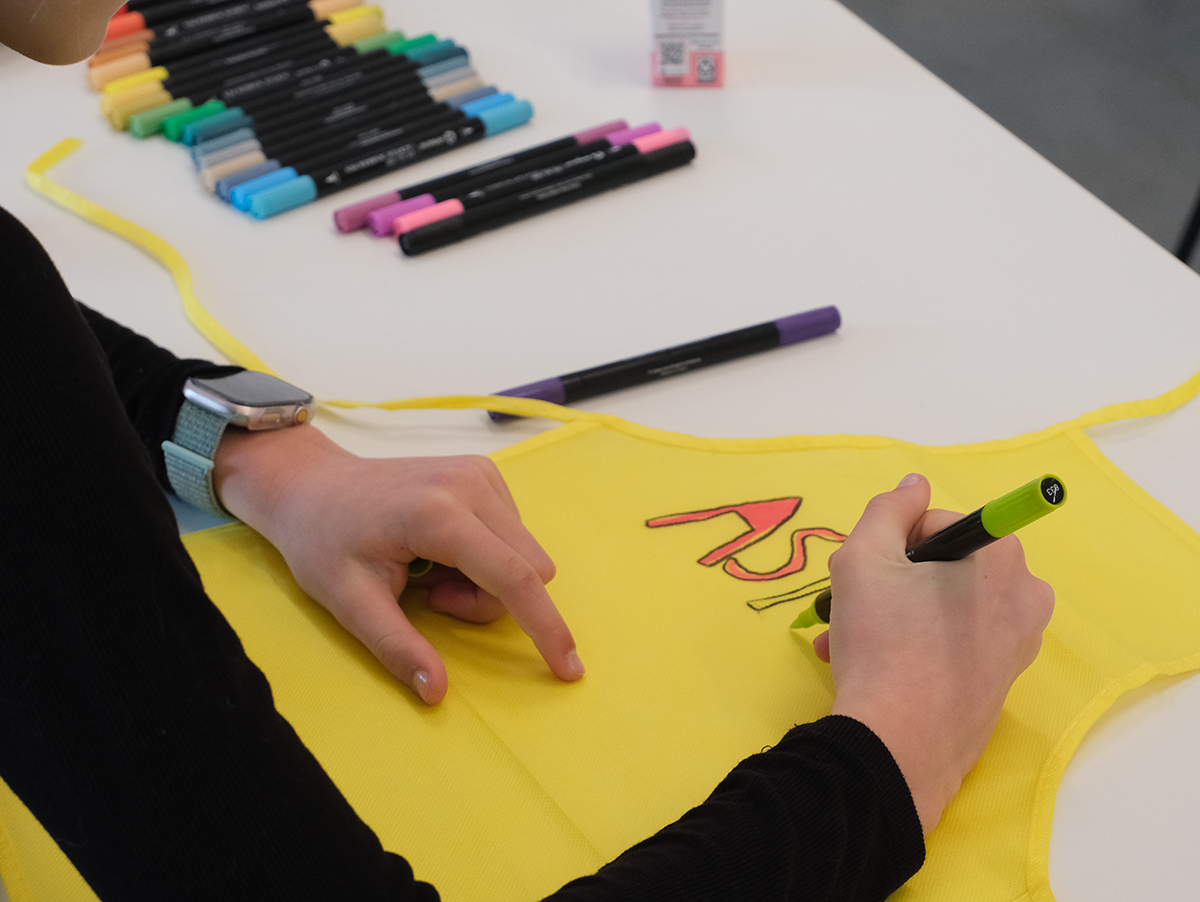
This research examines how facilitation of creative storytelling workshops can support early adolescent Rohingya girls by fostering hope through the development of agency and the visibility of educational pathways. Using a mixed-method qualitative approach, the study draws from secondary research, interviews with stakeholders, ethnographically informed fieldwork in Cox’s Bazar, and the design and facilitation of creative storytelling workshops with adolescent girls in collaboration with local partners in Bangladesh. Findings reveal that while educational access remains structurally constrained, storytelling-based participatory experiences can create space for self-expression, build confidence, and foster a sense of connection among participants. At the same time, the research underscores that cultivating hope requires not only strengthening individual agency but also making pathways toward education more visible and attainable.

The primary outcome of this research is a design framework for creating facilitated experiences for early adolescents that address key developmental needs as well as a multi-layered, storytelling-based initiative that operates across individual, community, institutional, and global systems. This approach proposes creative facilitation, mentorship, community engagement, and public-facing storytelling to support both individual development and broader shifts in perception. While design alone cannot resolve the complexities of forced displacement, this research demonstrates its potential to create conditions for agency, amplify marginalized voices, and contribute to expanding educational opportunities for Rohingya girls.

This design research is presented at Design Incubation Colloquium 12.3: Virtual Summer on Friday, June 26, 2026.
Using Things to Scaffold Difficult Conversations for Collegiate Residence Life Orientation Participants

Students use diagramming and conversation to explore aspects of social identity, and a card game/training program.

Michael Arnold Mages
Assistant Professor
Northeastern University

People can have a tough time talking with others about certain topics. Some topics, in combination with certain relationships can threaten the social identity of participants (Stone, Patton, Heen 2010), which can limit the potential for effective, replete relationships between people (Flores 2012). To help people begin to develop strategies for difficult conversations, designed things can serve in a number of ways: things can offer a frame to help people visualize challenging concepts, can provide an avatar upon which a person can project difficult subject matter, can offer prompts to help a person to develop responses. In short, things can act as scaffolding (Sanders, William 2001) extending the capacity of people to engage with difficult subject matter.

In the context of college residence life, some students assume formalized leadership roles within the student community, as resident assistants or orientation counselors. Beyond the anticipated duties of conducting the orientation activities, these students become de facto counselors and play a subtle but informal role throughout the year, helping students adjust to academic and residence life in college. These students, however, are not always prepared to serve as mediator in difficult conversations, or to fully consider the perspective that other students’ intersectional social identity might lend to a particular situation.

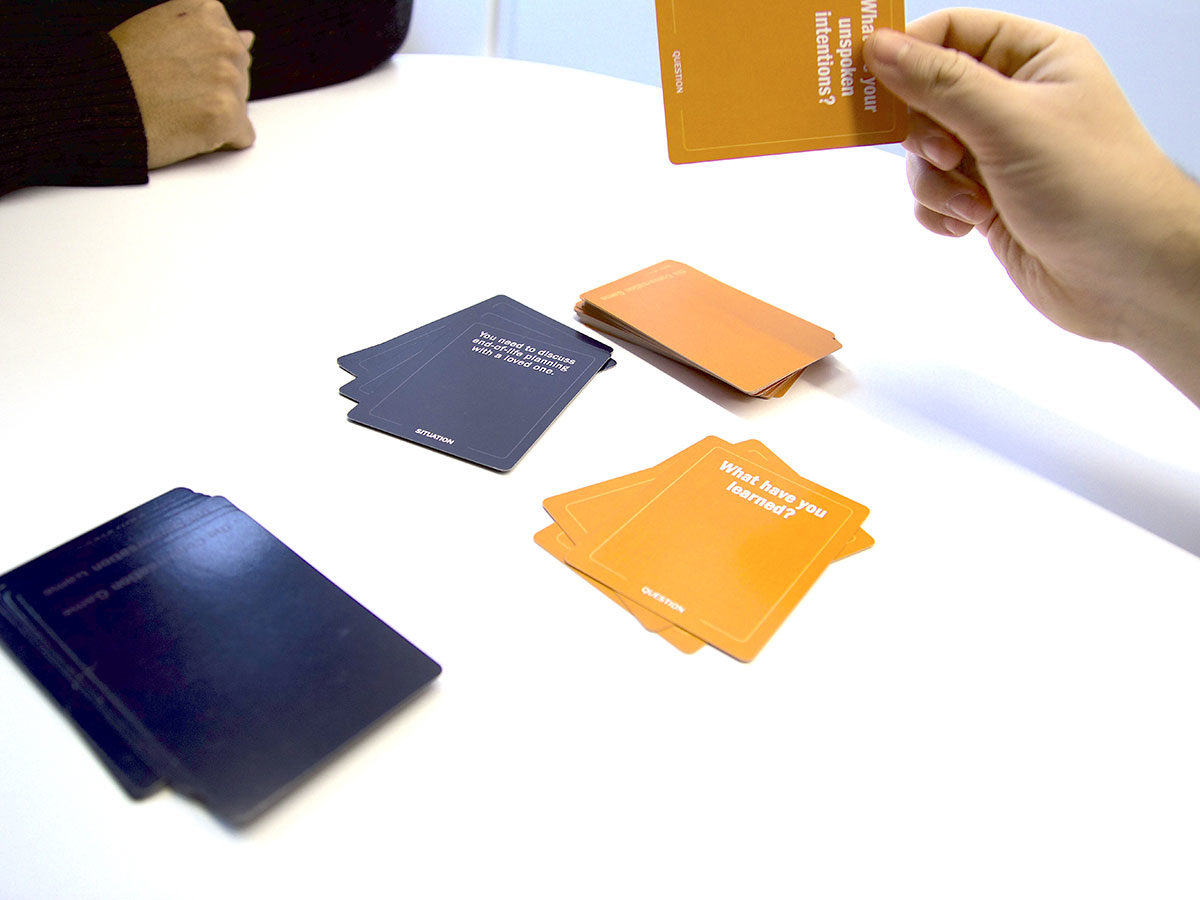
This presentation will share work done in collaboration with the Carnegie Mellon University Office of Residential Education and Center for Student Diversity and Inclusion where students used diagramming and conversation to explore aspects of social identity, and a card game/training program that was developed through an iterative process with design students. This presentation will discuss these artifacts, and propose a model describing a range of approaches by which things might moderate difficult conversation that may be useful for further work in this area.

Flores, F. (2012). Conversations for Action and Collected Essays. (M. F. Letelier, Ed.) (1st ed.). North Charleston, South Carolina: CreateSpace Independent Publishing Platform.

Sanders, E. B., & William, C. T. (2001). Harnessing People’s Creativity : Ideation and Expression through Visual Communication. In J. Langford & D. McDonagh-Philp (Eds.), Focus Groups: Supporting Effective Product Development. Taylor and Francis.

Stone, D., Patton, B., & Heen, S. (2010). Difficult conversations: how to discuss what matters most  (2. ed., 10). New York: Penguin Books.

This research was presented at the Design Incubation Colloquium 6.1: Quinnipiac University on October 5, 2019.