
Jialun Wang
Assistant Professor
Otis College of Art and Design
Eager Zhang
Assistant Professor
Otis College of Art and Design
What should the first year of typography class look like in art school today, when the students sitting in the classroom grow up in the screen-dominated era? This keynote presentation unfolded a pedagogical conversation between the two presenters, across their multiple years of teaching studio typography courses at Otis College of Art and Design and other institutes. Deeply inspired by the mutation from traditional printmaking to digital display in the type and design industry, the talk shares original assignments that we found innovative and unseen previously, along with students’ outcome, to build an emerging speculative pedagogy for the fellow type educators.
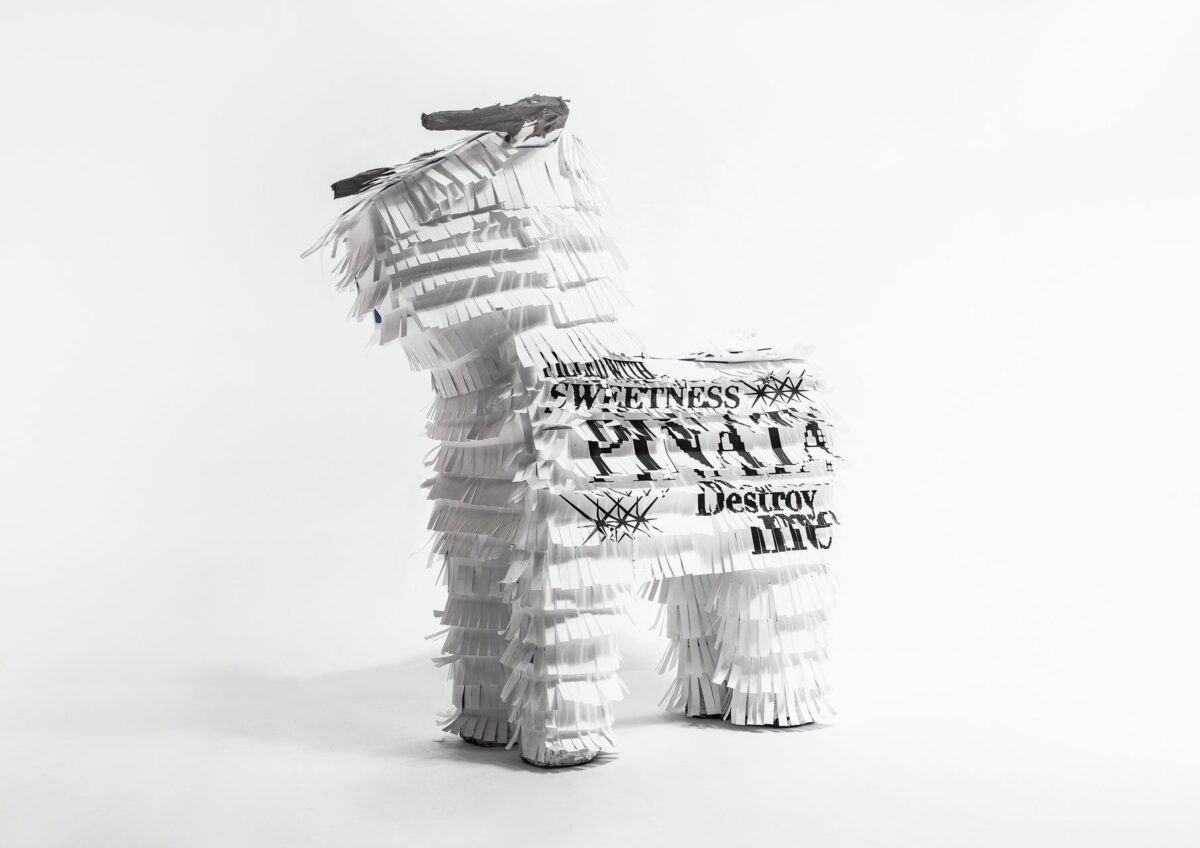
The assignment sequence begins with Pushing Pixels, a hands-on, analog typography workshop that introduces the notion of “legibility” through an origin of game UI. Students are required to design legible letterforms from low-resolution to high-resolution pushing the limit of legibility and investigating the balance of mathematical structure and visual intuition. It leads to a more integrated project later in the semester: Typo-e-ology, which will yield two typographic components: a 2D “encyclopedia page” and a 3D “still life”. The project stages a critical encounter between multiple tensions of contemporary life: craftsmanship versus software, individual narratives versus consumer culture, and consciousness versus artificial intelligence.
Rooted at Otis College of Art and Design, we aim to push the boundaries of teaching typography by introducing more digital perspectives—integrating cross-reality and embodied experiences such as AR and VR—while leading workshops and lectures at institutions including NYU, USC, Harvard University, The Cooper Union, and more. Our talk invites audiences to consider key questions: How can typography be taught with an awareness of both humanity and technology? How can students be encouraged to push typography beyond flatness to engage with a rapidly accelerating world?
This design research is presented at Design Incubation Colloquium 12.1: Virtual Online on Friday, November 14, 2025.