Adonis Durado
Associate Professor
Ohio University
VICO 3456 / VICO 5456: Generative AI for Visual Communication is a vertically integrated studio course that brings together undergraduate, master’s, and doctoral students in a shared learning environment. Designed as a yoke course, it intentionally collapses traditional academic hierarchies to create a collaborative space where emerging and advanced designers learn alongside one another. The course reimagines how artificial intelligence can be taught within design education by positioning AI not as a shortcut or productivity tool, but as a collaborative system that reshapes authorship, decision-making, and creative responsibility.
The course was developed in response to a widening gap between the rapid adoption of generative technologies in professional practice and the limited pedagogical frameworks available to support meaningful learning with them. Students often encounter AI informally through social media or commercial platforms, without guidance on ethical, cultural, or conceptual implications. By bringing undergraduate and graduate students together, the course leverages varied levels of experience and disciplinary perspectives while modeling how learning communities function in professional and research contexts.
At its core, the course is grounded in the belief that meaningful engagement with AI requires intentional design and critical awareness. Students work with generative image, video, and multimodal tools while examining how these systems shape authorship, aesthetics, and power. Early modules introduce foundational concepts such as training data, bias, authorship, and algorithmic influence. These shared conceptual anchors allow students at different academic stages to engage in layered ways, contributing diverse insights while working toward common learning goals.
Instruction is structured around three scaffolded projects that move from exploration to authorship to public-facing communication. Early projects emphasize experimentation and inquiry, allowing students to test tools within defined constraints while observing their limitations. Subsequent projects demand increasing conceptual clarity, ethical reasoning, and intentional design decisions. Graduate students are challenged to operate at a meta-level, articulating frameworks and critiques, while undergraduate students build foundational fluency and confidence through guided practice. This vertical integration fosters mentorship, peer learning, and shared accountability across experience levels.
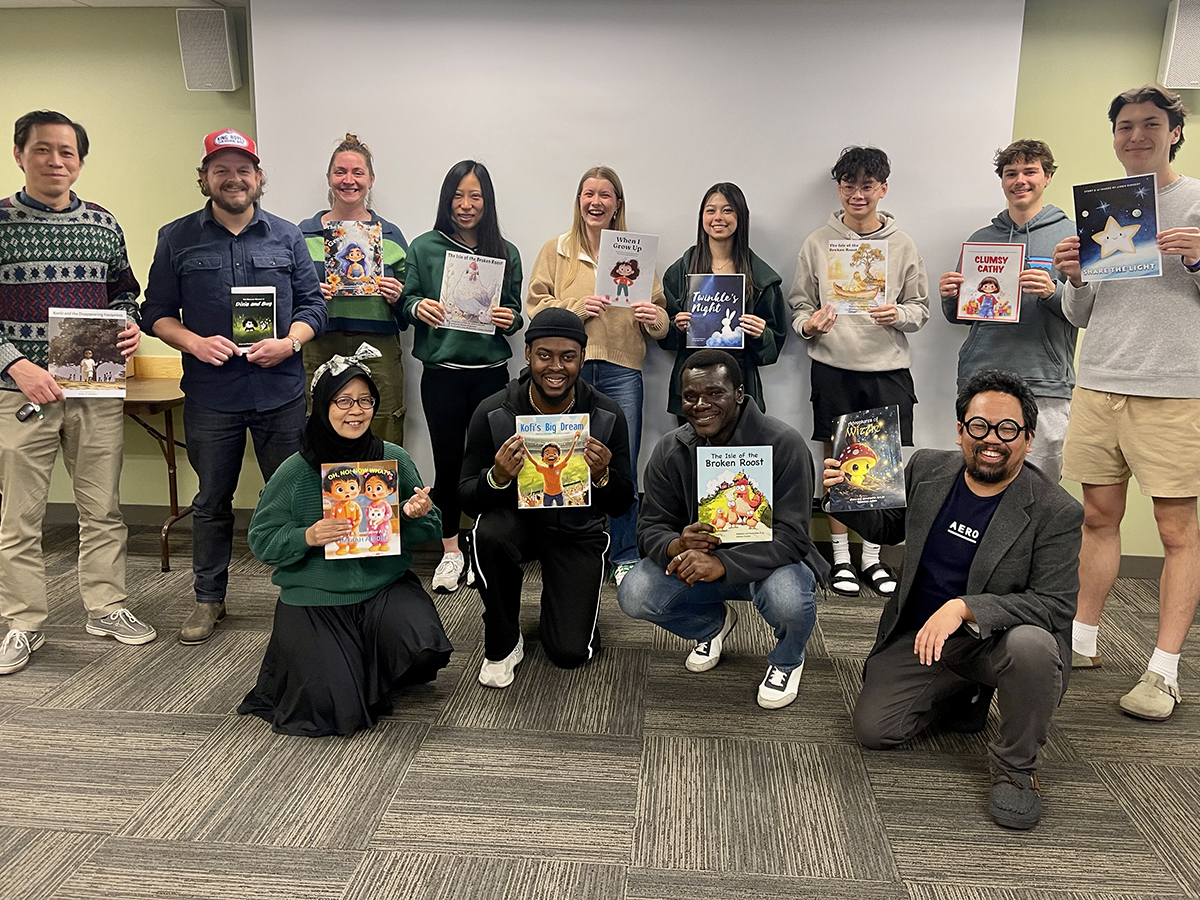
The culmination of the course is a public exhibition titled Generative Sparks, which serves as both a learning milestone and a platform for community engagement. The exhibition features work developed across all three major projects and invites audiences to reflect on authorship, ethics, and creativity in the age of generative AI. By situating student work in a public context, the exhibition reinforces professional standards and positions students as contributors to broader cultural conversations around emerging technology.
Reflection functions as a central design practice throughout the course. Students regularly document their processes through written and visual reflections that examine how AI influences their thinking, choices, and creative identity. These reflections support metacognition and allow students to trace their evolving relationship with generative tools. Peer critique further deepens this process by encouraging dialogue across experience levels, fostering a studio culture grounded in mutual learning and critical exchange.
Pedagogically, the course integrates experiential learning, studio critique, and inquiry-based practice. Students learn through cycles of making, testing, revising, and reflecting. Guided constraints prevent overreliance on automation and encourage engagement with the affordances and limitations of generative systems. Faculty guidance emphasizes authorship, accountability, and ethical responsibility, reinforcing that AI-generated work remains a human-centered practice shaped by values and intent.
A significant outcome of the course is a shift in student mindset. Many enter viewing AI as either a threat to creativity or a shortcut to production. Over time, students develop a more nuanced understanding of human–AI collaboration, recognizing both its possibilities and its limitations. This shift is evident in reflective writing, process documentation, and increasingly sophisticated visual outcomes that demonstrate intentionality rather than automation.
The course has produced strong and visible outcomes. Students generate portfolio-ready work that demonstrates conceptual depth, technical experimentation, and reflective authorship. Projects have been exhibited publicly through Generative Sparks and shared in academic and professional contexts. Students report increased confidence navigating emerging technologies, and many leverage coursework for internships, interdisciplinary collaborations, and advanced research.
Beyond individual outcomes, VICO 3456/5456 functions as a transferable pedagogical model. Its structure, assignments, and assessment strategies have informed broader curricular conversations around AI literacy, ethical design, and experiential learning. By bringing undergraduate and graduate students into a shared learning environment, the course models how design education can cultivate mentorship, complexity, and critical engagement across levels of expertise.
Ultimately, VICO 3456/5456 positions design education as a space for intentional experimentation rather than technological reaction. Through its vertically integrated structure and the public-facing exhibition Generative Sparks, the course demonstrates how educators can guide students to engage emerging technologies thoughtfully, creatively, and responsibly within contemporary design practice.
Durado_Documentation__EvidenceBiography
Adonis Durado is an Associate Professor in the School of Visual Communication at Ohio University, where he teaches design, storytelling, and generative AI–driven creative practice. His work centers on human-centered pedagogy, ethical technology use, and the thoughtful integration of emerging tools into design education. He developed one of the university’s first AI-first courses, positioning generative systems as collaborators in learning rather than replacements for human judgment. His teaching emphasizes reflection, authorship, and critical inquiry, preparing students to engage creative technologies with intention, accountability, and agency. Durado’s pedagogy bridges theory and practice through experiential, project-based learning and community engagement. His work has contributed to curricular innovation, interdisciplinary collaboration, and the development of AI literacy frameworks in design education. He is also an award-winning designer and writer whose research explores authorship, visual culture, and the cultural implications of artificial intelligence.
This project was the 2025 Design Incubation Educators Awards runner-up recipient in the category of Teaching.