Najmeh Pirahmadian
Graduate student
Ohio University
Miscommunication is often studied in linguistics and psychology as a technical challenge of understanding, yet such perspectives overlook the emotional and cognitive labor carried by non-native speakers. Language barriers create hesitation, delay, and dissonance that are difficult to express through description alone. This research addresses that gap by using interactive design to reveal the invisible labor of miscommunication, reframing it from a private struggle into a shared experiential phenomenon.
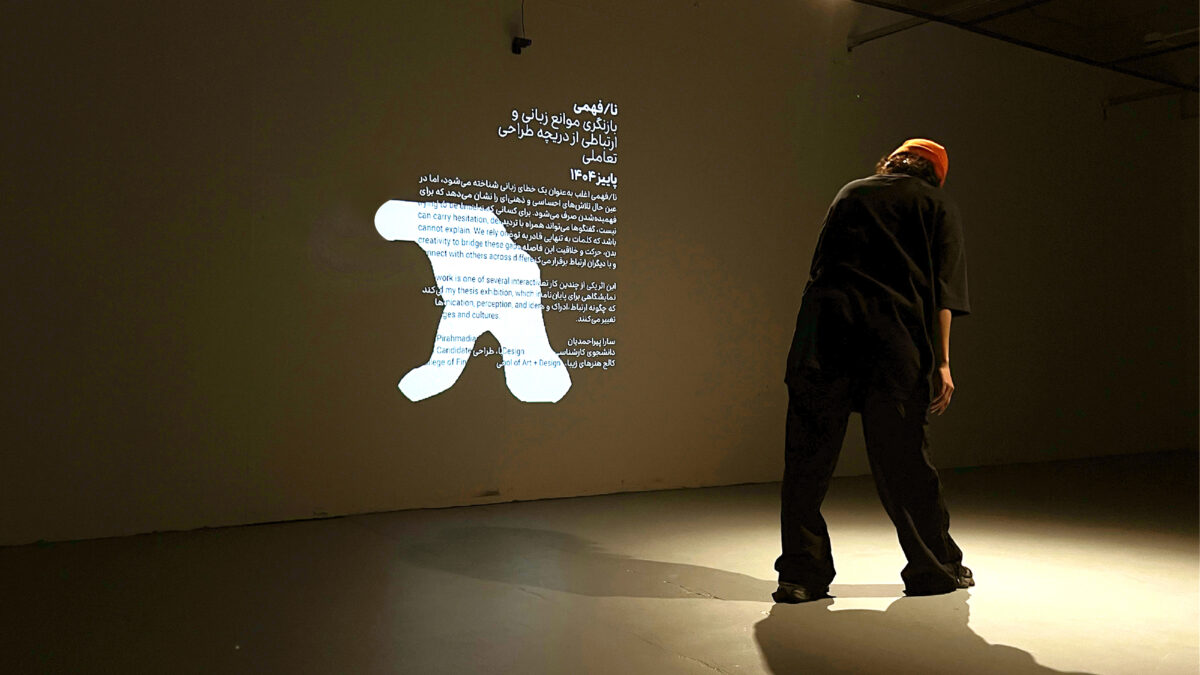
The project employed an exploratory, practice-based design research methodology that combined projection mapping, creative coding, and responsive technologies to construct environments where meaning is deliberately unstable. Works include wall text where English words gradually appear over Persian letters through the viewer’s body movement, echoing the struggle of non-native speakers who must often rely on body language to make themselves understood; a dual-microphone system that distorts or delays speech; motion-activated pieces that fragment words or faces in real time; and looping animations that represent anxiety, fear of misunderstanding, and the pressure to perform fluently.
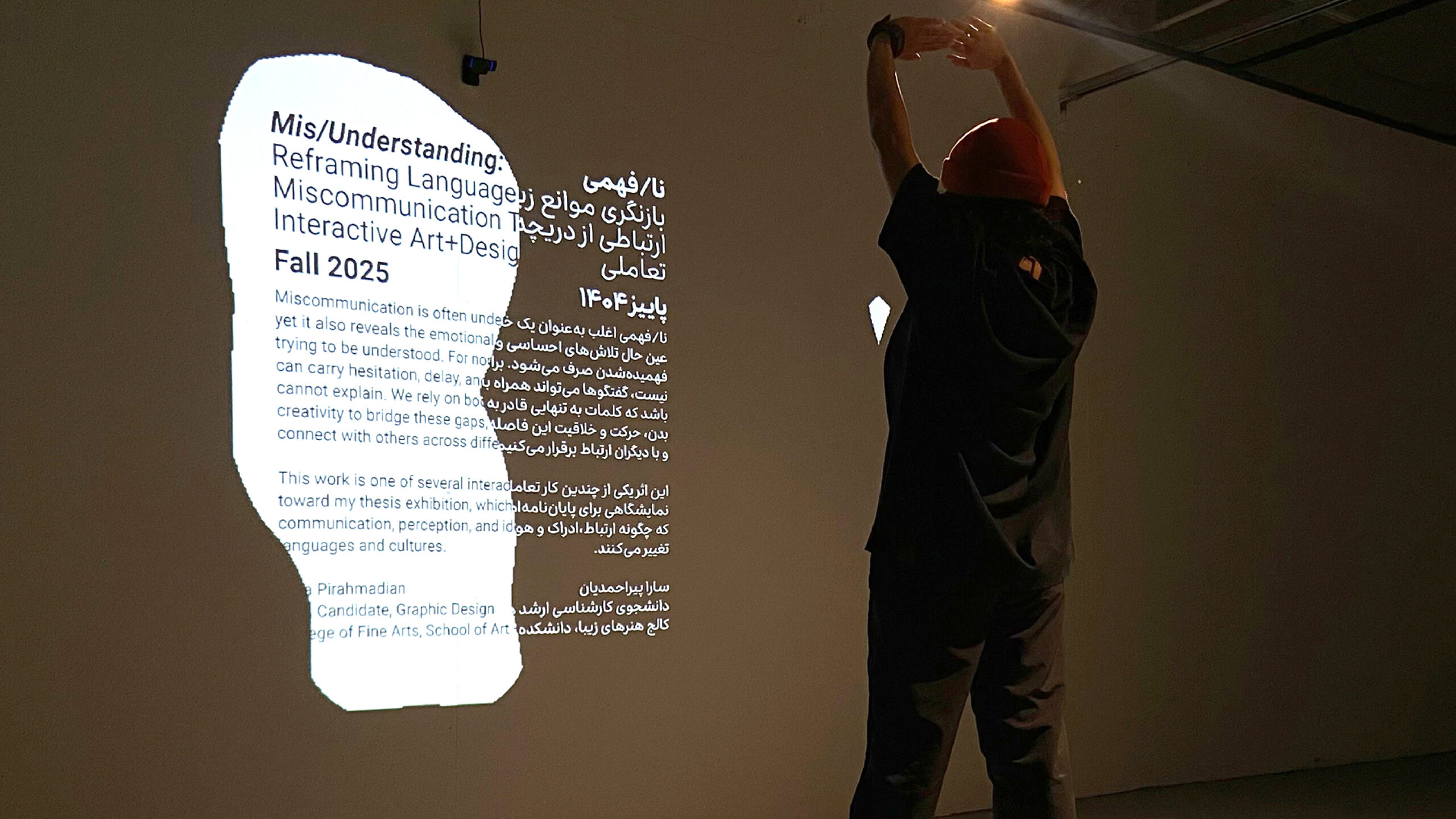
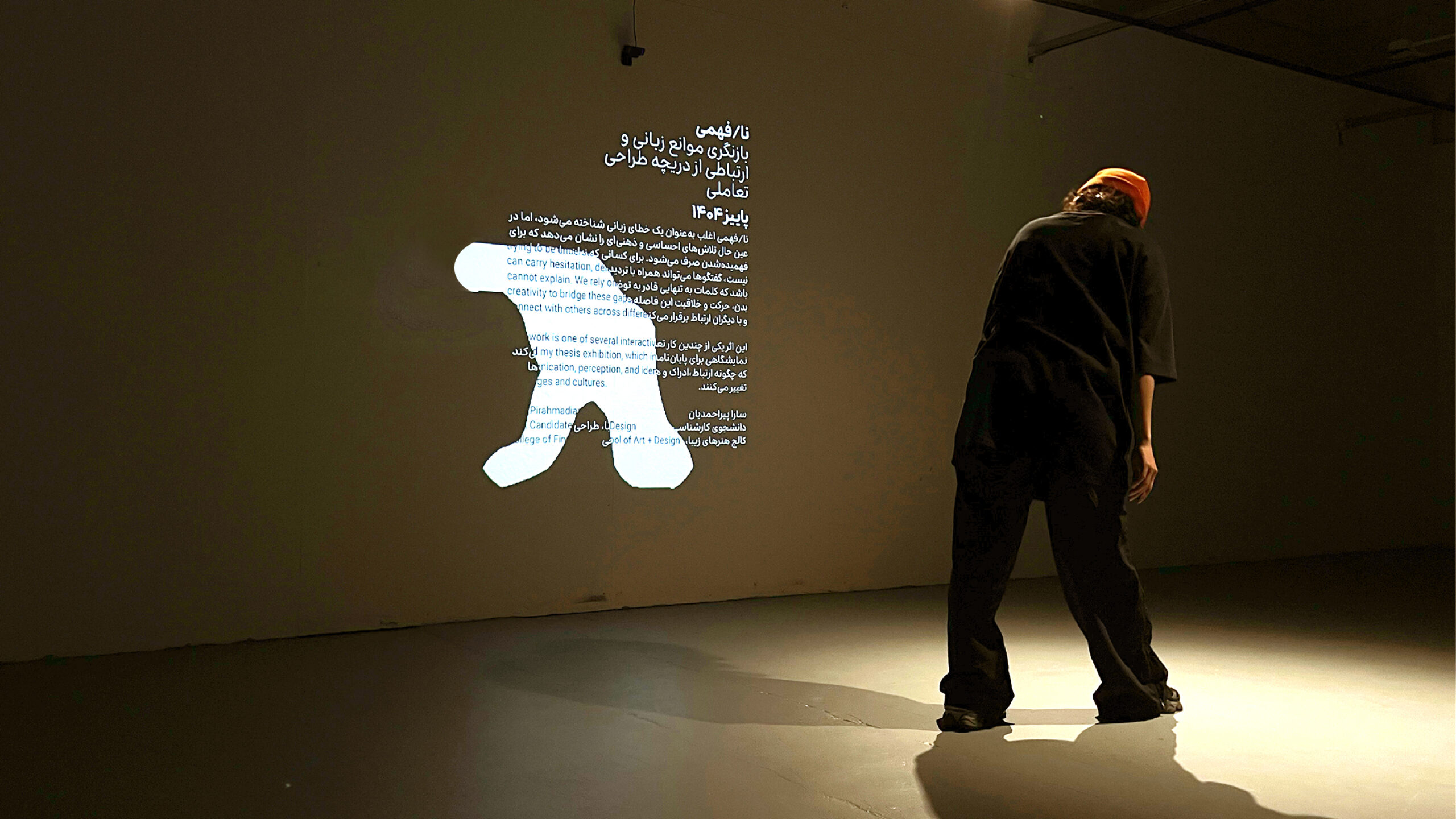
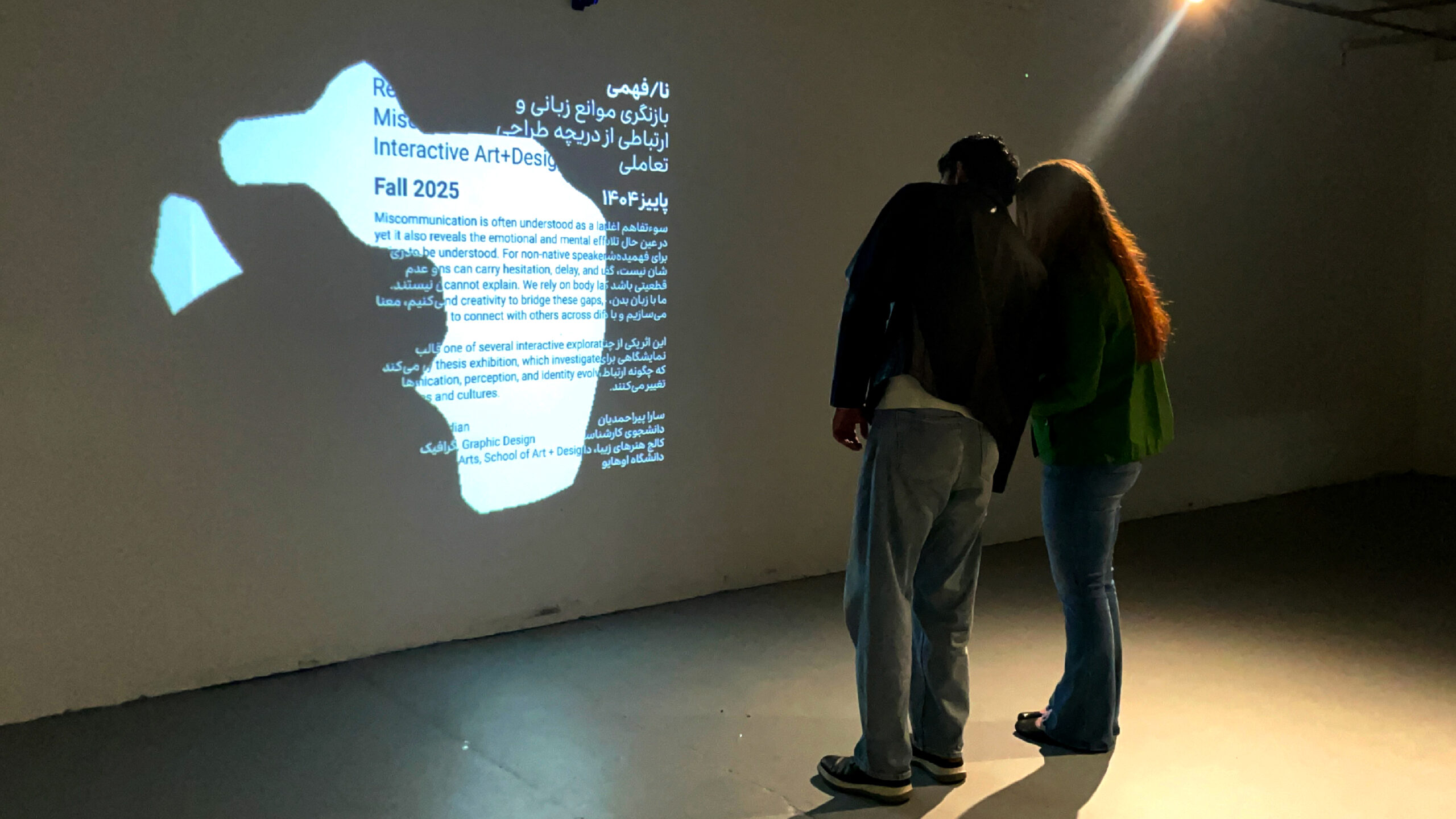
This research resonates with works such as Cildo Meireles’s Babel, which sonifies linguistic confusion; Paige (Xinling)’s Speak in Bloom, visualizing fragile digital speech; and Shuang Wu’s A Poetic Space, reinterpreting poetry beyond translation. Like these, Mis/Understanding transforms linguistic distance into shared, sensory experience.
Initial outcomes show that participants experienced stress and disorientation, suggesting the installations successfully replicate the hesitation and cognitive load of bilingual communication and make the invisible labor of miscommunication tangible.
This research contributes to communication design scholarship by reframing miscommunication as both a design problem and an opportunity: a space where interactivity and relational aesthetics generate new forms of encounter. It demonstrates how practice-based design can function as research, moving beyond representation toward experiential knowledge-making and offering transferable methods for future studies of accessibility, identity, and cross-cultural communication.
This design research is presented at Design Incubation Colloquium 12.1: Virtual Online on Friday, November 14, 2025.