
Megan Irwin
Assistant Professor
Washington University in St. Louis
As the climate crisis accelerates, designers are faced with pressing questions concerning how design contributes to awareness and action. Typography—bridging language and visual form—offers a unique capacity to make environmental issues tangible. This presentation examines how experimental typographic practice—through material processes, formal disruption, and spatial installation—can move beyond representation to translate the urgency and complexity of our ecological moment.
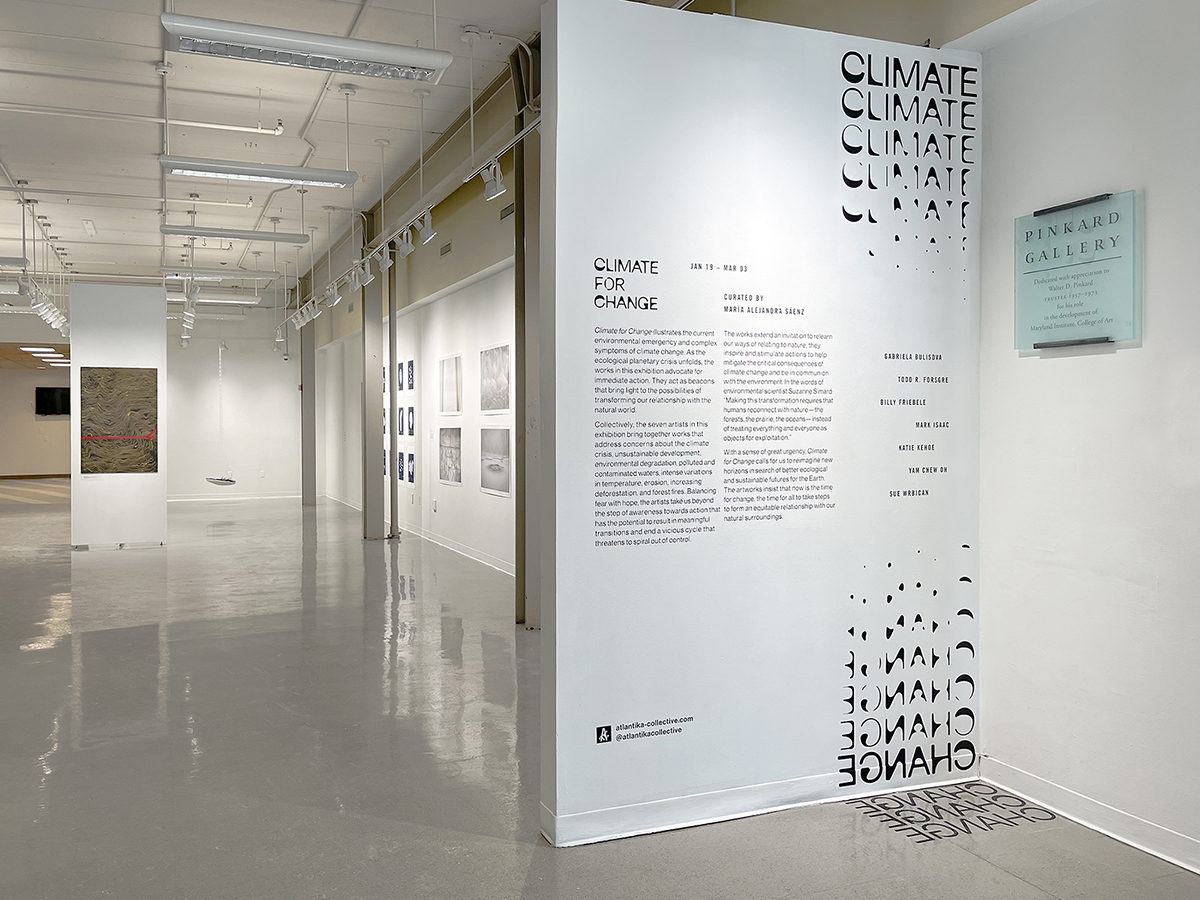
This presentation features design methodology and outcomes for two projects: Climate for Change and Tipping Point. Climate for Change, a group exhibition addressing the current environmental emergency, employed an expressive typographic language across the exhibition design. Physical manipulations with water and melted letterforms worked alongside digital experiments to distort and dissolve type—evoking themes of fragility and urgency. The typography disintegrates and then rebuilds, carrying an additional message of change, restoration, and hope.
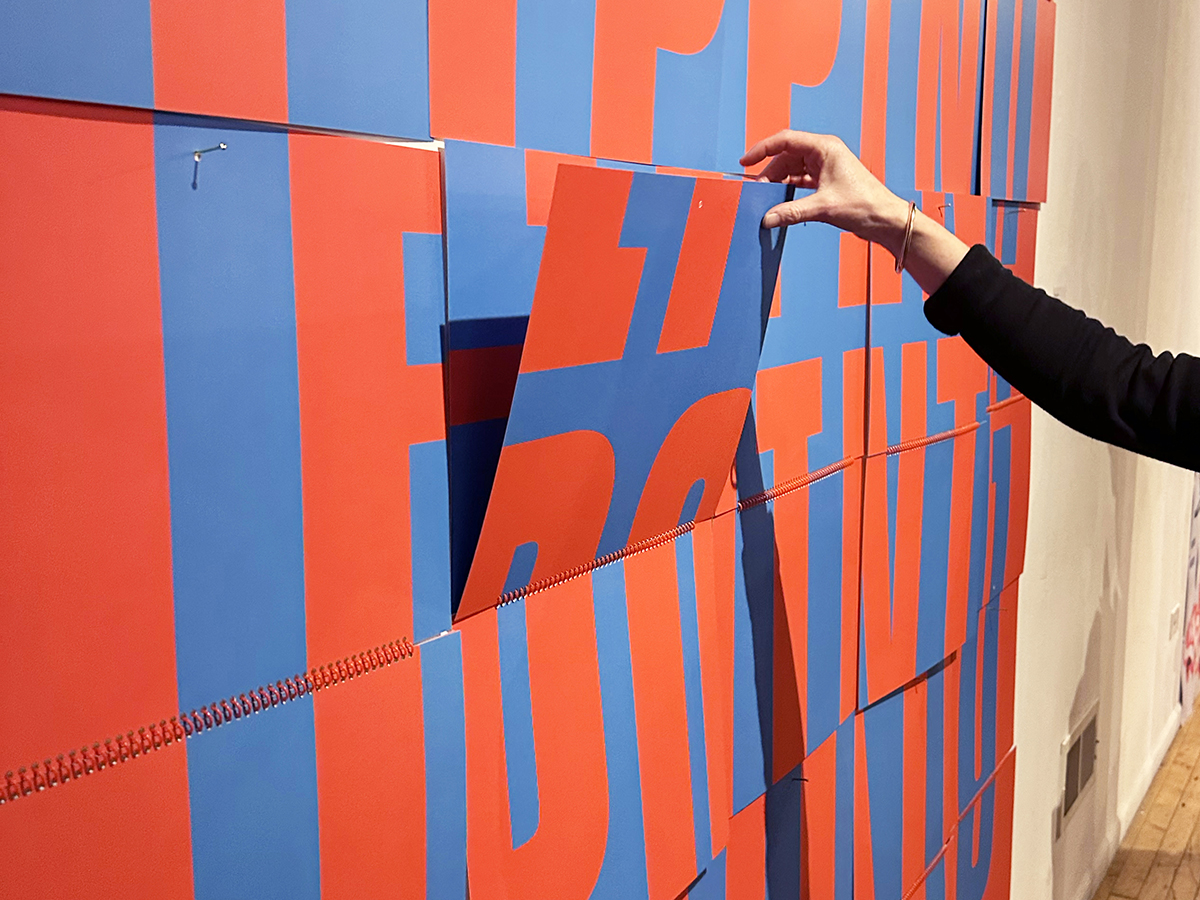
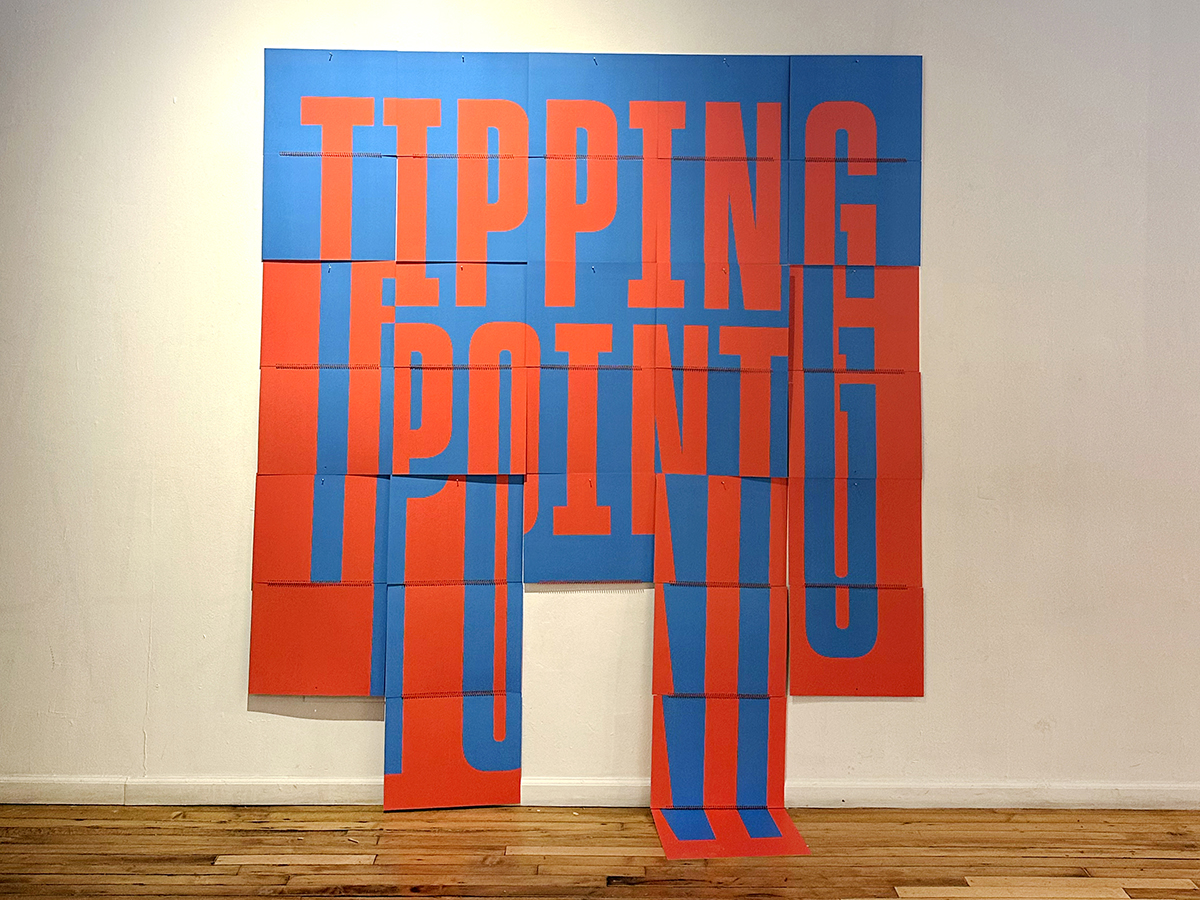
Tipping Point, a large-scale typographic installation, evolved from research on ecological thresholds. The typography spans a grid of 25 panels, each representing a vulnerable environmental system. As viewers engage with the work, panels flip and disrupt the typography, triggering a transformative cascade of events from the wall to the floor. This participatory experience invites action and reflection upon this ecological instability.
Together, these projects demonstrate typography’s power to engage the public with urgent climate issues. By synthesizing language and visual form, designers can mediate between scientific discourse and public understanding—offering frameworks for reflection, engagement, and collective action.
This design research is presented at Design Incubation Colloquium 12.2: Annual CAA Conference 2026 (In-person only) on Thursday, February 19, 2026.